
DHL Freight is using the SuperPanther eTopas 600 in regular operations.
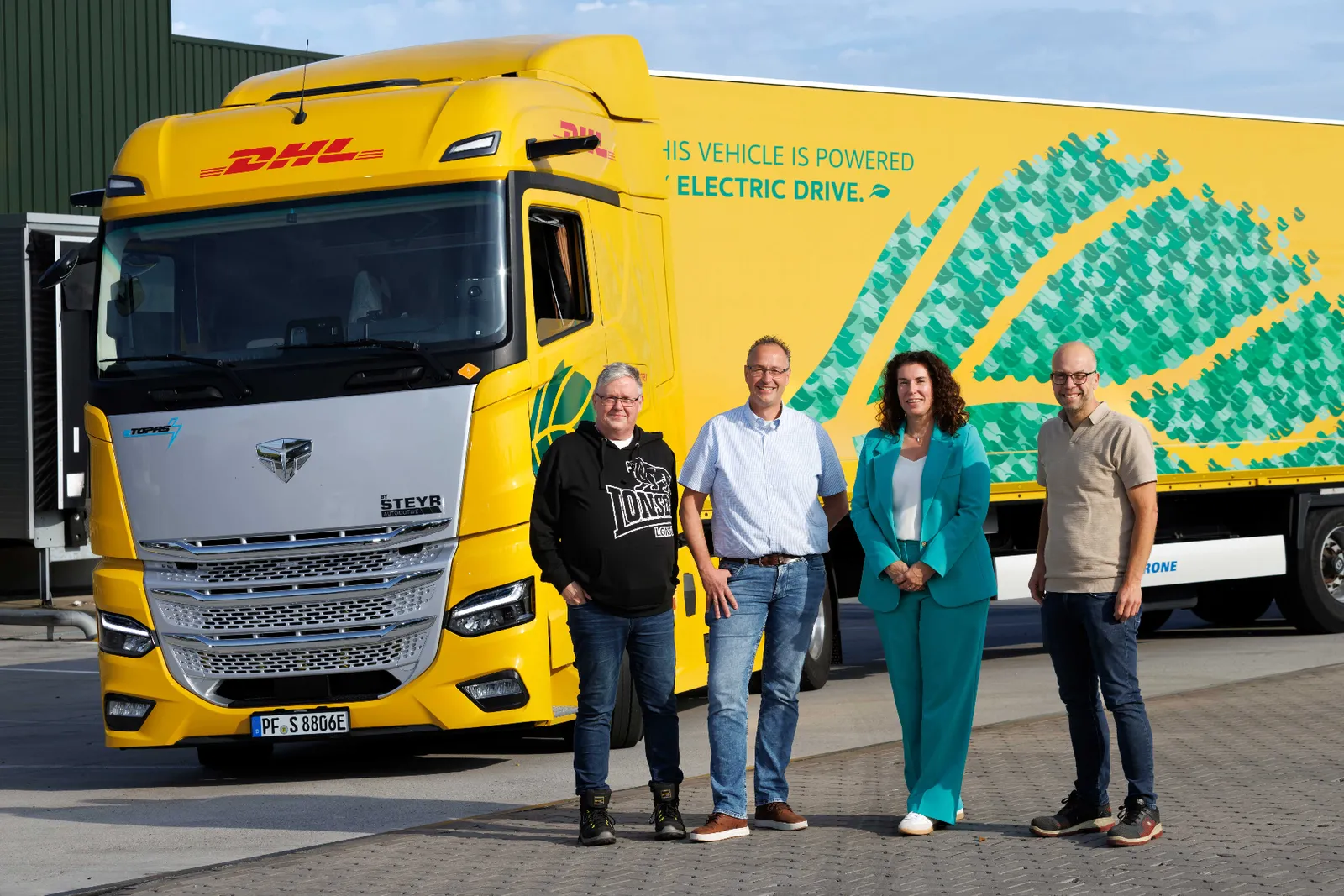
DHL Freight has transitioned the first SuperPanther eTopas 600 produced in Europe from testing to regular commercial operation. This battery-electric heavy-duty truck has been operating in the Netherlands and Belgium since September, covering approximately 2,000 kilometers per week.
Handover of the eTopas 600 with representatives from DHL Freight.
Image: DHLGroup
Since September, DHL has been regularly using a SuperPanther eTopas 600 in its network in the Netherlands. This battery-electric heavy-duty truck handles both domestic deliveries and cross-border shipments to Belgium, without being restricted to a fixed route.
DHL states that its range per battery charge is up to 500 kilometers for operational use. The vehicle’s technical specifications indicate a range of up to 560 kilometers. The eTopas 600 is equipped with a 621 kWh LFP battery from CATL, offering a continuous power output of 394 kW and peak power of up to 692 kW. Charging is done via two CCS2 ports, providing a maximum combined capacity of 660 kW. Under suitable conditions, the battery can be charged from 20% to 80% in no more than 38 minutes.
A two-week field test in Austria preceded regular operation. During this time, the eTopas 600 covered approximately 1,900 kilometers, averaging 238 kilometers per day. DHL estimates the energy consumption at 102 kWh per 100 kilometers. Compared to the benchmark scenario used in the test, around 930 kilograms of CO2 equivalent were saved.
The partnership between DHL Freight and SuperPanther has been in place since 2024. In July 2026, the first eTopas 600 produced in Europe for DHL rolled off the production line, and it has been deployed in regular network operations since September.
From DHL’s pilot test to regular transportation use
DHL aims primarily to explore how battery-electric heavy-duty trucks can be integrated into existing transportation networks and cross-border routes. The data collected in real-world operations is also intended to be fed back to SuperPanther to inform the development of future vehicle generations.
SuperPanther is currently building its presence in Europe. The eTopas 600 has been produced since summer through SKD assembly at Steyr Automotive in Austria. At the beginning of October, it was reported that Austrian logistics company Gartner ordered 20 units — the largest single order for the brand known so far in Europe. SuperPanther aims to reach 1,000 vehicles in Europe by the end of 2027.
DHL Freight itself also intends to further expand the use of electric commercial vehicles. According to Heidi van Eldik, CEO of DHL Freight Netherlands & Belgium, around 40 more electric vehicles are set to be added in the coming months alone.
DHL is also advancing electrification through partner programs. For example, the logistics company Pflaum operates 20 electric trucks from Scania’s Sennder joint venture, Junaein, for DHL’s shipments. Juna now has around 110 electric trucks in use across several European countries.
DHL Freight states that it uses approximately 1,700 vehicles designed to reduce emissions. In addition to battery-electric trucks, the company is testing other types of propulsion systems as well. The partnership with SuperPanther extends beyond the eTopas 600: both parties signed a Memorandum of Understanding on autonomous driving at the IAA Transportation exhibition.