
From 70,000 to 16,000 euros in four years: Toyota’s collapse as no one wants to buy it
Hydrogen is the future, said the “prophets” not long ago, failing to see that the simplest and most effective solution wasn’t hydrogen after all. But the push from brands like Toyota sowed doubt among those less informed, many of them misled by certain information about this technology. Now reality has caught up with them.
We found an example in some markets that have made the most progress in infrastructure, such as the Netherlands, where we located a second-generation Toyota Mirai registered in 2022 with less than 70,000 kilometers on the odometer. It’s a relatively modern car with very comprehensive equipment and a mechanical system that, in theory, allows users to enjoy the advantages of electric driving without relying on a charger.
The problem arises when we look at its depreciation. In 2022, this model was priced at around 70,000 euros in the Dutch market. Four years later, the unit being offered is available for just 15,950 euros. And it’s understandable that prices are so low, mainly because there are few charging stations available and the price remains high. That’s for the more modern version; older models are available for as little as 5,000 euros, but with a high mileage.
The situation becomes even more striking when we consider that Toyota continues to sell the new Mirai in the Dutch market, where its price is currently around 77,000 euros. This means a buyer can get a four-year-old used unit for about 61,000 euros less than what it costs to buy a new one.
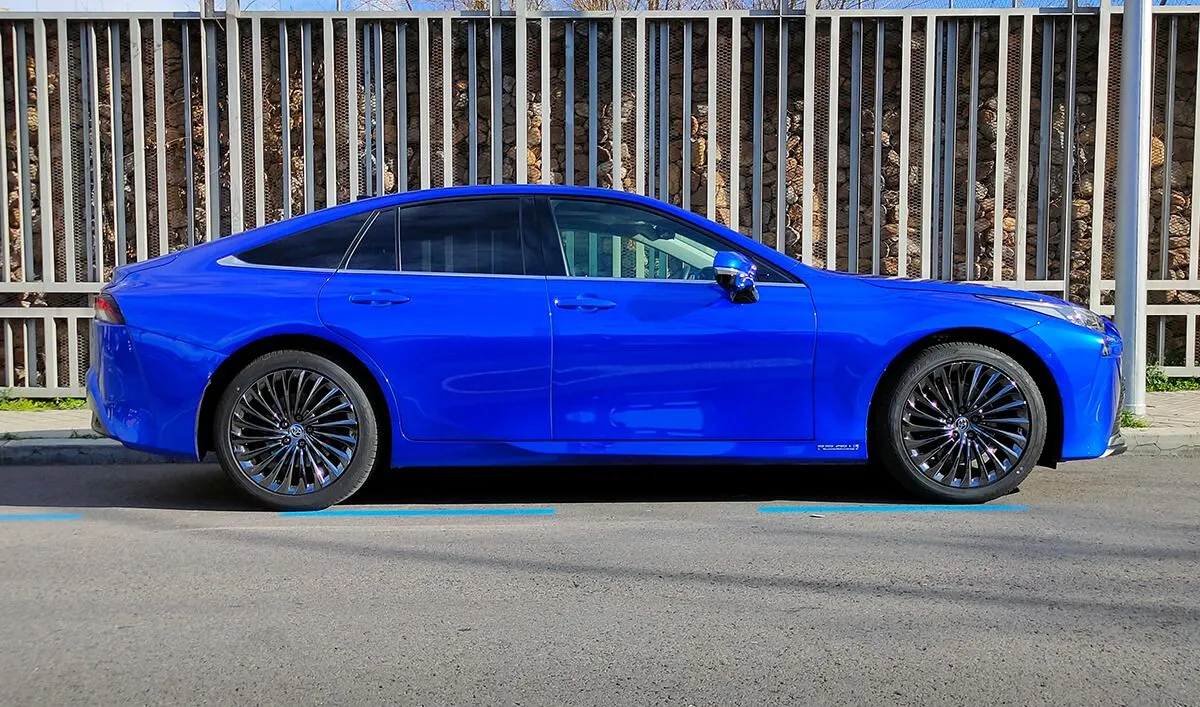
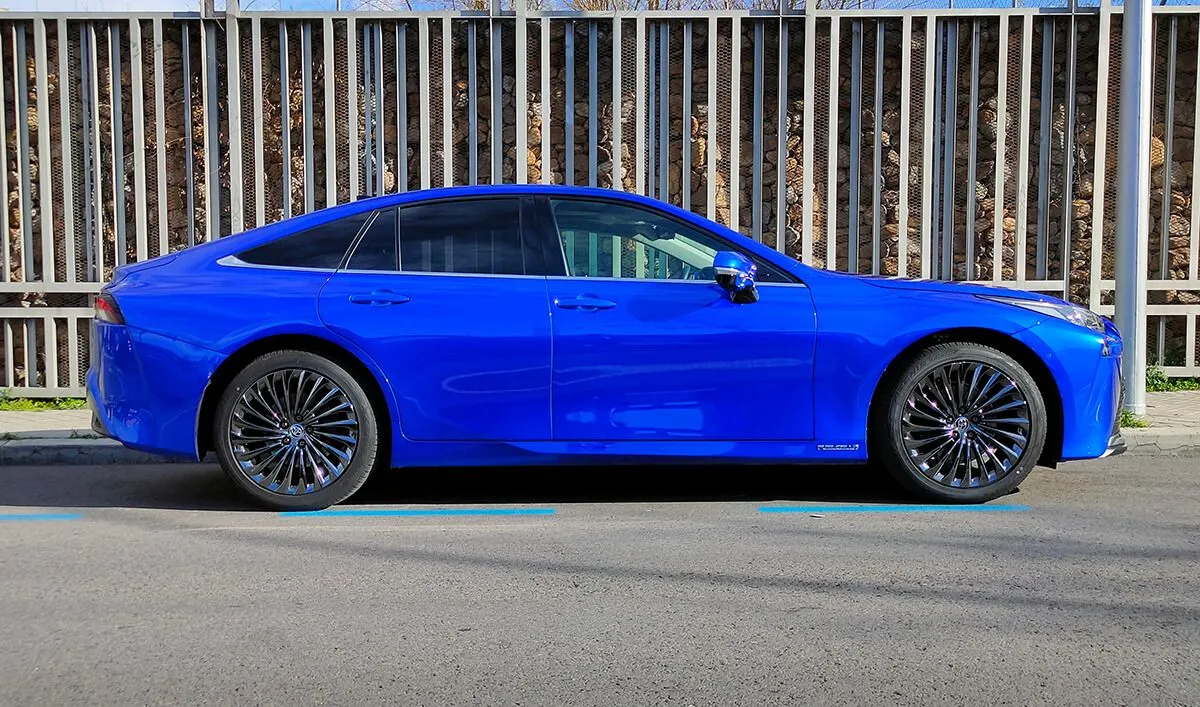
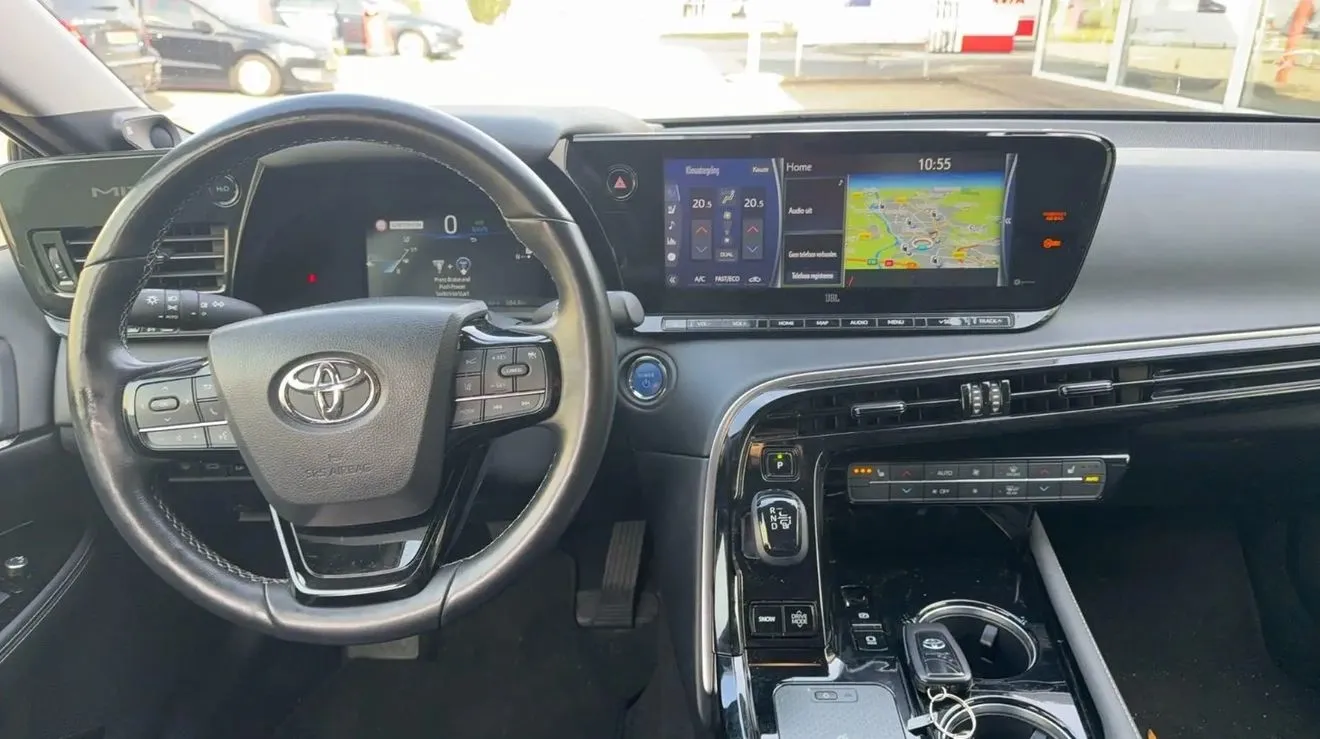
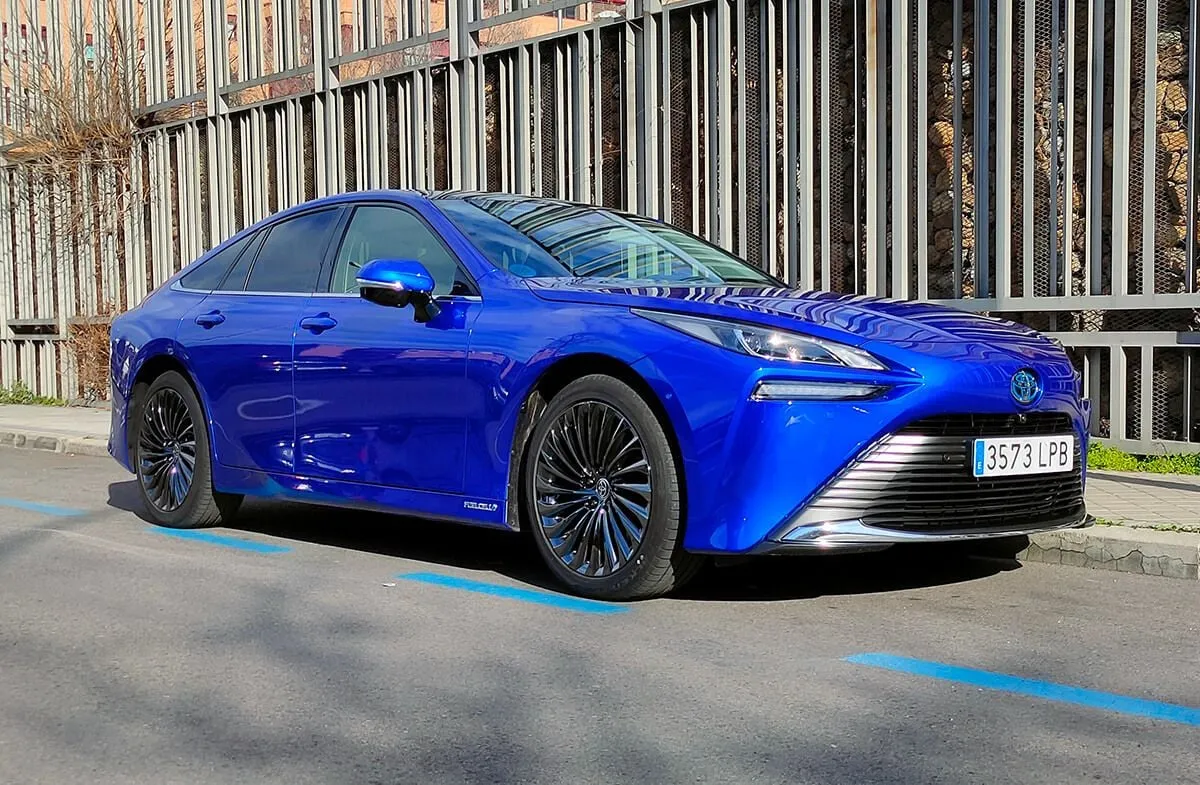
The interesting thing is that, on paper, the Toyota Mirai isn’t a bad car. It’s a sedan nearly five meters long with a fairly attractive design and an interior featuring amenities typically found in higher-end models. It has adaptive LED headlights, front and rear parking sensors, electric and heated front seats, a heated steering wheel, and synthetic leather upholstery.
But the list of problems and limitations is enormous, starting with the trunk space, as the location of one of the hydrogen tanks reduces its capacity to a laughable 278 liters.
But the real drawback lies outside the vehicle. The Mirai uses a fuel cell that converts hydrogen into electricity to power its engine. This allows for driving similar to that of a conventional electric car, with the advantage of being able to refuel in just a few minutes. The problem is finding where to do so and, more importantly, how much it costs.
In the Netherlands, for example, there are barely a little over twenty hydrogen refueling stations. It has one of the best infrastructures in Europe, but it remains very limited, which greatly restricts travel and can turn a long journey into a complex planning task. The situation is not particularly favorable in other European countries either, where the network is still very small.
Add to this the cost of fuel. Hydrogen costs between 12 and 20 euros per kilogram, depending on the station. The Toyota Mirai has an approximate fuel consumption of 0.8 kg per 100 kilometers, so at a midpoint price of 16 euros per kilogram, driving 100 kilometers would cost 12.80 euros. Diesel price.
This means that a driver who travels 15,000 kilometers per year will have to spend around 1,920 euros per year solely on hydrogen. This is a significantly higher amount than what an equivalent battery electric vehicle would require, especially if its owner can charge at home using a cheap electricity rate.
For example, an electric vehicle that consumes 18 kWh per 100 kilometers, with a home electricity rate of 0.15 euros/kWh, would need about 405 euros per year to cover the same distance, not including charging losses. The difference would be more than 1,500 euros per year in favor of the battery electric vehicle. And that’s without considering the greater ease of finding charging stations compared to the scarce hydrogen refueling stations.
We won’t discuss the maintenance costs, as we don’t know those for hydrogen vehicles, but they are likely to be less competitive than battery electric cars.
All of this helps explain why a relatively modern, well-equipped car backed by a brand like Toyota can experience such a sharp drop in value. The Mirai shows that depreciation depends not only on the quality of the vehicle but also on the viability of the technology it uses and the real practical benefits it offers its owners.
For those living near a hydrogen station, driving just a few kilometers and seeking a comfortable sedan at an SUV price, a used unit might seem like an interesting option. But for the vast majority of drivers, the limitations of refueling and the high cost of fuel turn this apparent bargain into a purchase that’s quite difficult to justify.
And it is precisely here that we encounter one of the biggest contradictions in the push for hydrogen in passenger vehicles. While battery electric cars have seen increased range, lower costs, and improved charging infrastructure, fuel cell vehicles still rely on a very limited supply network. As a result, a car that just four years ago cost as much as a luxury sedan can now be found for less than the price of a new SUV.