
From 1,008 km to just 566 km of real range: the latest BYD reveals the huge problem with Chinese cars and SUVs
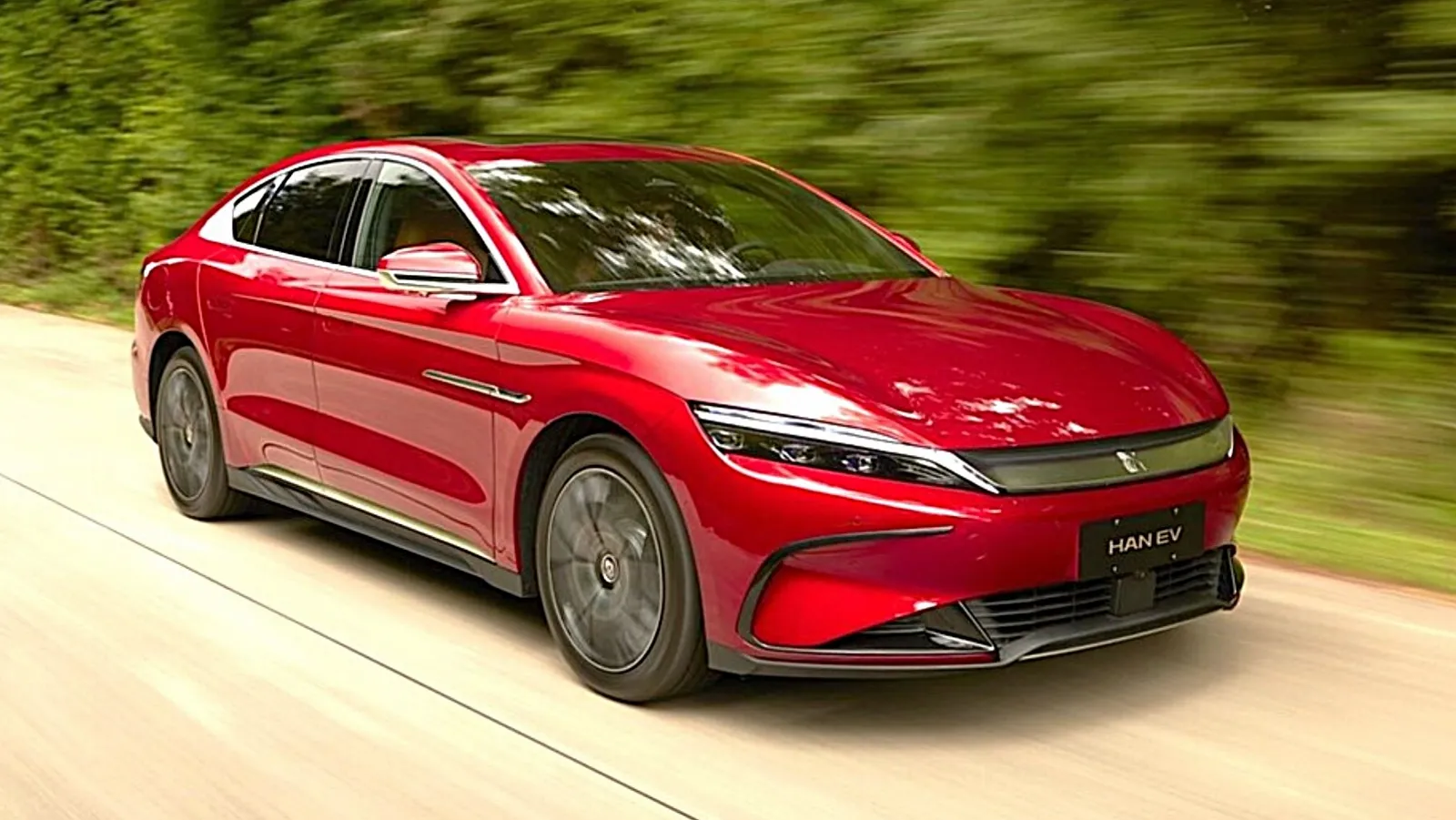
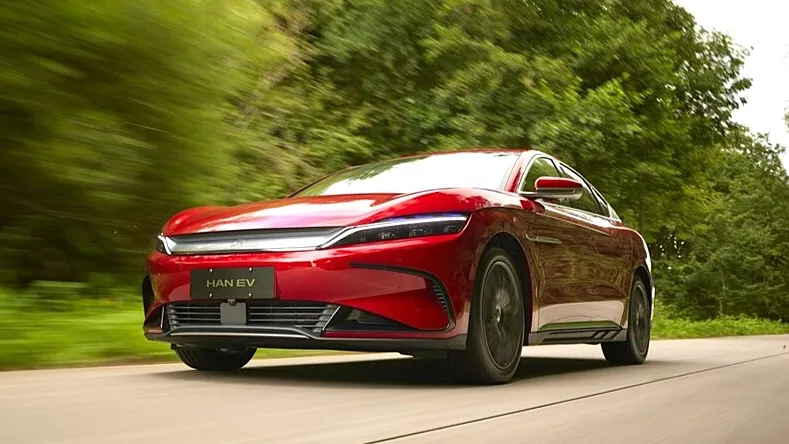
The latest BYD model, at first glance, had nothing to envy European luxury cars and SUVs. This massive electric sedan, 5.25 meters long with a Cx value of just 0.197, promised not only high levels of luxury—on par with China’s best SUVs already available in Spain—but also impressive performance, starting with a range of 1,008 kilometers.
However, there’s a serious issue: in actual highway testing, its range dropped to just 566 kilometers. And while BYD certainly isn’t off to a good start—that’s true—it’s not a problem unique to this first Chinese car and SUV manufacturer. It’s an issue affecting the entire Chinese automotive industry.
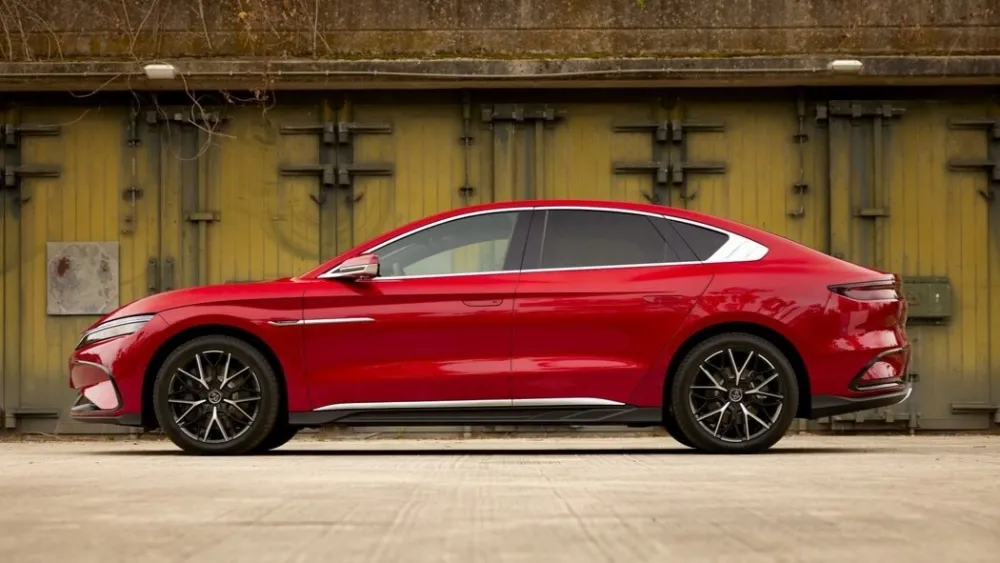
What is the BYD that promises 1,008 km but only achieves 566 km of range?
Some European media have discussed the possibility that BYD could market its latest model, the Da Han, in Europe as an alternative to the BMW Series i7 or Mercedes EQE. It has strong advantages: it measures 5.25 meters in length, 1.99 meters in width, and 1.51 meters in height, with an enormous wheelbase of 3.13 meters.
It also has no power issues: powered by the same 102.3 kWh battery, the latest BYD model is available in three versions; two of them have 503 horsepower and the aforementioned 1,008 km range; while the third version features twin motors, 775 horsepower, and an 880 km range.
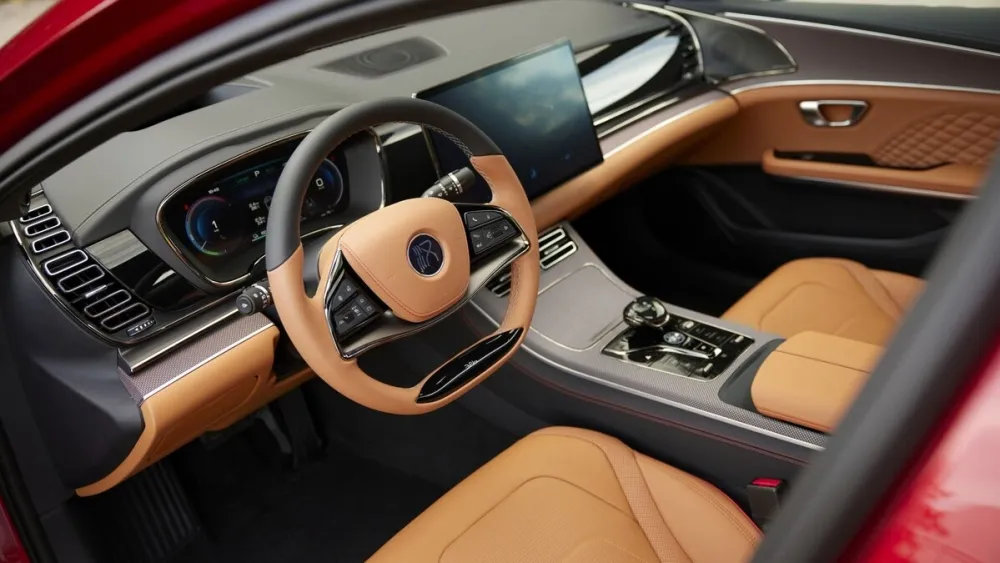
As for luxury: a brief list of standard features is enough to illustrate what the latest BYD available in China offers: adjustable rear axle, air suspension, intelligent driving with highway and city navigation assistance, remote autonomous parking, a 17.3” central screen with 3K resolution, leather upholstery, or an interior air freshener.
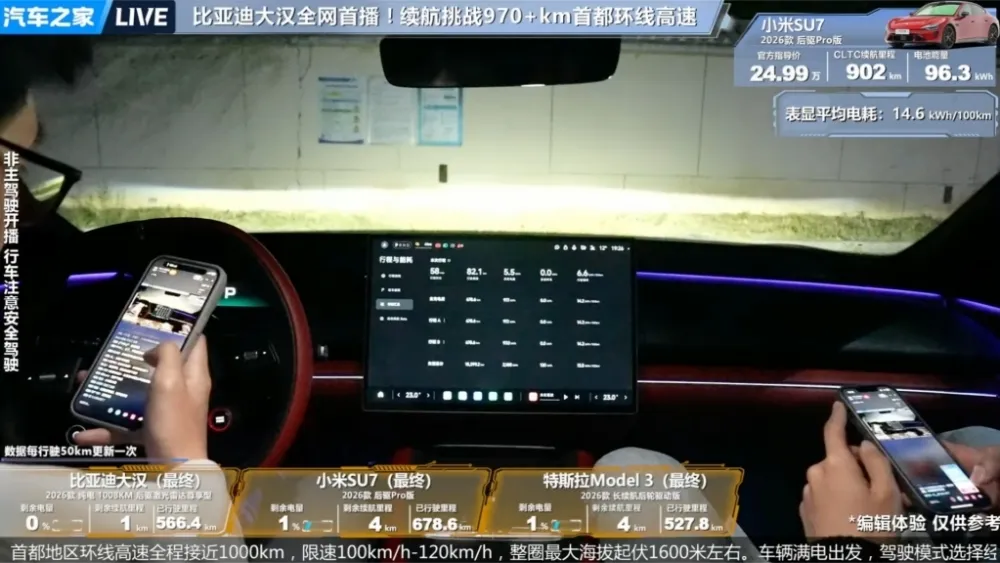
Last October 14th, the Chinese media outlet Autohome conducted a road range test on this latest BYD model using a test vehicle with an approved range of 1,008 km. The problem was that after nearly 1,000 km of testing on Beijing’s ring roads, with two people in the car and a speed between 100 and 120 km/h, the BYD Da Han finished the test with its battery at 0% after covering just over 566 km—specifically, 566.4 km.
The issue is no longer just that it achieved only 56.2% of its promised range. Another problem is that Autohome compared this BYD’s range figures with those of two other notable cars: a Xiaomi SU7 with an approved range of 902 km, which actually managed to travel up to 678.6 km in tests; and a Tesla Model 3 Long Range, which, despite an approved range of 830 km according to the Chinese CLTC cycle, could only cover 527.8 km. In both cases, the actual range percentage for the Xiaomi and Tesla was better than that of the latest BYD model.
566 km in reality: the major problem with Chinese cars and SUVs
The latest BYD model performed worse than its direct competitors, Xiaomi and Tesla, but these 566 km of actual range raises a key issue: the range rated by Chinese cars and SUVs is far — very far — from what they can achieve under real conditions.
And this has a culprit, the Chinese homologation cycle CLTC mentioned a few lines above. In our Hybrid and Electric section, we’ve always pointed out that it is much less rigorous than the Western homologation cycle WLTP. And now we’ll explain in detail why.
Initially, the CLTC homologation cycle applied to cars and SUVs sold in the Chinese market determines a vehicle’s fuel consumption and range under conditions presumed to reflect driving in China’s megacities, with very specific parameters: the CLTC cycle is designed to mirror traffic conditions in China’s cities, setting an average speed of only 29 km/h. During tests, Chinese cars and SUVs can reach a top speed of 114 km/h only without sudden acceleration.
On the contrary, the Western WLTP standard used in Europe is much stricter, as it is measured at an average speed of around 46.5 km/h and reaches a maximum speed of 131 km/h during the test, which also includes high-speed sections on highways.
As such, although there is no standardized equivalence figure, it is estimated that the difference in fuel consumption and thus range between the CLTC and WLTP testing cycles lies between 15% and 25% in favor of the Chinese cycle. This is why when a Chinese car or SUV is homologated in Europe, its range decreases; the 1,008 km CLTC range for Chinese vehicles becomes between 750 and 820 km under the WLTP standard.
Finally, in an attempt to explain the failure of the latest BYD model, it must be noted that during highway testing, high speeds—and the aerodynamic resistance they create—cause the energy consumption of any electric car or SUV to soar... thereby reducing its range.
This partly explains the actual 566 km range achieved in the test, but it does not exempt BYD from the fact that direct competitors like Xiaomi or Tesla experienced much lower theoretical ranges.