
The Pnrr is closed, but Lombardy has a 110 million euro grant for 200 electric buses
The end of the Pnrr has in no way concluded the effort to electrify bus fleets. The Lombardy case shows this, as the transition proceeds without slowdowns, and it is confirmed by new tenders published in recent weeks by various Italian cities and regions, from Ancona to Sardinia. The most evident signal comes from Lombardy itself, with a massive contract worth 113 million euros for the purchase of over 200 electric buses, one of the largest ongoing programs in local public transportation today.
Tenders in Lombardy thanks to PSNMS public funds
The initiative to fully electrify fleets in Lombardy is managed by Consorzio Autoservizi Lombardi Società Consortile A R.L. on behalf of its member companies Air Pullman S.p.A. and STAV Servizi Trasporti Automobilistici S.p.A., and it is funded through resources from the National Strategic Plan for Sustainable Mobility (PSNMS). These are public funds that cover exclusively the purchase of vehicles, with support amountsing up to 88 million euros. The unfunded portion—approximately 25 million euros—covers full-service maintenance and fixed safety costs, which remain entirely the responsibility of the member companies.
Bus retrofits in the UK, end to diesel by 2030. PETL’s strategy with Kleandrive
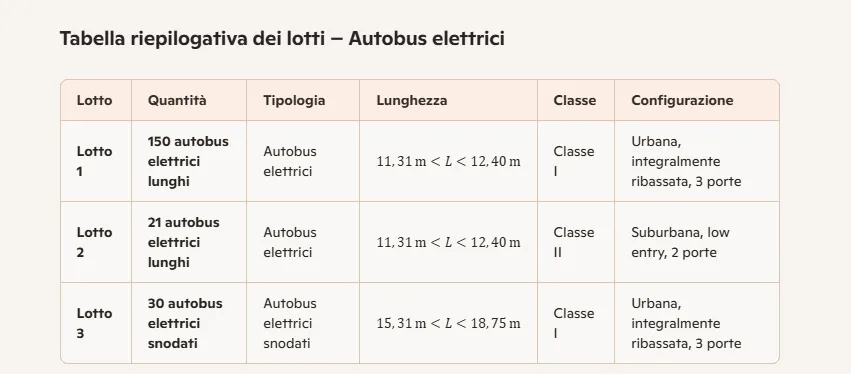
The contract involves the supply of a total of 201 fully electric buses, divided into 3 lots based on vehicle type, configuration, and class. The technical specifications are listed below.
The areas covered by the consortium include: Province of Pavia (Vigevano), Milan metropolitan area, North West Milan, Monza and Brianza, and South West Milan.
Eight new electric buses arriving in Ancona
Ancona is accelerating the transition to electric public transportation with a new tender for zero-emission buses. The first batch includes six electric articulated buses measuring 13.6 to 18 meters, intended for urban services, worth 4.98 million. The second batch involves two electric minibuses measuring 7.3 to 8.3 meters, also with a fully lowered floor. The tender was published by Conerobus, which operates the city’s public transport service.
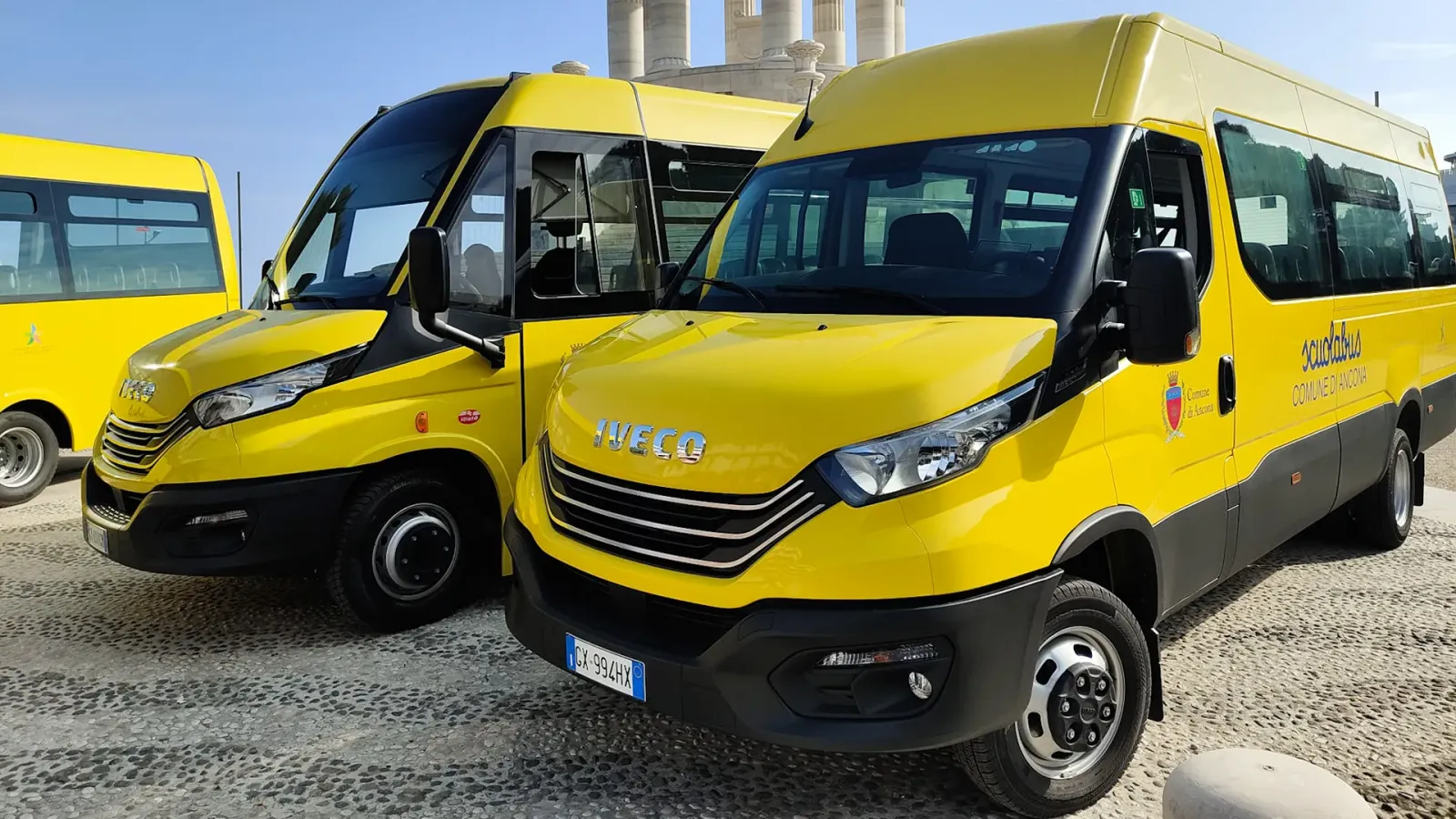
The push toward clean mobility doesn’t stop at urban areas. During the summer, the municipality expanded its school transport fleet with five new electric Iveco school buses, purchased thanks to funding from the Ministry of Environment and Energy Security worth over one million euros, entirely covered by public funds.
Electric buses continue to see strong demand: +148%, while trucks are declining. Incentives are needed.
This initiative is part of the “We Travel Green: What Are You Waiting For?” project, which aims to reduce pollution related to school transport by introducing zero-emission vehicles and, at the same time, improve services in the city’s peripheral areas, where demand has risen with increased requests for full-time schooling.
22 electric buses in Sardinia
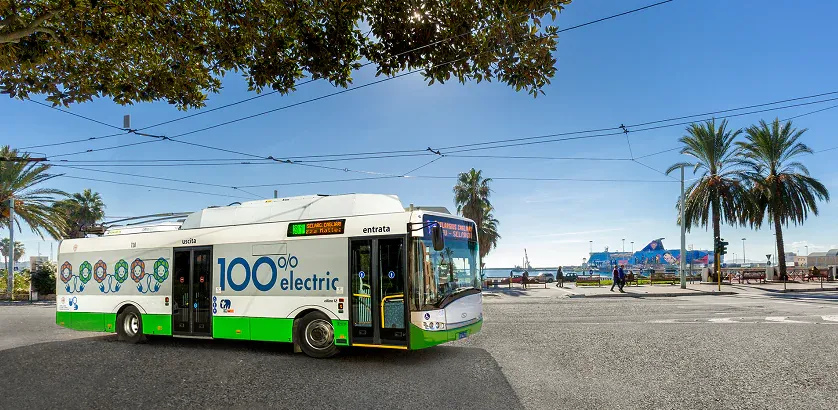
Sardinia is also accelerating its transition to electric mobility. In Cagliari, the CTM agency aims to have a fleet of 300 electric buses, while ARST, the region’s main public transport operator, has issued a new tender to further expand its zero-emission fleet.
In Cagliari, 70% of buses run on batteries, with all buses to be electric by 2030.
The contract, worth a total of 12.17 million, involves the supply of 22 electric urban buses through a framework agreement with a single supplier, divided into two lots.
The first option involves up to 12 short electric buses, with lengths ranging from 7.8 to 9.3 meters. The second option includes up to 10 electric buses, with dimensions between 10 and 10.75 meters. It represents another push toward decarbonizing regional public transportation.
READ ALSO: There’s still hope for charging station bonuses; watch the video – Incentive guide
Previous Article
Zero DS: 436 km on a single charge – a record that challenges assumptions about range
Next Article
Electric cars have saved 20 billion dollars in oil costs in six months