
China mocks Europe’s deadlines: internal combustion cars plummet by 90% in five years
The Chinese automobile market is undergoing a transformation that, if told to us just two or three years ago, we would hardly believe. Gasoline and diesel cars are losing ground at an extremely rapid pace. Most strikingly, this transition is not driven by a ban on traditional engines, but rather by the growing appeal of electric alternatives and rising fuel prices.
The latest registration data show just how much the landscape has changed in the world’s largest automobile market. China has become a massive laboratory for what happens when manufacturers compete with an increasingly wide range of electric cars, competitive prices, and technology that advances at a pace that traditional brands struggle to keep up with.
Electric cars already account for two thirds of China’s market
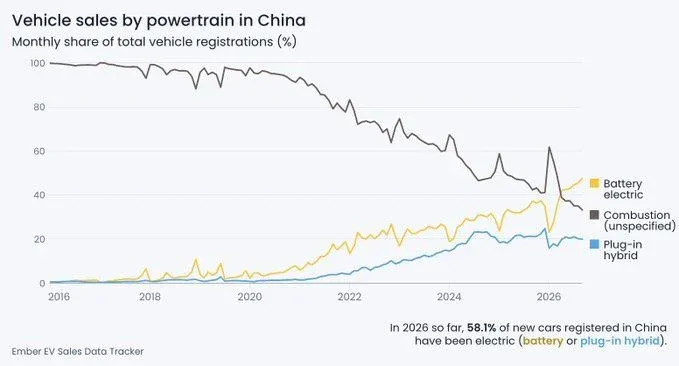
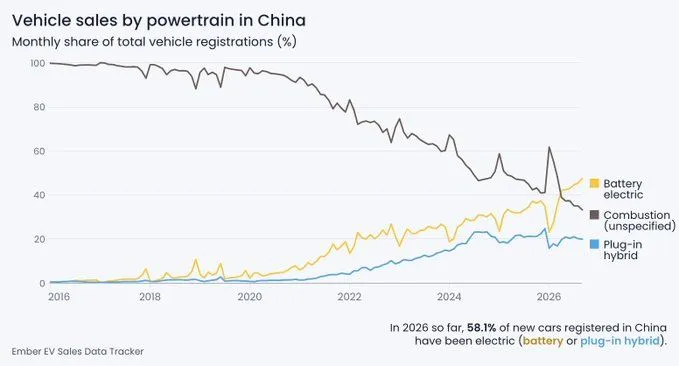
According to data published by Ember, as of September 2026, internal combustion cars accounted for only 33% of new car registrations in China, marking a new historical low. This is the first time that gasoline and diesel models, grouped under the combustion category in these statistics, have fallen to just one third of the market.
Battery electric vehicles accounted for 47.3% of sales, coming very close to representing half of all new car registrations on their own. Adding the 19.7% from plug-in hybrids brings the combined share of these two technologies to 67% of the market.
To grasp the scale of this change, it’s enough to look back five years. In 2021, internal combustion engine vehicles still made up over 90% of sales in certain months. Since then, their share has plummeted at a rate unseen recently in a market of this size. In just over a decade, they have gone from dominating almost all new car registrations to accounting for only one in three.
The trend becomes even more interesting when examining the performance of the two plug-in technologies. Battery electric vehicles have experienced the strongest growth and now far surpass plug-in hybrids. These latter have also made progress, though their market share has shown greater fluctuations in recent months. This indicates that China’s electrification strategy does not rely solely on intermediate solutions, as electric vehicles are solidifying their position as the dominant option.
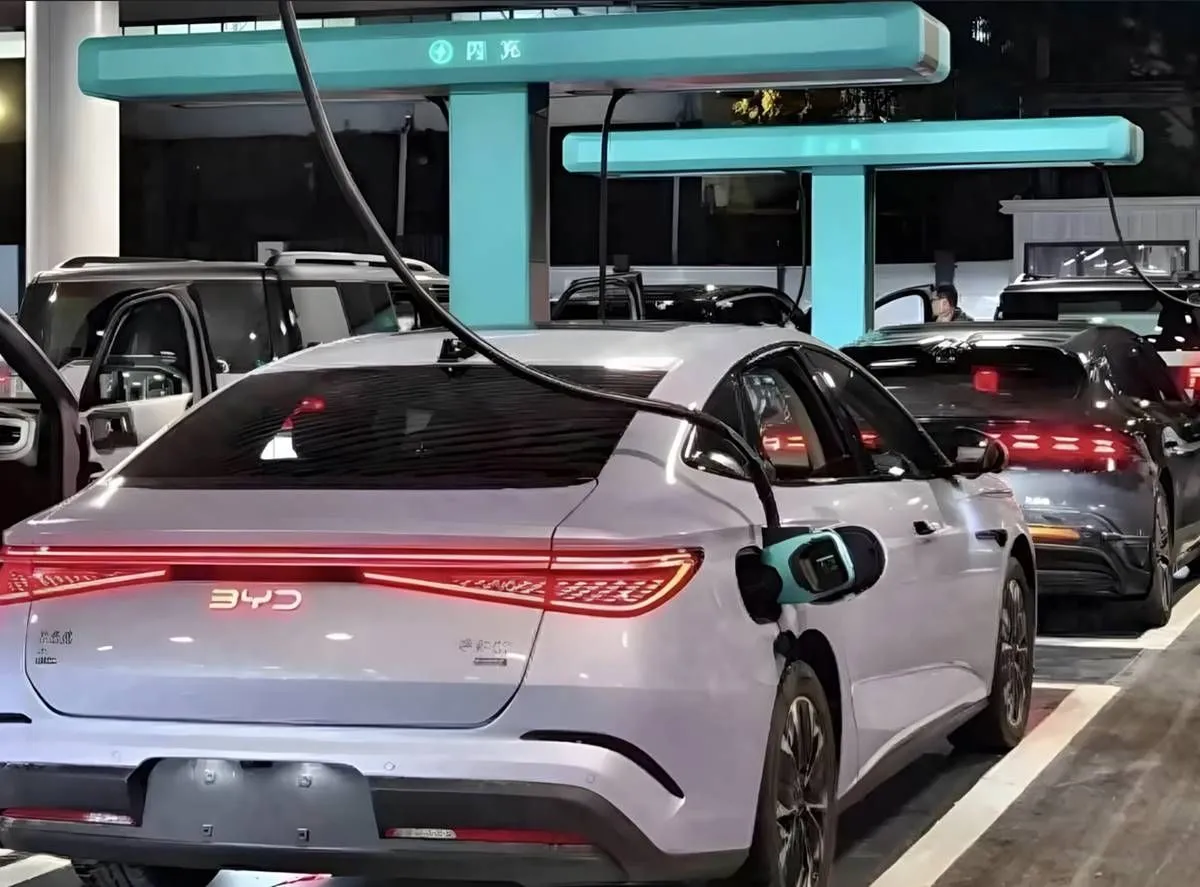
Several factors underlie this transformation. Intense competition among Chinese manufacturers, with BYD, Geely, Xiaomi, and other groups vying for market share, has accelerated the introduction of increasingly competitive models. This is compounded by an expanding charging network, a highly developed battery industry, and a product range that spans from small urban cars to large sedans and family SUVs.
There is also an element worth considering. China did not need to wait until 2035—the date set by the European Union for implementing its emission targets on new cars, a goal that European manufacturers are trying to overturn—to see internal combustion engine models lose their dominant position. The market is undergoing this change much earlier, driven by a combination of industrial policy, incentives, and commercial competition.
That doesn’t mean internal combustion engines will disappear overnight. They still account for a significant portion of new vehicle registrations, and plug-in hybrids still use gasoline. But the underlying trend is hard to ignore: in China, cars that can connect to the electrical grid are already the dominant choice.
For Europe, China’s development serves as a warning and also a reminder of how quickly a market can change. While debates continue here about 2035 targets and the future of internal combustion engines, China shows that the transition can progress much faster than expected when electric cars become an attractive option for a growing number of buyers.
Sources | EMBER | CADA |