
BYD updates its popular electric SUV: 850 km range and a futuristic interior
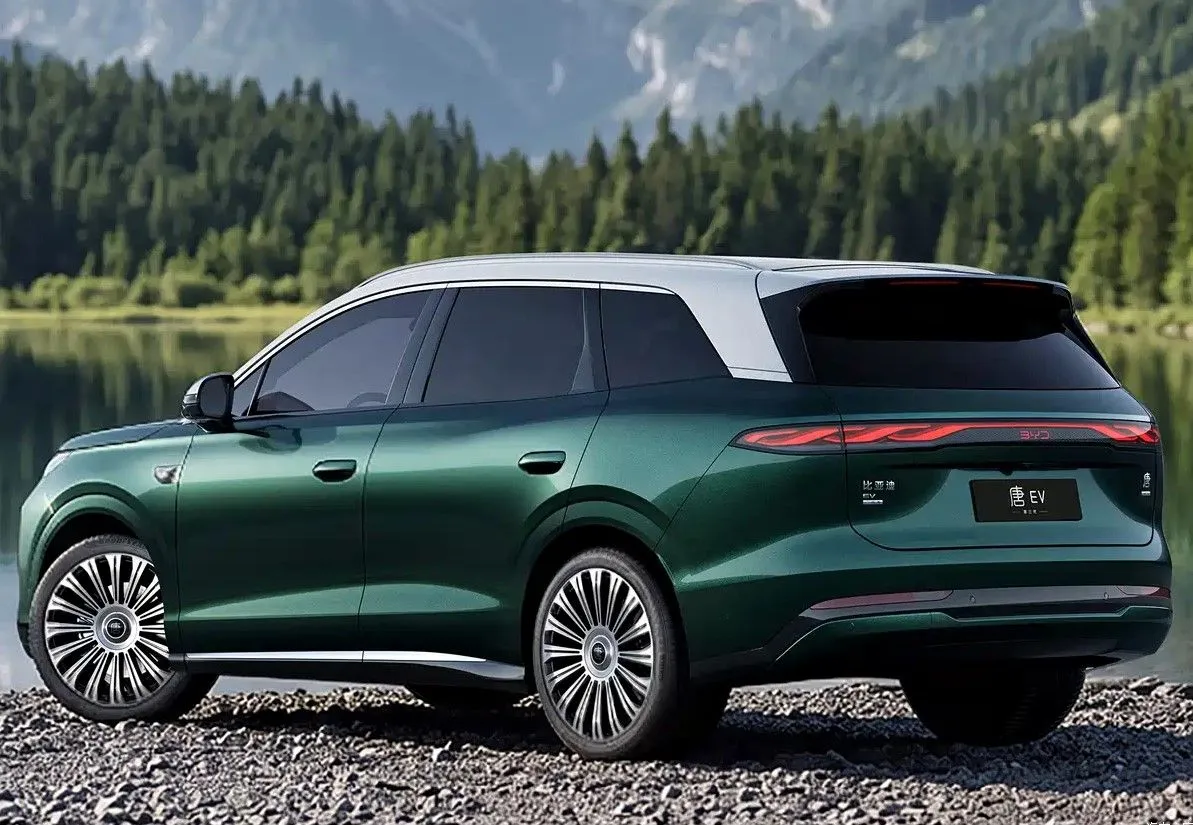
The new BYD Tang is set for a major refresh as it enters its third generation, featuring significant improvements in design, technology, and performance. It aims to compete with high-end models, with advanced interior features serving as one of its key selling points.
The Chinese manufacturer continues to expand and update its lineup of electric vehicles, and now it’s the turn of the BYD Tang. This model is already familiar in Europe, but the new generation introduced for the Chinese market represents a substantial evolution compared to the version currently sold on our continent.
The brand has released new images and details of its interior, where digitalization plays an even more prominent role. The new Tang will position itself as a tech-driven five-seater SUV, competing at the upper end of the range with the larger BYD Atto 8.

In terms of aesthetics, the new BYD Tang adopts a design language inspired by its larger sibling. The front features a solid surface, stylized headlamps that slope slightly upward, and a chrome trim running along the entire front end. The result is an SUV with very clean lines that aims to convey a more modern and elegant image.
As for its dimensions, the new Tang measures 5.05 meters in length, 1.98 meters in width, and 1.76 meters in height, with a wheelbase of 2,950 mm. These figures place it roughly on par with the BYD Tang L in length, width, and height, although it has a slightly narrower body.
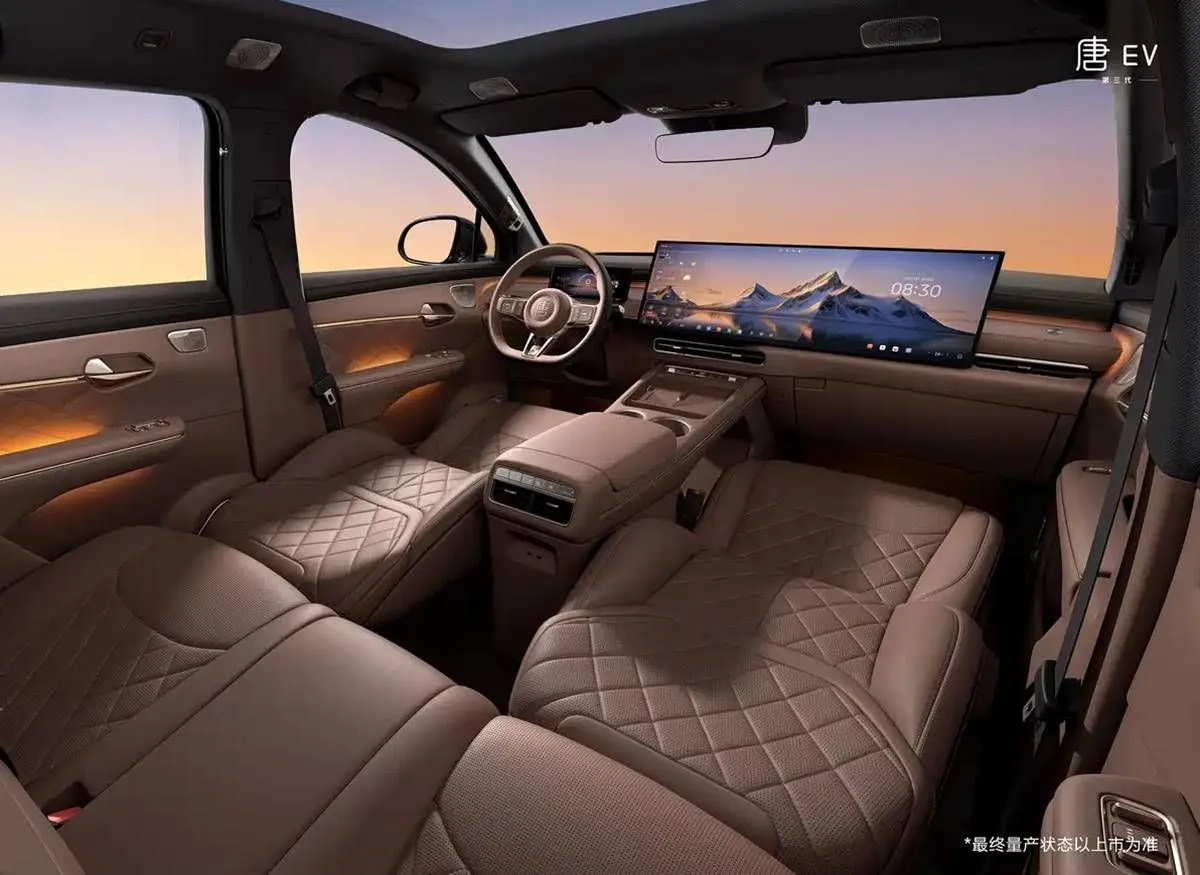
These proportions should result in a spacious interior, especially for passengers in the rear seats. Choosing a five-seater layout instead of the seven seats traditionally featured on the Tang also allows for better utilization of available space, although the trunk capacity has not yet been disclosed.
The new BYD Tang focuses on large screens and a range of up to 850 kilometers.
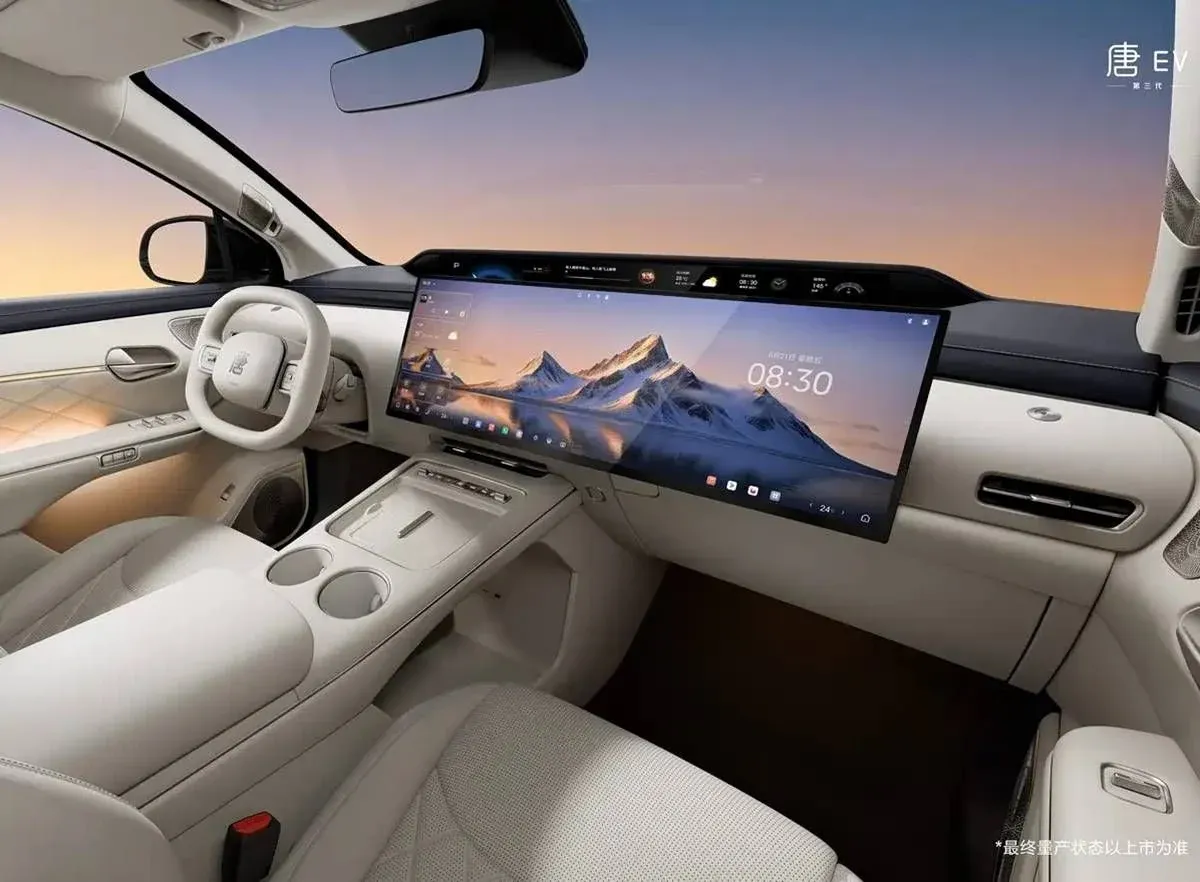
BYD’s main innovation lies in the interior. The manufacturer introduces a new interaction system called Giant Screen UI in this model, designed to make use of the large digital display that occupies much of the dashboard.
Its functionality will allow customization of the dashboard and arrangement of various information windows according to the driver’s preferences. Applications can be resized and repositioned, enabling each user to organize the content they deem most important, from navigation to entertainment or vehicle information.
In addition, there is a virtual assistant based on artificial intelligence named Xiaomianbao, which could be translated as Little Bun. This digital character will be able to listen, respond to voice commands, recognize certain situations, and interact with passengers through animations and various expressions. This is a solution BYD aims to use to bring the relationship between passengers and the multimedia system closer.
The dashboard will be dominated by a configuration of interconnected screens, along with a third particularly narrow screen located beneath the windshield. This screen will display information such as the time, multimedia content, vehicle tilt, or the selected driving mode. The interior can be configured in two color combinations: beige duna and amber brown.
On the mechanical side, only an electric variant with a single 300 kW (408 HP) motor has been announced for now. This power output is somewhat insufficient for a family SUV of these dimensions today, although its acceleration and top speed figures have not yet been disclosed.
Regarding batteries, the new Tang will offer two capacities: 88.6 kWh and 105.7 kWh, with certified ranges of 730, 830, and up to 850 kilometers under China’s CLTC cycle. According to our estimates, these figures could correspond approximately to between 640 and 750 kilometers under Europe’s WLTP cycle, though official certification will be needed to determine the final values.
The maximum charging power and the time required to recharge have not yet been released. This is a particularly important aspect given the high capacity of its batteries and the expectations surrounding a model positioned at the top of BYD’s range.
The technological equipment will also see significant improvements. The new Tang will come standard with the God’s Eye B driving assistance system, known in China as Ojo de Dios B, while optional equipment includes the DiSus-A intelligent suspension system.
This latter system can feature a dual-chamber air suspension along with an advanced road prediction function that allows the suspension to adjust its response to road irregularities. This technology is designed to enhance both comfort and dynamic performance in a large SUV.
For now, BYD has not announced the prices of the new Tang, which will go on sale in China before the end of 2026. There is also no confirmation regarding its possible arrival in Europe, where the brand already sells the previous generation of Tang. If it makes its way to our market, this refresh could significantly strengthen its lineup of family-friendly electric SUVs.