
Broken battery? Repairing it with refurbished parts costs half as much
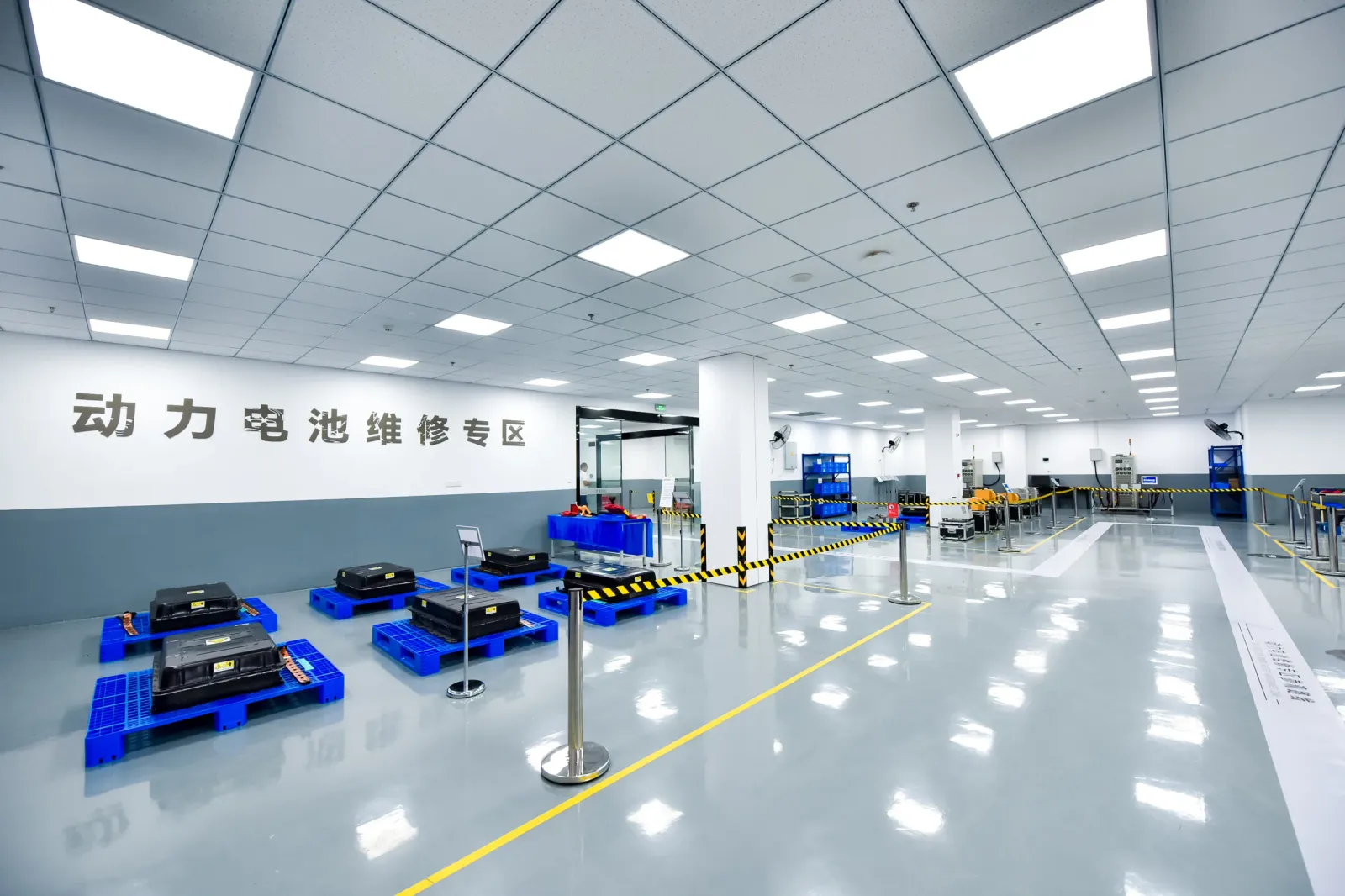
When the battery of an electric car fails outside the warranty period, replacing it entirely can be extremely costly. But it’s not always necessary to replace the whole battery pack. A thorough diagnosis and repair of individual components can significantly reduce costs, sometimes even cutting them in half in the most severe cases.
That’s the message from engineer Francesco Mastrandrea in the third episode of the YouTube series “L’Officina Elettrica.” Mastrandrea is the General Manager and co-founder of EvSafe, an Italian network based in Milan of independent workshops specializing in the maintenance and repair of electric cars. Today he explains how to deal with battery failures by focusing on repairability and the used parts market.
It’s not always necessary to replace the entire battery
According to Mastrandrera, automakers often tend to recommend replacing the entire battery pack even when the issue involves only specific components. This is a understandable choice, he explains, due to considerations of liability, safety, and the readiness of repair shops. But it can be financially disadvantageous for the customer. “We at EvSafe place much more emphasis on repairability rather than replacement.”
The first step is a thorough diagnosis. When a battery fails, it’s not necessarily the cells that are at fault. The problem could also stem from a fuse, a contactor, or a stuck relay—electrical and electronic components that enable the battery pack to function.
In such cases, fixing the individual component can prevent a much more expensive replacement.
If the cells are damaged, the module can be replaced
Even when the issue lies with the cells, it doesn’t necessarily mean the entire battery is faulty. It’s possible that only some components have defects or abnormal degradation. However, repairs often can’t go down to the individual cells. Cells are welded industrially, and a repair shop cannot replicate those welds with the same quality and safety standards as those used during manufacturing.
Battery degradation slows down its performance. It can be tested, but…
The solution is to replace the affected module by choosing a replacement with compatible electrical specifications and an internal resistance similar to that of the other modules. However, the repair requires attention to the tightening torque of the connections and the cleaning of the contact surfaces to avoid overheating and electrical issues.
These modules can be purchased directly from automobile manufacturers when available, or found on the used parts market, which is particularly well-developed today.
Used Battery, Half the Cost
If the degradation affects the entire battery pack, a complete replacement becomes inevitable. Even in this case, however, it is not necessary to purchase a new battery from the manufacturer. The advice is to consider a used battery pack, provided it has undergone thorough inspections and tests to verify its safety, condition, and compliance with the vehicle’s specifications.
“In the worst case where the entire pack needs to be replaced, the cost is still about half of that of a new battery pack from a manufacturer.”
The difference in condition and charging capacity, according to the engineer, can be limited to just a few percentage points. A carefully selected and tested used battery can therefore offer performance very close to that of a new one, with significant savings.
Batteries without modules: a challenge for repairability
The situation becomes more complex with next-generation batteries, where cells are integrated directly into the pack without being arranged in easily replaceable modules. These solutions help reduce weight and size while improving overall efficiency, but they raise questions about the possibility of repairing individual components.
“The repairability of these battery packs […] raises some doubts,” he notes, pointing out that maintaining such designs poses a challenge for both independent repair shops and the manufacturers themselves.
The future: aftermarket modules and larger batteries
Another topic concerns aftermarket modules, particularly those from China. Technically, explains Mastrandrea, they could be used to replace degraded components and, in the long term, even to increase the battery’s capacity.
A battery pack offering 300 km of range, for example, could theoretically be upgraded with larger modules to achieve a range of 600 km. But currently there is a regulatory obstacle: these modules are not approved for use in vehicles. “It’s a real shame because it limits the maintainability of both the vehicle and the battery pack.”
But EvSafe, according to Mastrandrea, is working with lawmakers to overcome this limitation and make possible interventions that are technically feasible today but not legally permitted. The goal is to promote greater repairability of electric vehicles, in line with the principles of a circular economy, by reducing vehicle obsolescence and maximizing the value of batteries even after many years of use.