
Tesla exec hints at a wild fix for Robotaxi’s biggest weather problem
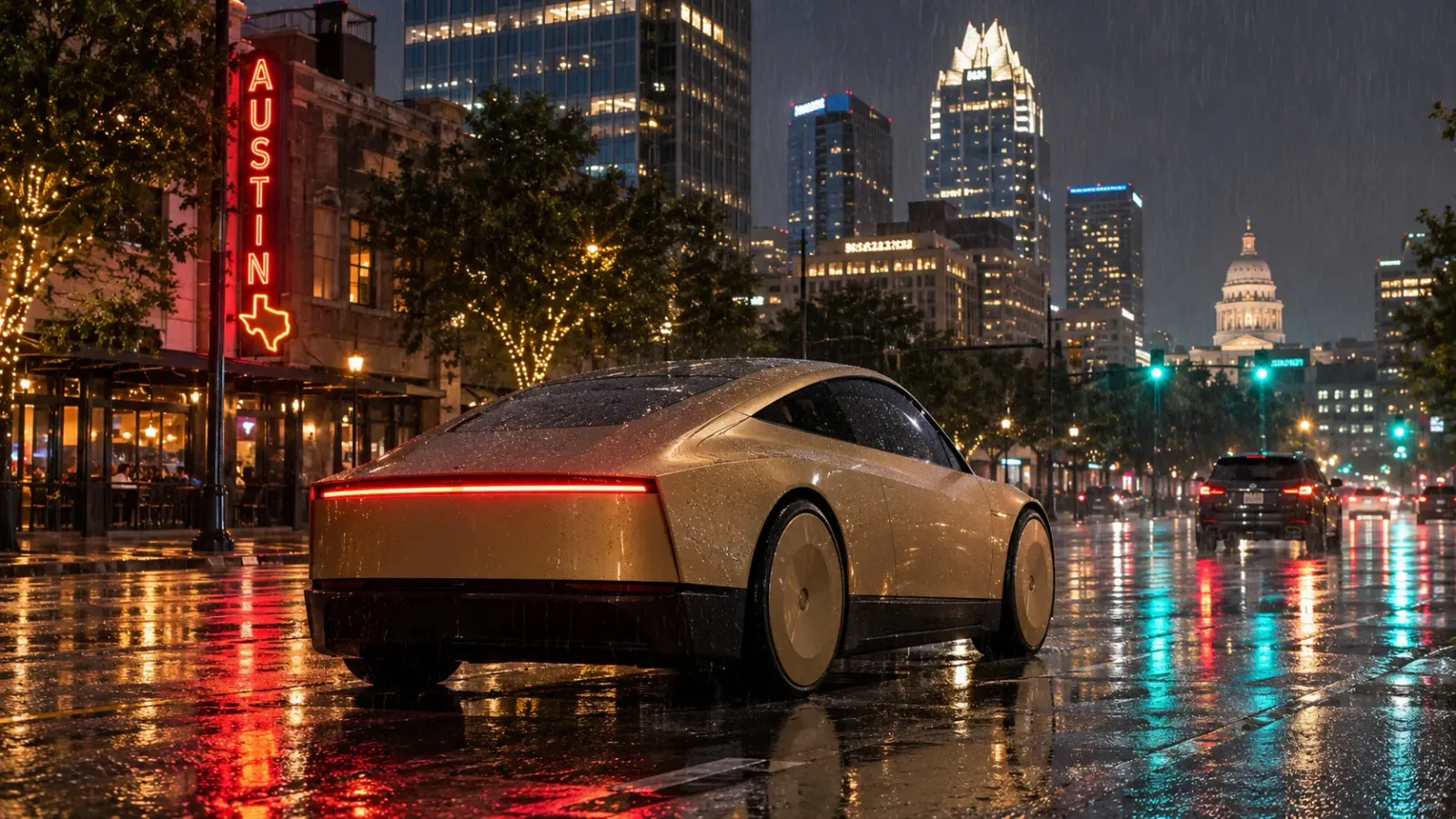
Tesla may one day use lasers instead of wiper blades to keep its robotaxi cameras clear. Lars Moravy, Tesla’s Vice President of Vehicle Engineering, floated the idea in a new episode of Jay Leno’s Garage released Monday, where he and design chief Franz von Holzhausen walked Leno through the Model Y L.
“If you fire them in a focused area, you can clean the sheet of water and create a barrier,” Moravy said. “When you think about autonomy, it might be a good solution to only clean the area where the camera is.” He added that clearing an entire windshield would take too many lasers to be practical.
🚨 Jay Leno has released a new episode breaking down the Model Y L. You can watch it here: https://t.co/umMp85UEaB
— TESLARATI (@Teslarati) November 9, 2026
The comment brings back one of Tesla’s stranger patents. The company filed for “Pulsed Laser Cleaning of Debris Accumulated on Glass Articles in Vehicles and Photovoltaic Assemblies” in May 2019, and the U.S. Patent Office granted it in September 2021. An updated divisional version was granted on March 31, 2026. The system detects debris on the glass, identifies what it is, and pulses the laser at a calibrated rate so the beam never penetrates deeper than the glass itself. The filing names windshields, side windows, camera lenses and solar panels as possible targets.
Lasers were once rumored for the Cybertruck, which appeared at its November 2019 unveiling with no wipers at all. Tesla eventually settled on a single oversized blade, and Elon Musk admitted the wiper was the part of the truck that troubled him the most. That production line is now scheduled to shut down around mid 2027 to make room for more Cybercab output.
What has changed since then is who is in the vehicle. A privately owned car has a driver who can notice a smeared windshield and do something about it. A Cybercab heading to its next pickup has nobody on board to check. Tesla has been chipping away at that problem with conventional hardware. Model Y Robotaxis in Austin were spotted with washers on their side repeater cameras in January, and a lens cleaning patent granted in May describes a fluid and wiper assembly for vehicle cameras and Optimus’ eyes. A laser would remove the fluid and the blades, both of which need regular replacement across a fleet.
The same episode gave Leno his first ride on Full Self-Driving (Supervised). The Model Y L pulled over on its own when an ambulance approached with its sirens on. “We got it on self-driving mode! I’m not touching anything,” Leno said. Moravy and von Holzhausen also explained that owners remain responsible while using FSD (Supervised), while Tesla takes responsibility for Robotaxi rides because it acts as the operator. Tesla launched the Model Y L in the U.S. in July at $61,990.
Moravy gave no timeline, and he described the laser setup as something Tesla is considering rather than a confirmed feature. The fleet it would serve keeps getting bigger, though. Tesla launched unsupervised Robotaxi service in San Antonio on Monday, its eighth city, and expanded its Austin service area to roughly 443 square miles on the same day. Several of those markets, including Houston, Miami and Tampa, see heavy seasonal rain.