
We took a city electrician from China on the road trip. The result? You’ll be surprised at how well the GAC Aion UT performs.

Let’s be clear — the myth that it’s impossible to drive an electric car on long trips across Poland due to a lack of charging infrastructure can be dismissed as nonsense. Especially when you have a car whose maximum charging power isn’t its strongest feature.
For the GAC Aion UT, we have typical parameters for an urban electric car, namely:
- Maximum DC charging power: 87 kW (max)
- AC charging power: 11 kW
With a 60 kWh net capacity LFP battery and a 400V architecture, this is a fairly average performance by market standards. But do we really need more in a typical urban car? Well, we set out on a trip from Warsaw to Krakow to find out.
Section 1: 193 km
SOC at start: 90% (range: 400 km)
Driving time: 2:33 h
SOC at charging station: 20% (range: 113 km)
Average energy consumption: 19.9 kWh/100 km
Weather conditions: temperature around 10°C, rain
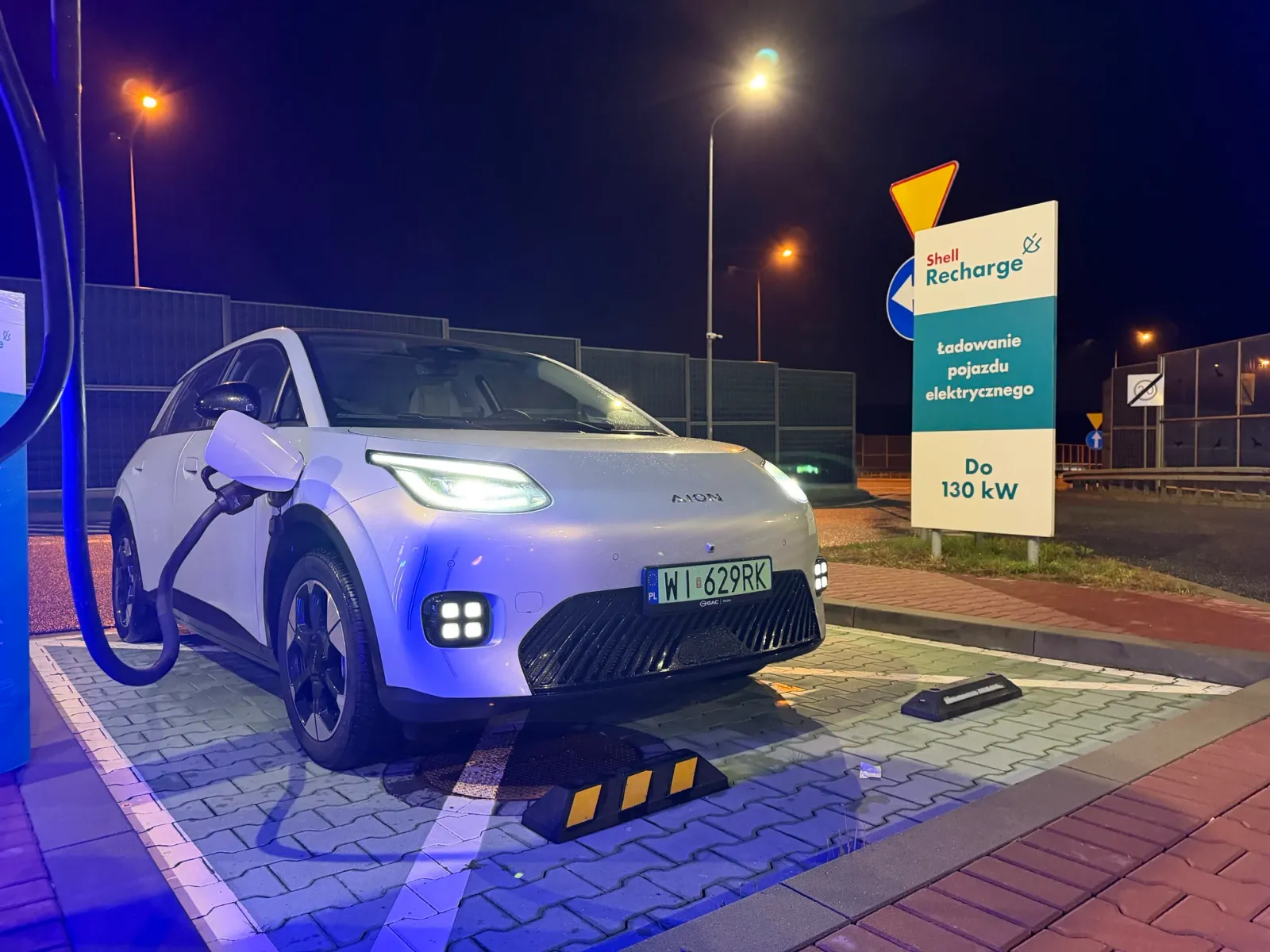
The first leg of the journey was marked by heavy rain and attempts to navigate through congested Warsaw during peak traffic hours, adding about 40 minutes to the total travel time. Stuck in traffic on one of the capital’s widest arteries, I realized that nearly 1/4 of the entire 300-kilometer route was spent trying to leave the city. Apart from the rain, the S7 route itself was relatively comfortable. The GAC Aion Ut fulfilled its role—delivering me to my destination safely. Despite its relatively compact size, the car handles well, even in challenging conditions.
An important note about the test: the speed limit on most of the route is 120 km/h (not everyone remembers this, of course—salutations to business car drivers). In reality, however, I was traveling at around 105-110 km/h due to heavy rainfall. As a result, the energy consumption of around 20 kWh per 100 km while driving on the S7 at the allowed speed could be slightly higher. I checked this after recharging.
Section 2: 113 km
SOC at start: (range 213 km)
Travel time: 1:03 h
SOC at finish: 15% (range)
Average energy consumption: 21.01 kWh/100 km
Weather conditions: temperature around 7°C
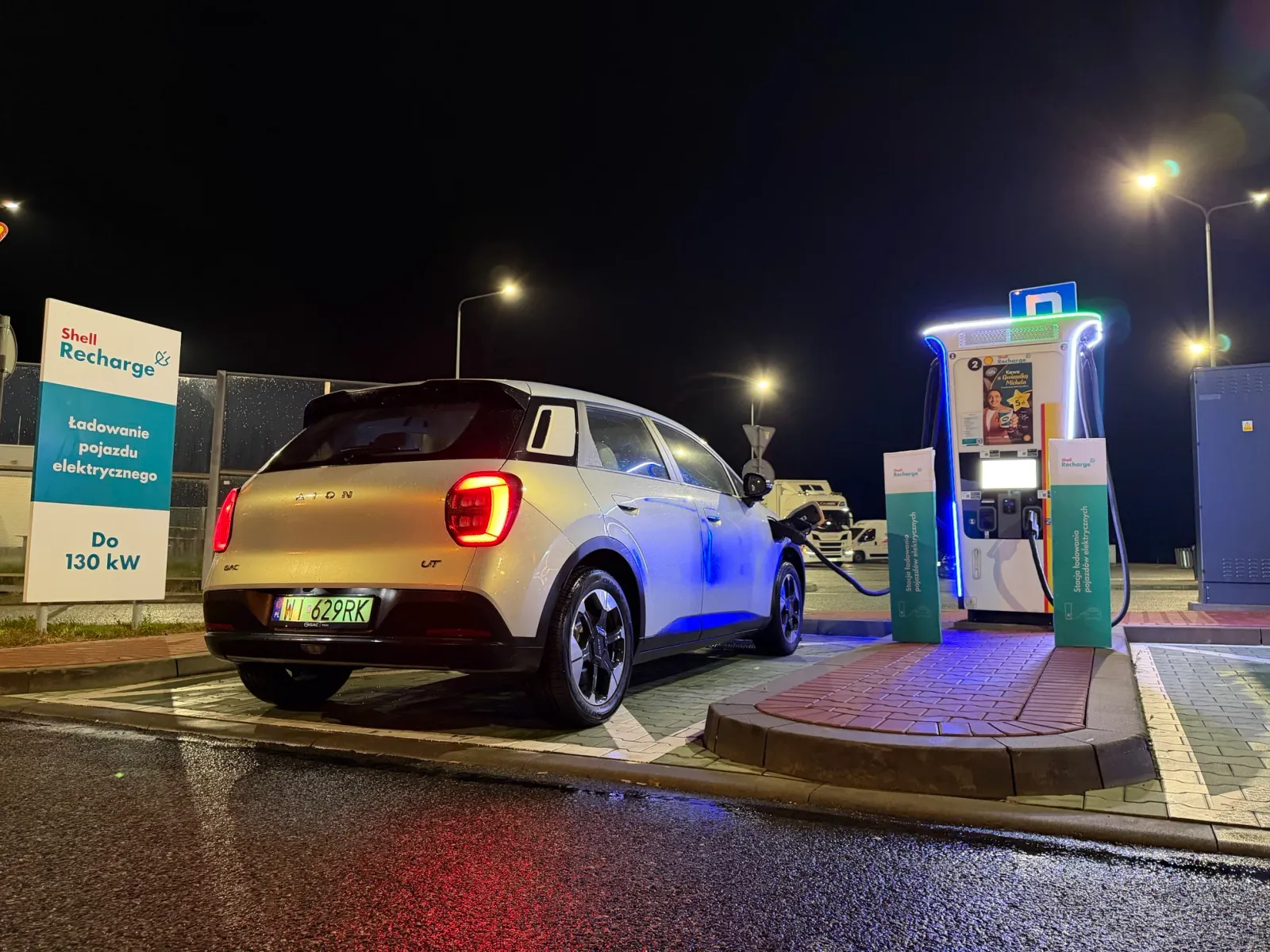
The second leg after charging was shorter but also kinder to the car’s wipers — they could finally rest for a while (so could I). Additionally, traffic on the road beyond Kielce was minimal at times, making the driving less bumpy. As a result, driving at the maximum allowed speed (naively, I’ll just remind you: 120 km/h) increased energy consumption to just over 21 kWh. The entire trip took 3:40 hours, with 20 minutes spent charging.
Advantages:
- The car handles smoothly
- Ergonomics and driving position
- The trunk and its size allow a 4-person family to go on a weekend trip
Disadvantages:
- The cruise control can slow down significantly
- Navigation: in urban areas, it sometimes led the car into a dead end or against traffic
I intentionally did not consider the relatively low maximum charging power to be a disadvantage, as this car doesn’t need it for daily urban driving. Indeed, the charging process started to take a bit longer after fifteen minutes, and since I wasn’t planning a short trip when I set off, this wasn’t a major issue. So, how did the GAC Aion UT perform on longer routes overall?
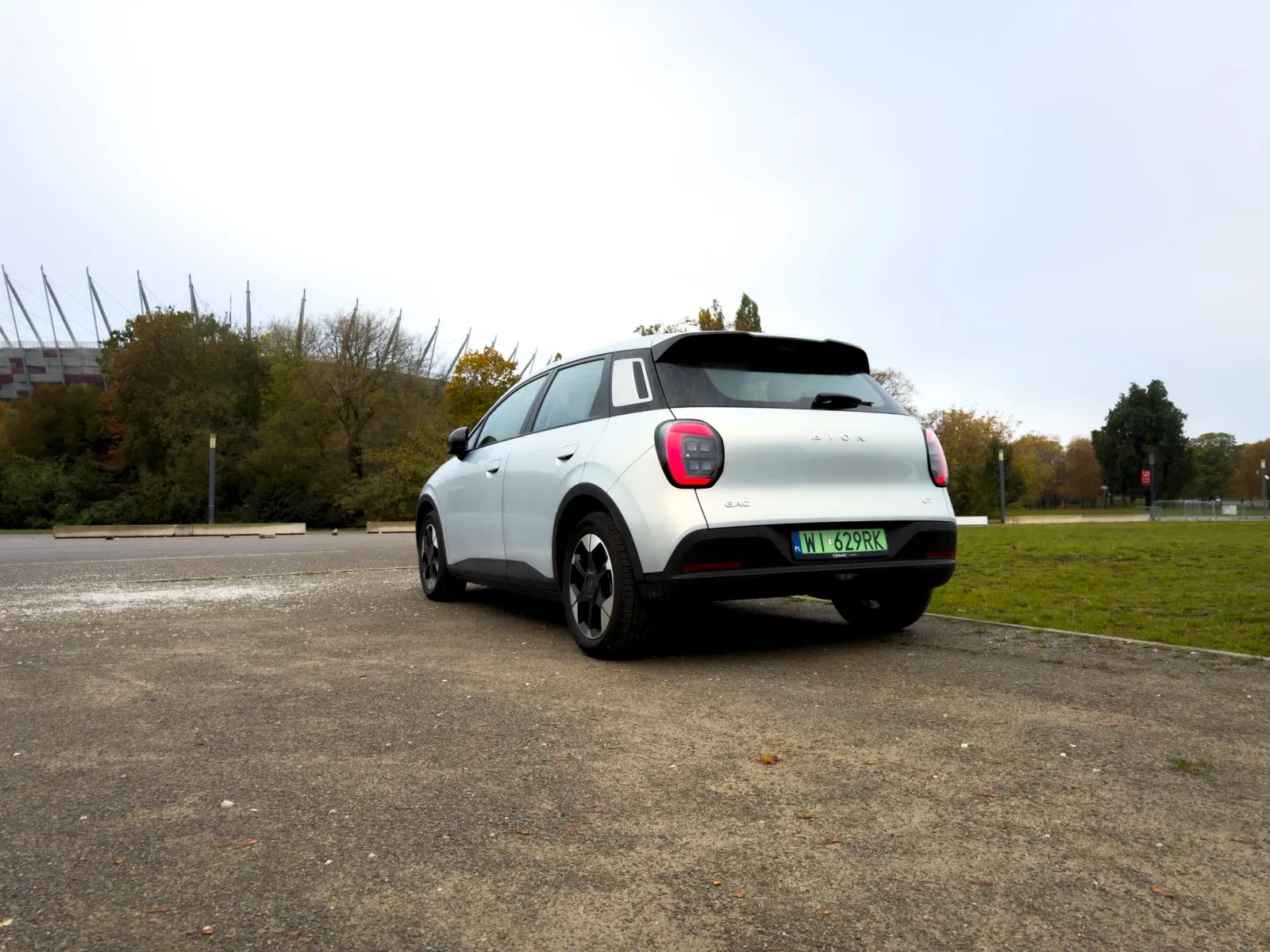
Sometimes we expect extraordinary things from cars and look for advantages in details that are ultimately unnecessary and unimportant. That’s why I was even more pleased that the vehicle under test didn’t irritate me with anything special, nor did it impress me.
The GAC Aion UT simply turned out to be functional: just as it should be. You get in and drive off. It’s worth remembering that highways aren’t its natural environment. Still, it performed well there!
Jan Wiewiór