
A Chinese electric truck impresses with 1,050 kW of charging power, promising to restore 20% to 80% of the battery in just 8 minutes.
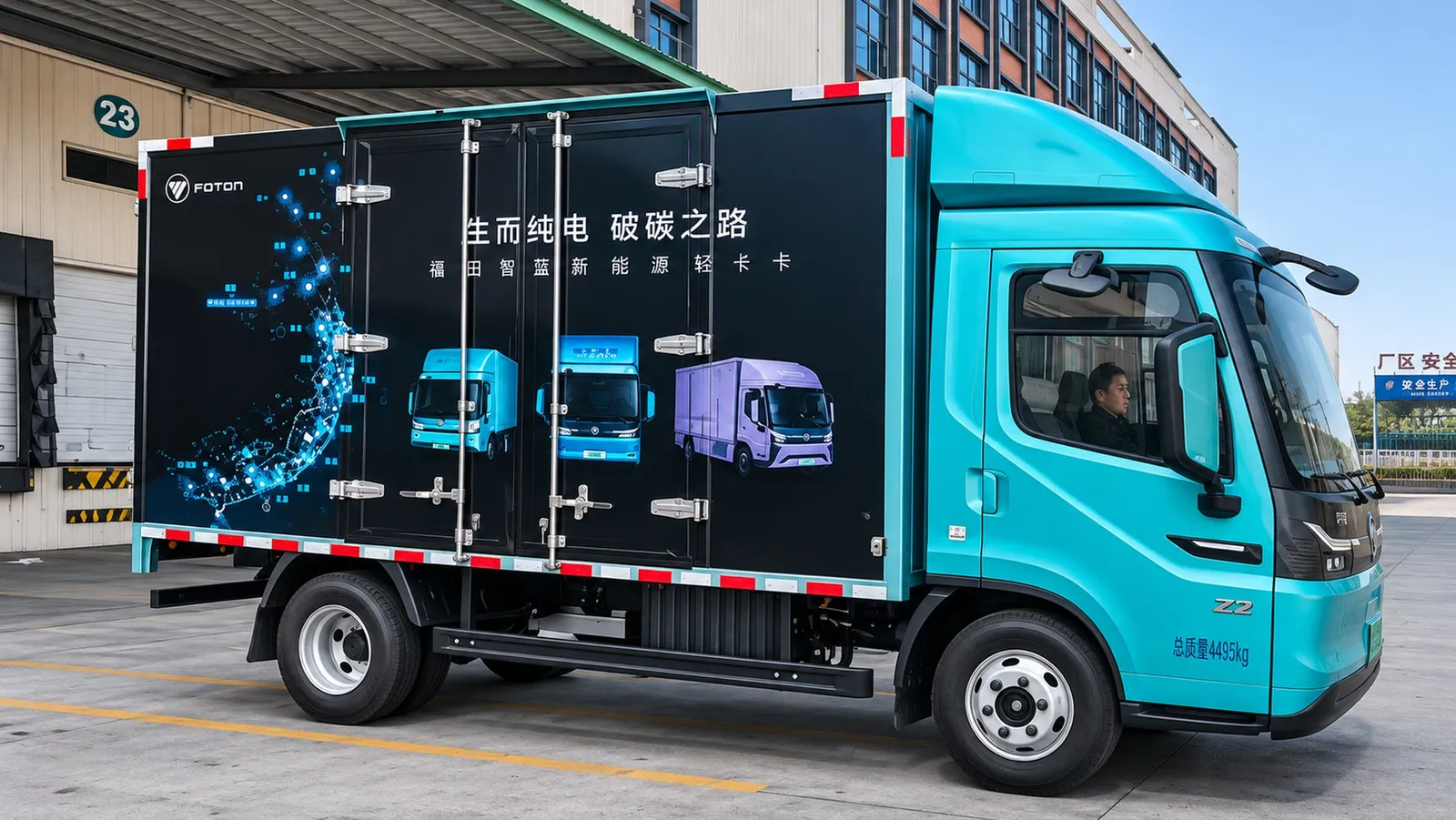
The electrification of heavy transportation faces one of its biggest challenges: reducing the time needed to recharge batteries without compromising vehicle performance. While automakers continue to improve their fast-charging systems, a Chinese company has recently introduced a particularly impressive technology for freight transport. It is BAIC Foton, which has announced an electric truck capable of achieving a maximum charging power of 1,050 kW and restoring 20% to 80% of its battery capacity in just eight minutes.
The protagonist is the Foton Aumark Z, a light truck developed on a platform designed specifically for electric vehicles. Its international debut took place on November 6th in Beijing, during an event where the manufacturer also unveiled a new ultra-fast charging strategy for commercial vehicles. The goal is to address one of the main challenges of electrifying fleets: the long stops required to recharge during workdays.
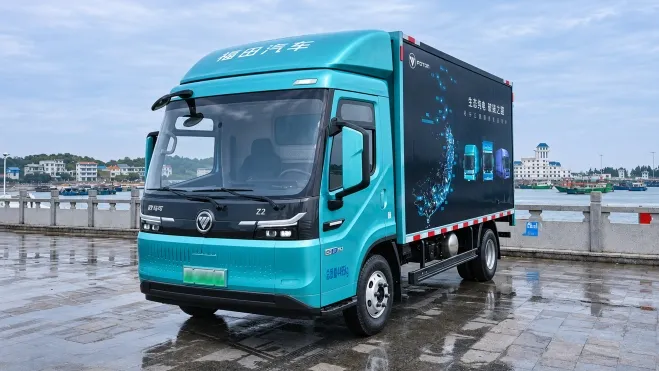
According to the company’s official statement, the Aumark Z can regain up to 32 kilometers of range for every minute it is connected to a compatible charger. This capability would allow for urban distribution operations with much shorter interruptions, taking advantage of times such as loading and unloading goods or shift changes. However, these figures represent performance claims made by the manufacturer, and no independent test results have yet been presented to confirm these times under actual usage conditions.
A battery capable of withstanding 1,050 kW of charging power
To achieve these performance levels, BAIC Foton has developed an 800-volt electrical architecture, along with a battery capable of supporting a maximum charging rate of 8C. This figure indicates how quickly energy can be supplied to the battery relative to its nominal capacity. The system delivers a maximum rated power of 1.05 megawatts, equivalent to 1,050 kW, and allows a current of up to 1,600 amperes at the charging connector.
The battery incorporates various solutions designed to reduce internal resistance and facilitate ion movement during charging. These include a highly conductive electrolyte, optimized graphite materials, and new internal structures to improve energy transfer. According to the manufacturer, these technologies enable a 30% reduction in internal resistance and achieve a charge and discharge efficiency of 97%. Again, these are results reported by the company.
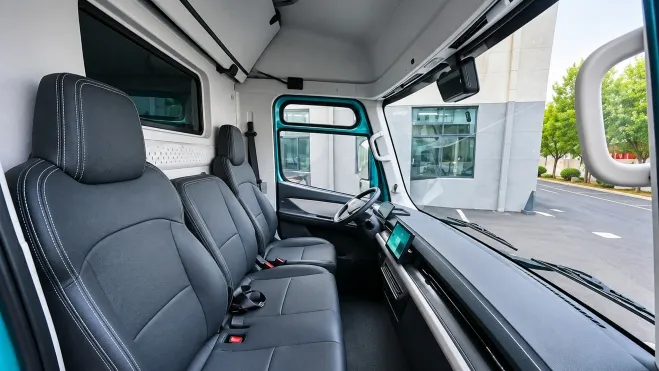
Another major challenge with a battery pack of such high capacity is controlling the temperature of its components. To address this, the Aumark Z uses a liquid cooling system that, according to Foton, improves thermal exchange capacity by 40% and boosts current delivery capacity by 150%. It also features a 10 kW thermal management system that regulates the temperature of the battery, electric drive, cabin, and cooling systems.
The company has also paid attention to performance in adverse weather conditions. Thanks to a pulse heating system, it ensures that at -20 ºC, the charging time increases by only two and a half minutes compared to the stated reference value. This is a particularly important feature for commercial vehicles that need to remain operational throughout the year, even in regions with extremely cold winters.
The manufacturer also offers an eight-year or 800,000-kilometer warranty for the vehicle, along with an intelligent battery management system to monitor its condition. The Aumark Z features V2G two-way charging technology, which allows the battery to supply electricity back to the grid when technical conditions permit. This enables the truck to participate in energy management systems that utilize renewable energy generation and electrical storage.
Foton aims to bring its ultra-fast charging technology to Europe
The launch of the Aumark Z is part of a much broader industrial strategy. BAIC Foton has announced a partnership with major players in the energy sector, including CATL, Sunwoda, TELD, and Hunan Jingneng, to develop a high-power charging infrastructure network. The goal of this collaboration is to establish 5,000 standardized charging stations, though the company has not yet set a definitive timeline for completing this rollout.
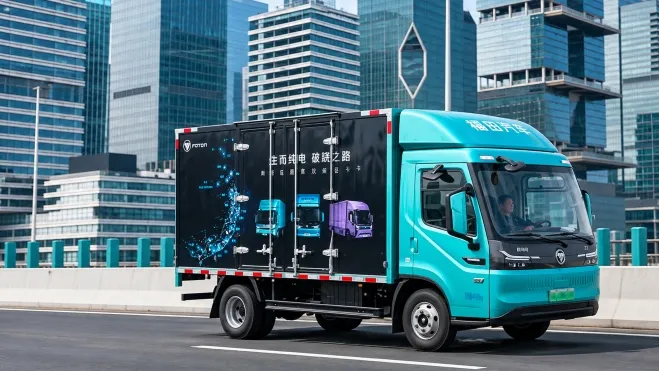
Its ambitions also extend to international markets. Foton plans to install more than 3,000 charging units outside China by the end of 2027, with projects targeting Asia-Pacific, Latin America, Africa, and Europe. The company has not specified how many chargers will go to each region nor announced any specific locations in Spain. The new stations will be able to incorporate photovoltaic installations and stationary batteries to better manage electricity demand and reduce reliance on the grid.
The Chinese manufacturer also presented megawatt-level charging solutions for heavier-duty trucks. Notable among them are the Auman Galaxus and Cavan Beacon, designed for applications such as refrigerated transport, emergency logistics, and port operations. For these platforms, the company claims it is possible to recover approximately 100 kilometers of range in six minutes, though it has not provided specific figures for maximum power and battery capacity for this process.
The combination of compatible vehicles, high-capacity batteries, and new charging stations represents BAIC Foton’s main strategy to accelerate the electrification of commercial transportation. However, the success of this technology will depend on its ability to maintain the advertised performance under real-world conditions, the costs of installing chargers, and the availability of infrastructure. For now, the Aumark Z offers a technological solution that promises to drastically reduce charging times, but it still needs to prove its performance outside of the manufacturer’s presentations.