
VW ID. and Škoda Enyaq: Battery preheating for older models
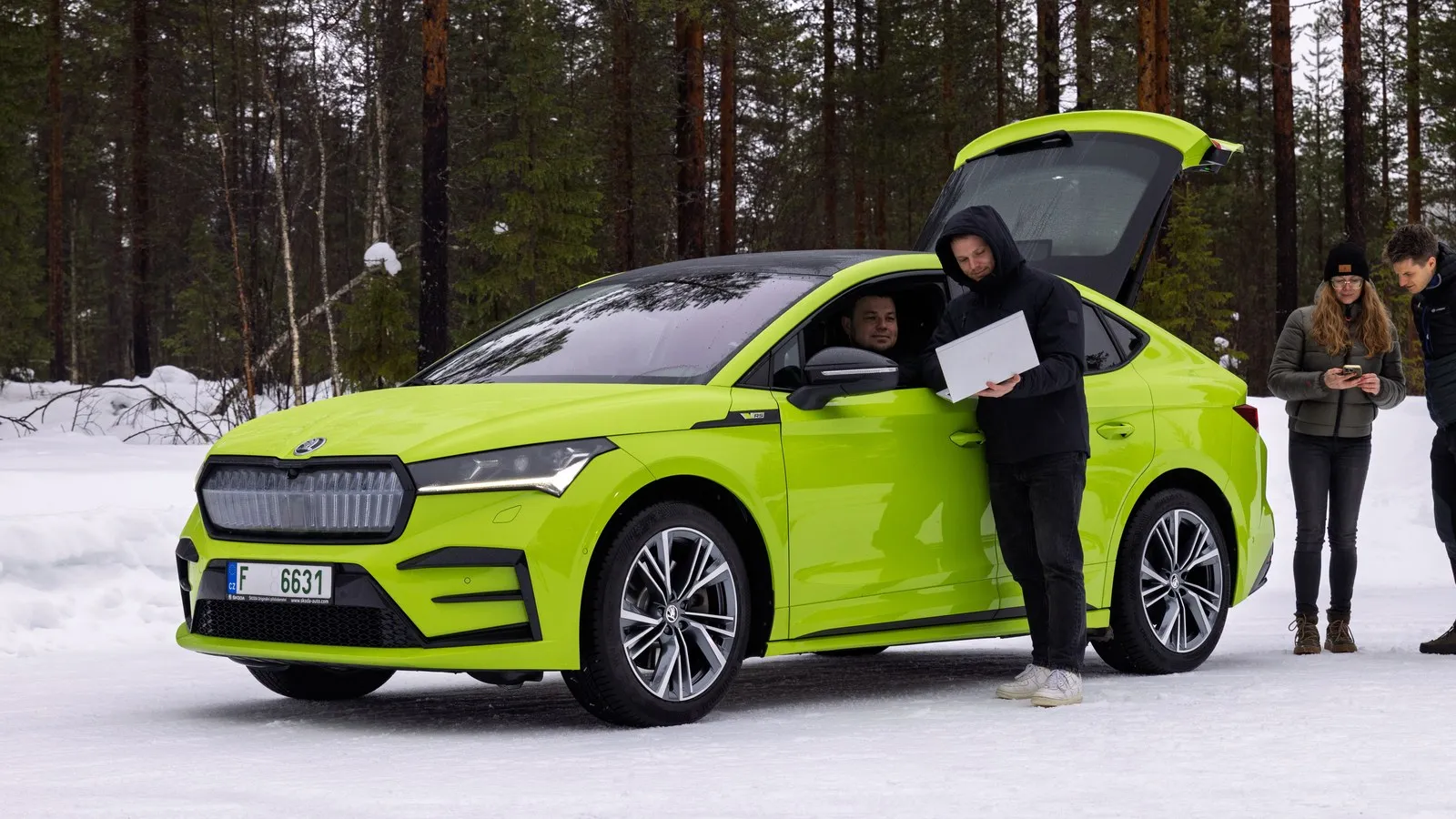
Volkswagen and Škoda are implementing battery preconditioning for fast charging via software updates in older models from the ID series and the Enyaq. Around 200,000 Škoda vehicles are affected, with the first receiving the first of two updates starting in calendar week 47, and the second in week 49.
Advertisement
A cold high-voltage battery does not draw full power from a fast charger. The Škoda Enyaq includes a pre-conditioning feature for this purpose, but it is currently available only for vehicles manufactured after the 2023/2024 year change with software version 4 or higher. Older Enyaq models and older Volkswagen ID models lacked this function. Both brands are providing it via software updates, but in older vehicles, the pre-conditioning must be started manually.
Volkswagen: ID. Software 3.9.1
At Volkswagen, this feature is available in ID. Software 3.9.1 for older ID. models with 3.x generation software. After the update, the battery heater can be manually activated as needed through the vehicle’s charging menu. According to VW, pre-conditioning before a DC charging session allows for higher charging speeds. The digital user manual is automatically updated after the update. VW does not provide a timeline on the update page.
VW has also revised the battery temperature management system. As per the manufacturer, it adjusts the battery temperature to match driving conditions and specifically cools the battery after fast charging sessions. This is intended to improve consumption and range while preventing premature battery aging. Other aspects of the update according to VW include:
If the charging power drops unexpectedly during AC charging under certain conditions, it will now be automatically restored.
Photovoltaic surplus charging on the Wallbox SMARTFOX Pro Charger resumes after a charging pause.
The software checks the battery for increased self-discharge. If the check shows significant issues, a yellow warning light indicates a fault in the electric drive system. In such cases, a workshop should inspect the battery. According to VW, the vehicle remains fully drivable without restrictions, but without inspection, the battery’s lifespan may be shortened. VW states that only a few batteries are affected.
The electric door handles are designed to work more reliably in wet conditions, depending on the vehicle and equipment. After the update, the service partner will get in touch for further adjustments.
The welcome screen disappears after five seconds, a faulty warning regarding child safety, and an incorrect display of the air conditioner’s refrigerant level have been fixed, along with security updates.
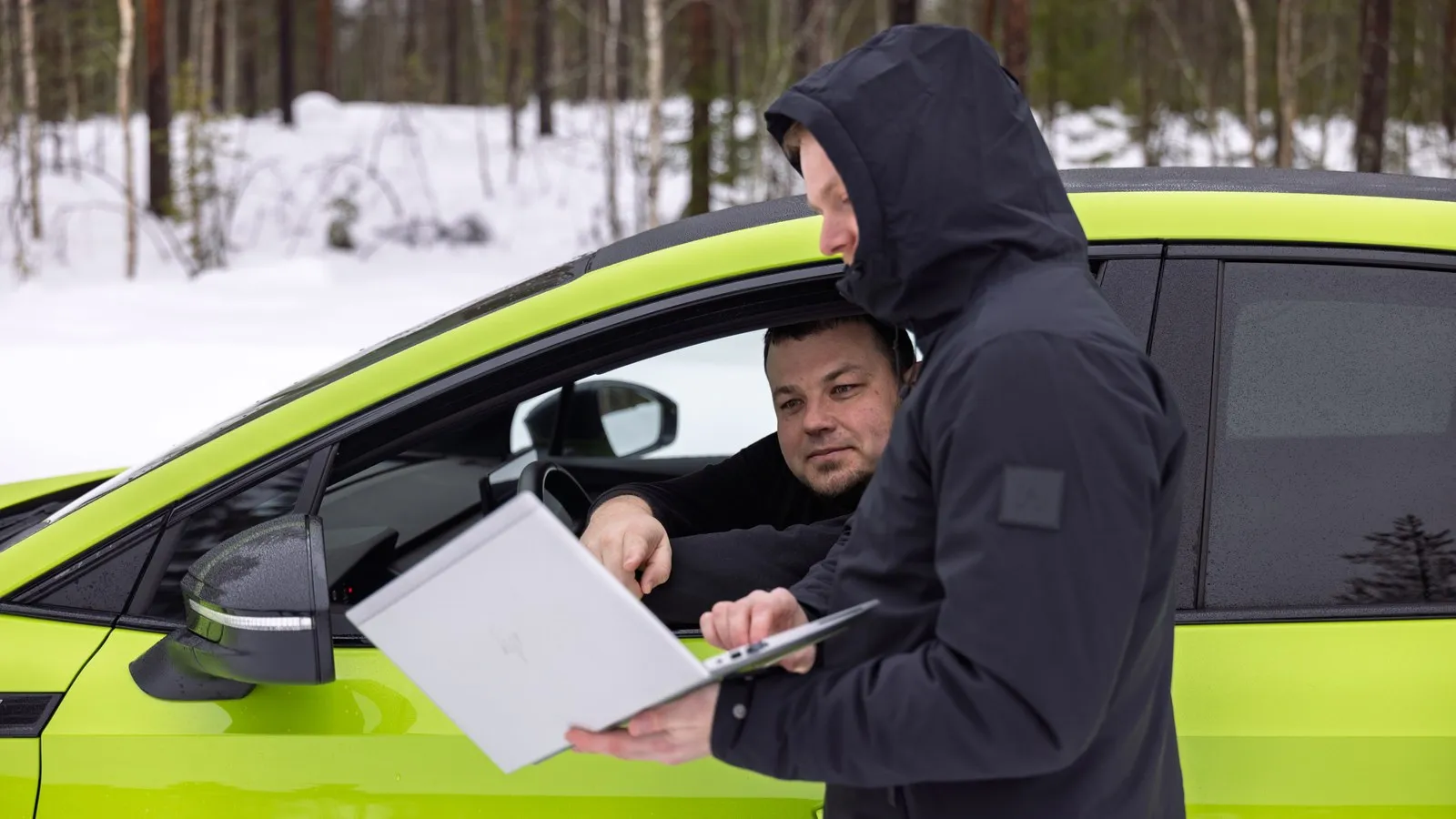
For installation, Volkswagen notes that the installed software version cannot be reset. The update is a prerequisite for future over-the-air updates. Personal settings such as saved radio stations can be reset. Additionally, according to VW, the update may prevent unauthorized changes by third-party services through the on-board diagnostic interface. During installation, the doors may temporarily not open, the theft warning system is inactive at this time, and warning lights may appear occasionally. For modifications such as those in taxis that interfere with the control signals, VW advises against an over-the-air update and refers to the service partner.
Ad
Škoda Enyaq: Version 3.9 in two steps
Škoda is introducing this feature with software version 3.9 in Enyaq models produced from the start of production until around the end of 2023. According to Jiří Vlček, Škoda’s project leader for online updates, the update affects approximately 200,000 vehicles. It will be rolled out in waves.
If version 3.8 is already installed, the car will offer the update automatically. Older software versions must first be upgraded to 3.8: This can be done online for version 3.x models, while those with version 2.x need to go to an authorized workshop. Starting from version 3.8, two updates follow—the first prepares the car, and the second activates the feature. The first vehicles are expected to receive the first update by calendar week 47, and the second by calendar week 49. Additional vehicles will follow gradually. The installed version can be checked via the MyŠkoda app under “Check” and “Vehicle Details.”
How Pre-conditioning Works in the Enyaq
After the update, the Enyaq displays the “Optimize Fast Charging” view under the “Optimize” tab in the “Charging” section, along with a button labeled “Start Battery Pre-conditioning.” According to Škoda, this button is only active when the battery temperature is below 20 degrees Celsius. The view also shows the current maximum charging capacity, while the battery temperature can be checked in the “Battery Temperature for Fast Charging” app.
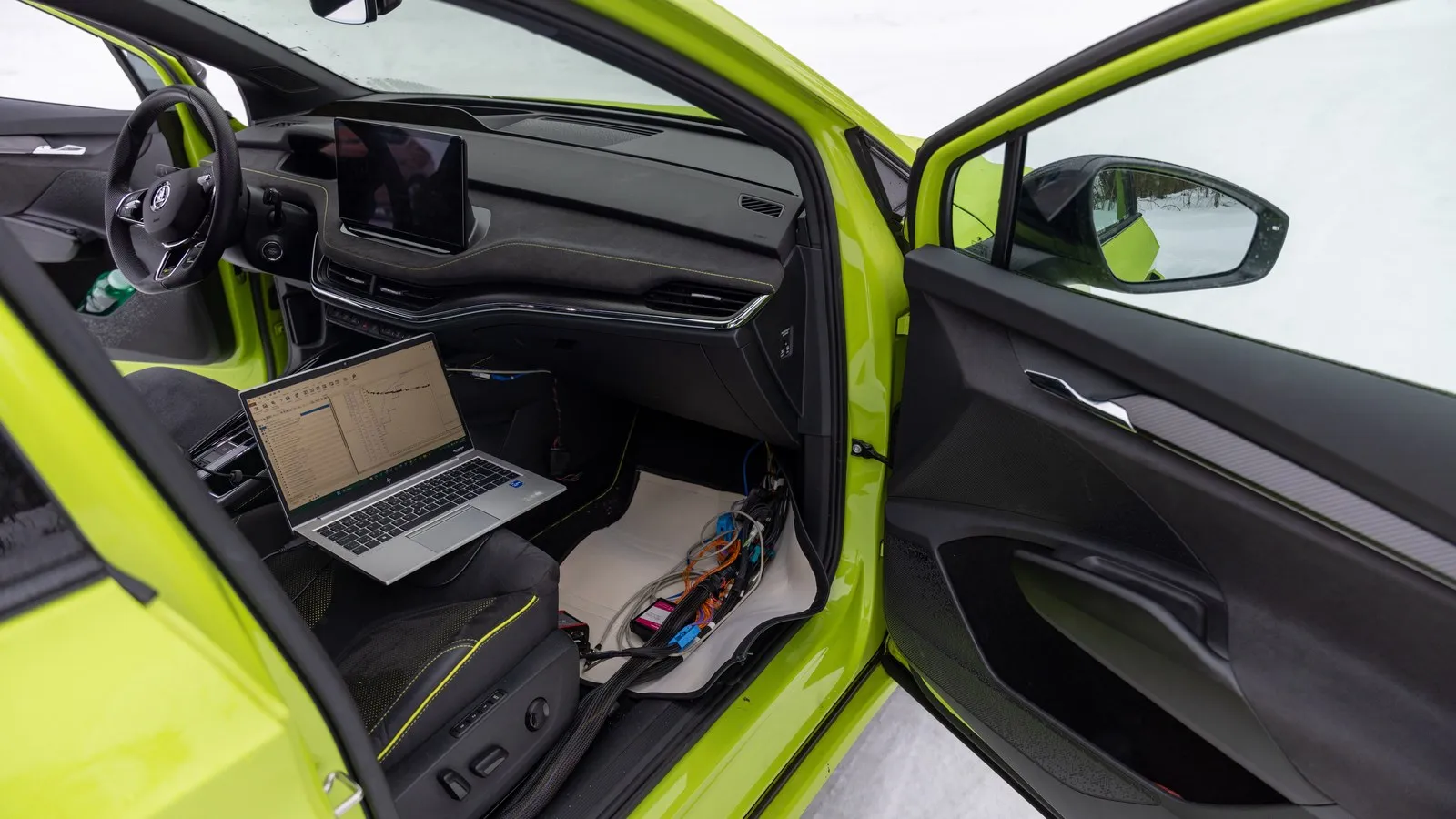
Škoda specifies around 25 degrees Celsius as the optimal battery temperature, and this value is difficult to achieve under low outdoor temperatures through normal driving. Depending on the outdoor temperature, it takes about 30 to 40 minutes after starting the vehicle for the battery to reach this temperature. Škoda recommends beginning pre-conditioning about 45 minutes before the planned charging stop, ideally while driving. The vehicle must be turned on for this to work. Pre-warming is not necessary when charging via AC.
Recent Enyaq models with software version 4 or higher can also start pre-conditioning automatically when a charging station is entered as a destination in the navigation system. This automation feature is not included in updates for older vehicles. According to Škoda, technically the function interacts with three control units: the vehicle control unit, the battery control unit, and the infotainment system. Additionally, version 3.9 introduces a welcome screen that does not require confirmation, security updates, and a fix for the online connectivity unit.
Do you drive an older ID. or Enyaq? Have you received the update yet, and how does pre-conditioning affect charging times for you in winter?
Display