
Volkswagen has started disassembling older cars on the production line. The parts are already being sent to repair shops.
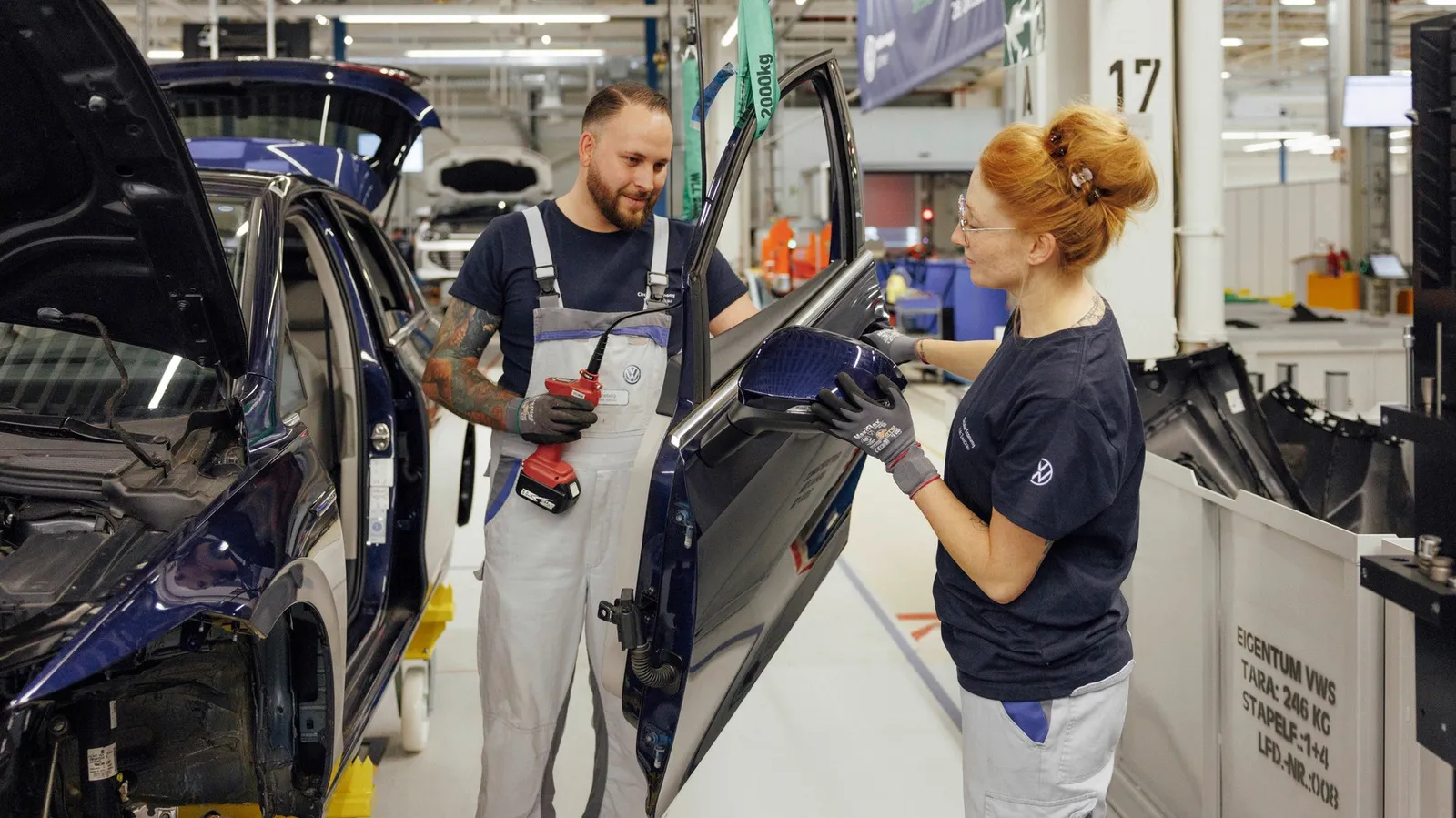
The used original parts from Cvikov are already being sent to service centers. Volkswagen aims to reduce repair costs by selling them and gradually disassemble thousands of cars per year.
Used parts can lower the cost of repairing older cars
“Starting today in Cvikov, we not only assemble cars but also disassemble them again,” said Volkswagen brand chief Thomas Schäfer at the opening of the new disassembly line on October 28. Pre-production vehicles are being disassembled at eight stations, with end-of-life cars following later. The usable components are put back on the market as used original parts.
These parts have been in distribution from Cvikov since July. They are purchased by authorized dealers and service partners, independent workshops, and spare parts dealers. Volkswagen reports strong demand for doors and bumpers, as well as for engines and transmission components.
For an older car, the repair cost with new parts can exceed its value. Using a used original part can reduce costs enough to make the repair worthwhile. Volkswagen cites limiting such economic total losses as one of the benefits of the project. It has not disclosed specific part prices.
From hundreds of cars to thousands per year
In 2026, Volkswagen in Cvikov announced the processing of 500 pre-production test vehicles. Starting in 2027, it plans to disassemble 4,100 cars per year, in two shifts with a workforce of a hundred employees. By 2030, it aims to gradually increase capacity to 15,000 cars per year.
Preparing the production line, including obtaining permits, took nine months, three less than originally expected. Automotive manufacturing technology was also utilized during installation. The renovation also included modifications to storage areas for the obtained raw materials and residual waste.
Volkswagen plans to invest up to 90 million euros, or approximately 2.2 billion crowns, in the broader circular economy project in Cvikov over the next few years. Saxony has pledged support of up to 10.7 million euros, which is about 260 million crowns.
The automaker will also need these materials due to new European regulations. Starting in September 2032, plastics in newly approved car models must contain at least 15% recycled content from consumer waste. This percentage will rise to 25% by September 2036.
Sources:
Original text / Elektrickevozy.cz
Volkswagen
Don’t miss
Scraper and gloves in one. Action offers it for 27.90 CZK
Škoda Octavia to lose TDI engine. Diesel production will end in mid-2027
Carbon, 100 Nm, and automatic transmission. Honda unveiled a new electric bike