
Volkswagen is betting its future in China on an electric SUV priced at 13,000 euros: the ID. Era 5X
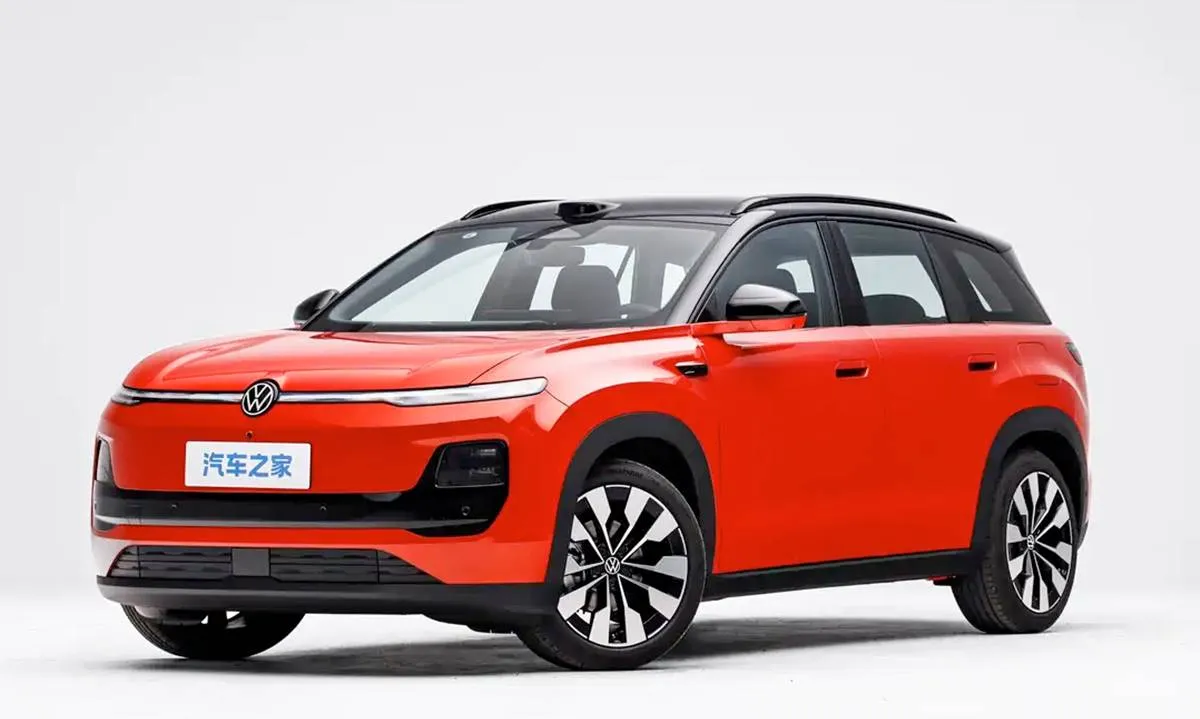
Volkswagen is facing one of the most challenging periods in its recent history in China. The German manufacturer, which dominated the world’s largest automobile market for decades, has seen local producers gradually take market share away from it due to its slow response to electric vehicles. Now, the Wolfsburg-based brand is preparing a new offensive with a model that could prove decisive in regaining some of its former position. What’s most striking is that its price is hard to imagine in Europe.
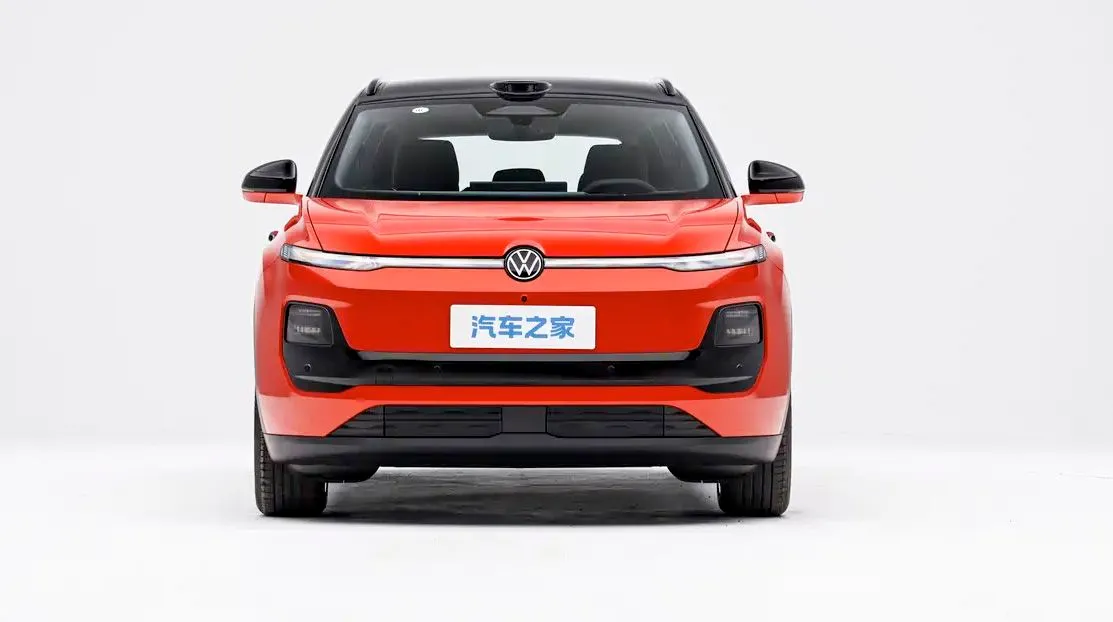
This is the Volkswagen ID. Era 5X, an electric SUV developed specifically for China in partnership with its partner SAIC. It represents much more than just another model in the ID series. It is the result of a completely new strategy, in which Volkswagen had to rely on Chinese technology and suppliers to try and compete with brands like BYD or Geely, which have completely changed the rules of the market.
The issue is that Volkswagen no longer has much room for continued mistakes. Its previous electric vehicles have failed to replicate the success their internal combustion engine models achieved in China, and competition is advancing at an extraordinary pace. The ID. Era 5X could be one of Volkswagen’s last major opportunities to regain relevance in China’s electric vehicle market. If this new generation also fails to convince buyers, the German automaker might be relegated to a secondary role in a market that was once one of its main drivers of growth.
A Volkswagen electric vehicle with Chinese technology and an unthinkably low price in Europe
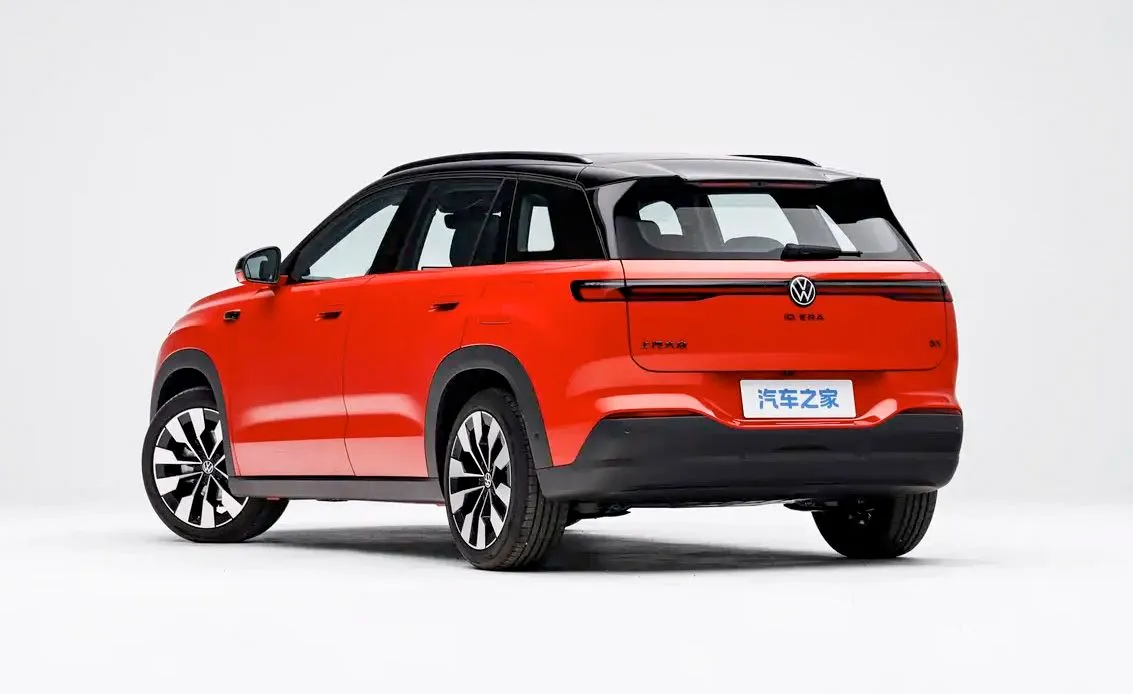
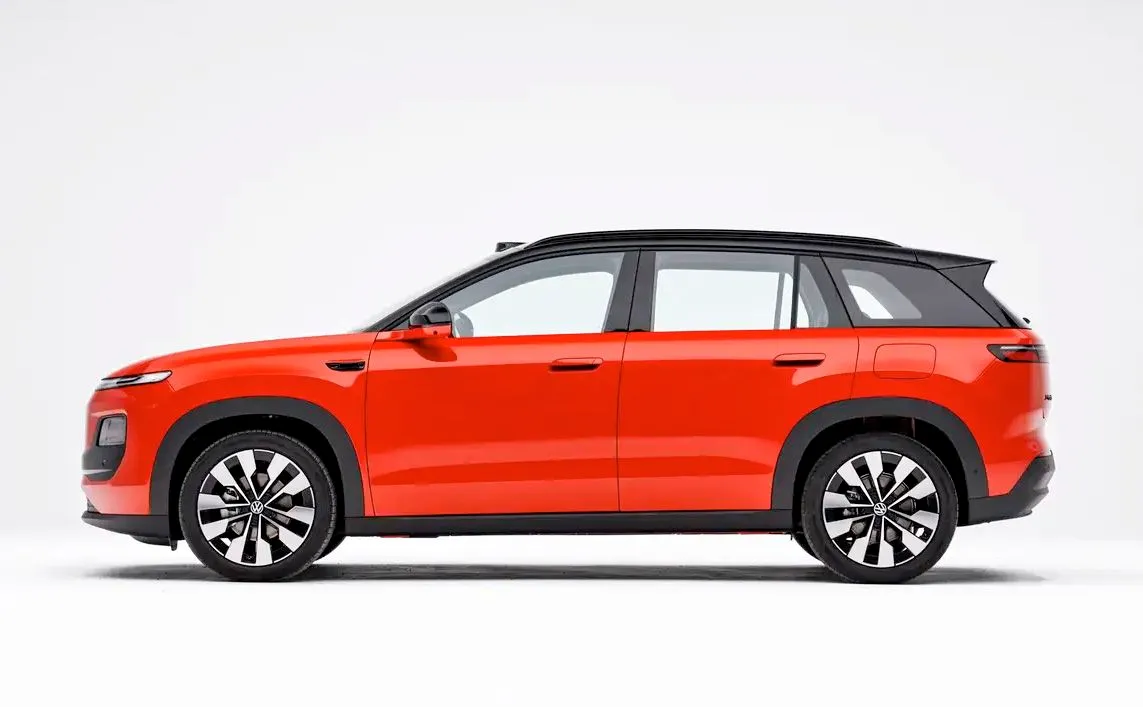
The ID. Era 5X is a compact SUV that features a design quite different from the Volkswagen models we know in Europe. It has split front headlights, a rear lighting signature that spans the entire width of the car, partially hidden handles, and darkened pillars. Its aesthetic is closer to that of new Chinese manufacturers than to the traditional image of the European ID series.
Its dimensions are 4.56 meters in length, 1.90 meters in width, and 1.63 meters in height, with a wheelbase of 2.82 meters. This places it in a very popular segment where models such as the BYD Atto 3 or the Volkswagen ID.4 compete. Although it is slightly shorter than the new ID. Tiguan, it offers a longer wheelbase, which should result in ample space for rear passengers.
The trunk reaches a maximum capacity of 1,815 liters with the rear seats folded down. This is an impressive figure for a car of these dimensions, although Volkswagen has not yet specified the capacity when all five seats are in use in the available information.
Inside, we see another example of this shift in design philosophy. The dashboard is dominated by a 15.6-inch central screen, along with a 10.25-inch digital instrument cluster. The multimedia system uses a 4-nanometer MTK8676 processor, a solution designed to provide a digital experience that better meets the current demands of Chinese consumers.
The higher trims come equipped with heated, ventilated, and electrically adjustable front seats, as well as a heated steering wheel. But one of the most interesting features is located in the ceiling, where a 192-line LiDAR sensor can be installed as part of the driving assistance system developed by Carizon, a joint venture between Volkswagen’s Cariad subsidiary and Horizon Robotics.
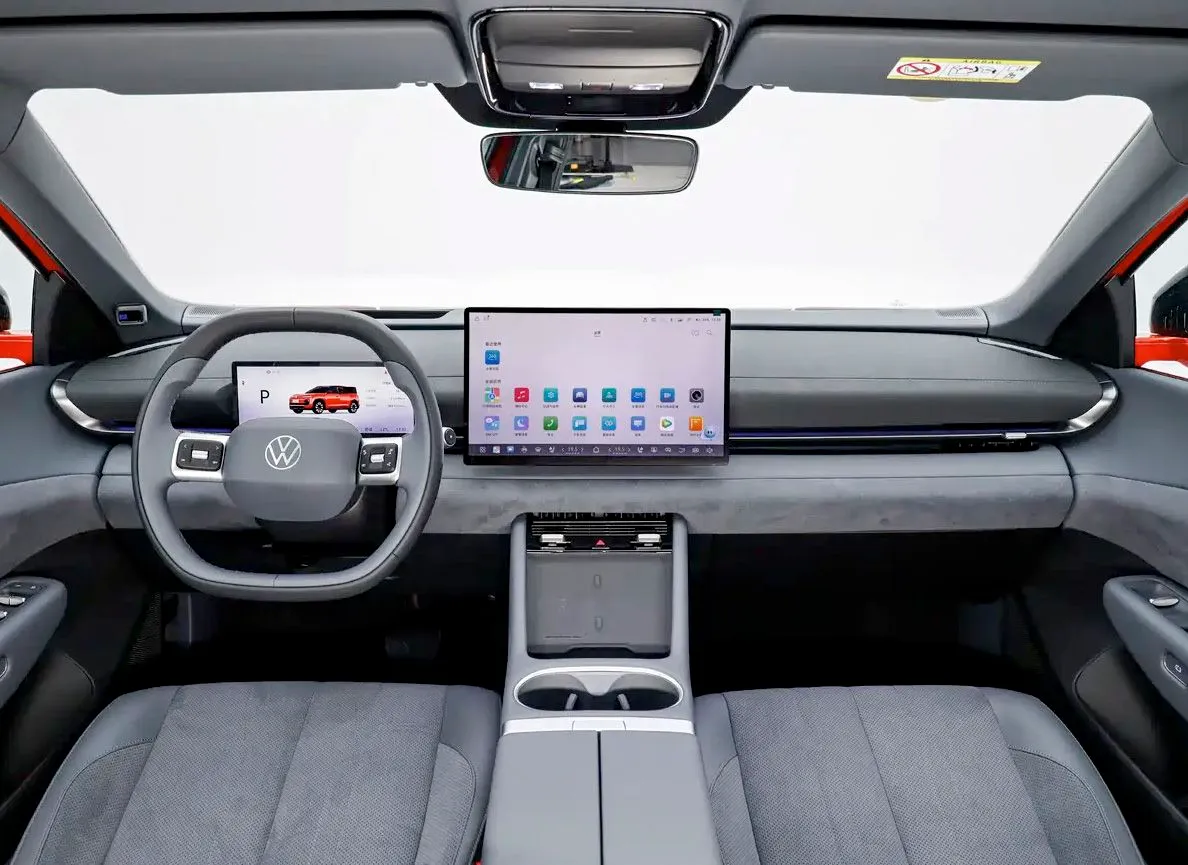
This system uses a Horizon Journey 6H processor with a computing power of 420 TOPS, enabling advanced driver assistance features both on highways and in urban environments. It demonstrates how Volkswagen is leveraging the expertise of its Chinese partners to accelerate the development of its new models.
What’s under the hood is equally important. The ID. Era 5X introduces the CMP platform, developed under the “in China, for China” strategy, and utilizes the CEA electronic architecture created in collaboration with XPeng. This combination allows the car to be tailored to local market needs while reducing development and manufacturing costs—two key factors for competing in a market where prices are under constant pressure.
In terms of mechanics, the Volkswagen is equipped with a front-mounted electric motor producing 155 kW (211 hp) and 270 Nm of torque. It features front-wheel drive, focusing on keeping costs low rather than delivering particularly sporty performance.
The setup includes two LFP batteries with capacities of 45.8 and 58.5 kWh, allowing for certified ranges of 415 to 520 kilometers under the Chinese CLTC cycle. Based on our estimates, this corresponds to around 361 and 452 kilometers respectively under the WLTP standard. These figures are sufficient to meet the typical needs of many drivers, though they are lower than the higher-range versions Volkswagen sells in Europe.
And we come to the aspect that will likely draw the most attention from European buyers: the price.
The new ID. Era 5X is available in China starting at around 13,000 euros. The most equipped version costs approximately 18,200 euros, while the official prices before discounts range roughly between 15,600 and 20,800 euros.
To put this in perspective, the Volkswagen ID. Tiguan announced for Europe starts at around 43,645 euros, based on the price with incentives as listed in available information. In other words, the Chinese SUV costs about one-third of what Volkswagen charges for its European alternative.
They are not exactly the same car, nor do they use the same batteries or mechanical configurations. They also have different tax, labor, and business costs. But the difference is so significant that it’s inevitable to wonder how a European manufacturer can develop and sell an electric SUV of this size and technological level in China at such a low price, while its equivalent models in Europe remain at much higher prices.
There’s another detail worth highlighting. While the European ID. Tiguan represents an evolution of the established ID.4, the ID. Era 5X uses a new platform and an electronic architecture developed specifically for the demands of the Chinese market. In other words, Volkswagen is offering a more modern technological solution in China that is also significantly cheaper.
The question is how long it will take Volkswagen to bring part of this strategy to Europe. Since the brand has managed to develop a low-cost electric platform with competitive features and a modern electronic architecture, it makes sense to assume that some of these solutions could help reduce the prices of its future European models.
But first, it must pass a much more important test: convincing Chinese buyers.
For years, Volkswagen enjoyed a privileged position in China thanks to its gasoline-powered sedans and SUVs. However, the shift toward electric vehicles has allowed local manufacturers, with shorter development cycles and greater technological integration, to surpass traditional automakers. Volkswagen has gone from setting the pace of the market to having to adapt to the conditions imposed by its competitors.
The ID.5X, along with the other models in this new family, represents an attempt to reverse that situation. Volkswagen no longer aims to compete in China solely with cars developed in Germany and later adapted for the local market. Instead, it is creating Chinese-made products from the outset, using local technology and setting prices at levels that would have been unthinkable just a few years ago.
If this strategy works, Volkswagen can still regain ground in China. If it fails, the consequences could be far more severe than poor sales of a single model. The manufacturer might permanently lose much of its influence in the electric vehicle segment of the world’s largest market, at a time when this sector is setting technological trends that later spread to other countries.
Meanwhile, in Europe we continue to wait for Volkswagen to be able to offer electric cars with a price, size, and technology ratio similar to that it just introduced in China.