
An electric machine weighing over 17 tons proves it can pave roads without using diesel, laying 1.2 million kilograms of asphalt in one day.
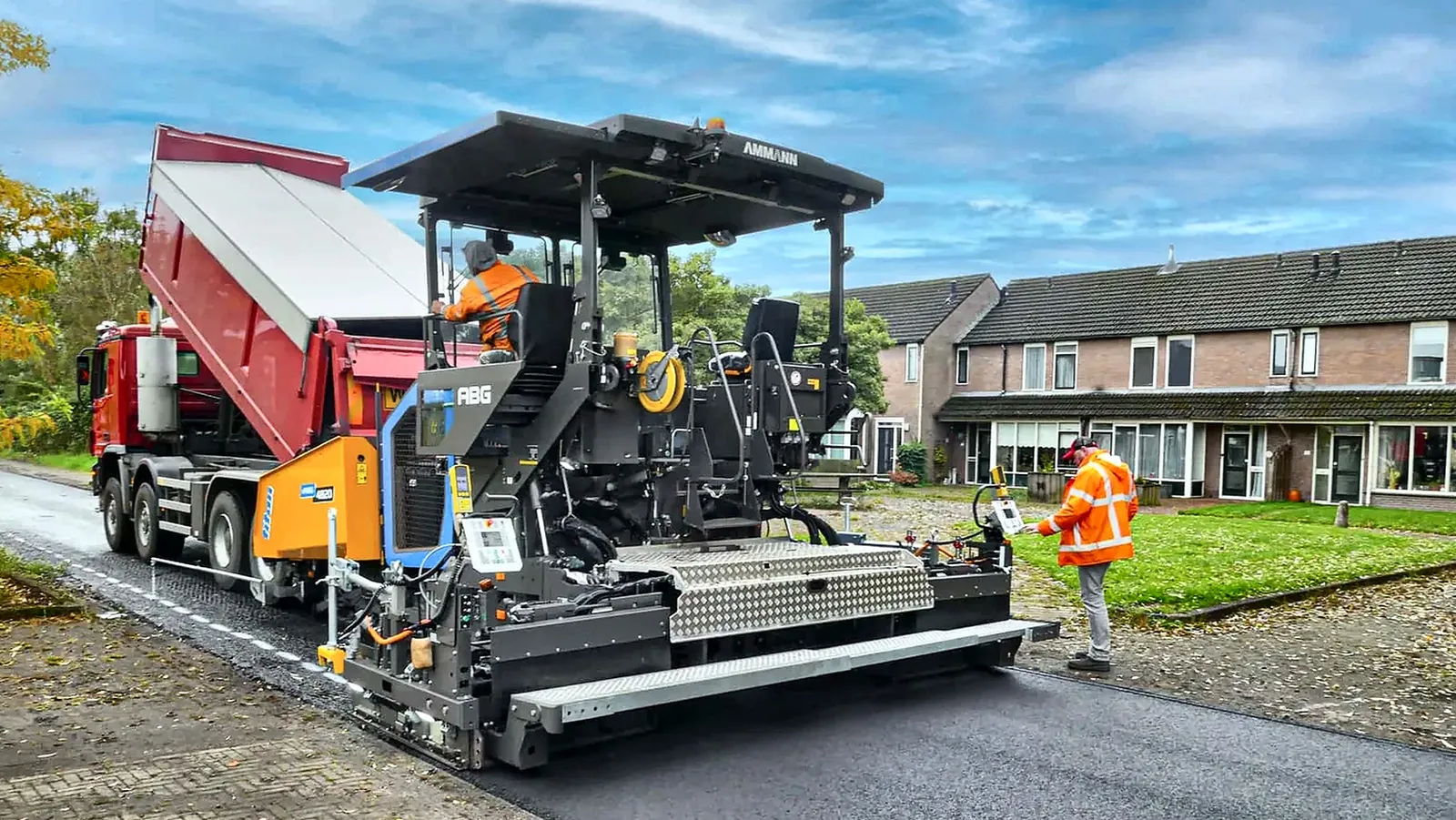
Electrification is reaching one of the sectors that has historically relied most on diesel engines: road construction. Replacing these engines in large machinery poses a significant challenge due to the enormous amounts of energy they require to operate for hours. However, a new technological demonstration has shown that batteries can also power heavy machinery without sacrificing high levels of productivity.
The protagonist is the Ammann eABG 4820, a fully electric asphalt paver developed by the Swiss construction machinery manufacturer in collaboration with Volvo Penta. Its tractor unit weighs approximately 13.8 tons, a figure that exceeds 17 tons when the paver unit is included. Despite its size, this machine has managed to apply 1,200 tons of asphalt in a single day, equivalent to 1.2 million kilograms, without using a diesel engine to operate.
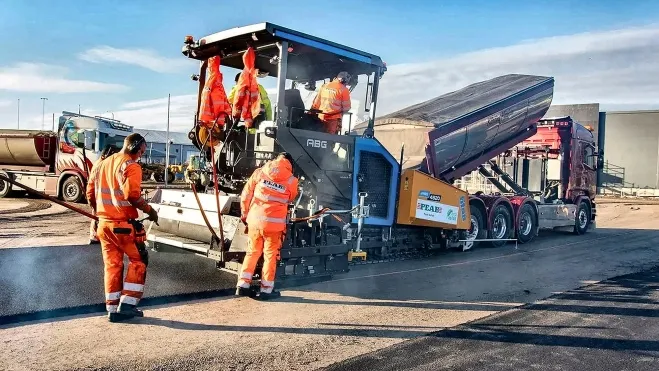
According to Ammann, this result represents a record level of productivity for an electric paver. The company notes, however, that intermediate recharges were necessary to achieve such a workload volume. Under normal operating conditions, the machine has proven capable of paving between 350 and 450 tons of asphalt without needing to recharge its batteries. This capacity allows it to handle multiple paving days without constantly relying on an electrical power source.
A 270 kWh battery for a machine weighing over 17 tons
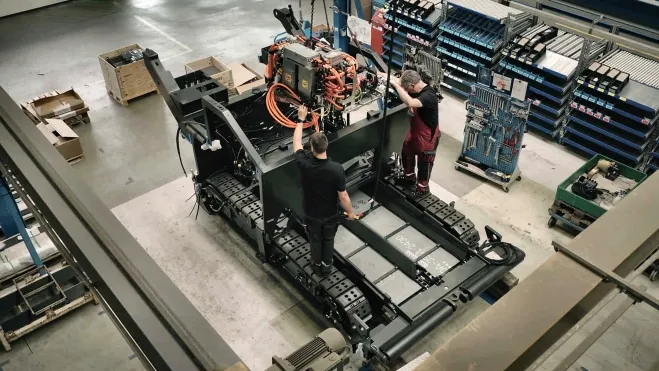
The core component of this machinery is its electric propulsion system, developed by Volvo Penta. It features three battery modules with a combined capacity of 270 kWh, far exceeding that of most electric cars. This energy powers a permanent magnet synchronous motor that delivers a nominal power of 99 kW, equivalent to around 135 horsepower, through a 600-volt electrical architecture.
Its performance is also impressive. According to the technical specifications published by Ammann, the eABG 4820 can achieve a theoretical spreading capacity of 500 tons of asphalt per hour under ideal conditions. Additionally, it features a Variomatic blade that allows operation at widths ranging from 2.5 to 6.5 meters, making it suitable for both urban streets and larger roads. The maximum thickness of the asphalt layer it can apply is 300 millimeters.
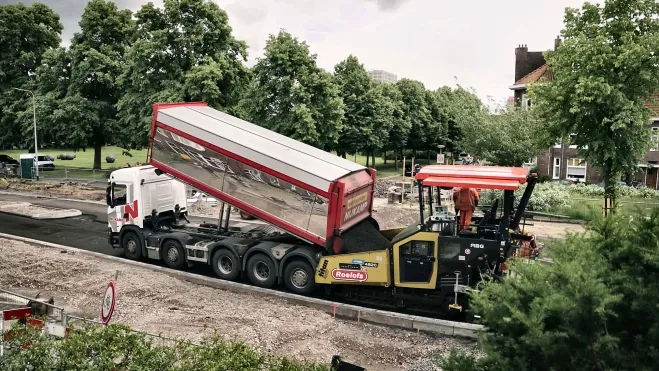
To recharge the batteries, the manufacturer has adopted the CCS2 standard, which is also used by many electric vehicles. The charger supports direct current at powers up to 150 kW, with an advertised charging time of approximately one and a half hours. It can also be connected to an alternating current outlet of up to 22 kW, though in that case the process takes around twelve hours. This flexibility allows charging operations to be adjusted to the needs of each construction site.
Another important aspect is the screed heating system, the component responsible for distributing and leveling asphalt. Ammann offers a technology called e+ Screed Heat that allows this component to be preheated using an external power source, without drawing energy from the traction battery. This way, the machine can start the day with the screed ready for work and preserve its power for spreading operations.
Up to 70% less emissions and significant noise reduction
The elimination of diesel engines also has environmental consequences. According to calculations published by Ammann, this electric spreader can reduce CO₂ emissions associated with supplying and using the energy required for its operation by approximately 70% compared to a conventional alternative. This is an estimate that takes electricity generation into account, so the final result depends on the source of energy used to charge the batteries.
This reduction is complemented by the absence of direct exhaust emissions and a significantly quieter operation. These are two particularly advantageous features for work carried out in cities, residential areas, or spaces near schools, hospitals, and commercial establishments. Volvo Penta also highlights its usefulness in the construction and repair of bike lanes, where the machines typically operate very close to pedestrians, cyclists, and homes.
Reducing noise can also improve the working conditions for operators. Asphalt paving involves various vehicles and workers who need to communicate constantly to coordinate their movements. An electric paver makes these tasks easier by eliminating much of the noise from the engine. However, the entire operation still depends on other equipment, such as trucks that transport the asphalt and machinery used to compact it.
A diesel alternative already available commercially
The eABG 4820 is not merely a prototype created to demonstrate the possibilities of electrification. It is based on the platform of the conventional ABG 4820 and is already available commercially, according to Ammann. Its development was announced in 2025, and Volvo Penta highlighted its capabilities again in November 2026, citing its use in asphalt paving and urban infrastructure construction as an example.
However, its large-scale implementation also presents significant challenges. The cost of acquisition, the availability of high-power chargers, and the planning of work schedules will be decisive factors for construction companies. In projects that require large daily volumes of asphalt, organizing refueling will be particularly important to avoid disruptions and maintain productivity.
What this machine demonstrates is that electrification is no longer limited to cars, buses, or trucks. It is also reaching the heavy machinery used to build the roads on which those same vehicles travel. Spreading 1.2 million kilograms of asphalt in a single day shows its working capacity, though the next challenge will be making such solutions economically competitive with diesel alternatives in more construction projects.