
A renewable energy company based in Spain expects losses of 170,000,000 € and is considering excluding all of its shareholders.
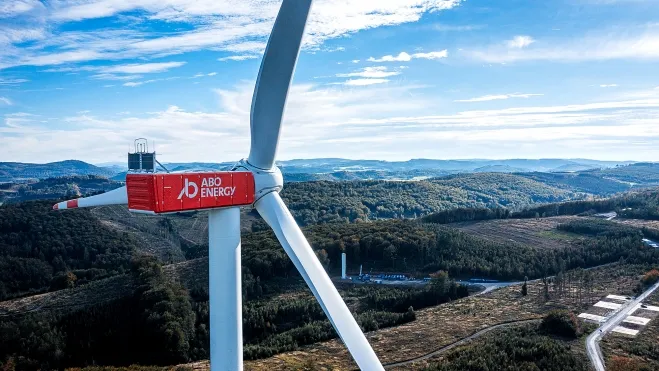
The growth of renewable energy is not preventing some of the companies developing solar and wind farms from facing significant financial difficulties. A German multinational with operations in Spain has just announced a particularly drastic restructuring plan, after forecasting losses of around 170,000,000 € for the 2025 fiscal year. The plan includes an extraordinary measure that, if ultimately approved, could exclude all of the company’s current shareholders.
The protagonist is ABO Energy, a German company founded in 1996 that specializes in the development and construction of wind farms, photovoltaic installations, and energy storage systems. The company, which recorded sales of 446,000,000 € in 2024, announced on November 11 that it intended to initiate a financial restructuring process under German law. Its goal is to reorganize its debts, secure additional liquidity, and ensure the continuity of its operations.
The severity of the situation is reflected in the measures the company itself is considering. These include reducing its share capital to zero, issuing new shares, and excluding current shareholders from the future ownership structure. This is a proposal still pending approval and is part of a broader plan to address the financial difficulties accumulated over the past few months.
A rescue that could leave all its shareholders out
The procedure chosen by ABO Energy is known as StaRUG, a German mechanism for preventive restructuring that allows companies to negotiate changes to their financial obligations before facing insolvency. The company has decided to inform the competent court in Frankfurt of its intention to use this system, while continuing to negotiate with its major creditors an agreement that will help stabilize its finances.
The most notable measure involves reducing the share capital to zero and then conducting an expansion reserved for a new restructuring shareholder. According to the official statement, current shareholders would lose their stake in the company if the plan is carried out as planned. Additionally, ABO Energy intends to transform into a German limited liability company and end the trading of its shares on the public market of the Munich Stock Exchange.
The plan also includes significant changes to the debt structure. Holders of two tranches of subordinated bonds, due in 2029 and 2030, would have to give up their current credit rights in exchange for future recovery subordinated instruments. Additionally, part of the preferred financing would be written off, while the maturity date of other obligations would be extended to December 31, 2030. All these measures are part of a proposal that must receive approval from creditors and shareholders, as well as judicial confirmation.
Expected losses of 170,000,000 € and suspended interest payments
ABO Energy’s financial difficulties did not arise suddenly. In January 2026, after reviewing its economic forecasts, the company announced that it expected to record losses of approximately 170,000,000 € for the 2025 fiscal year, marking its first annual loss. It explained at the time that the deterioration was linked to significant changes in market conditions, adjustments to project valuations, deferrals of revenues to subsequent years, and lower margins in the development of renewable energy installations.
The situation worsened on November 6th, when ABO Energy announced the suspension of a interest payment of approximately 3,125,000 €, related to a subordinated bond issuance worth 80,000,000 €. The payment was scheduled for November 9th, but the company decided not to make it to avoid disrupting financial negotiations. The announcement itself clarified that the terms of that issuance did not include a right to early termination due to missed interest payments.
The company also acknowledges that without restructuring, it would have to face financial obligations over the next 24 months that it could not meet or refinance solely with its own resources. However, ABO Energy insists it meets the requirements to benefit from the StaRUG preventive mechanism, reserved for companies that are not yet in a state of insolvency or over-indebtedness as defined by German law. Therefore, no bankruptcy or creditors’ court declaration has been announced, but rather a procedure aimed at preventing further financial deterioration.
A company with 25 years of operation in Spain
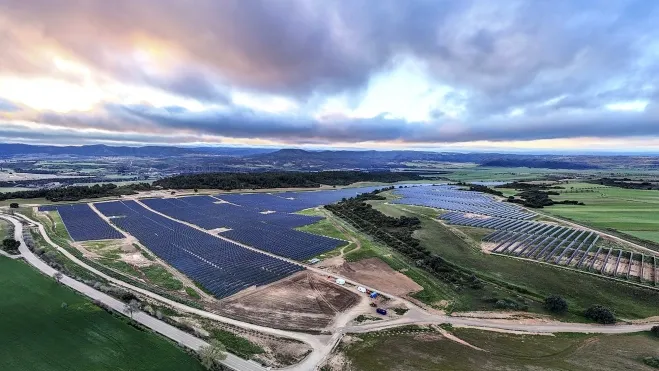
ABO Energy’s situation is also of interest to the Spanish market. The company began operating in our country in 2001 and has since been involved in the development of various renewable energy generation facilities. Its projects include the 50 MW Andella wind farm in Castilla y León, and the 50 MW Valdezorita solar plant located in Yebra (Guadalajara), which was connected to the grid in April 2025.
The Spanish subsidiary has offices in Valencia and Valladolid and develops projects in wind, solar energy, and battery storage. In February 2026, as it celebrated 25 years of operation in Spain, the company announced that it employed over 50 professionals and emphasized its intention to continue advancing renewable energy installations and solutions related to industrial electrification.
For now, ABO Energy has stated that the decision to initiate restructuring does not affect daily operations or its usual relationships with customers, suppliers, and employees. It has also not announced the closure of its Spanish facilities as a result of this process. The next step will be to present the plan to the affected creditor and shareholder groups for voting, and subsequently obtain confirmation from the court overseeing the process.
The ABO Energy case shows that the growth of renewable energy can also bring significant financial difficulties for companies developing such facilities. The company aims to reduce its debt and ensure its survival, but a rescue plan could have extraordinary consequences for its current shareholders. Its future now depends on negotiations with creditors and the final approval of a plan designed to guarantee its long-term viability.