
A foldable caravan that saves battery life: it reduces an electric car’s energy consumption by 38%
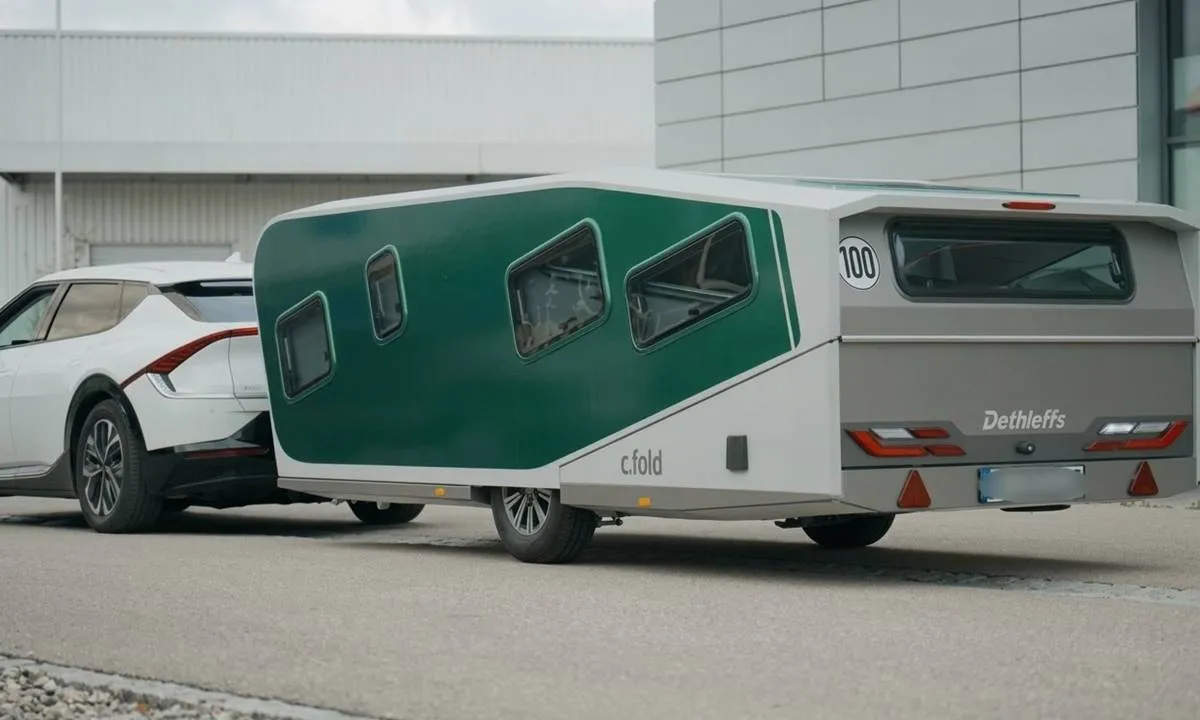
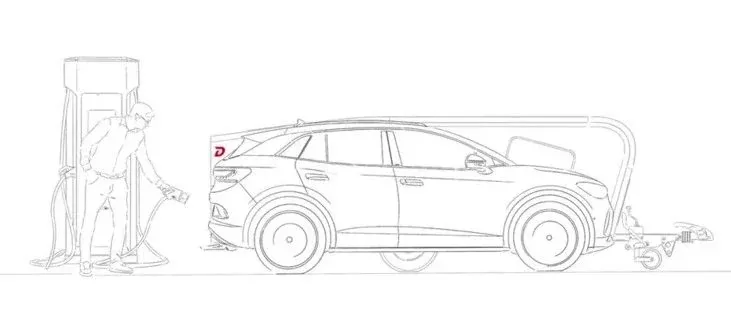
Traveling with a caravan and an electric car remains a challenging combination. It’s not so much due to the towing capacity, which is more than sufficient in many models, but rather because of the significant impact it has on energy consumption and, consequently, range. Aerodynamic resistance soars, and the range can be reduced to almost half, forcing drivers to plan many more stops for recharging. But a German manufacturer believes it has found a rather ingenious solution.
This is Dethleffs, one of the historic names in the caravan industry, which has developed a prototype designed specifically for traveling with electric cars. Its approach doesn’t involve installing an additional battery or adding engines to help the car pull a trailer. The idea is much simpler: adjusting the dimensions of the caravan depending on whether we are moving or parked.
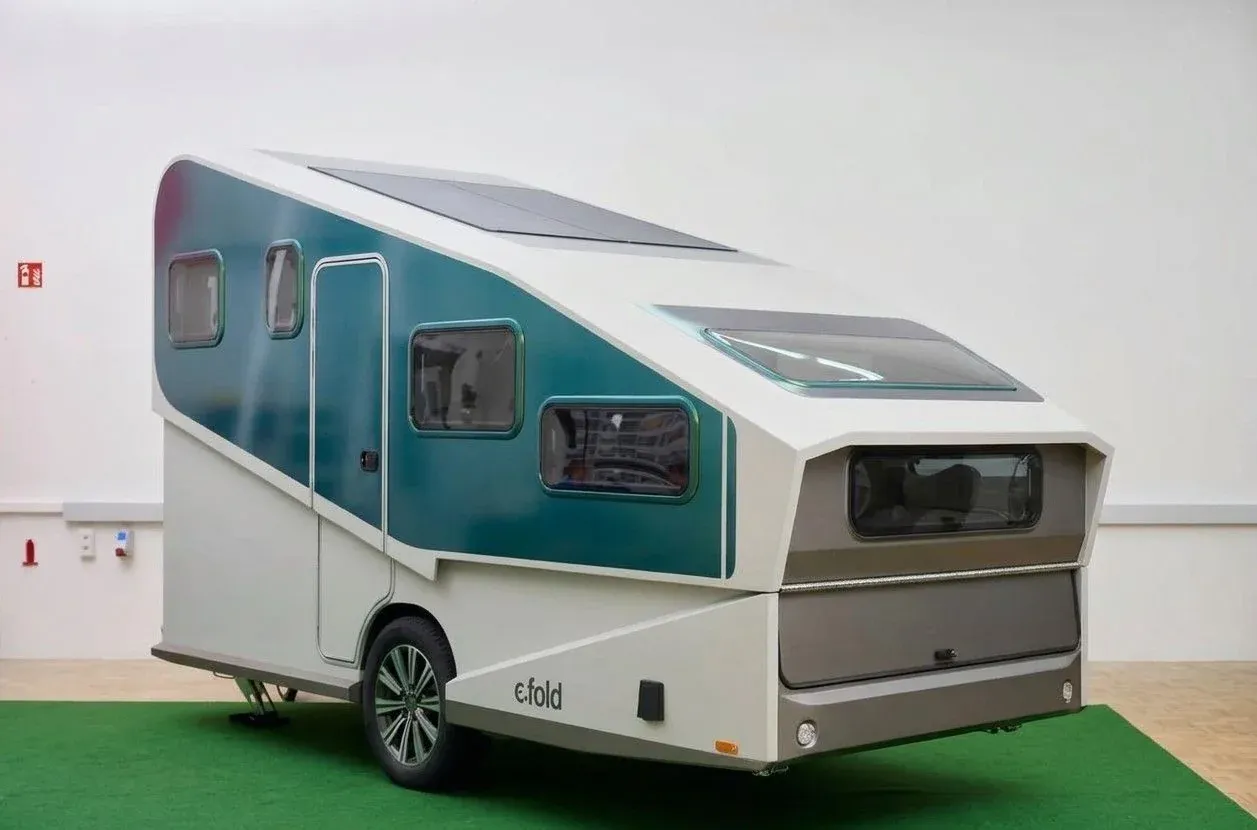
The result is the Dethleffs c.fold, a caravan that folds up while in motion to reduce air resistance significantly, and automatically unfolds once we arrive at the campsite to become a livable space. Although it may seem like a simple solution, it has achieved truly impressive results in initial fuel consumption tests.
A caravan that transforms to use much less energy
The origin of this project lies with a German couple, Monika and Peter Marchart, regular customers of Dethleffs who decided to switch to an electric car. The problem arose when they started using it for their caravan trips. Their car, which normally had a range of about 400 kilometers, saw that figure drop to around 200 kilometers when coupled with a conventional caravan.
The couple brought the issue to the manufacturer, who decided to develop a solution through its Destination Future innovation program. The goal was to create a caravan that maintained the comfort of traditional models while minimizing the impact on the fuel consumption of the vehicle pulling it.
To achieve this, engineers designed an extremely compact structure when in motion. In this configuration, the c.fold is 5.49 meters long, 1.90 meters wide, and only 1.65 meters high. This allows most of the caravan to remain within the vehicle’s aerodynamic zone, reducing the frontal surface exposed to wind.
It features rounded corners on the body, a stylized rear section, and virtually bare underbodies. The overall weight when empty is less than 1,000 kilograms, with a capacity for approximately 400 kilograms of additional load—figures that allow it to be used with various electric vehicles that have the appropriate certified towing capacity.
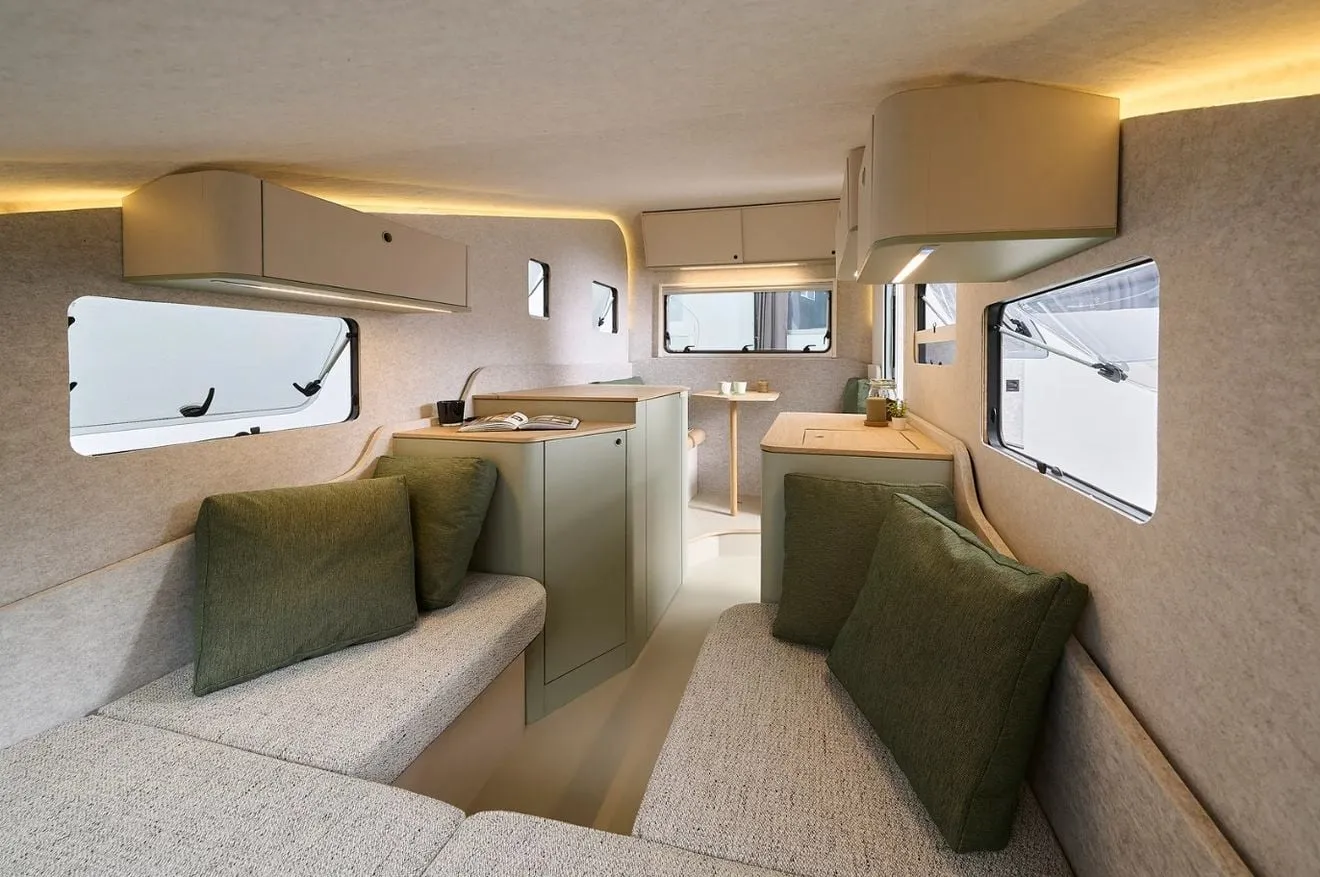
But the most interesting part comes when the journey ends. Through an electric mechanism, the roof and walls unfold to reach an external height of about 2.18 meters, doubling the available interior space. The entire process is completed in less than a minute, without the need for complicated manual operations.
The manufacturer has also paid special attention to the materials. The structure uses honeycomb-patterned aluminum panels, combined with recycled PET insulation and felt interior linings. This construction aims to keep the weight low without sacrificing thermal and acoustic insulation, which is particularly important for a caravan that needs to provide comfort in both summer and winter.
The suspension is also quite unique. Dethleffs collaborated with specialist Goldschmitt to develop an independent pneumatic suspension system integrated directly into the caravan’s floor. It also includes a feature that allows weight monitoring via an app, making it easier to control the load before setting off on a trip.
To reduce reliance on the campsite’s electrical grid, the c.fold features 300 W solar panels, a 300 Ah battery, and a 2,000 W inverter. This system enables power for some of the caravan’s equipment without needing to use the car’s battery.
However, the most interesting aspect of this project lies not in its equipment, but in what happens when we connect it to an electric car and head out on the road.
In a test conducted by the specialized publication Clever Campen, they used a Volkswagen ID.4 GTX equipped with a 77 kWh battery to compare the performance of the new camper van against a conventional model.
The results were quite surprising. With a traditional camper van, the Volkswagen recorded an average consumption of 36 kWh/100 km, while with the Dethleffs c.fold, the figure dropped to 22.4 kWh/100 km. A difference of 13.6 kWh per 100 kilometers, representing a reduction in consumption of nearly 38%.
If we apply those results to theoretical range using the battery’s 77 kWh capacity as a reference, the ID.4 would go from covering about 214 kilometers with a conventional caravan to approximately 344 kilometers with the c.fold. In other words, it gains around 130 kilometers of range mainly thanks to the improved aerodynamics.
These figures are particularly interesting because they show that it’s not always necessary to increase battery size to improve the range of electric cars. In certain situations, reducing aerodynamic resistance can be much more effective, especially when towing bulky items like a caravan.
For now, the Dethleffs c.fold remains a prototype, and the manufacturer has not announced a price or release date. Yet this concept, which has already received a European Innovation Award, shows that the caravaning industry will also need to adapt to the unique characteristics of electric vehicles.
What’s most interesting is that this solution doesn’t require modifying the car, installing additional batteries, or developing expensive propulsion systems for the trailer. It simply allows the caravan to take up much less space while in motion and to expand to its full size when needed.