
Italy and China in the Citroen 2CV: Could This Become a Unique Case?
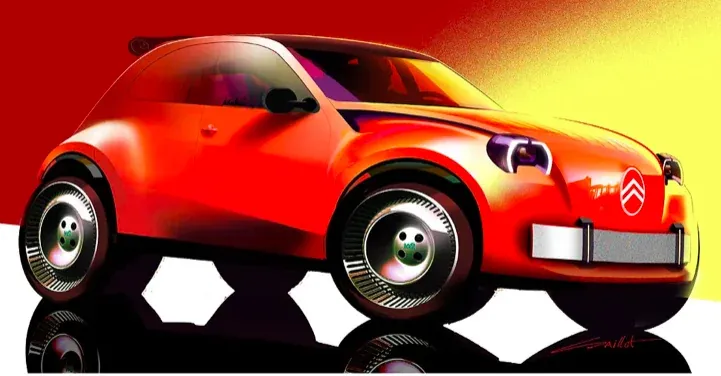
So much Italy and China in the new electric Citroen 2CV coming in 2028: can this become a trend in a chauvinistic country like France?
So much Italy and China: what will the French say (especially with Le Pen in power...)?
If there’s a car that represents the history of cars made in France, it’s undoubtedly the Citroen 2CV. The version for this century, as we know, is being developed by Stellantis and will be an affordable electric vehicle priced at 15,000 euros. Its design has already been hinted at by a concept car likely very close to the production model. But across the Channel, some are raising concerns that the new model will be manufactured in Pomigliano d’Arco, Naples. This decision was made with considerable consistency by Stellantis’ CEO, Antonio Filosa. After all, there are models that appear distinctly Italian, such as the Grande Panda, which are produced elsewhere (in Serbia). People here have grown used to seeing domestic brands manufactured in unknown locations. But France isn’t Italy when it comes to nationalism. And the grumbling could increase if Marine Le Pen goes to the Élysée in March, as current polls suggest.
Produced in Pomigliano with Leapmotor’s expertise
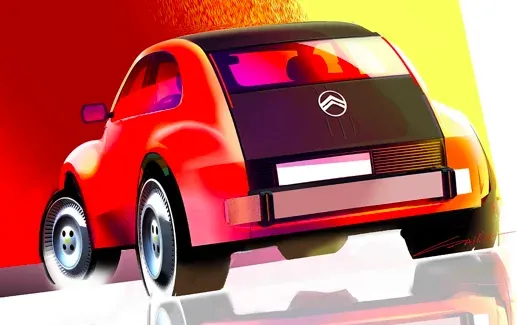
The fact that the new 2CV project benefits from significant Chinese technology provided by Leapmotor will create fewer problems. Even the French have given up on the technological superiority of Beijing-based brands. To such an extent that Renault itself, which used the term “Renaulation” in its industrial plan to emphasize returning to production in France, relied on Chinese technology to develop the Twingo. Speaking at Anfia, Filosa explained that the project for the small electric vehicles, of which the 2CV is part, “is one of the areas where we will work intensively together with Leapmotor.” How? In October, Stellantis’ chief technical officer, Ned Curic, told Reuters that the electric vehicles from Pomigliano are based on a platform developed with Leapmotor. Chinese engineers are already working alongside those from the group at Mirafiori to develop solutions, particularly in the field of electronics.
But a major question mark remains in the background regarding what is happening in Germany. Specifically, the productivity of factories, which is considered too low in the face of Chinese competition. Volkswagen made the shocking decision to delay the launch of the new electric Golf due to what it deemed too low productivity in Wolfsburg. 300 million euros in savings are needed to revive the program. Meanwhile, Mercedes is asking its workers back home to abandon the 35-hour workweek in exchange for 40 hours at the same salary. The question is: Will Pomigliano be able to produce at costs that ensure adequate margins even for an electric car priced at 15,000 euros? Will China also play a role here? One thing is certain: the sustainability of the small electric car project represents a significant test for Italian-made cars. With a potentially very interesting market, given the sales trend of EVs in major European countries. And here, Filosa is betting a lot on his own future.
– Says Nicola Armaroli: “That magical figure for electrification that would make us say: Eureka!” / VIDEO
Previous Article
In Rimini, the solar-powered electric hotel: panels, charging stations, Tesla, and the ID. Buzz bus