
Tesla is testing lasers to clean the windshield for the Cybercab
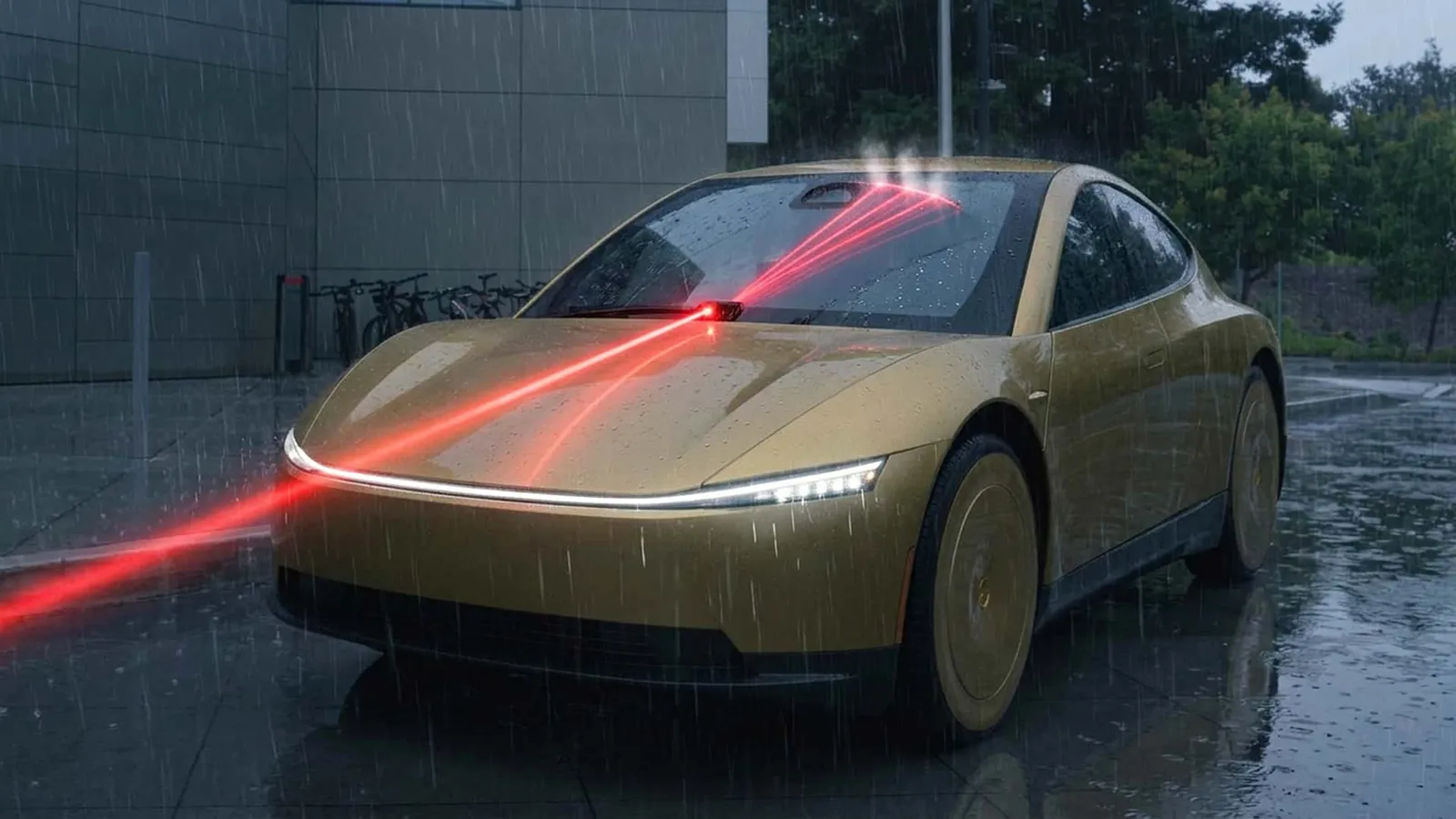
Tesla continues to work on a laser system for cleaning the windshield, but this idea might never make it to everyday cars. Tesla’s vice president of vehicle engineering, Lars Moravy, discussed it during an episode of Jay Leno’s Garage. The most practical application, he explained, relates to the Cybercab robotaxi.
The patent has existed for some time and was recently updated. This technology proves useful in situations where there is no driver available to get out and clean the glass by hand, such as in autonomous vehicles that operate for many hours in a row.
Why not the entire windshield
In the video, starting at minute 14:14, Moravy explained why Tesla has never pursued a full-glass solution. Too many laser emitters would be needed to cover such a large surface, making the system impractical for a regular car.
Minute 14:14 discusses laser wipers
The reasoning changes if the target is limited to just the area in front of the camera that controls autonomous driving. Focusing lasers on that small area, according to Moravy, "could make sense for autonomous driving." The updated patent, granted on March 31 of this year, describes a system capable of detecting debris on the glass, identifying its type, and adjusting the laser pulses accordingly.
What does the patent cover?
The technical document discusses an automatic control that manages the intensity and duration of the pulses. For safety, the penetration depth of the beam always remains below the thickness of the glass. This way, the laser only affects the outermost layer where droplets and dirt accumulate.
The logic is to remove water or debris only when it is necessary for the autonomous driving system to see. Thus, the camera’s field of view becomes the critical area that needs to be kept clean, rather than the entire windshield as is the case with traditional wipers today.
From the Cybertruck to potential use on the Cybercab
The idea of laser wipers is not new. Elon Musk discussed them as early as 2021, during the development of the Cybertruck. In the end, Tesla opted for a more traditional solution, the 48-inch giant wiper, which is now only sold through the Tesla Shop as a specific part for the model.
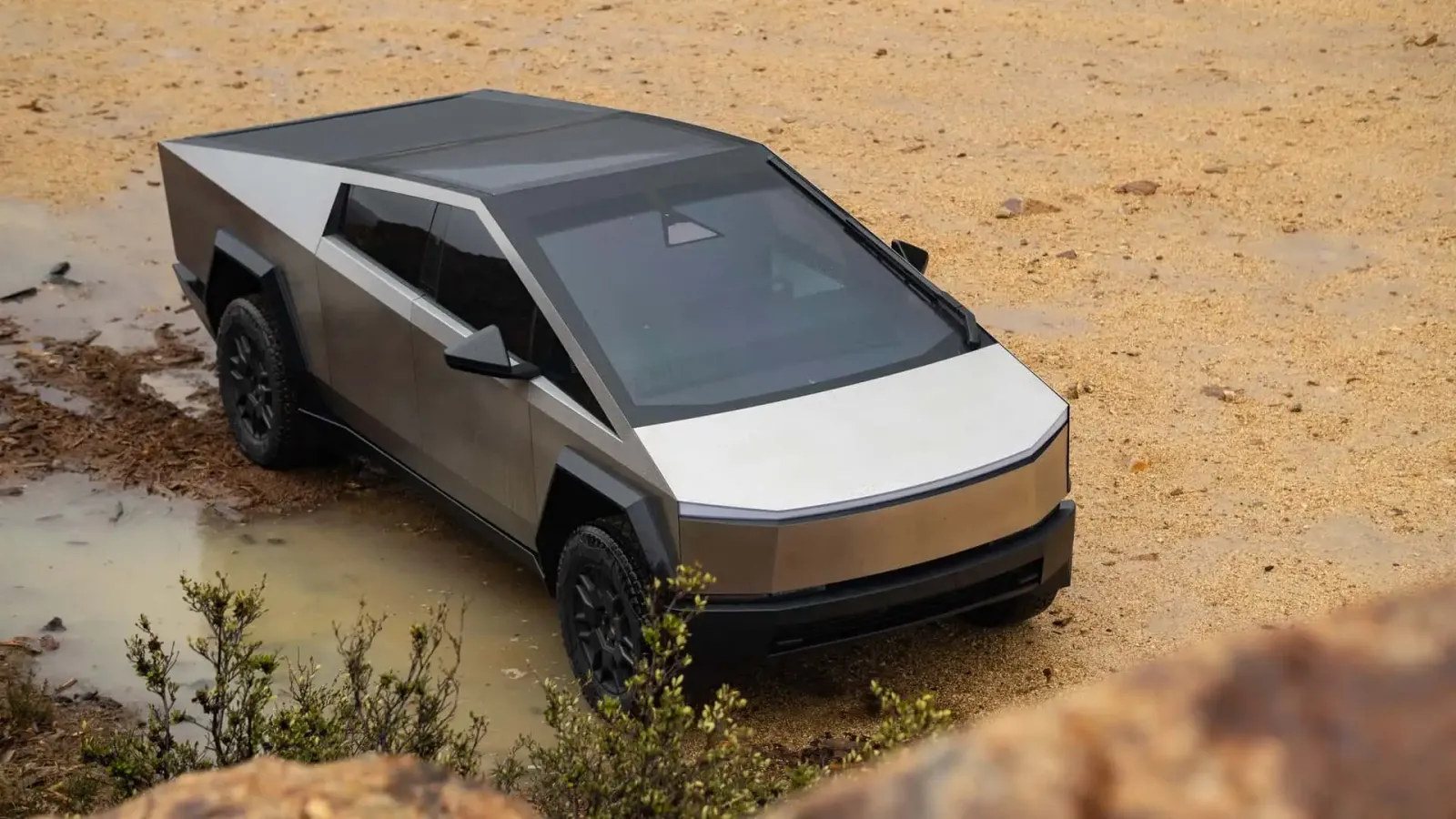
Tesla Cybertruck
The laser system, if it ever makes it to production, seems designed for a different type of vehicle. Regular cars already suffer from automatic wipers that activate on dry glass or fail to respond well to light rain. This is a problem with sensor calibration, not with glass cleaning.
Fewer parts, less maintenance
A laser focused on a single point would not overcome these limitations in vehicles driven or supervised by a human. The Cybercab robotaxi, on the other hand, does not require a perfectly clear windshield everywhere, except in the area covered by the camera. There, an automatic system makes more sense and can intervene between trips.
Photo Gallery: Tesla Cybercab
A contactless system for removing water from the glass would align with Tesla’s principle that “the best part is the one that isn’t there,” a phrase often cited regarding the components of the brand’s vehicles. A laser device would have fewer mechanical parts and no moving elements, potentially reducing maintenance needs.
Tesla currently recommends replacing windshield wipers once a year. An automatic and contactless system would eliminate the need for this task as well. The difference would be most noticeable in the Cybercab, where there is no one on board to clean the windshield or fix a wiper issue while the vehicle heads to the next race.
More Tesla news