
St. Gallen will acquire 39 more electric buses.
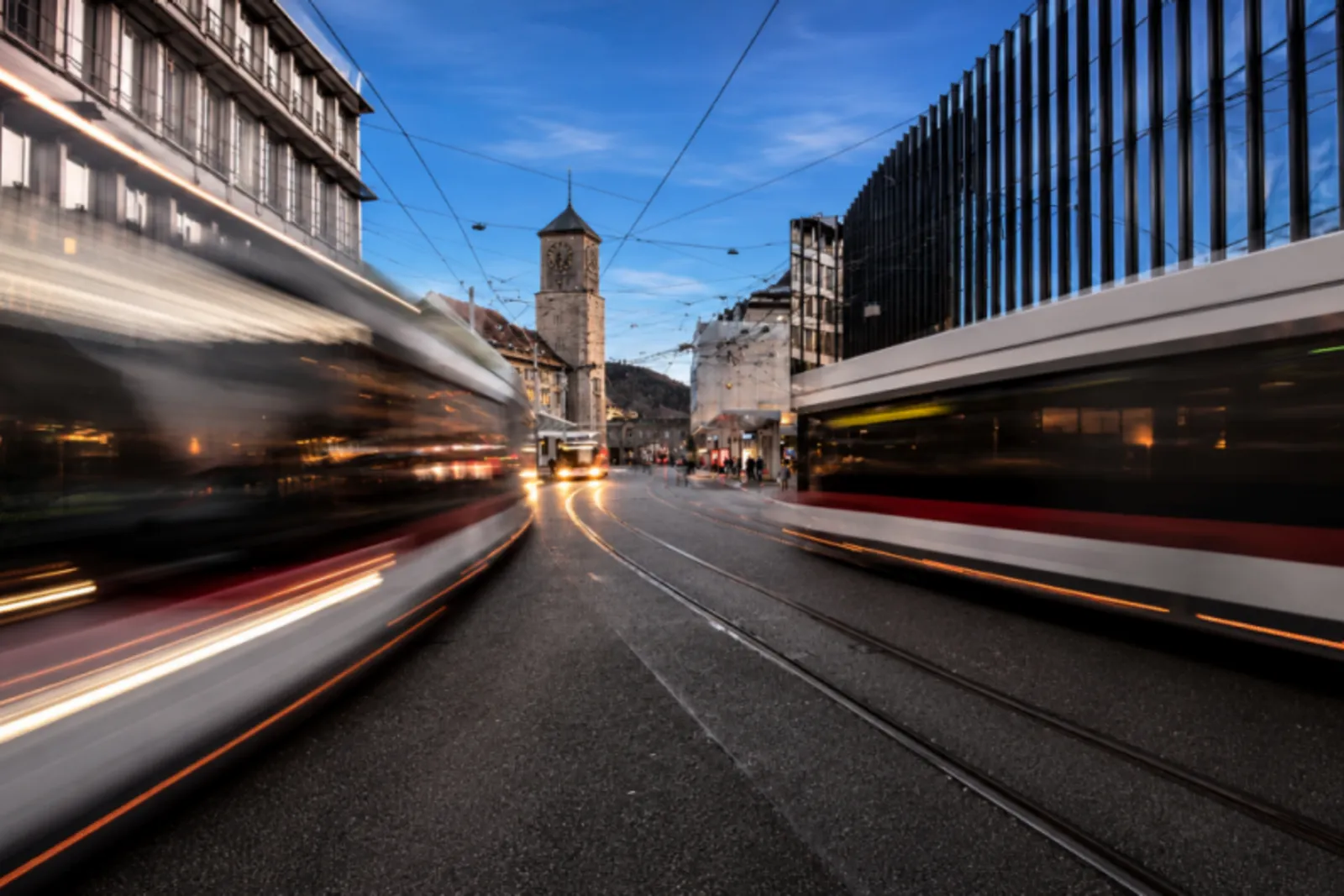
St. Gallen’s public transport authority aims to complete the full electrification of its bus services by adding 39 more electric buses. An investment of 61 million Swiss francs is planned for the third phase of fleet renewal. The residents of St. Gallen will decide on this matter at the end of November.
Image: City of St. Gallen
Specifically, three standard battery buses, ten articulated battery buses, six articulated battery trolleybuses, and 20 double-articulated battery trolleybuses are to be acquired. At the same time, the St. Gallen Transport Company (VBSG) plans to expand the charging infrastructure in its depot’s storage hall.
The new battery buses are intended to replace diesel buses that have reached the end of their useful life. The battery trolleybuses will take the place of older trolleybuses from 2008 and 2009. Thanks to their batteries, they can travel longer distances without an overhead line. Therefore, no additional overhead lines are planned as part of the third phase.
With the new vehicles, VBSG aims to standardize its fleet across four vehicle types. This is intended to simplify maintenance and spare parts logistics, among other things. If passenger numbers increase accordingly, line 12 could also be operated electrically using articulated battery buses in the future. However, structural modifications would still be required for this.
VBSG has been gradually transitioning its fleet to electric drives over the past several years. The first phase was approved in 2018 and has since been completed, while the second phase was approved in 2021 and is still under implementation. According to the city, around 75 percent of the transportation capacity is already provided by electric vehicles today. Out of a total of 85 vehicles, 29 diesel buses are still in use.
29 diesel buses still in use in St. Gallen
As part of the ongoing electrification process, VBSG awarded Daimler Buses a contract in spring 2026 for 26 electric buses. The order includes 16 12-meter standard buses and 10 18-meter articulated buses of the Mercedes-Benz eCitaro model, plus options for another 20 vehicles. The first buses are expected to enter service by mid-2028.
Daimler’s contract followed a failed procurement attempt with Ebusco. The Dutch manufacturer had received the contract in early 2024 for initially 13 electric buses. Even before the first order was placed, VBSG revoked the contract at the end of that same year because Ebusco could not fulfill its contractual obligations due to financial reasons. The vehicles were then put up for bidding again.
With the now planned third phase, VBSG aims to complete the electrification of its fleet. Once phases two and three are implemented, the annual greenhouse gas emissions from the bus fleet are expected to drop by around 85 percent. The third phase alone is projected to save approximately 12,300 tons of CO2 over the entire lifespan of the vehicles.
A loan of 61 million francs has been allocated for the vehicles and additional charging infrastructure. Around 70 percent of the operating costs, including depreciation for vehicles and infrastructure, are currently covered by transportation and ancillary revenues. The remaining costs are covered by the cantonal financing model. If approved, the new vehicles will be acquired in phases and put into service by 2032. From that point onward, all VBSG route operations are intended to be electric.
The city parliament had already approved the proposal with a large majority on May 26, 2026. On November 29, the voters of St. Gallen will now decide on the third phase of fleet renewal. The city council recommends accepting the proposal.