
Rimac Nevera: Electric hypercar discontinued after just 71 units produced – 190 were planned
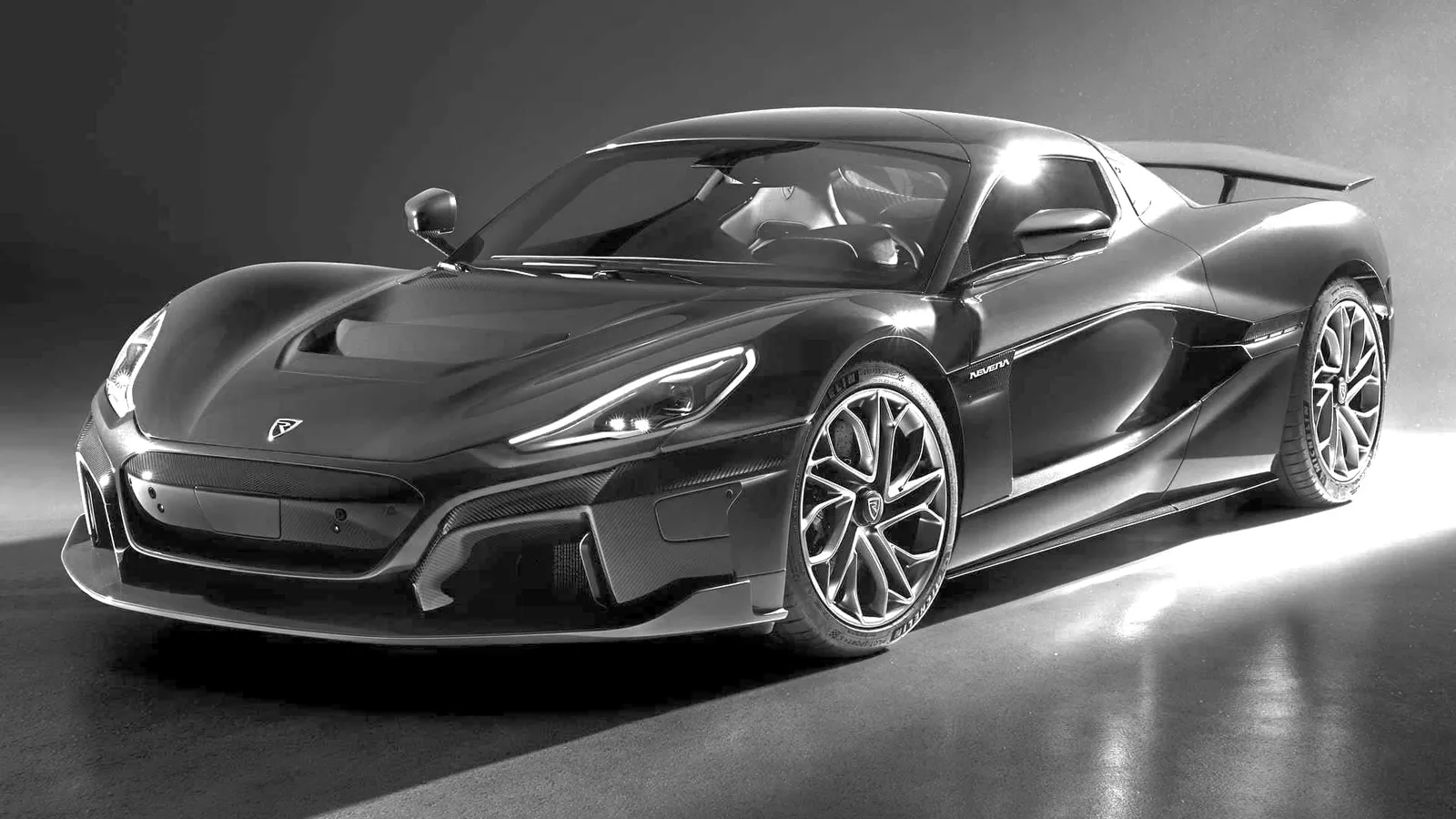
The production of the Rimac Nevera will cease by the end of the year. This was stated by the company founder, Mate Rimac, in a video on his Instagram account. A total of 51 standard Nevera models and 20 Nevera R models have been built. In the video, Rimac shows his factory, where the final ten Nevera R models are currently being produced.
71 units represent a good outcome, according to the company’s CEO. This makes the vehicle the best-selling electric hypercar. Without the Nevera, neither the factory nor the Bugatti Tourbillon would exist.
The Tourbillon (French for whirlwind) is the successor to the Bugatti Chiron. For this model, Bugatti’s parent company, Volkswagen, originally planned a purely electric drive system. The simplest approach would have been to give the Nevera a Bugatti-inspired design, but Rimac insisted on a plug-in hybrid powertrain based on a V16 gasoline engine. Based on his experience with the weak demand for the electric sports car Nevera, he did not believe an electric Tourbillon would generate sufficient demand, reported Motor1 USA recently, citing Automotive News Europe.
Image Gallery: Rimac Nevera (2021)
But back to the Rimac Nevera. The model originated from the C-Two concept from 2018, which featured a pure electric drive with four motors and 1,914 horsepower (1,408 kW), along with a T-shaped battery holding 120 kWh. The battery consisted of 6,960 cylindrical cells in the 2170 format (21 mm diameter, 70 mm height). The production model used the same technology and was unveiled in June 2021. It was limited to 150 units.
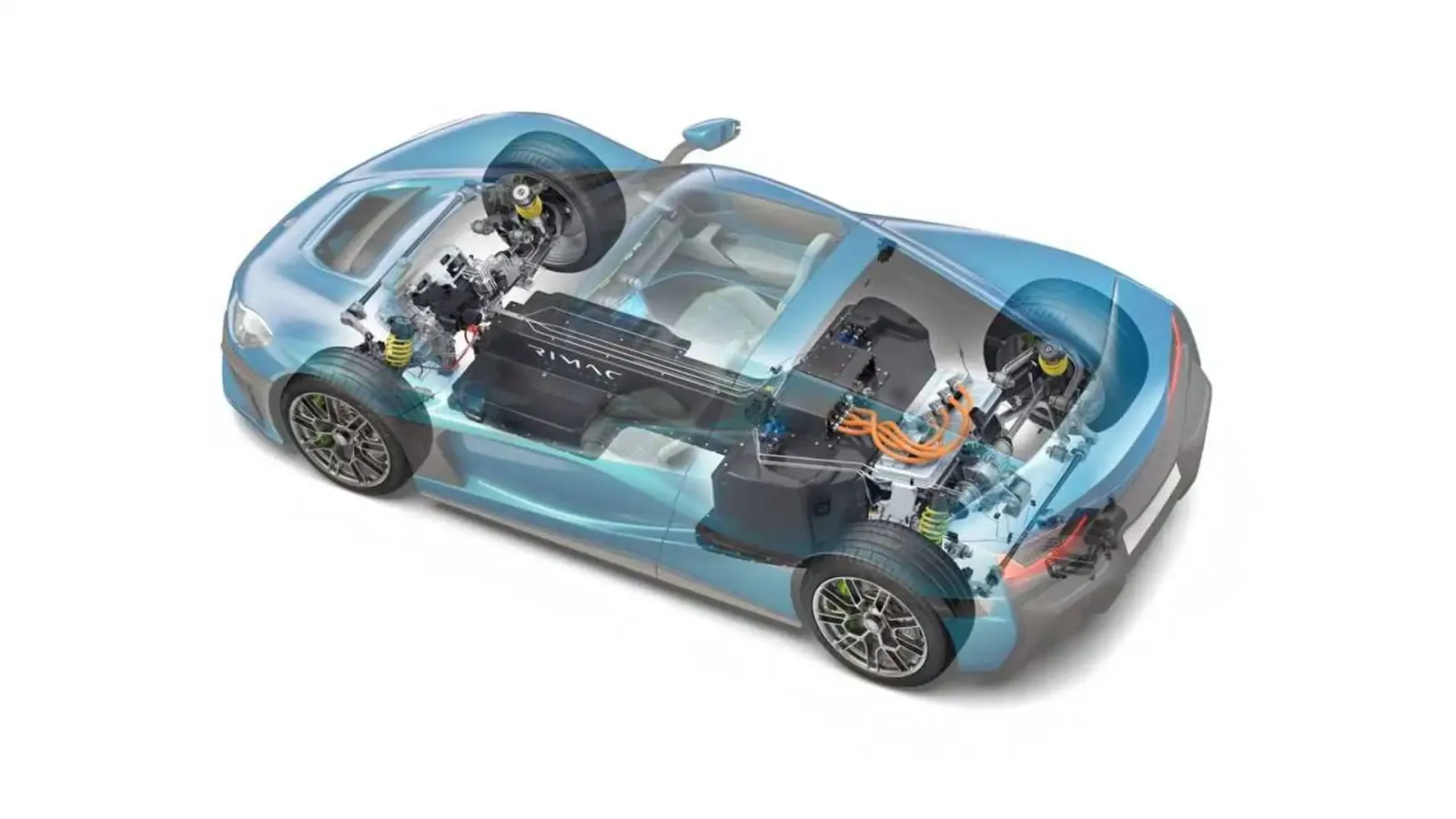
The layout of the Rimac Nevera: The thickest part of the T-shaped battery is located at the rear (Image: Rimac)
The Nevera R, introduced in August 2024, boasts 2,107 horsepower, or 1,550 kW, and requires only 1.72 seconds to reach 100 km/h instead of 1.81 seconds. Its top speed is 431 km/h. The aerodynamics and tires were also modified for this purpose. The Nevera R was limited to 40 units.
The 150 units of the Nevera and the 40 Nevera R add up to 190 vehicles in total, not 150 as Mate Rimac says in the video. In any case, only 71 units were produced, which is less than half of the planned quantity.
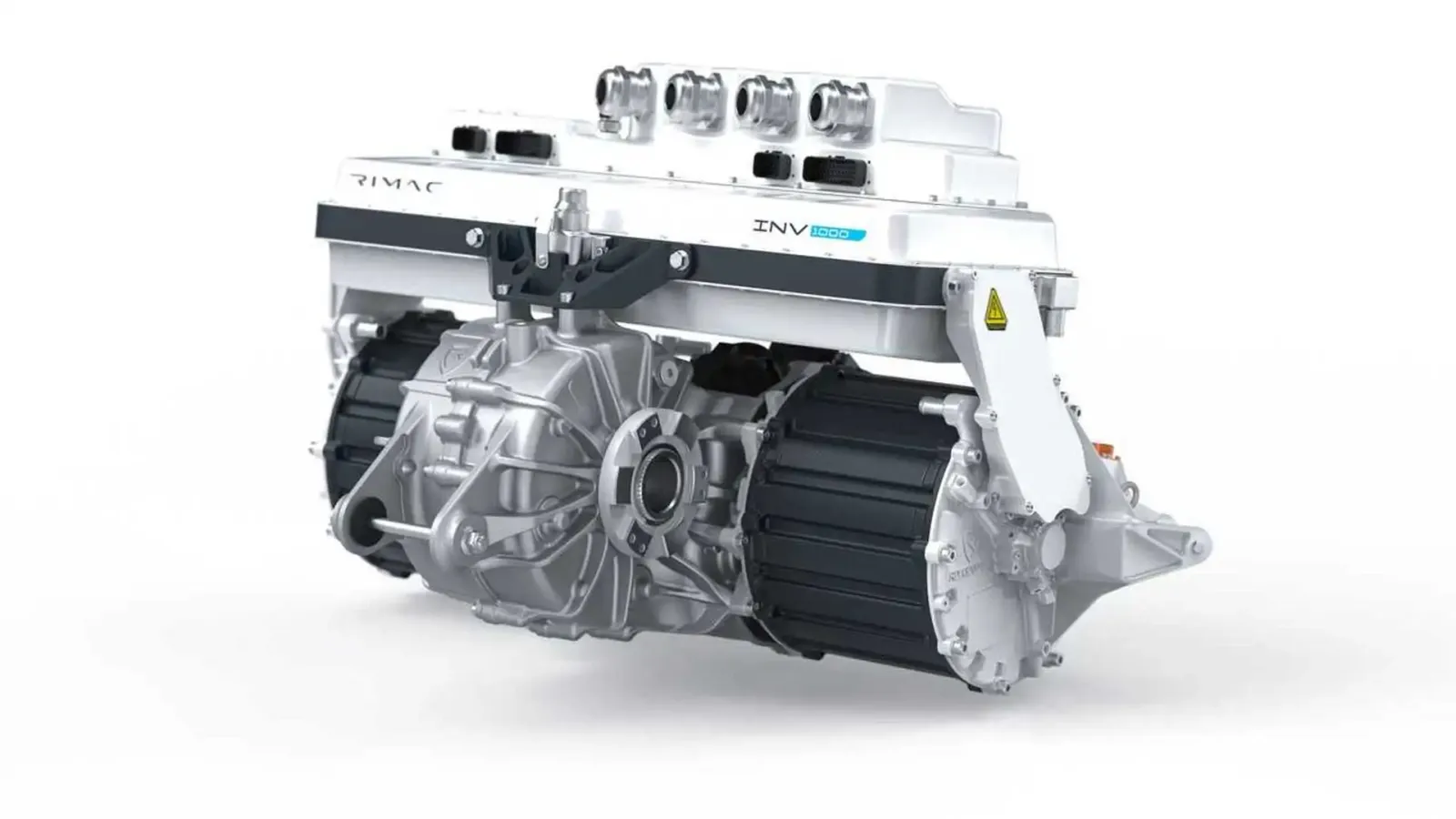
A unit featuring two electric motors with inverters and a transmission from the Nevera (Image: Rimac)
The Nevera and Nevera R set numerous records for sprint time and top speed, including some quite absurd ones such as 275 km/h achieved in reverse gear. In forward drive, the Nevera R reaches 431 km/h, but customer vehicles are limited long before reaching that speed. Even in high-speed mode, the car cannot match today’s top speeds, like those of the Yangwang U9 Xtreme, which can reach around 500 km/h.
However, the market for pure electric hypercars appears to be limited in size. The 71 units produced of the Nevera and Nevera R are contrasted with 250 Bugatti Tourbillons, all of which have already been sold — although the last ones are not expected to be produced until 2029, according to Auto Motor und Sport.
More electric hypercars:
In summary
The Rimac Nevera is now a thing of the past. It was excellent in terms of power output, sprint performance, and top speed. These specifications were extremely important when we were still in the auto racing scene. But today, with all-wheel-drive models often offering 400 kW or even more, they have lost much of their appeal. On the highway, it’s rare to reach 200 km/h anymore. And when driving a high-powered car with sudden acceleration and deceleration, especially without controlling speed in curves, it makes the passenger feel unwell.
Of course, these are also emotions, but the experience becomes more enjoyable when you can shift gears and hear the corresponding sound. You don’t need a V16 for this; an electric car with a virtual transmission system and artificial sound effects can do it too—provided it’s well-designed, like the Hyundai Ioniq 5N.