
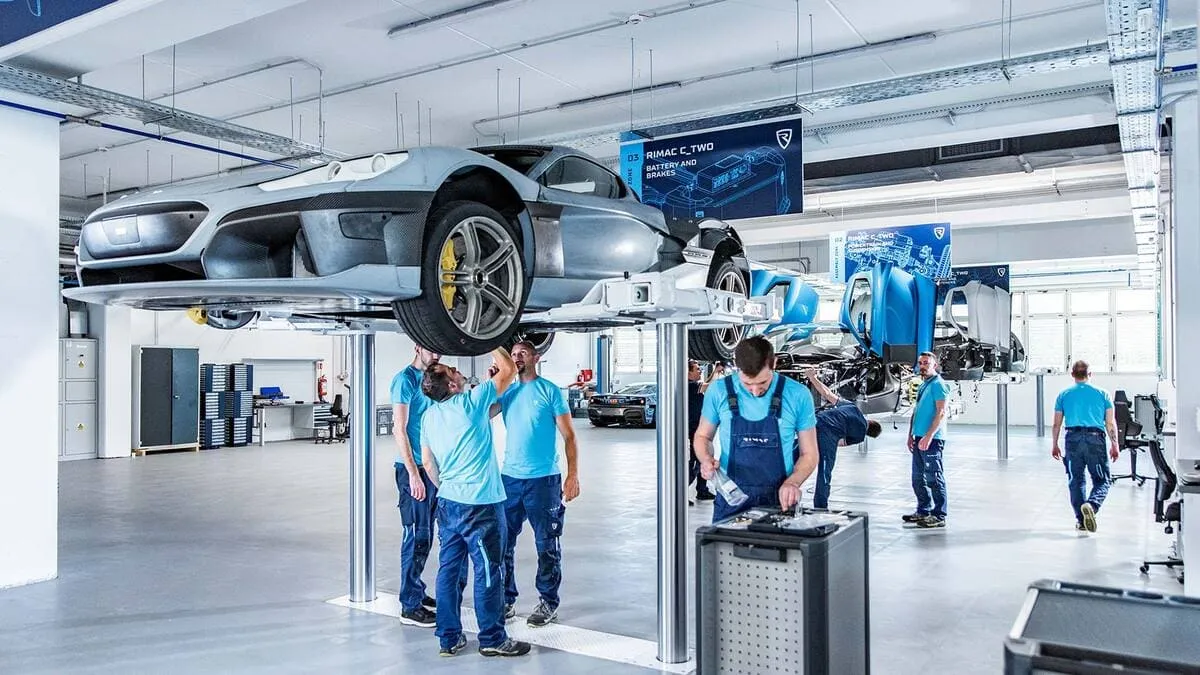
Rimac is ending production of the Nevera. Only 71 units will be made! Behind the scenes, sales are lower than expected.
In the article:
- Why Rimac is ending production of the Nevera much earlier than planned
- What speed and lap time records has the Croatian hypercar set?
- What millionaires are looking for today, or the case of Swiss watches
Only 37 percent of Rimac’s plan
As the brand’s founder, Mate Rimac, announced on Instagram, production of the electric hypercar will come to an end by the end of 2026. The initial plans were much more ambitious, aiming to build 150 units of the base Never model and 40 units of the more aggressive Never R variant unveiled in August 2024. However, the final count will be 51 units of the base version and 20 units of the R variant, ten of which are part of a limited Founder’s Edition series available starting in January 2026. This means only about 37 percent of the original plan was fulfilled, a result, according to Electrive.com, of a significant decline in demand for these cars worth at least two million euros since mid-2024.
Still, the brand’s founder isn’t ready to give up. “I think it’s still a pretty good achievement. It’s the best-selling electric hypercar in the world. Without it, there would be no Tourbillon or this factory today. It did its job, and I think it’s a great car that will secure its place in history,” Mate Rimac emphasized in his post.
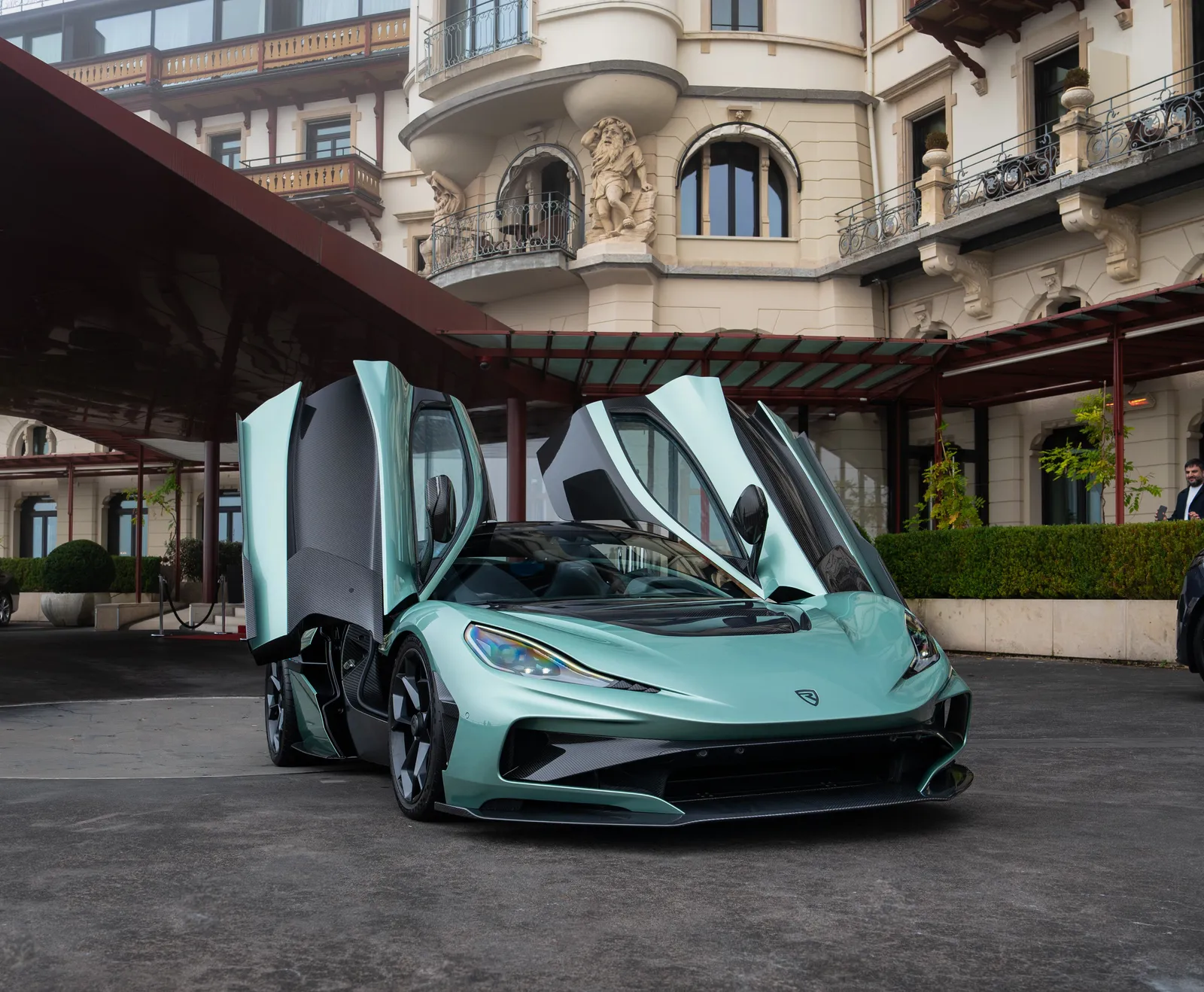
Rimac Nevera: King of Speed and Reverse Driving Records
The lack of interest from customers certainly wasn’t due to any technical or technological shortcomings. The base Nevera boasts 1914 horsepower (1408 kW), enabling it to reach speeds of 412 km/h, while the Nevera R version sees power increase to 1550 kW, pushing its top speed to 431.45 km/h. As reported by “Auto Motor und Sport,” for customer safety, the speed is factory-set at 352 km/h, but during special events, drivers can utilize its full potential.

Recall that this model made history by setting a time of 7:05.298 minutes on the Nürburgring Nordschleife lap, breaking 23 records in one day in May 2023, and establishing another 24 best times in the R version in 2025. Test driver Goran Drndak even pushed the car to 275.74 km/h in reverse on the track in Papenburg, though recently—on November 1, 2026—the speed record for road-use electric vehicles was taken from him by the Chinese Yangwang U9 Extreme with a speed of 503.17 km/h.
Swiss watch phase
So why has this engineering masterpiece stopped attracting billionaires? Mate Rimac himself admits that achieving a 0-100 km/h acceleration in under three seconds is no longer a unique advantage, as much cheaper limousines can now do the same. In interviews cited by CNBC, the head of Bugatti Rimac compared the hypercar market to the watchmaking industry. Although smartwatches dominate everyday life, wealthy collectors still spend fortunes on mechanical Swiss watches for their craftsmanship, sound, and soul.

Proof of this claim is the already sold hybrid Bugatti Tourbillon with its low-revving V16 engine, where customers spend an average of an additional $600,000 to $700,000 solely on customization. Rimac itself has transformed into a large technology conglomerate, launching a battery production facility in Zagreb at the beginning of 2026 as well as a commercial network of autonomous vehicles called Verne.
Oskar Włostowski