
Rimac is ending production of the Never. Only 71 units will be produced instead of 190.
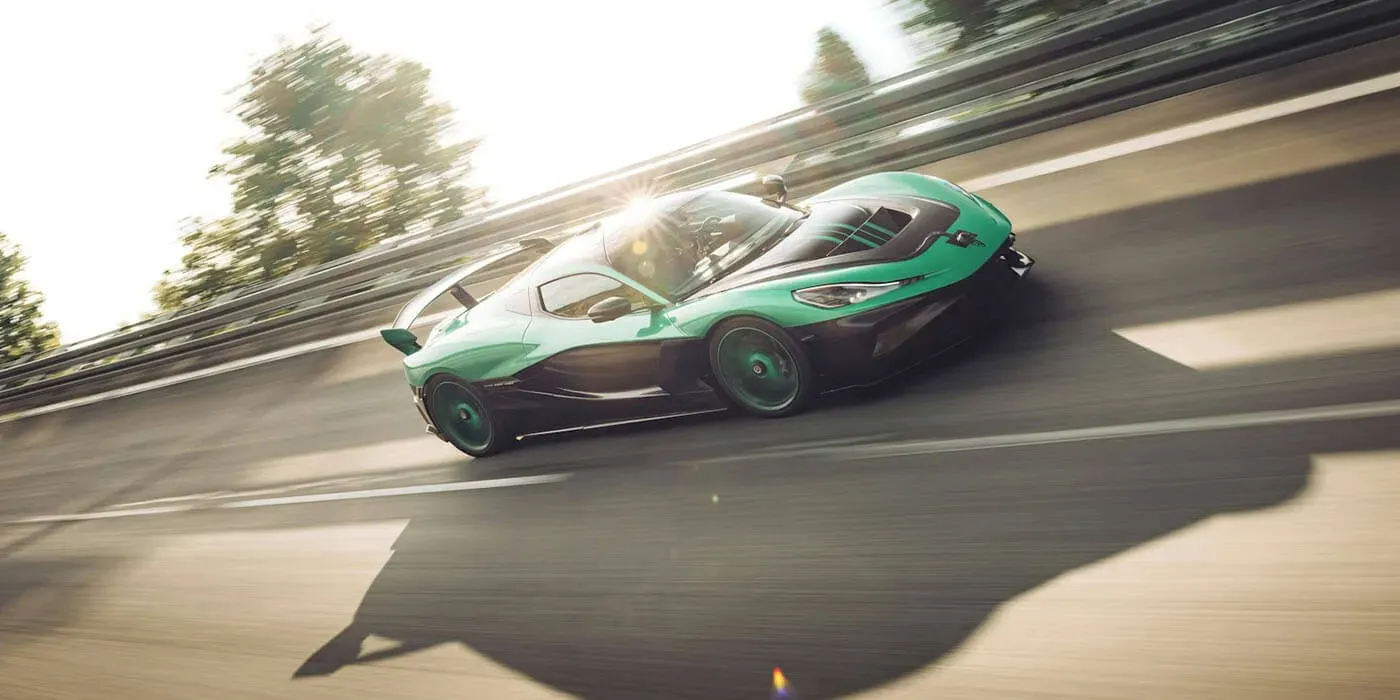
The last Rimac Nevera will leave production at the end of 2026. A total of 71 units of this electric hypercar will be produced, which is just over one-third of the planned 190. Mate Rimac, the company’s founder, announced this in an Instagram video, immediately stating that he does not consider it a failure. In his view, the Nevera has fulfilled its purpose, as without it there would be neither the Bugatti Tourbillon nor the new factory in Zagreb today.
The standard Nevera was intended to be produced in 150 units, while the upgraded Nevera R, unveiled in August 2024, in 40 units. By the end of production, 51 regular models and 20 R versions will have been built.
Half of these twenty are the limited Founder’s Edition, which customers configured together with Mate Rimac and will be delivered to owners starting in January 2026, with the remaining ten currently in production.
1408 kW was not enough
Performance was not an issue. The Nevera has 1408 kW (approximately 1914 horsepower), while the Nevera R has 1550 kW (about 2107 horsepower). The car completed the Nürburgring in 7:05.298 minutes, a record for a production electric vehicle, and reached a top speed of 431.45 km/h. Nevertheless, demand for the car, which costs at least 2 million euros, began to decline in mid-2024.
Mate Rimac admitted that such extreme acceleration is no longer something special for the wealthiest customers, as much cheaper sedans can reach 0-100 km/h in less than three seconds. Collectors today seek excitement, and Rimac compares this to Swiss watches that still sell well despite smartwatches being more capable. The development of the Nevera project started in 2017, when the company’s founder viewed electromobility very differently from now. Back then, the specifications on the brochure were considered sufficient.
Mate Rimac, the company founder, says, “I think it’s still a pretty good result. It’s the best-selling electric hypercar in the world. Without it, there would be no Tourbillon or this factory today. It’s done its job, and I think it’s a really great car that will secure a place in history.”
Bugatti, Batteries, and Verne’s Autonomous Vehicles
At Bugatti Rimac, the Bugatti Tourbillon is being developed—a V16 engine hybrid whose entire production run has already been sold out. At the beginning of 2026, Rimac opened the Rimac Campus in Zagreb, where it produces high-voltage battery systems. In spring 2026, the subsidiary Verne launched the first commercial routes for autonomous shuttles in Zagreb, with dedicated production capacity built for these vehicles in Croatia.
The battery business unit also serves other brands. In April, we reported that the BMW i7 would receive a battery developed in collaboration with Rimac Technology, featuring 4695 cylindrical cells.
Rimac, once a record-breaking electric vehicle manufacturer, has now transformed into a technology group focused on batteries, autonomy, and Bugatti. According to Mate Rimac, a V16 combustion engine is set to restore excitement on the road.
LovEV Newsletter
Want more content like this?
Sign up — we’ll send you a weekly summary once the newsletter starts.