
Renault and Geely present a hybrid V8 engine with over 680 horsepower and less than 200 kilograms in weight, which Lotus will use.
12/11/2026 14:00
Updated to
12/11/2026 14:00
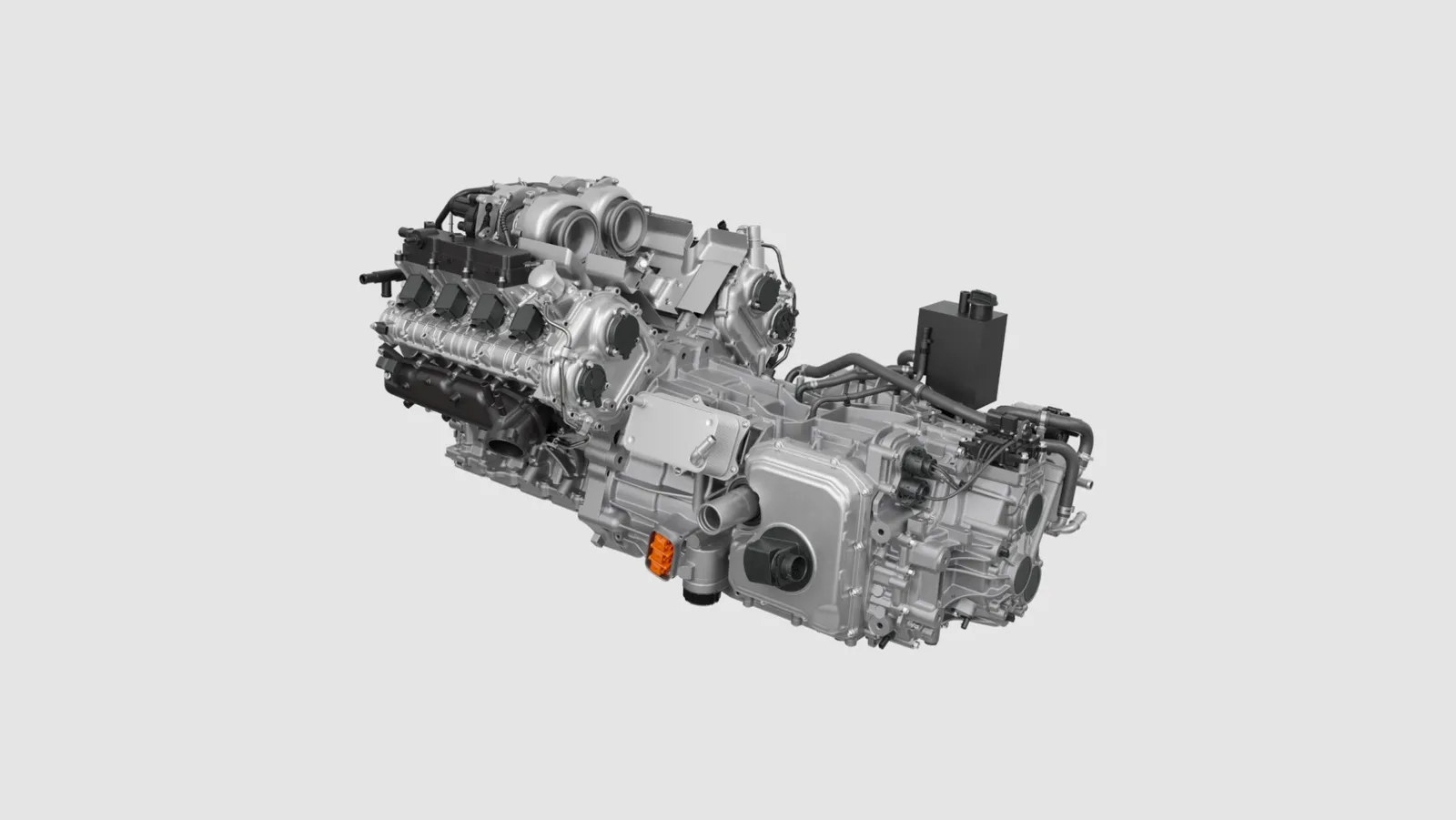
We live in the era of electric cars, and it’s quite unusual for two manufacturers to introduce a four-liter V8 engine that weighs less than a motorcycle. Yet that’s exactly the case with the Horse W40, the first V8 from Horse Powertrain, the engine and transmission company shared by Renault and Geely. It delivers over 680 horsepower and 800 Nm of torque, and it was designed from the start to work with electrification systems.
Until now, Horse was primarily known for its hybrid systems, four-cylinder engines, and small range extenders. In April it moved on to V6 engines, and now it takes another step forward with a luxury client: Lotus, the British sports car brand owned by Geely, will debut it in the Type 135. This is a sign that large gasoline engines still have a future when paired with electric components.
A compact V8 with turbos in the center
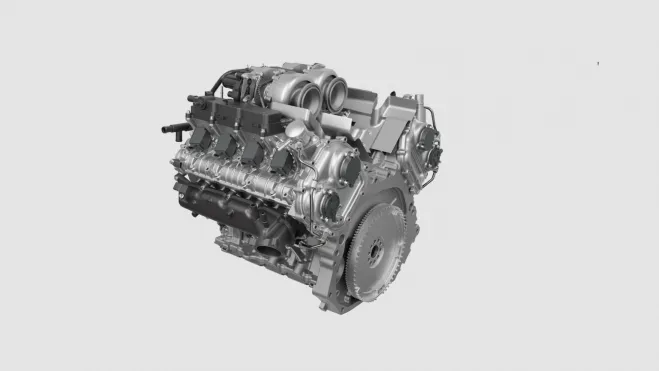
The W40 is designed to be mounted in a longitudinal position, as is common in sports cars and SUVs. Its two turbochargers are installed at the top, between the two cylinder banks, in what is known as a “hot V” configuration. This reduces the distance gas must travel to the turbos, which typically improves throttle response.
Horse positions it as one of the V8 engines with the highest power density on the market, thanks to direct fuel injection, extensive use of lightweighting techniques, and that shorter intake path. Weighing 200 kilograms, it is about nine kilograms lighter than Mercedes-AMG’s 4.0-liter twin-turbo V8 (M177). Since it delivers high torque at low RPMs, the company also sees it as suitable for pickup trucks and SUVs.
A dual-clutch gearbox that can handle 1,050 Nm
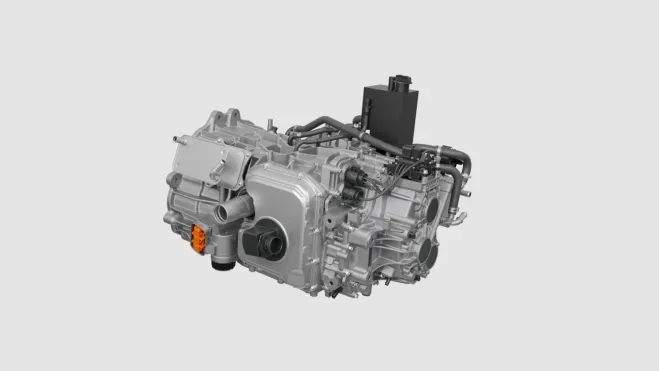
The engine was developed alongside the new Horse 8LDCT transmission, a dual-clutch eight-speed hybrid transmission. Its clutches operate in an oil bath, are ready to engage in less than 50 milliseconds, and the shift response time is under 20 milliseconds.
The transmission includes a control system and a silicon carbide (SiC) power module, as well as a variable-displacement mechanical pump. It can handle up to 1,050 Nm of torque input, 250 Nm more than what the V8 alone can provide, leaving room for the contribution from the electric drive.
Lotus Type 135, the first destination
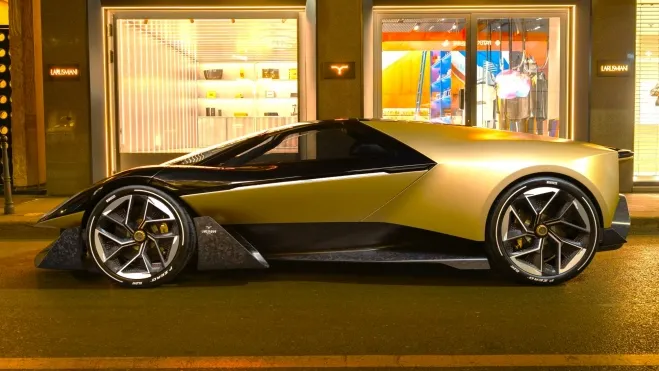
The engine and transmission will make their debut together in the Type 135, the model through which Lotus enters the supercar category for the first time. The brand had previously stated it would launch a model in 2028 with over 1,000 horsepower, as part of its shift away from full electrification. Its CEO, Feng Qingfeng, says they are aiming for “a new generation of supercar performance” that combines power, efficiency, and the precise driving experience that defines Lotus.
Feng himself has indicated that there will also be a V6 version, with the V8 aiming for a weight of 1.5 tons. To achieve this, Lotus will use a plug-in hybrid with a smaller battery and an electric motor weighing only 20 kilograms, utilizing technology derived from Formula 1. This demonstrates Lotus’s shift in direction. Its new phase began with the sale of electric cars, to which plug-in hybrids have now been added.
From the Beijing V6 to the V8
The W40 arrives just over half a year after the Horse W30, the company’s first V6 engine. It’s a 3.0-liter engine weighing 160 kilograms, producing 476 to 544 horsepower and 600 to 700 Nm of torque, paired with a four-speed hybrid transmission. It will also hit the market in 2028. Horse Powertrain, headquartered in London with 18 factories, produces part of its output in Spain, at its plants in Valladolid and Sevilla. The Type 135 will roll off the British factory in Hethel, the same site as the Lotus Emira, in 2028. If it meets the 1,000 horsepower and 1.5-ton weight target, it will have a weight per horsepower of 1.5 kilograms, a figure typical of top-tier supercars.