
Porsche Macan GTS, the electric SUV that acts like a hot hatch on corners – and does so convincingly
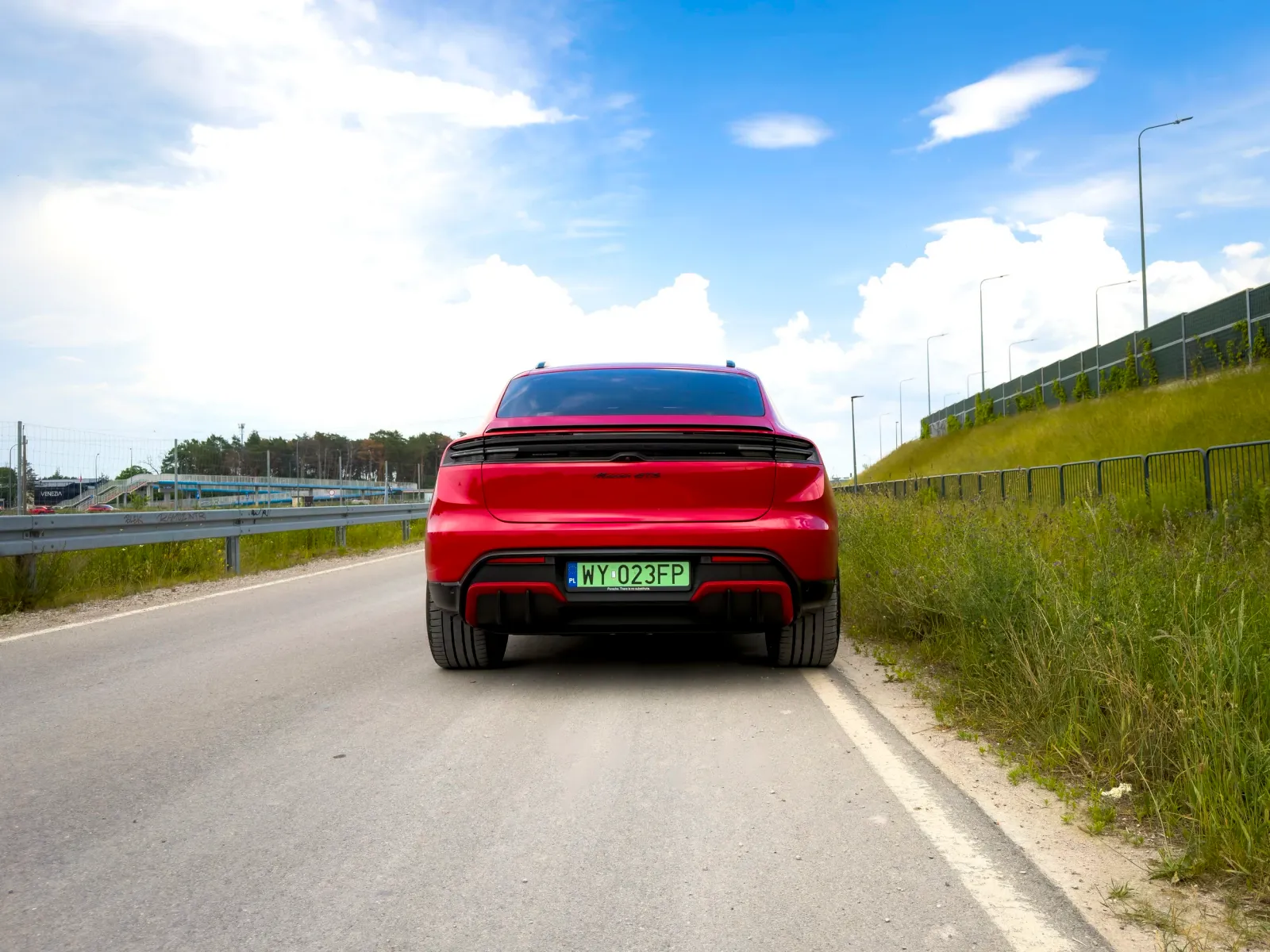
The GTS designation holds special significance in Porsche since 1963, when the 904 Carrera GTS model made its debut. It denotes a version tailored for drivers: more powerful than “regular” models, with stiffer suspension, yet still relatively drivable for everyday use. Now it has been introduced to the electric Macan, adding a fifth variant positioned between the 4S and Turbo models. But is the GTS truly the “sweet spot” in the Macan’s electric lineup? We decided to find out.
Contents
How much power does the electric Macan GTS have and what sets it apart from the Turbo version
What changes were made to the chassis and how does the car perform in practice
Testing results: acceleration, braking, traction, range
How much does the Macan GTS cost in Poland and who are its competitors
Powertrain – the most powerful rear engine in the lineup
The Macan GTS uses the PPE (Premium Platform Electric) platform with an 800 V electrical system. It features the same engine as the Turbo version, with a diameter of 230 mm and an effective length of 210 mm, powered by a 900 A silicon carbide (SiC) inverter. The nominal power is 380 kW (516 hp), and when Launch Control is activated, it temporarily delivers 420 kW (571 hp) and 955 Nm of torque. This enables a 0–100 km/h acceleration time of just 3.8 seconds, 0–200 km/h in 13.3 seconds, with a top speed limit of 250 km/h. The single-speed transmission (9.0:1) has been reinforced to handle high torque. For comparison, the Macan 4S achieves 516 hp with Launch Control and a 0–100 km/h time of 4.1 seconds, while the Turbo version delivers 639 hp and 3.3 seconds.
Chassis – Lowered, with rear weight distribution
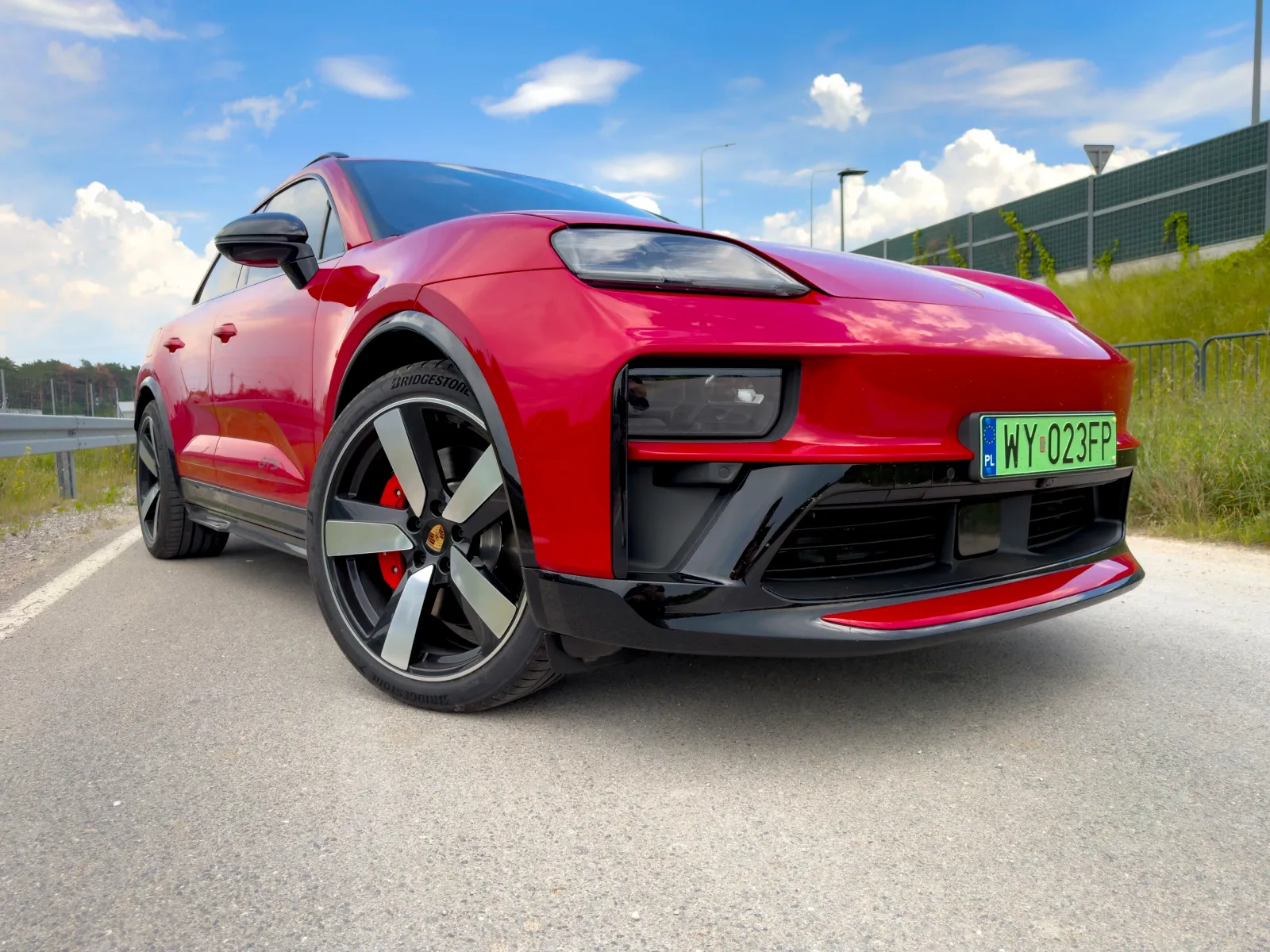
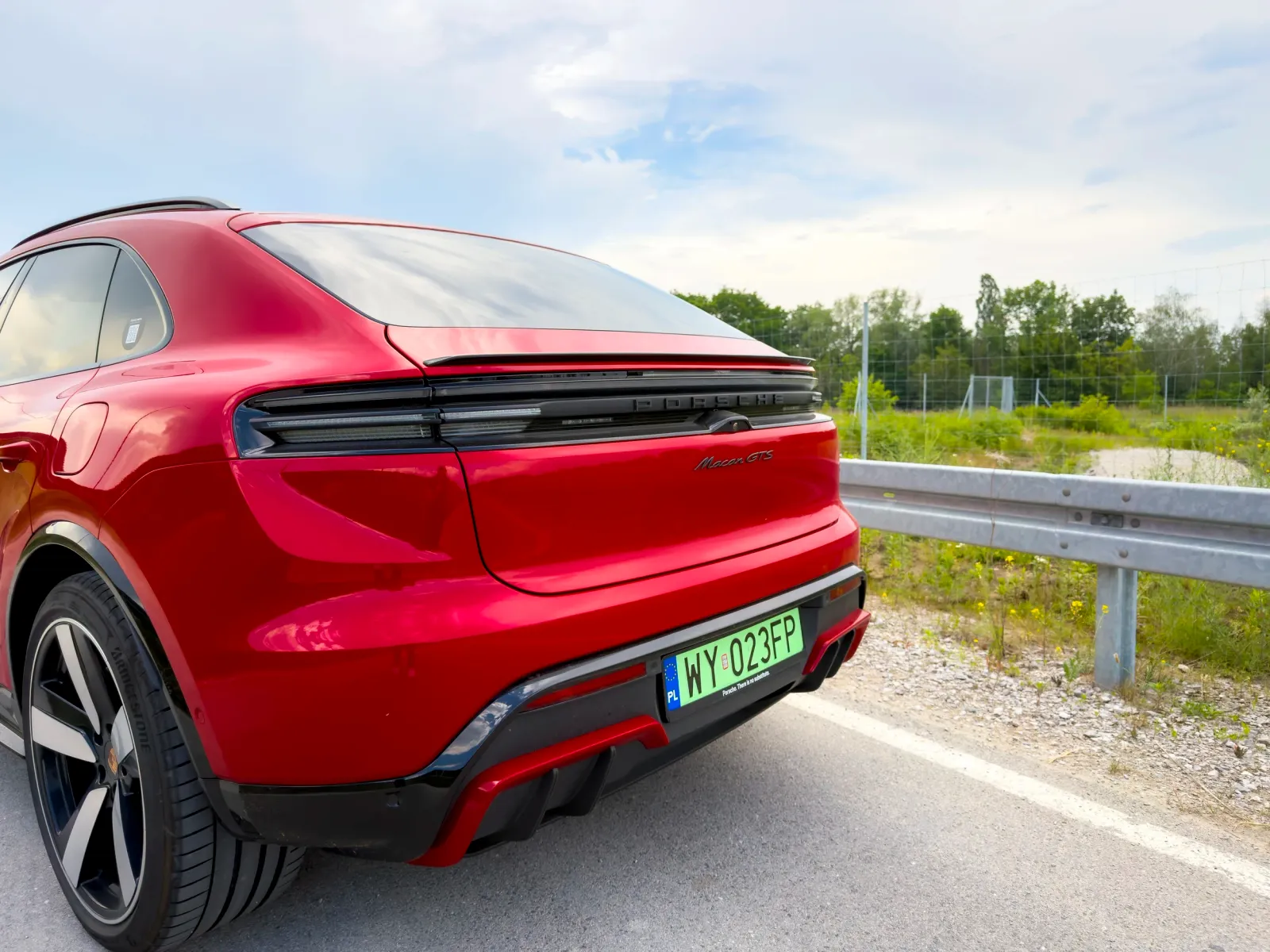
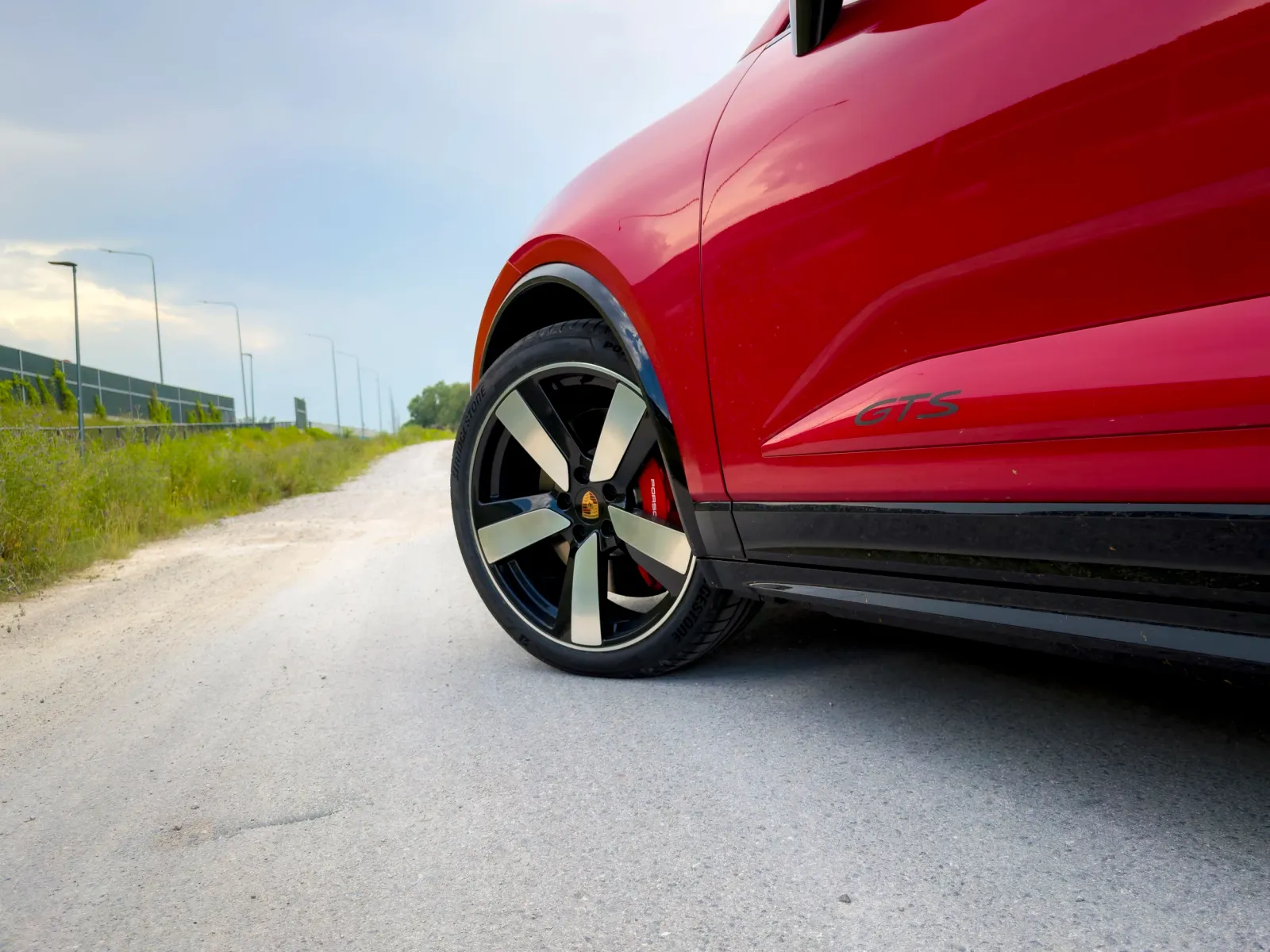
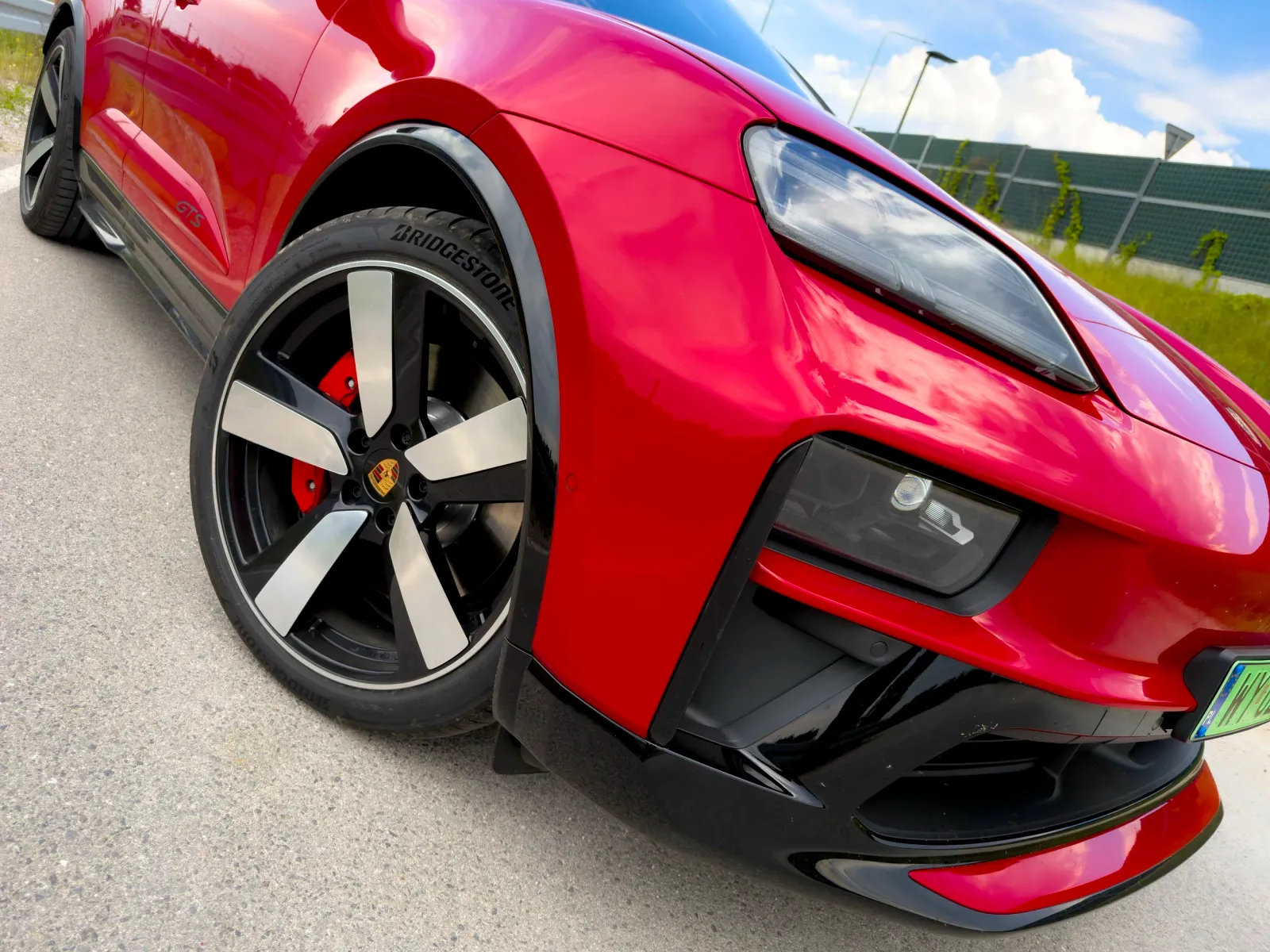
The series production sports air suspension with active PASM shock absorbers has received its own tuning settings, and the body has been lowered by 10 mm. Standard is the Porsche Torque Vectoring Plus system with electronically controlled locking of the rear differential, located right behind the engine. The weight distribution is 48:52 in favor of the rear, and the center of gravity is at its lowest point in the entire Macan lineup. The adjustable rear axle remains an option that is truly useful in narrow streets to improve the car’s maneuverability. Standardly, the Macan comes with 21-inch wheels, while 22-inch RS Spyder Design wheels are available as an option; although they offer little in terms of practicality, they are absolutely stunning in appearance.
The standard Sport Chrono package includes the track mode taken from the Taycan. It increases the cooling intensity of the battery to limit power loss caused by temperature under prolonged load, such as during multiple laps on a track.
Closer to Turbo than 4S
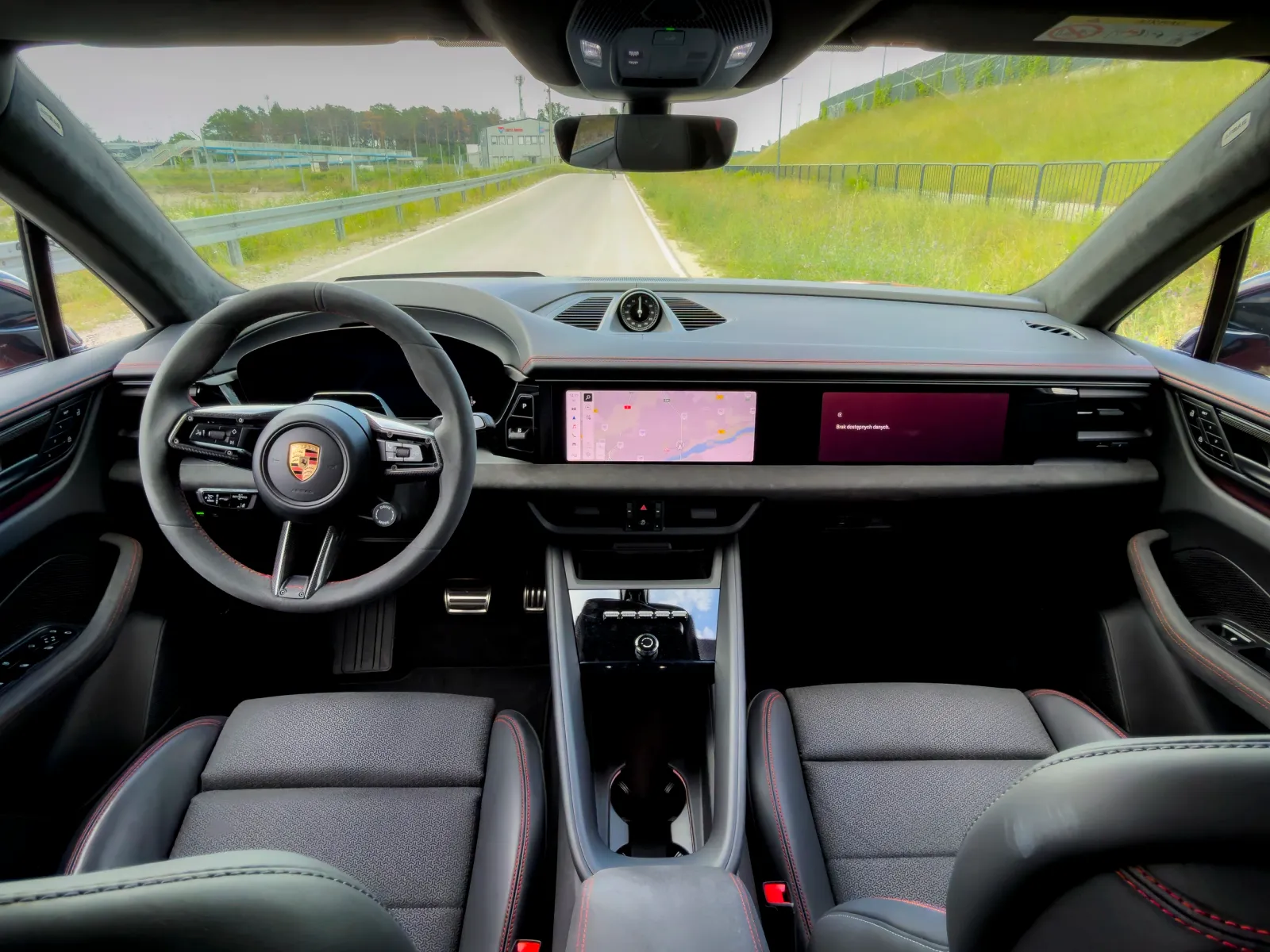
Let’s move on to the driving experience. The GTS drives more like a large, fast hatchback rather than a heavy SUV. It features a direct and responsive steering system, as well as cornering stability that isn’t disrupted by uneven surfaces. Completing the package is the Porsche Electric Sport Sound system with two sound profiles reserved for the GTS. Of course, it won’t replicate the classic roar of a V8, but it’s an interesting alternative that’s becoming increasingly refined and pleasing to the ear.
We must also consider the issue of suspension tuning. As I mentioned earlier, the car has been given unique settings. This has resulted in an almost perfect balance between sportiness and comfort. The car is pleasantly firm and even encourages drivers to explore where the limits lie when taking corners. And let’s be honest, those limits are quite far. Additionally, the car’s handling feel is perfect. Every movement of the steering wheel is transmitted to the wheels. It’s the precision expected from sports cars, something we’ve found in this SUV. All that comes to mind is “bravo.”
21 minutes to 80 percent charge.
As expected from an electric vehicle, the charging aspect cannot be overlooked. The battery in this case has a capacity of 100 kWh gross (about 95 kWh net). The WLTP range reaches 586 km with an energy consumption of around 18.5–20.6 kWh/100 km. Under real-world conditions, the Macan GTS covers approximately 400 km. However, if we exert more driving pressure, we shouldn’t expect easy performance. It’s very easy to awaken the energy “dragon” that draws power directly from the battery, reducing the actual range to around 300 km. Charging comes to the rescue here. The manufacturer claims a maximum charging power of 270 kW, allowing the battery to go from 10% to 80% in 21 minutes. During testing, it was possible to exceed this figure, achieving 280 kW, and adding about 160 km of range in just under 10 minutes.
Price – GTS between 4S and Turbo
Unfortunately, every story has its dark side. In Poland, the Macan GTS starts at around 490,000 zł, which is 120,000 zł more than the base model and 74,000 zł more than the 4S version. Of course, this doesn’t include the long list of additional features that can significantly raise the purchase price of this model. We should also remember that we’re still talking about Porsche’s smallest SUV, which, despite its performance and excellent handling, doesn’t offer much comfort for long trips. There isn’t much space in the back, and even in the front, taller individuals might find it cramped. As a result, it’s worth considering whether the base Porsche Cayenne, which is a few tens of thousands of zł more expensive, offers far more value.
Market – The electric Macan takes over
In summary, the electric Macan GTS delivers on the promises made in its name. It isn’t the fastest in a straight line, but it brakes better than the Turbo model, offers almost the same level of traction, a reasonably acceptable range, and very fast charging. For drivers who value driving experience over acceleration records, it’s the most interesting variant in the lineup. The price remains a barrier, putting the GTS in the category of cars for a niche group of enthusiasts, especially considering it’s still a compact SUV.
Gallery
Maciej Gis