
On the outside a 1950s Chevrolet, on the inside a Tesla: this is how they created this classic electric car
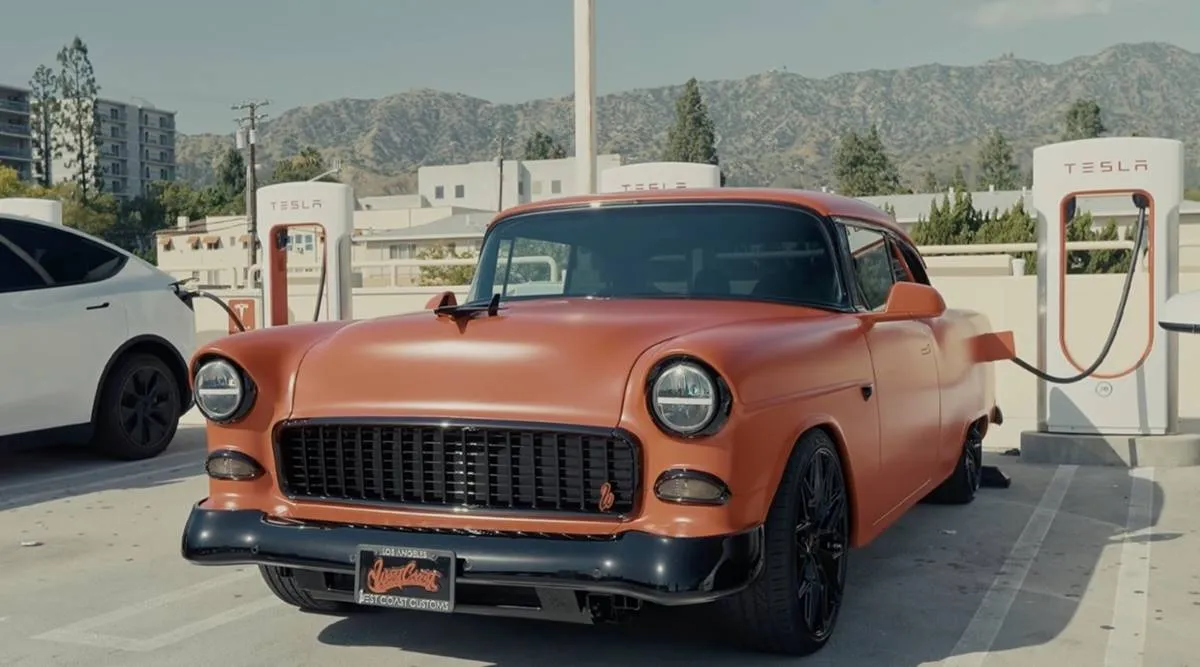
What if we took one of the most iconic American cars from the 1950s and combined it with the technology of a Tesla Model 3? The result is a transformation that might not please all classic car enthusiasts, but it shows how far things can go when two completely different worlds are merged. And the most interesting part is that its creators didn’t just replace the gasoline engine with an electric one.
The renowned American shop West Coast Customs, famous for its vehicle modifications and the television show Pimp My Ride, has undertaken one of its most unique projects. It involved converting a Chevrolet Bel Air into an electric car by using almost the entire platform of a Tesla Model 3. This transformation preserves the essence of the classic American car while hiding a completely modern vehicle beneath its bodyshell.
Ryan Friedlinghaus, founder of West Coast Customs, decided to approach this project in an unconventional way. Instead of installing an electric motor and battery in the original chassis, he opted for a much more radical solution: using a Tesla Model 3 as the donor vehicle and placing the Chevrolet’s bodyshell on top of it.
A Chevrolet Bel Air with a Tesla Model 3’s chassis and interior
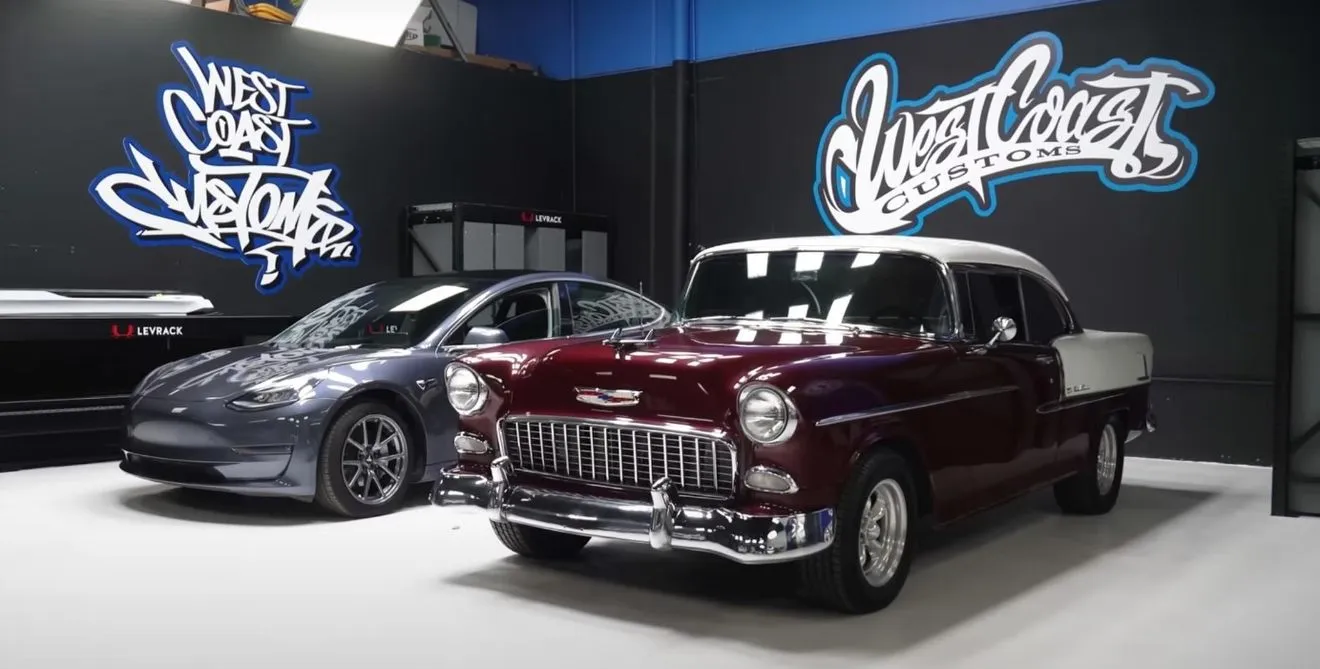
The process began with completely disassembling the Tesla Model 3’s body to leave only its chassis, along with the necessary components to keep the car functional. This allowed the team to use a modern electric base to adapt the Bel Air’s body to.
This wasn’t the first time West Coast Customs had undertaken a transformation of this kind. They had previously combined older bodies with modern chassis from models such as the Pontiac GTO, Chevrolet Camaro, or Ford Mustang. But this time there was a significant difference: the chosen chassis was electric and came with a built-in battery, which greatly complicated any structural modifications.
One of the biggest challenges arose when trying to fit both bodies together. The wheelbase of the Chevrolet Bel Air did not exactly match that of the Tesla Model 3. In previous projects, the workshop had been able to modify the chassis to adjust its dimensions, but with the electric platform this option was much more limited.
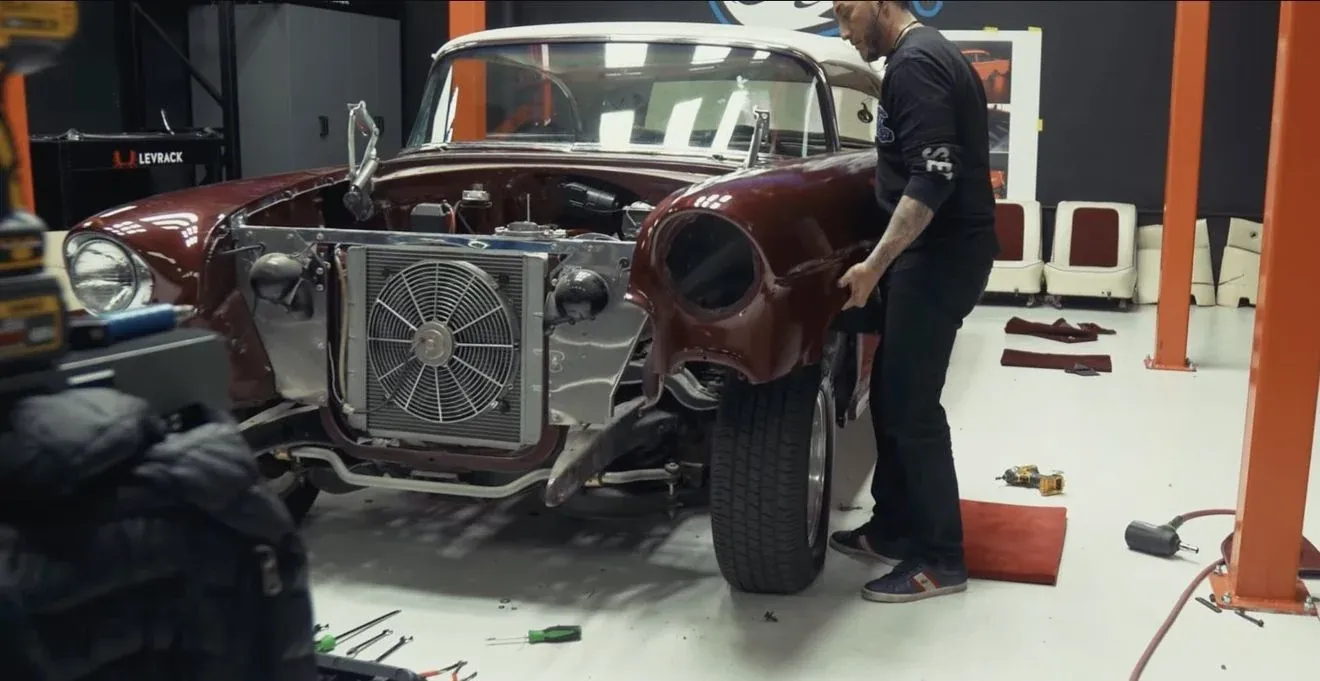
The solution was to modify the rear track of the Chevrolet, lengthening it slightly so that the wheels could be properly positioned. This adaptation allowed the classic car’s proportions to be preserved without requiring major changes to the Tesla’s structure.
Before permanently installing the body, the mechanics tested the completely bare electric platform. The car could drive and function normally, confirming that the Model 3’s chassis was still operational after removing its original body.
The interior also underwent a rather unique transformation. The owner wanted the car to appear as a classic Chevrolet Bel Air from the outside, but to reveal a modern interior once the doors were opened, almost like that of a Tesla.
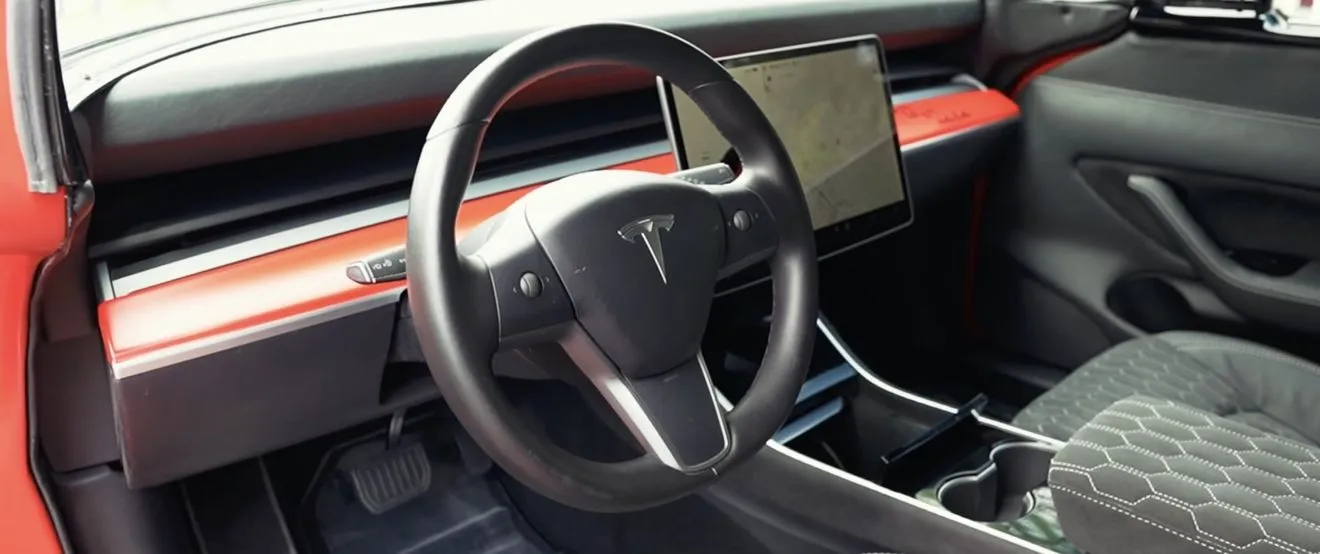
To achieve this, West Coast Customs retained much of the Model 3’s original interior, adapting it to the dimensions and shape of the American body style. The result combines Tesla’s modern architecture with custom upholstery, black suede finishes, white stitching, and small red accents.
The seats and various interior surfaces feature an octagonal stitching pattern inspired by those used in models like the Lamborghini Urus. This detail enhances the contrast between the exterior design from the mid-20th century and the technologically advanced interior atmosphere.
The bodywork also underwent some aesthetic changes. The owner wanted to retain Chevrolet’s signature red color but with a more modern appearance. Therefore, the shop chose a satin red paint combined with bright black accents, which adds a sportier look without drastically altering the car’s identity.
The project also takes advantage of one of the most interesting benefits of using the Tesla platform: the ability to utilize its electrical systems and charging infrastructure. In the video, its developers emphasize just how surprising it would be to see a 1950s Chevrolet connected to a Supercharger alongside modern Teslas.
The final result has sparked mixed reactions. Some enthusiasts consider turning a classic Chevrolet Bel Air into an electric car almost a sacrilege, while others appreciate the possibility of continuing to enjoy these vehicles with modern mechanics that are much easier to use.
The owner himself highlights this latter aspect. He claims it is now much easier to drive, and that the experience of taking a classic car with electric propulsion for a drive is particularly satisfying.
Indeed, this project shows that electrifying a classic car doesn’t have to be limited to replacing its engine. It’s also possible to use a complete platform from a modern electric car, including its battery, suspension, propulsion system, and much of the interior space.
A complex and likely expensive solution, but it offers an interesting option for those who want to retain the design of classic American vehicles without sacrificing the advantages of a modern electric car.