
Polestar’s design strategy: Formula 2030 showcar sets the direction
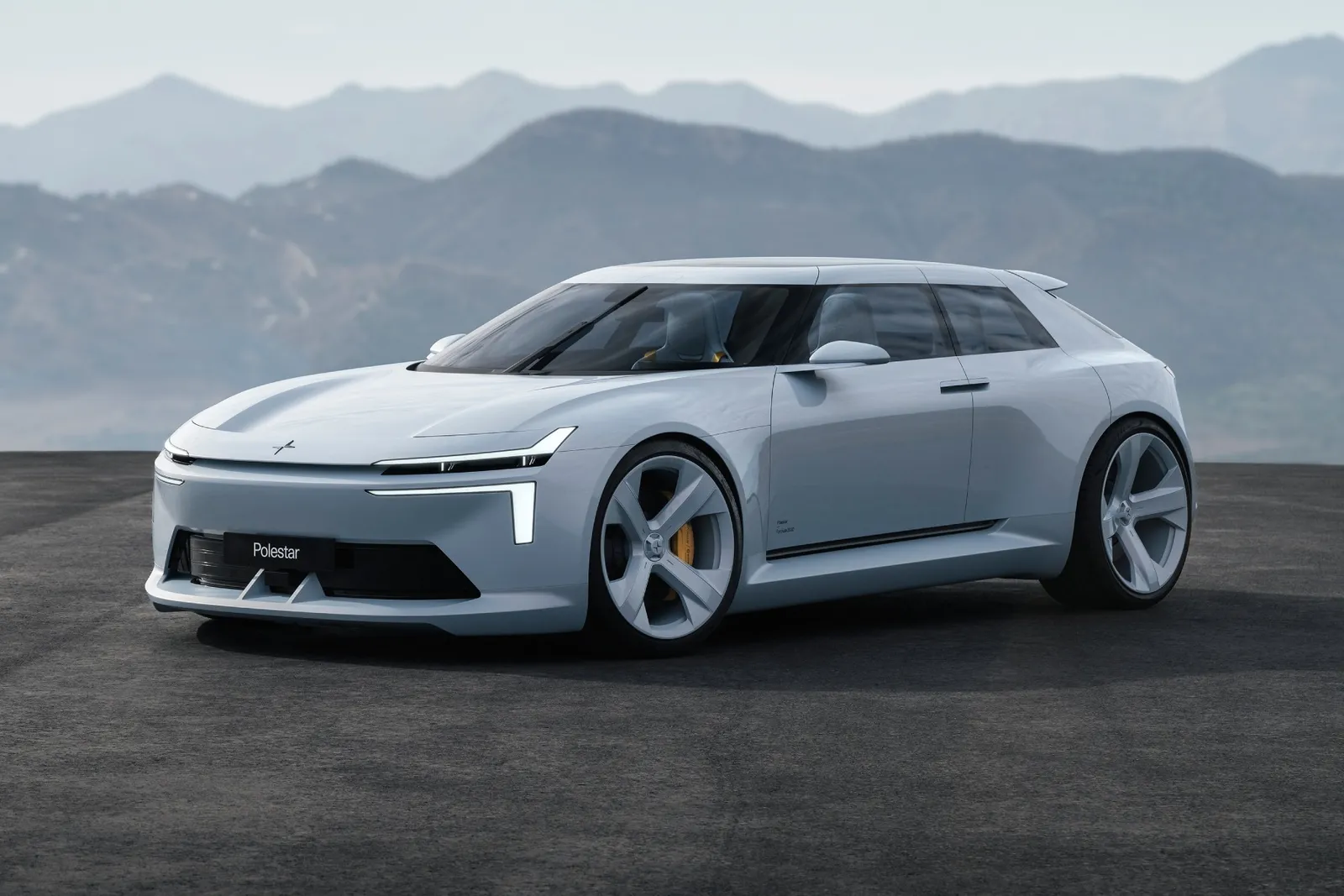
Polestar unveils the Formula 2030 concept car, showcasing the brand's future design direction. Formula 2030 is the first study under the leadership of Chief Designer Philipp Römers, who took up the position in mid-2024. As a four-door sports car, the show car is intended to emphasize that performance remains at the heart of the brand.
Image: Polestar
Since mid-2024, Philipp Römers has served as Head of Design at Polestar. Now, the Formula 2030 concept car offers the first glimpse of an evolution in the brand’s visual identity. The study serves as a physical embodiment of the overarching Formula 2030 brand strategy.
Philipp Römers commented: “Design should always reflect the values and mission of a brand and that is exactly what we did with Polestar Formula 2030 concept. It is a physical embodiment of how we apply Polestar‘s core values of design, performance and sustainability to the next production cars. A bold evolution of our already well-established design DNA to strengthen the brand‘s positioning with performance at its heart.”
In developing the concept, the design team aimed to eliminate the superfluous and refine the existing, Polestar explains. No compromises were made. As is typical with design studies, the Formula 2030 is unlikely to represent a prototype of a future production model. However, Polestar has announced that various design features of the Formula 2030 will appear in the next generation of the Polestar 2 as well as the upcoming Polestar 7.
Sporty, dynamic exterior that winks at future production models
At 4.68 metres in length, 2.02 metres in width, with a 2.78-metre wheelbase and a height of 1.35 metres, the Formula 2030 is flatter than the Polestar 5 GT. Its dimensions position it between the future Polestar 2 and the Polestar 7. The concept car sits on 22-inch wheels, which, while impressive, are unlikely to make it into production. Typical of modern electric vehicles, however, are the short overhangs. Its long bonnet and wide rear fenders emphasise the sporty character.
At the front, dual-blade headlights are integrated into an aerodynamic wing, offering a preview of the design for the next-generation Polestar 2, expected in 2027. The wraparound windscreen with a vertical wiper transitions directly into the side windows. Beneath a cover above the windscreen is a LiDAR unit, which only becomes visible when in use.
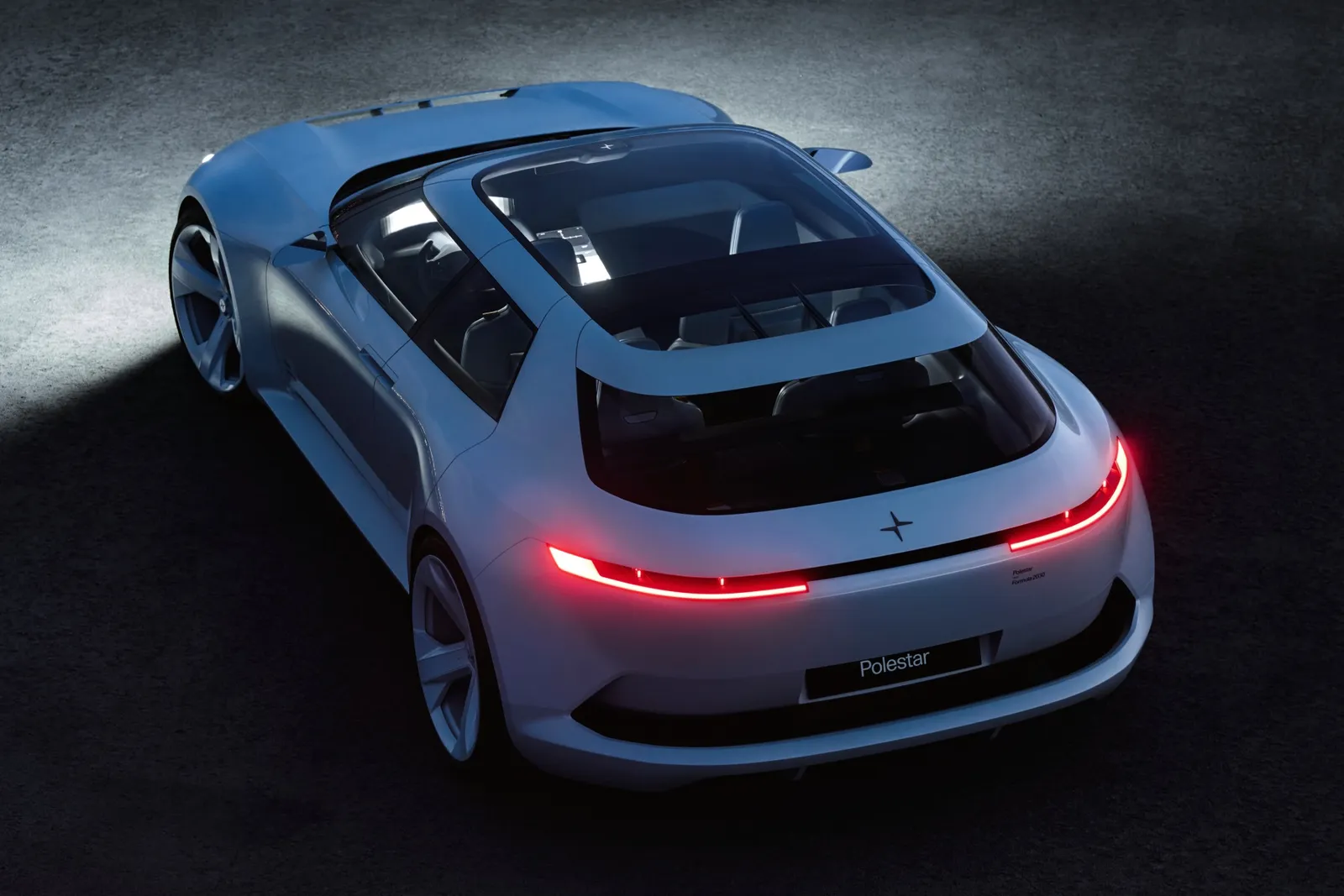
Image: Polestar
- 1/5
- 2/5
- 3/5
- 4/5
- 5/5
At the rear, Polestar replaces the previously continuous light strip with separate single-blade rear lights, which are intended for future production models. The rear window connects to the flat side glazing and is interrupted by the C-pillar, which extends into the roof. Additionally, the vehicle features a centrally mounted, illuminated rear wing and a diffuser.
Nahum Escobedo, Head of Exterior Design at Polestar, said: “We wanted to evolve, while respecting, the core design values we demonstrated with previous models that define the Polestar brand in such a recognisable way.”
Also visible on the concept car is the newly developed exterior colour, Nitrogen. Designed to “react dynamically to natural light,” it features a glossy, matte, or satin finish depending on the area of the vehicle. As an accent, Polestar has also incorporated its signature “Swedish Gold” on Brembo brake callipers, valve caps, interior elements, and seatbelts.
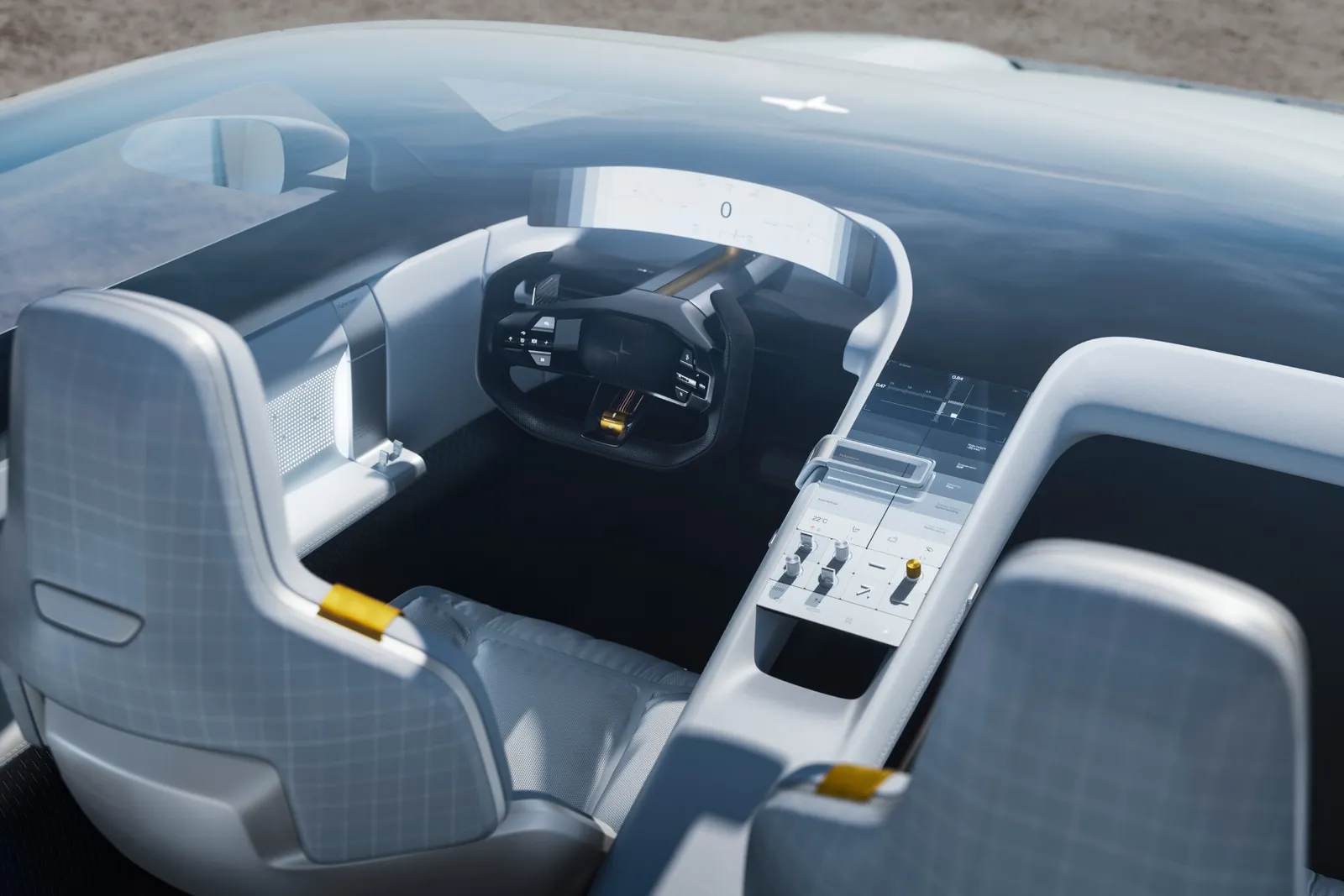
Image: Polestar
- 1/4
- 2/4
- 3/4
- 4/4
Driver-oriented cockpit with wraparound console
The interior concept of the Polestar Formula 2030 focuses on the driver. Directly on the steering column is the 20-inch HyperDIM driver display, complemented by a 12.2-inch central display in the slightly rising centre console. A horizontal, indirectly lit console runs through the entire interior. For control, the centre console below the main screen offers eight freely assignable physical switches and rotary knobs.
The four deeply mounted individual seats feature adjustable air cushions for lateral and longitudinal support. A slider in the centre console allows the selection of Performance, Normal, and Autonomous modes, which ergonomically adjust the seat, steering wheel, and central display: in Autonomous mode, the distance between the seat and steering wheel increases with the display upright; in Performance mode, the steering wheel and driver display move closer to the driver, while the central display is flush and lowered.
“With the Formula 2030 concept we’re reducing the unnecessary, distilling the experience to its very essence and enhancing the elements that truly matter to set the tonality and ambition for future Polestar interiors. As a performance brand, we see a renewed focus on the driver, and so we re-balance the digital and physical. We introduce physical buttons and controls, and we believe we have achieved a tactile harmony suited for our premium positioning,” explained Juan Pablo Bernal, Head of Interior Design at Polestar.
Sustainability is also a focus of the study. Components such as the door panels are made from single-material, mono-material constructions, making them fully recyclable, while visible structural components like seat frames and crossmembers are made from low-emission recycled steel produced using renewable energy. Instead of conventional plastics for the seat backs, a bio-based composite material made from European flax and polypropylene by Bcomp is used.