
Pere Navarro defends DGT’s radars and denies they aim to collect revenue: “That is not our intention.”

12/11/2026 19:00
Updated to
12/11/2026 19:00
The General Directorate of Traffic has once again defended its speed control policy in the face of criticism over the revenue generated from fines. Its director, Pere Navarro, claims that the installation of speed cameras is based on road safety considerations and asserts that the agency receives no budgetary benefits from increasing the number of penalties.
These explanations were given during an international conference on road safety for motorcyclists held in Zaragoza on October 21 and 22. In an interview published by Heraldo de Aragón, Navarro discussed the revenue collected, the criteria used for installing speed cameras, and the trend in accidents in Spain, with a particular focus on motorcycle users.
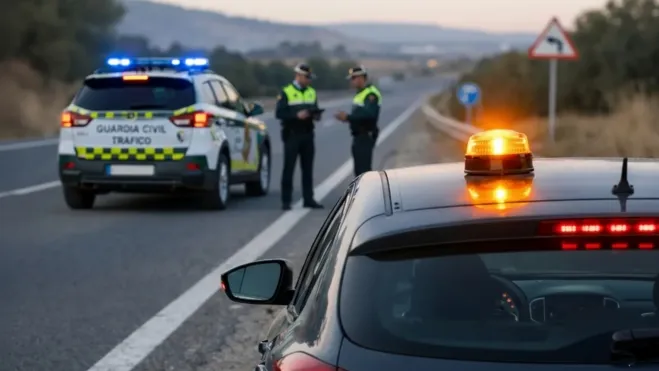
DGT explains what happens to the money from traffic fines
One of the traffic director’s main points was that DGT operates with a fixed budget, thus ruling out any financial motive behind speed checks. Navarro also claimed that Spain is among European countries with the lowest fines, though he did not provide comparative data to support this claim.
The allocation of funds obtained from fines is regulated by Spanish law. Specifically, Additional Provision Four of the Traffic Law requires that fines imposed by the General State Administration be used entirely for activities related to road safety, accident prevention, and assistance to victims. This requirement does not apply in the same way to fines managed by municipalities or the administrations of Catalonia and the Basque Country.
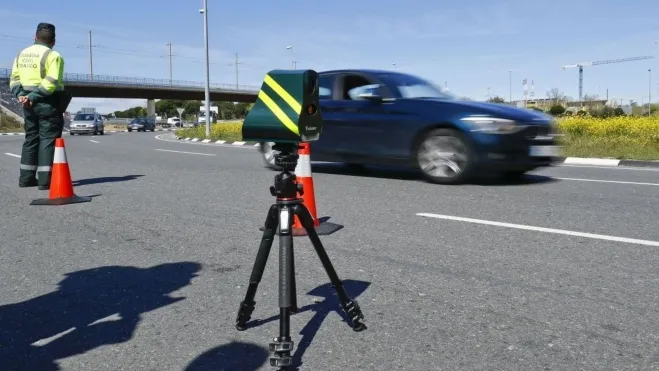
Regarding the placement of safety devices, the Traffic Department maintains that decisions are based on accident statistics studies. Instruction MOV 2024-04 establishes a five-phase evaluation process that analyzes, among other factors, accidents recorded over the previous five years in two-kilometer sections of roads.
The accident data Traffic uses to defend speed cameras
Navarro’s main argument for keeping these speed controls is the relationship between speed and the severity of accidents. In his statements, he attributed 22% of accidents to this risk factor and credited the introduction of a 30 km/h urban speed limit with a 14% reduction in accidents. However, the information provided does not identify the specific studies that support these percentages.
The latest official statistics show the overall trend in road safety. According to the final figures for 2025 released by the DGT, Spain recorded 1,775 fatalities in traffic accidents, ten fewer than in the previous year. However, the number of injured people who required hospitalization increased by 3%, reaching 9,888 cases, indicating uneven changes in the key indicators.
The situation of motorcyclists also took up an important part of the director’s remarks. This group accounts for approximately 16% of Spain’s vehicle fleet, but they account for around a quarter of road deaths. The 2025 annual accident report shows 443 deaths among motorcyclists, a figure that rises to 468 when moped riders are included.
For now, Pere Navarro’s statements do not imply any changes to fines or the legal criteria for radar operation. The DGT maintains its strategy of surveillance and enforcement as a tool to reduce accidents, although it still has not publicly detailed the scope of its closed-budget system nor provided a documented comparison of Spanish fines with those in other European countries.