
New Dacia Spring (2026) in review: The budget car at its best
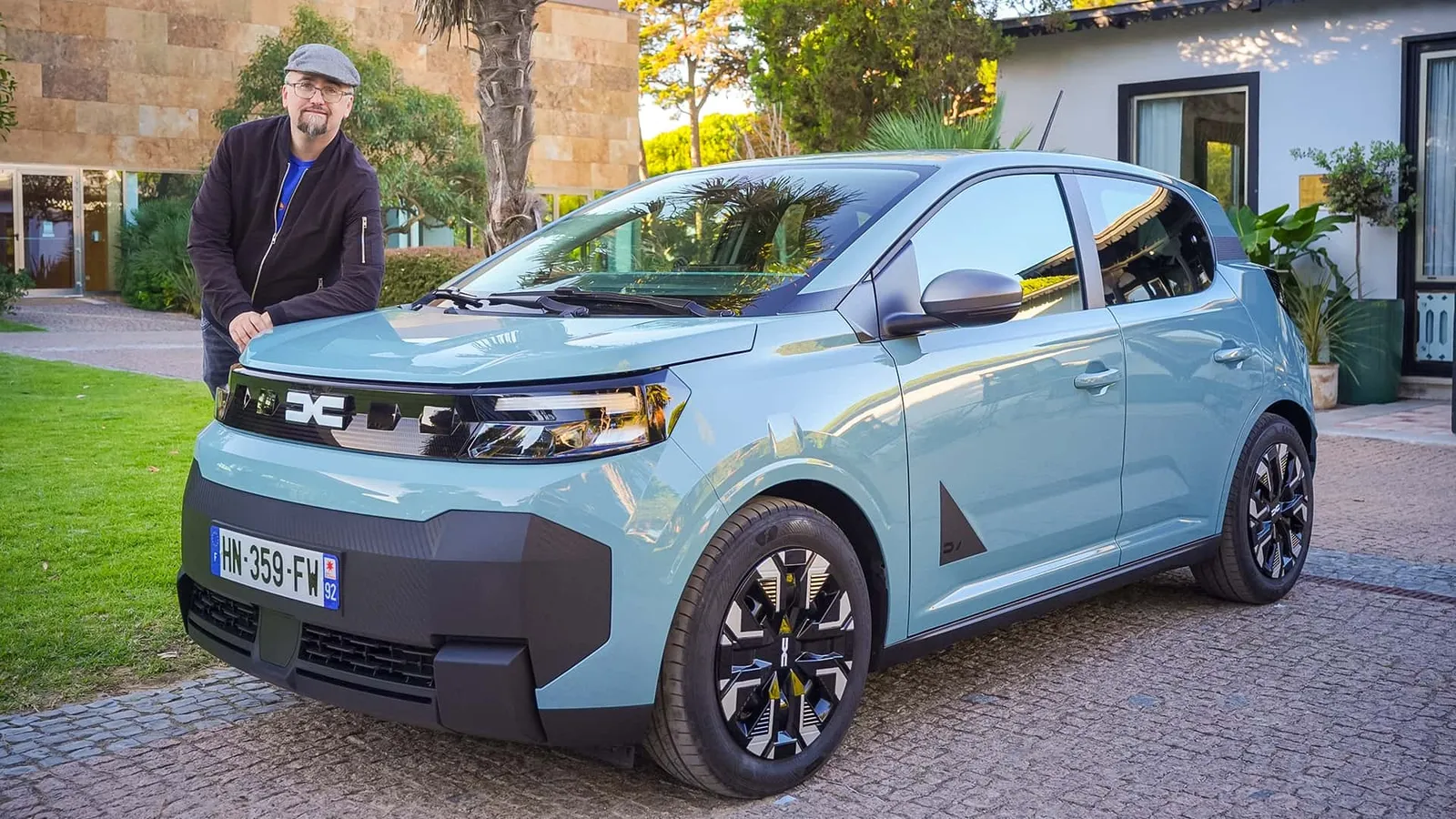
Do you still remember Ernie and Bert from Sesame Street? One is childlike, playful, and quirky, while the other is humorless, serious, and lacking in fun. At the automotive level, there are now counterparts to them: the Renault Twingo (Ernie) and the Dacia Spring (Bert). Both were created by the same designer and share the same base, yet they are quite different.
Dacia has confirmed the introduction of four all-electric vehicles by 2030 and is now unveiling the first model in this series: the new Dacia Spring. It is positioned as an A-segment electric vehicle, developed on Renault Group’s new RG-EV small car platform. Production of this model takes place alongside the Renault Twingo and Nissan Pixo in Novo Mesto, Slovenia. Unlike its predecessor, the Spring will no longer be a Chinese-made car.
Image Gallery: Dacia Spring (2026) in Test
Will it become better as a result, but possibly also more expensive? And what are the differences compared to the Renault Twingo, which the author of these lines recently drove? This is intended to be a first test drive of the new Dacia Spring. Here are the key details first:
Quick facts
Dacia Spring (2026)
Powertrain
Permanent magnet motor (synchronous motor), front-wheel drive, 1-speed automatic transmission
0 - 100 km/h
12.1 seconds
Range (WLTP)
246 - 250 km
Consumption (WLTP)
12.7 - 12.9 kWh
Charging speed (DC)
50 kW (optional only, standard is 6.6 kW AC)
Base price
17,900 euros
Body/Design | Interior | Powertrain/Driving experience | Consumption/Price | Conclusion
Body/Design
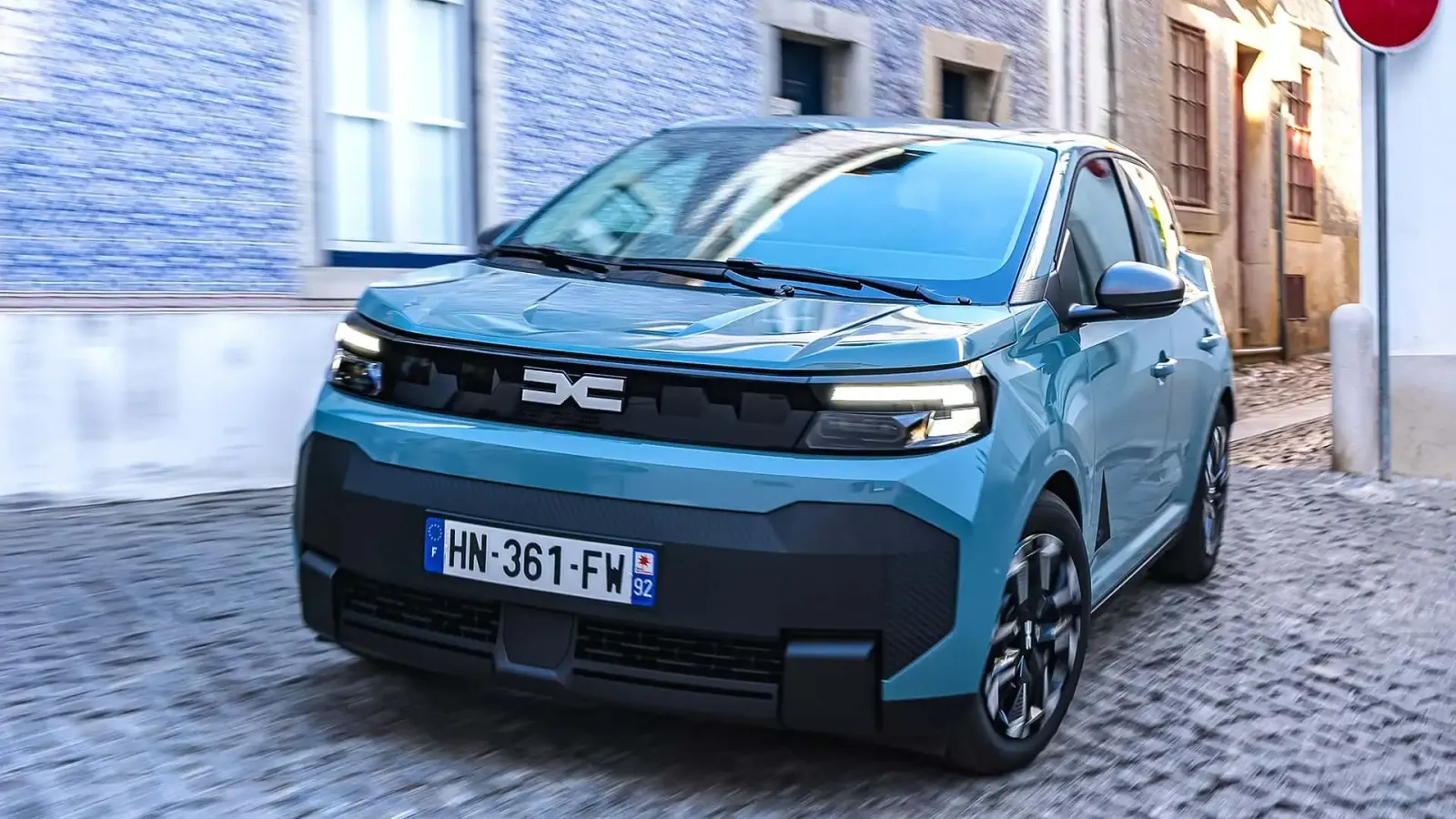
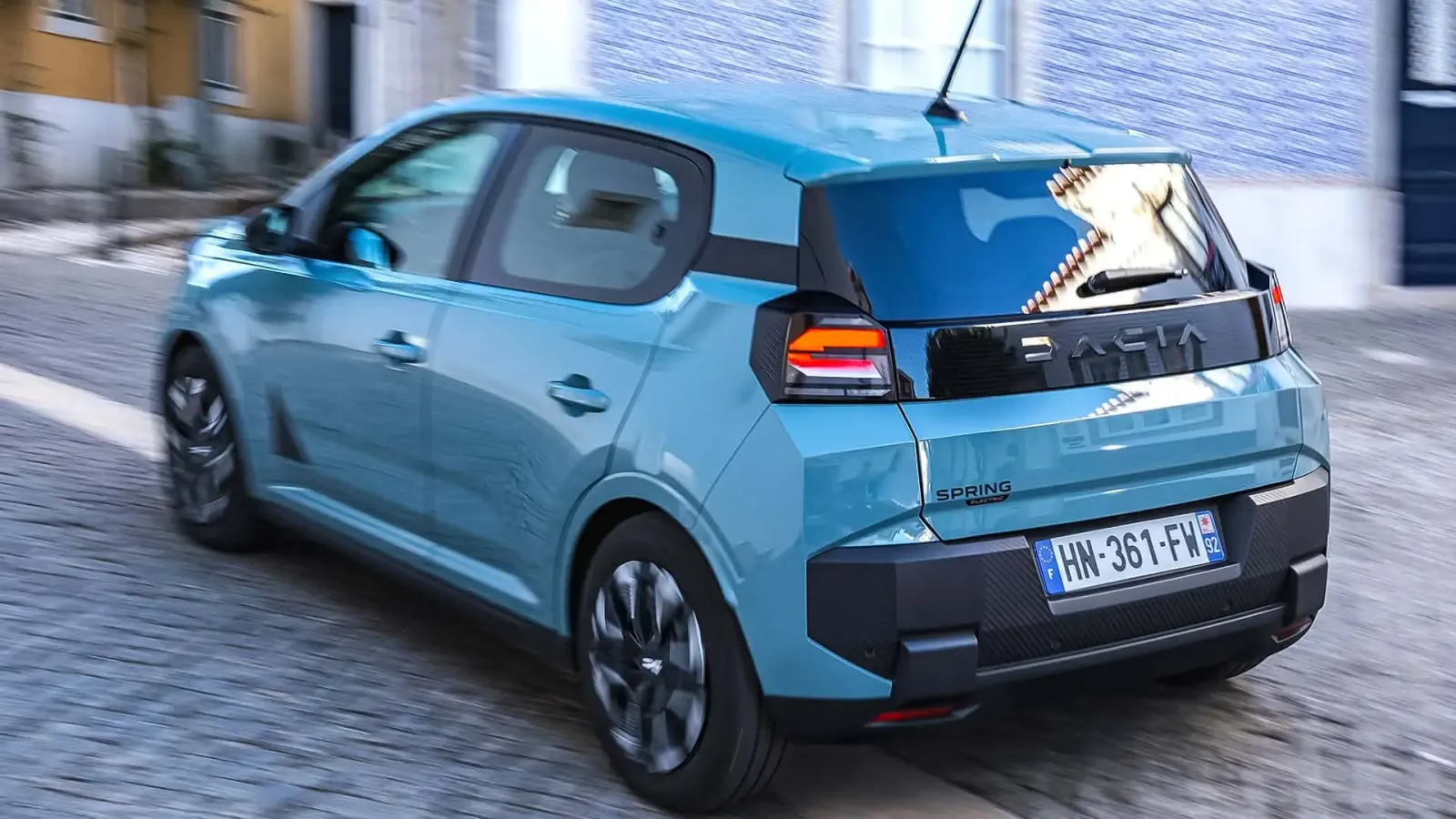
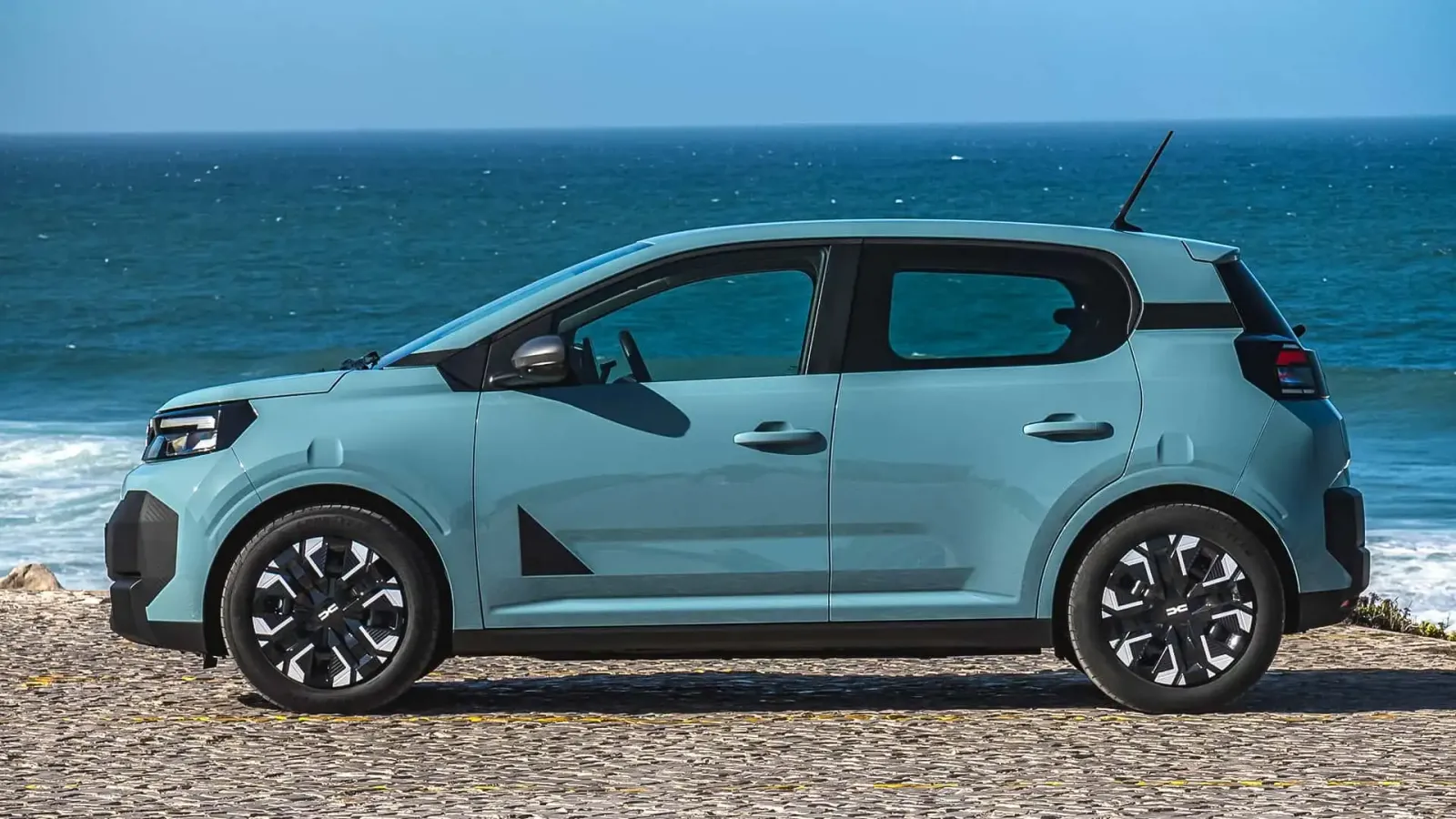
The exterior design of the new Spring follows a functional and geometric design language that avoids unnecessary decorative elements. As mentioned earlier, the Spring appears significantly more practical in appearance compared to the Twingo. The similarities are most evident in the side profile; otherwise, the Dacia car has a distinct identity of its own. Group CEO Katrin Adt told Automobilwoche that only 20 percent of the components are different from those in the Twingo.
The designers did a good job. They skillfully combined elements from the old Spring with those of the new Twingo. Notable is the increased size of the new Spring. It measures 3.85 meters in length, an increase of 15 centimeters. It is also 1.74 meters wide without mirrors, meaning it is 13.9 centimeters wider than the previous generation.
Dacia Spring (2026) in Testing
Images by: Dacia
Images by: Dacia
These altered proportions, combined with a short hood and prominent fender flares, provide a more stable stance on the road. Fortunately, the Spring hasn’t become bulky but rather less toy-like. On the positive side: stable door handles all around.
The front and rear sections are connected by continuous, structured trim strips in a black finish that house the headlights and taillights, creating a unified lighting design. Large, solid-colored plastic covers on the bumpers serve to protect against minor damage in daily use.
Dimensions
Dacia Spring (2026)
Length / Width / Height (in mm)
3,855 / 1,722 / 1,519
Wheelbase
2,492 mm
Turning radius
9.9 m
Trunk space
325 - 337 / 1,283 liters
Weight
1,287 kg (including driver 68 kg and luggage 7 kg)
Towing capacity
-
Roof load capacity / load support
- / -
Another significant difference from the Twingo is that while the Twingo often comes in bright colors, the Spring offers only four rather dull paint options: Agave (the car in the images), Glacier White, Pearl Black, and Slate Gray. None of them are particularly cheerful, and we would keep the free white option. However, we were told that more colors will be added in the near future.
Interior
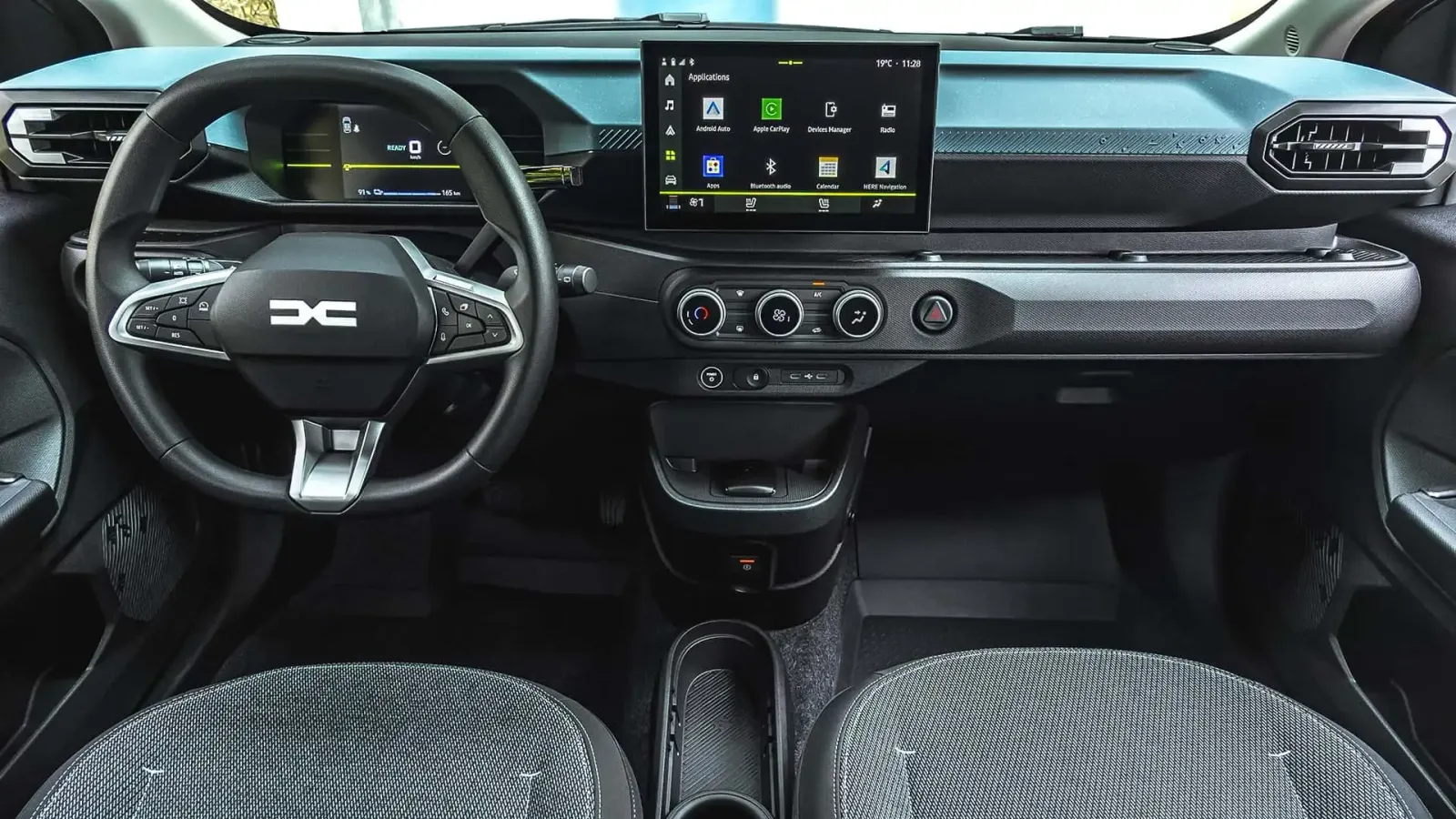
Inside, the close resemblance to the Twingo is immediately apparent. Rigid plastics dominate both models, and cheap prices must come from somewhere. The controls raise few questions, as the Spring lacks clever features like the Twingo’s chunky red warning light switch. Dacia also omits the playful graphic intro when starting the car. Standard is a 7-inch digital dashboard, but there aren’t many display options available.
By default, you clip your smartphone into the center console; only the Journey trim comes with a 10-inch touchscreen. The infotainment system isn’t particularly fast, but the monitor is useful for using Google or Apple navigation. Additionally, the YouClip mounting system allows accessories to be attached flexibly at multiple fixed points inside the cabin.
Dacia Spring (2026) in test
Images by: Dacia
Images by: Dacia
The folding door opener familiar from the Twingo is rather impractical inside, especially in the dark. It’s also a shame that there’s no handle for the passenger, as there’s no real grip point on the door itself either. Climate control is always manual; after a short adjustment, you master the process literally in no time.
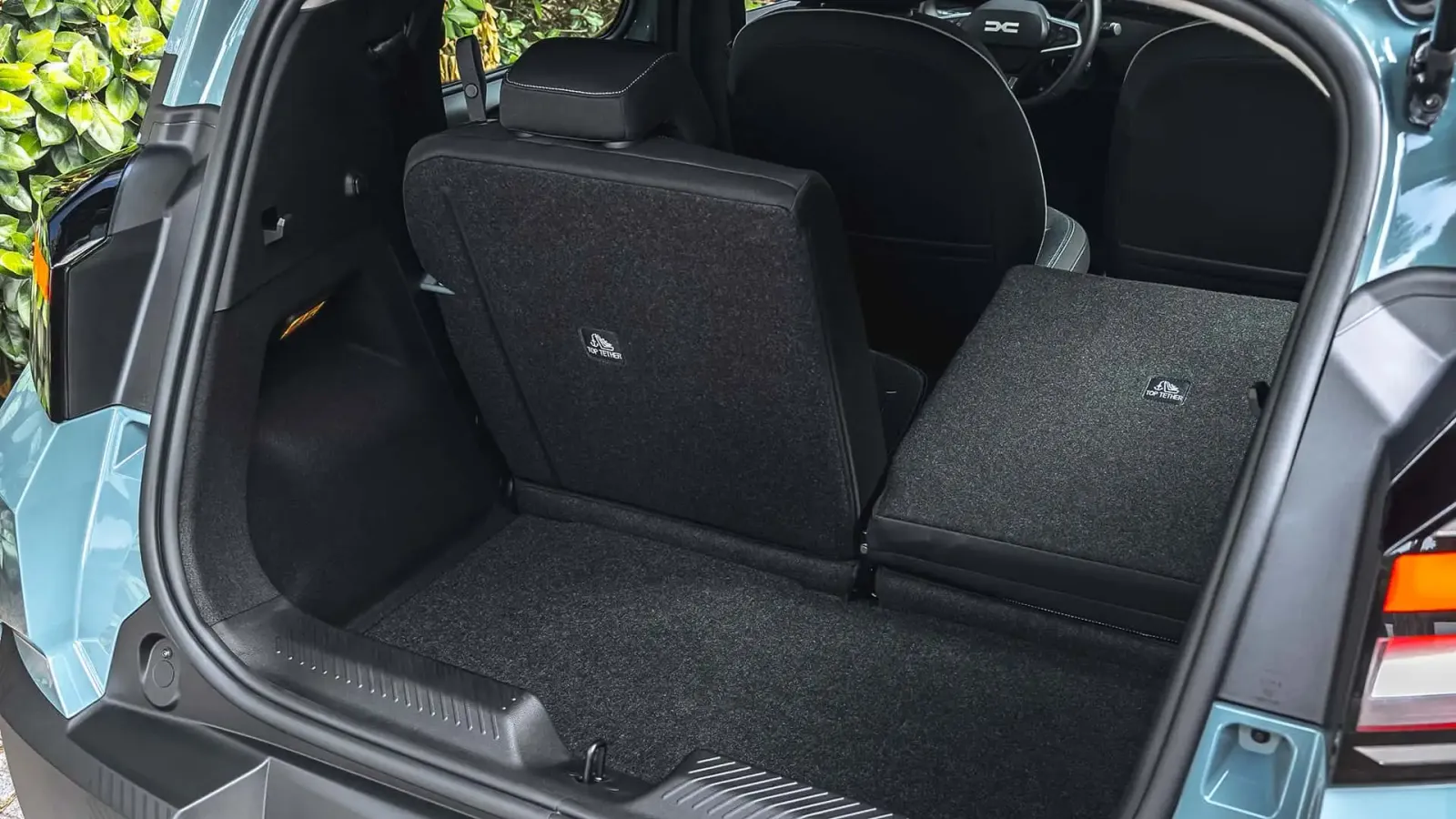
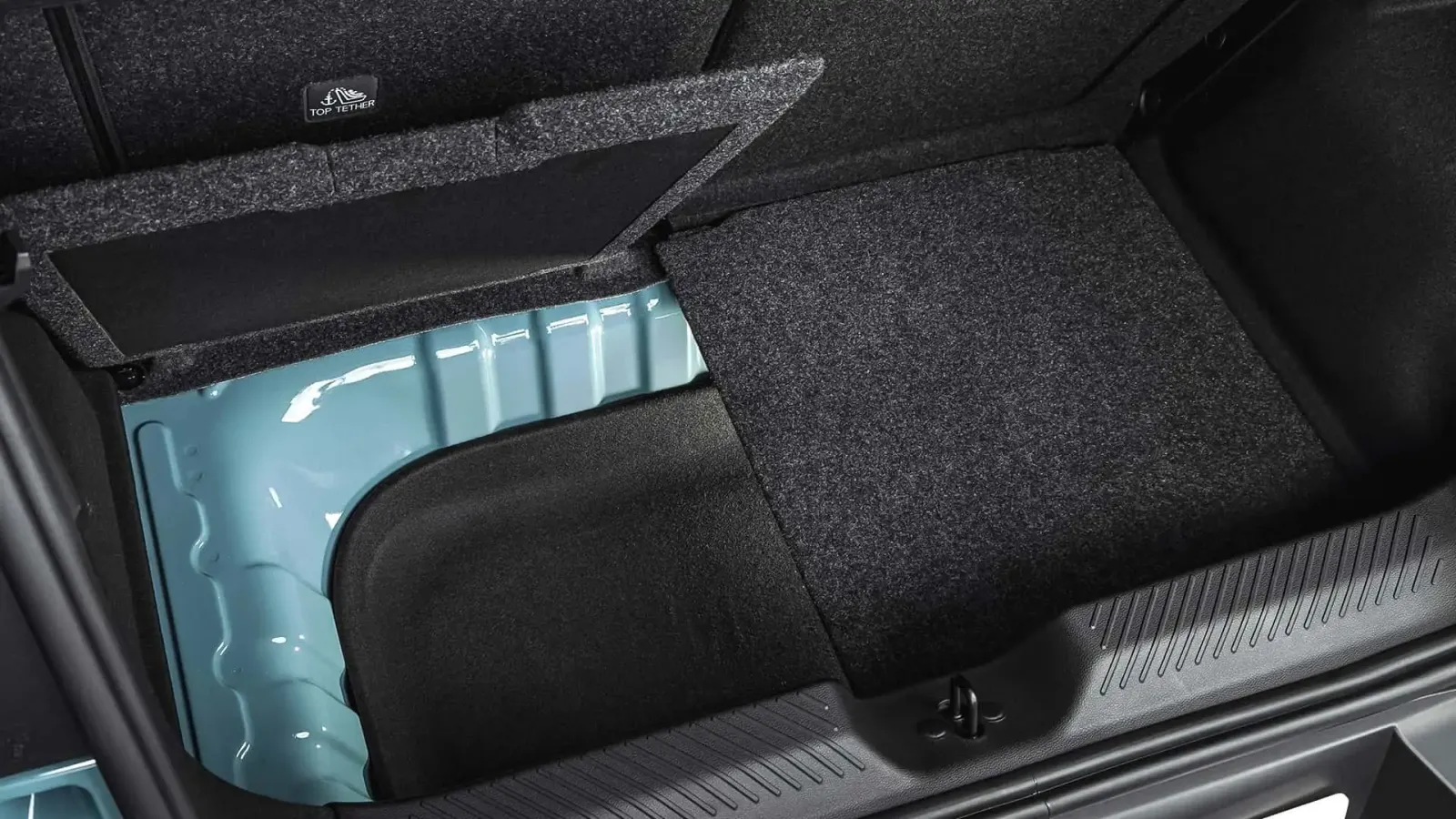
The trunk volume is up to 337 liters and can be increased to 1,283 liters by folding the rear seats in a 50:50 ratio. However, the exposed metal on the trunk lid shows why the Dacia can still be a bit cheaper than the Renault.
Practicality: There is also storage space under the split, removable load floor. We would store the charging cable here instead. The optional front storage area under the hood ("Frunk") with 18 liters of capacity seems rather limited.
Images by: Dacia
Images by: Dacia
The front seats are also limited in space. Their surface area and backrests are too short for taller people, although the driver’s seat is adjustable in height and the steering wheel is adjustable in height and length. Long trips? Not recommended. A plus is the increased width: in the new Spring, passengers in the front don’t get in each other’s way.
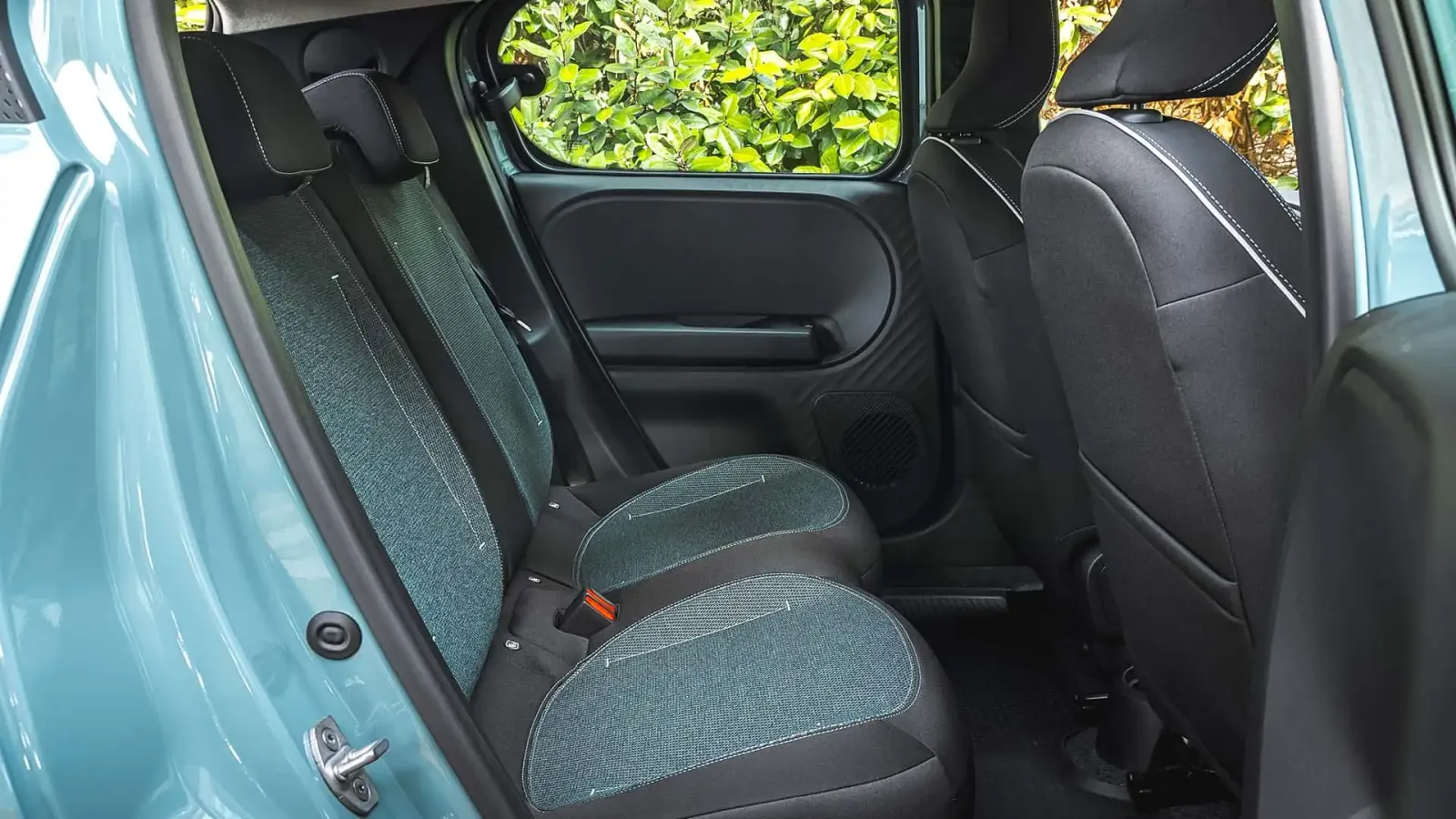
The leg and headroom in the rear seats are acceptable, though neither is particularly spacious. This is also because Dacia has abandoned the longitudinally adjustable rear seats from the Twingo in the new Spring. A common feature, however, is the rear windows that can only be tilted outward.
Power/Driving Experience
Under the hood, the Spring is identical to the Twingo. The Dacia is powered by an electric motor with a power output of 60 kW (82 hp) and a torque of 175 Nm. It accelerates from 0 to 100 km/h in 12.1 seconds, with a top speed of 130 km/h. The vehicle’s curb weight starts at just over 1.3 tons.
Dacia Spring (2026) in Test
Image by: Dacia
That’s the theory. What about practice? Here, the new engine delivers some pleasant surprises. It accelerates swiftly (3.9 seconds to 50 km/h) while remaining smooth under load. Overall, it offers a balanced power output—nothing rocket-like, but more than sufficient for everyday use, lively in the city, and much more harmonious than its predecessor.
The suspension tuning is also successful. The Dacia handles more roughness than one would expect given its short wheelbase. 16-inch wheels are standard, and only with severe potholes does the suspension reach its limits. The steering is even more impressive. Unlike many Chinese competitors, it provides plenty of feedback and responds directly. The hard plastic steering wheel rim slightly reduces the often-cited “handling torque.” Dacia lists a turning circle of 9.9 meters.
We shouldn’t overlook this figure either: the Spring is equipped with 22 assistance systems (ADAS), including an audible speed warning. But these and other well-intentioned helpers can be disabled or set to silent in the “My Perso” mode. And all of this can be finalized with a button press on the left side of the steering wheel.
Technical Specifications
Dacia Spring (2026)
Engine
Permanent magnet motor (synchronous motor)
Power / Torque
60 kW (82 hp) / 175 Nm
0-100 km/h / Top Speed
12.1 seconds / 130 km/h
Battery / Capacity
Lithium iron phosphate / 27.5 kWh (net)
Range / Consumption (WLTP)
12.7 - 12.9 kWh / 246 - 250 km
Architecture / Charging Port
400 volts / CCS (optional only, standard AC)
Maximum AC / DC Charging
6.6 (standard), 11 kW (optional) / 50 kW (optional)
DC charging time to 15-80 percent
28 Min.
Consumption/Price
The energy supply comes from an LFP battery (lithium-iron-phosphate) with a usable capacity of 27.5 kWh. This allows a range of up to 250 kilometers in the combined WLTP cycle. Incidentally, it is charged through the right fender.
As standard, the new Spring charges from 15% to 80% in just under three hours at a charging rate of 6.6 kW. (Dacia uses 15% as the starting point, for some reason...) The optional Power Package includes an 11-kW AC charger and a 50-kW DC charger. This reduces the charging time from 15% to 80% to only 1 hour and 55 minutes when using a three-phase 11-kW wallbox or a 22-kW charging station. The 50-kW DC charger enables access to fast charging stations, charging from 15% to 80% in just 28 minutes. However, the 11 kW AC and 50 kW DC options via CCS cost an additional 500 euros in the package.
Dacia Spring (2026) in Test
Image by: Dacia
The combined energy consumption of the Dacia Spring is 12.7 kWh per 100 kilometers according to the WLTP cycle. This figure is entirely achievable in Eco mode, which limits speed to 115 km/h. With a mix of driving in Normal mode, we achieved an average of 13.5 kWh per 100 kilometers. One more word on regenerative braking: there is no one-pedal driving system like in the Twingo. However, in Eco mode, the braking effect is already quite close to that.
The price for the new Spring in Germany starts at 17,900 euros without any discounts. It comes in two trim levels, Expression and Journey, each paired with a 60-kW powertrain.
Other affordable electric cars:
The base Expression model is already quite well-equipped. It comes standard with 15-inch steel wheels in the Mura design featuring wheel arch trims, a central locking system with remote control, power windows at the front, and electric mirrors. For comfort and ease of use, it also features a manual air conditioning system, automatic lighting, rear parking sensors, an electric parking brake, and a media-control system with a USB-C port.
Behind that is simply a holder for your own smartphone. Inside, the base model offers a rear seat that can be divided 50:50, a split trunk floor, three YouClip mounting points, fabric upholstery, and a driver’s seat that is adjustable in height and position with an adjustable backrest.
Dacia Spring (2026) in Test
Image by: Dacia
The higher-end Journey model (our images) builds on these features and adds 16-inch steel Drava-style wheels with wheel arch trims, along with the Keycard Handsfree keyless entry system. It also comes standard with a rearview camera, the Media Nav Live infotainment system featuring a central 10.1-inch screen with navigation and connected services, two USB-C ports, and an additional YouClip mounting point.
Even just because of the touchscreen included, we would lean toward the 19,400 euro “Journey” model, especially since around 95 percent of all Spring vehicles are leased. The additional cost amounts to little per month. With a CCS charging port, front seat heating (290 euros), a frunk compartment (190 euros), and the practical accessory solution for the center armrest (105 euros, plus installation costs), the total price reaches 20,485 euros.
Dacia Spring (2026) in Review
Image by: Dacia
In addition to a two-year new car warranty, Dacia offers an 8-year warranty on the drive battery or up to 120,000 km (with at least 75% battery capacity), as well as the optional Dacia Loyalty Warranty for up to 7 years or 150,000 km.
Conclusion
There’s no need for a crystal ball to predict a bright future for the new Dacia Spring. It comes at a competitive price at a time when more and more customers are switching to electric vehicles, especially with government incentives. It shows no serious flaws in this initial review. The only drawbacks are that a 11 kW charging capacity and CCS require an additional cost, along with the mediocre seats.
But with leasing, which will be the case for a large portion of all Spring models, the extra cost isn’t a big deal. I bet the new Spring will gain many fans as a pizza taxi, a car for home care services, a parent taxi, or a mobile shopping bag. And it’s a challenge to China: Look, affordable electric cars can also be built in Europe!
Ample space
Good balance between suspension and steering
Affordable price
Seats that are too short
No one-pedal driving
CCS requires an additional cost