
It measures 4.68 meters and has a stunning design, but Volvo’s ‘cousins’ have bad news regarding their new electric car.
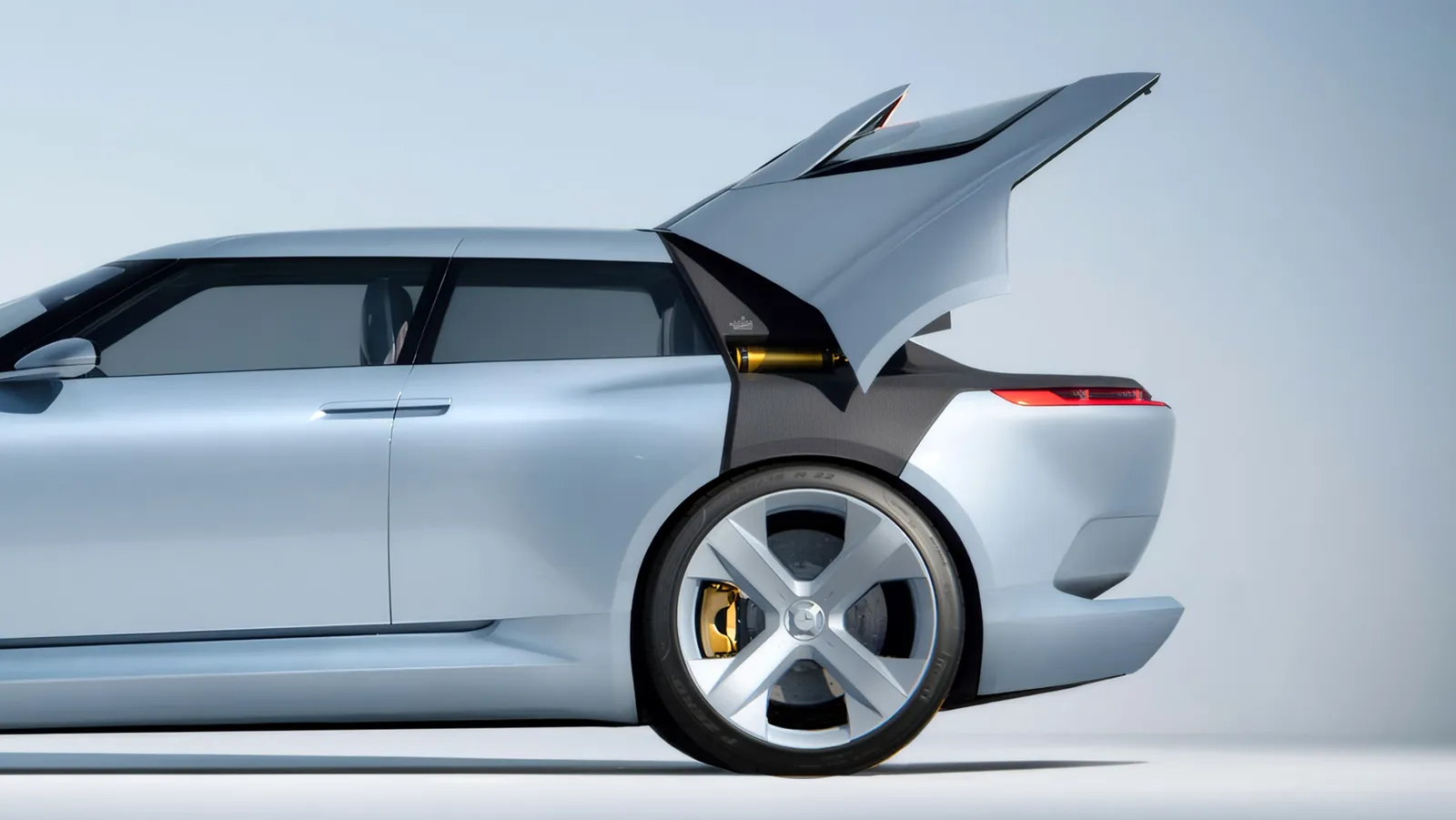
Polestar has just unveiled the Formula 2030, a new electric prototype that gives a glimpse of what its upcoming vehicles will look like. It is a four-door, four-seater compact sports car with an exceptionally low body style that blends a futuristic aesthetic with practical solutions. Its main purpose is to demonstrate the evolution of the Swedish company’s design language, which has already confirmed that some of its elements will make their way into future Polestar 2 and Polestar 7 models.
The new model also represents the first design effort developed under the leadership of Philipp Römers, head of this division at Polestar. Although it is currently a conceptual vehicle with no plans for commercial release, its introduction is significant as it previews solutions we will see in the brand’s upcoming models, starting with the next generation of the Polestar 2, which will arrive in 2027.
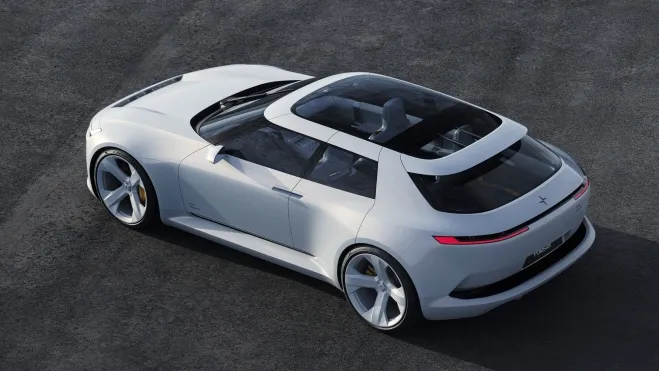
4.68 meters long and just 1.35 meters tall
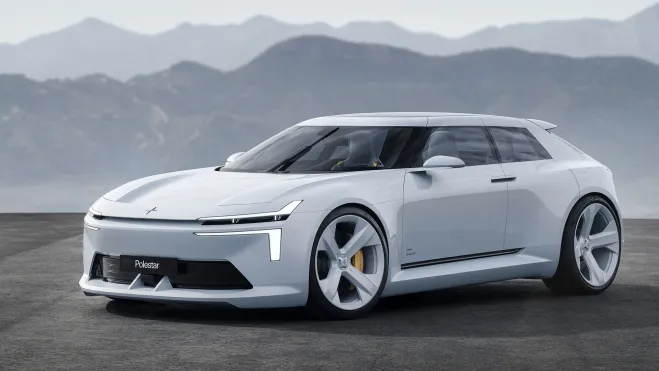
The Polestar Formula 2030 measures 4,680 mm in length, 2,021 mm in width, and just 1,350 mm in height, with a wheelbase of 2,780 mm. These proportions place it between the future Polestar 2 and Polestar 7, although its body is even lower than that of the Polestar 5. Its design features an elongated hood, short fenders, very pronounced rear wheel arches, and 22-inch tires with central locking.
At the front, the distinctive Dual Blade headlights stand out, integrated into an aerodynamic structure that also includes a prominent lower splitter. The brand has confirmed that this lighting signature previews the appearance of the next generation of the Polestar 2. Another particularly eye-catching detail is its wraparound windshield, accompanied by a single windshield wiper positioned vertically in the center.
The rear features a new luminous identity called ‘Single Blade’, which replaces the traditional horizontal strip seen on other Polestar models. It also includes a spoiler mounted on illuminated supports and a large-sized diffuser. The brand’s emblem is projected on the panoramic roof, while a LiDAR sensor remains hidden under an aerodynamic cover until the autonomous driving functions intended for the prototype are used.
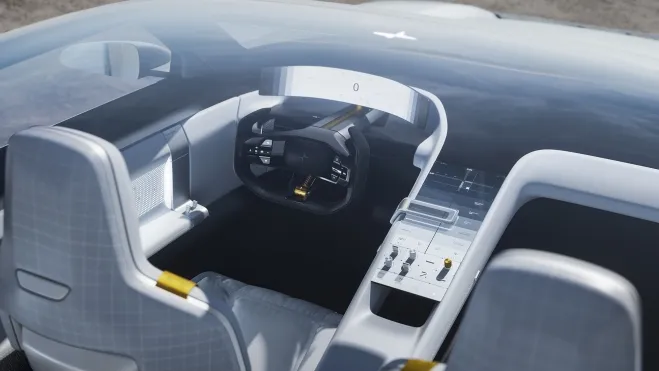
A 4-seater interior, a 20-inch screen, and the return of physical buttons
The interior of the Formula 2030 features a layout with 4 individual seats and a driver-focused cockpit. Its most prominent feature is a 20-inch curved digital instrument panel called HyperDIM, mounted directly on the steering column. This is complemented by a 12.2-inch central screen integrated into the console, which slopes gently toward the dashboard.
Polestar also emphasizes physical controls, combining traditional buttons and levers with digital functions. The multimedia system includes Google Gemini through Google Built-in, allowing use of artificial intelligence via voice commands. Access to the cabin is provided through doors that open opposite each other without a center pillar, a design that facilitates entry to the rear seats.
In terms of sustainability, the seats use composite materials of biological origin, made from European flax and bio-based polypropylene. They also feature low-emission galvanized steel structures and door panels designed to facilitate recycling. The overall design combines different finishes in similar tones, with golden accents that echo the brand’s more sporty models.
A new electric vehicle whose specifications are still confidential
Although the Formula 2030 is presented as a fully electric sports car, Polestar has not disclosed the details of its propulsion system. As a result, the power output, number of engines, battery capacity, range, and performance metrics remain unknown.
The company has confirmed the use of competition-inspired Öhlins shock absorbers and a Brembo braking system, with its components highlighted by the distinctive Swedish Gold finish. It also features a front compartment designed to hold racing helmets and a fire extinguisher. The prototype incorporates specific aerodynamic solutions and a body design aimed at conveying sportiness, though the brand has not released figures regarding drag coefficient or weight.
Bad news: it won’t make it to dealerships
The Polestar Formula 2030 is presented as a true design exercise, and as such, it has no announced price or release date. Its purpose is to outline the aesthetic and technological direction the company will pursue in the coming years. What’s truly important is that Polestar has already confirmed that various elements from this prototype will make their way into its production vehicles. The first to feature them will be the new Polestar 2, with a launch scheduled for 2027.