
MG 4 64 kWh vs MG 4 Urban 54 kWh: Can the cheapest electric compact car be the best?
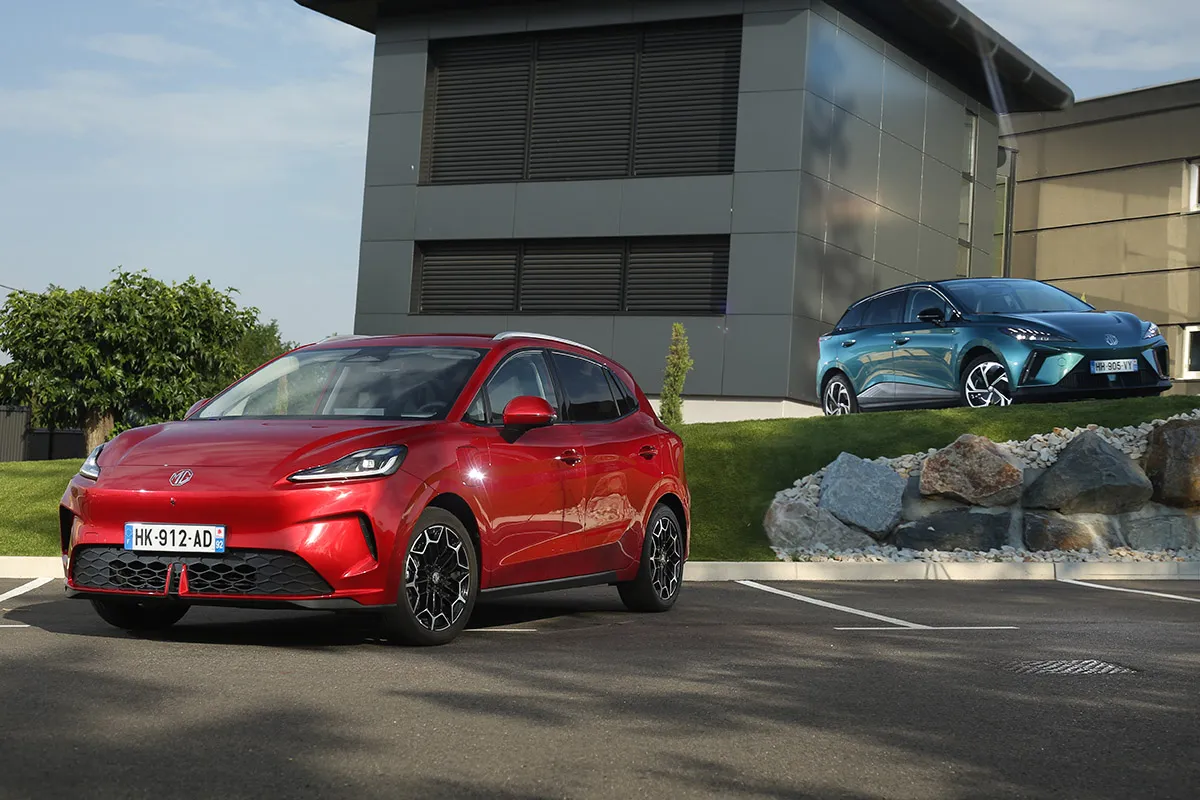
The MG 4 Urban is not meant to overshadow the classic MG 4. But in reality, the gap between them is narrowing significantly!
Like other Chinese manufacturers, MG is expanding its model lineup. After launching a range of SUVs, the brand introduces the new MG 4 Urban. Although it carries the name of the already familiar and recently updated compact model, its target market is clear: despite its larger size, it is primarily designed for urban use. In essence, it takes over from the old MG 4 Standard. On paper, the roles are clearly defined. But in reality, the Urban poses a threat to the entry-level MG 4.
Technical Specs
The standard MG is built on the MSP platform, which offers either rear-wheel drive or all-wheel drive configurations. The Urban, on the other hand, is based on the new E3 platform with front-wheel drive. According to MG, this different architecture allows for 20 meters less of internal wiring, thereby reducing costs, weight, and especially energy losses. The rear electric motor in the entry-level MG 4 can deliver up to 190 horsepower and 350 Nm of torque, compared to 160 horsepower and 250 Nm of torque from the front motor in the Urban. That’s a 30 horsepower difference.
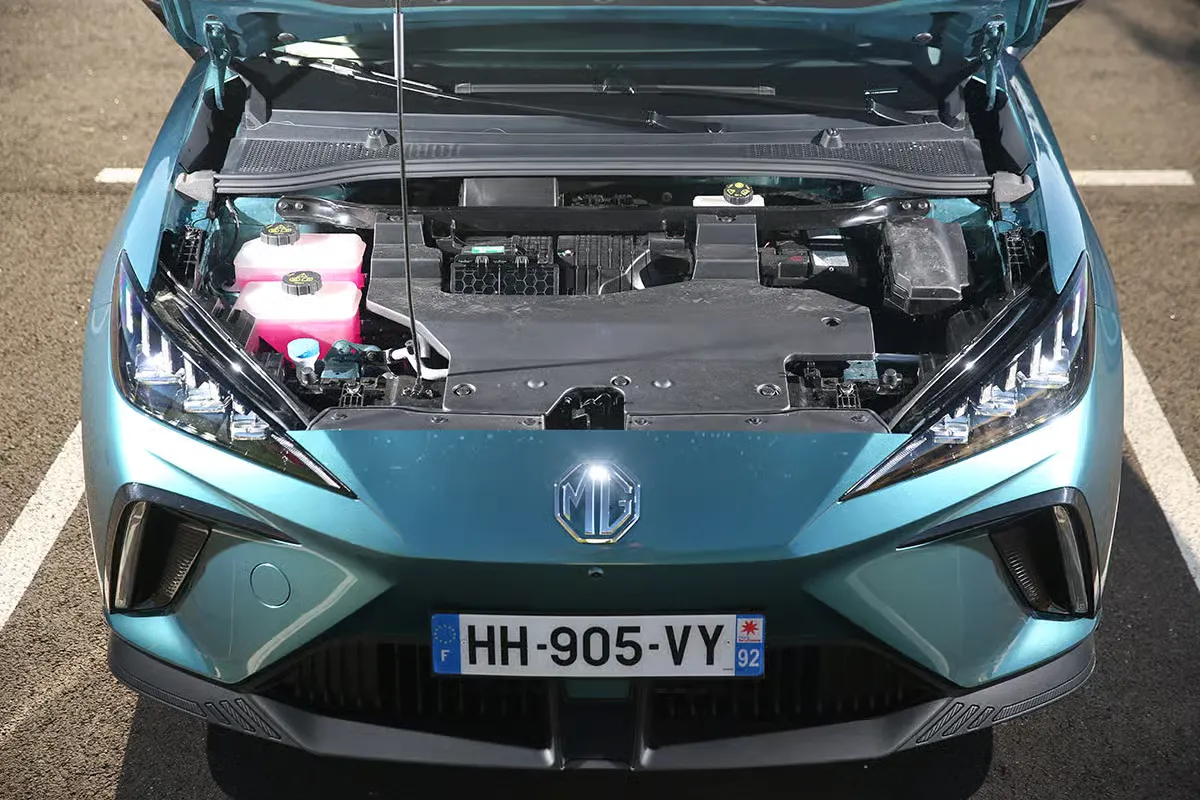
Under the floor, both compact models use LFP batteries. At the higher end, the MG 4 Urban features a battery with a gross capacity of 54 kWh, resulting in nearly 52 kWh of usable capacity. The standard MG 4 claims 64 kWh, with 62 kWh available for use. In terms of range, the Premium version of the MG 4 offers 452 km, compared to 405 km for the Urban version. Regarding fuel consumption, WLTP standards show a high consumption of 17.6 kWh/100 km. However, when charging losses are excluded, the net consumption drops to 13.8 kWh/100 km, which is very close to the 13.0 kWh/100 km of the MG 4 Urban.
Usable Battery Capacity
WLTP range
WLTP fuel consumption
Power
Net power (P.2)
Weight (G1 class)
Weight-to-power ratio
MG 4 64 kWh
62.6 kWh
452 km
17.6 kWh/100 km
190 hp / 350 Nm
95 hp
1,765 kg
9.8 kg/hp
MG 4 Urban 54 kWh
52.5 kWh
405 km
15.5 kWh/100 km
160 hp / 250 Nm
75 hp
1,520 kg
10.1 kg/hp
Acceleration and braking
With the Urban model being 245 kg lighter (1,520 kg vs 1,765 kg), both vehicles have a similar weight-to-power ratio. However, the Urban’s more linear power distribution to avoid overloading the front end results in lower performance.
On paper, the Urban claims a 0-100 km/h time of 9.5 seconds, compared to 7.5 seconds for the MG 4. But in reality, the former achieves 0-100 km/h in 8.5 seconds, while the latter takes 7.3 seconds. The difference isn’t as significant as the specifications suggest.
0-100 km/h
400 m D.A.
80-120 km/h KD
Max speed.
MG 4 64 kWh
7.3 s
15.4 s
5.9 s
180 km/h
MG 4 Urban 54 kWh
8.5 s
16.4 s
6.5 s
160 km/h
Braking and regenerative braking
Both cars are equipped with conventional regenerative braking systems. On paper, MG claims a stopping distance from 100-0 km/h of “under 37 m” for the MG 4 and 37.3 m for the Urban. In practice, the two cars aren’t that close, with the MG 4 requiring 60.7 m from 130 km/h, compared to 64.5 m for the Urban.
130-0 km/h (regenerative)
80-0 km/h (regenerative)
80-0 km/h (min. regen.)
80-0 km/h (max. regen.)
MG 4 64 kWh
60.7 m
22.5 m
721.4 m
128.2 m
MG 4 Urban 54 kWh
64.5 m
24.4 m
688.8 m
134.0 m
In terms of regenerative braking, both compact models offer three different modes (Low, Standard, High) and a One-Pedal mode. With the normal modes, the braking powers are identical, but the MG 4 stops more quickly. In One-Pedal mode, the MG 4 has greater power (as shown in the graph below), allowing it to stop in 128 meters from 80 km/h, compared to 134 meters for the Urban version.