
Mercedes-Benz specifies its CO₂ targets for 2039
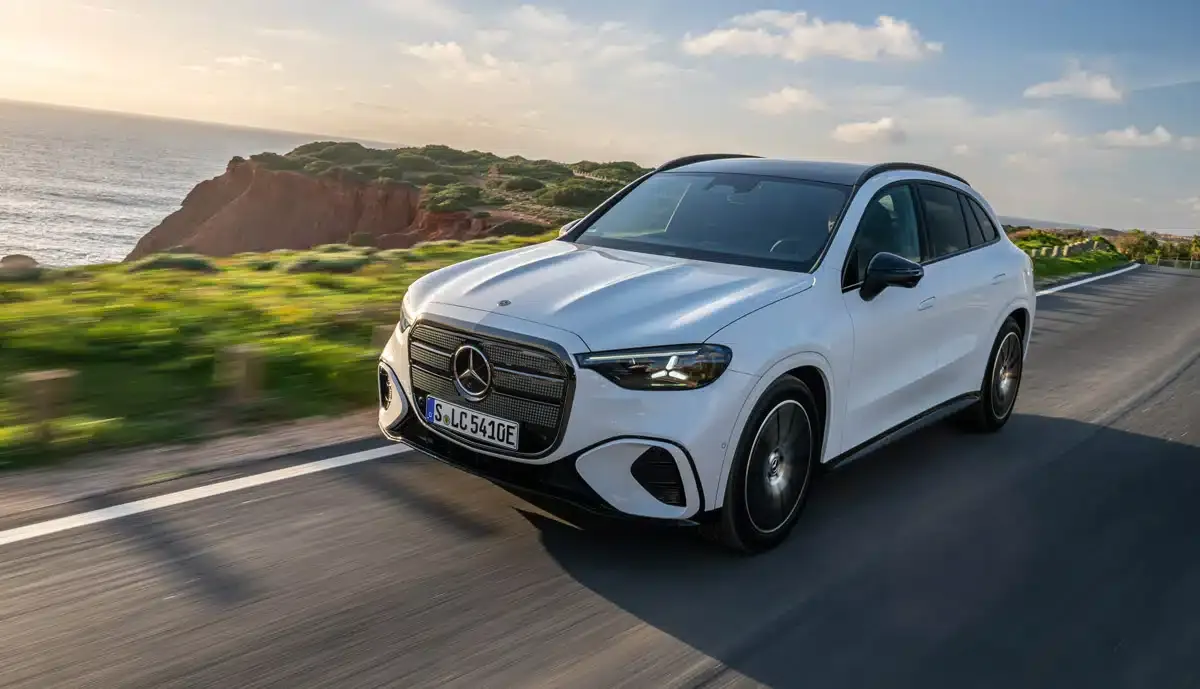
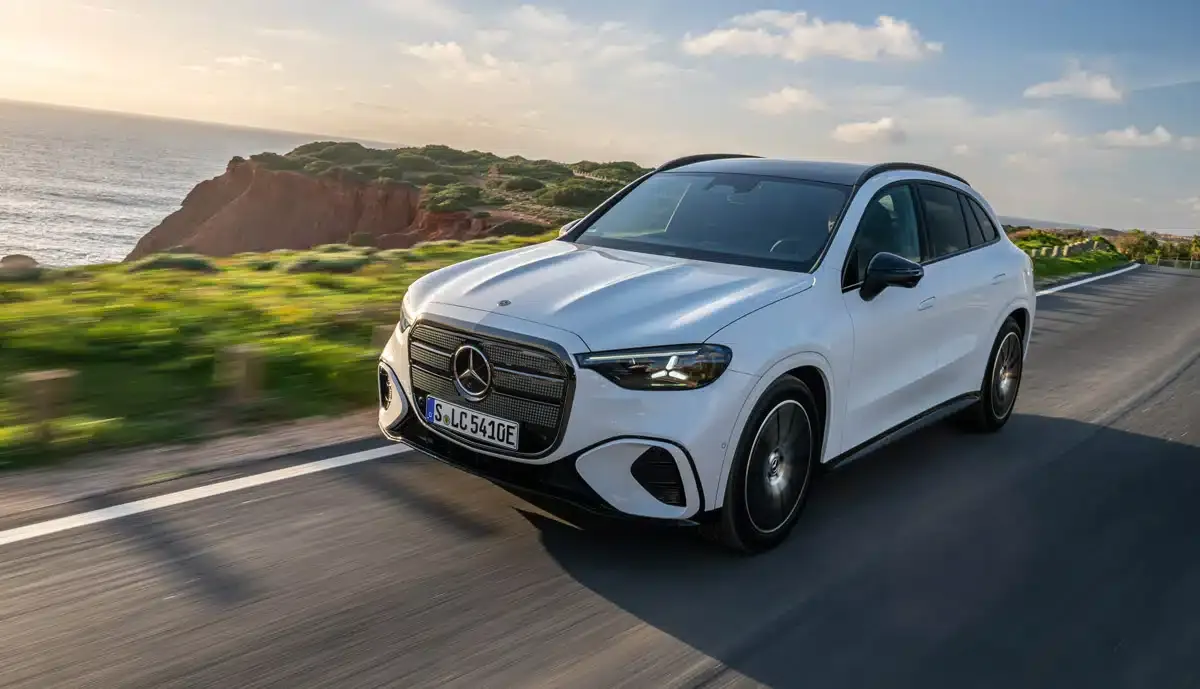
Image: Mercedes‑Benz
Mercedes-Benz has clarified its CO₂ reduction targets for 2039 and announced additional measures to decarbonize its supply chain. Emissions from its own production are set to drop by 90 percent, and those from vehicle use by 80 percent compared to 2019, assuming market conditions permit it.
Across all relevant stages of the value chain, the company aims for a 70 percent reduction. Beyond 2039, the reduction effort will continue with the goal of achieving “Net Zero” over the following decade. To do this, emissions must fall by at least 90 percent compared to 2019, and any remaining emissions must be permanently neutralized.
Between 2025 and 2027, the company plans to introduce 14 all-electric vehicles to the market. According to the company, 51 percent of the energy consumption at Mercedes-Benz Cars and 39 percent at Mercedes-Benz Vans already comes from renewable sources. The electricity sourced externally worldwide comes entirely from renewable sources.
Sustainability in Four Focus Areas
Starting in 2027, Mercedes-Benz will organize its sustainability strategy around four key areas: decarbonization, circular economy, safety, and people. The goal for the circular economy is to increase the share of secondary raw materials to 40 percent within the next decade. Other priorities include traffic safety and digital trust, as well as social responsibility toward employees and respect for human rights throughout the product value chains.
The production process is intended to become more resource-efficient and rely more heavily on renewable energy. By improving energy efficiency, Mercedes-Benz has achieved cumulative savings of around 570 gigawatt-hours over the past two years.
By mid-2027, 20 wind turbines with a total capacity of 140 megawatts are set to generate electricity at the test track in Papenburg. An agreement with Iberdrola will ensure an additional 140 megawatts or more of renewable electricity from the Windanker offshore wind farm starting in 2027. Together, these two projects can cover roughly half of Mercedes-Benz’s annual electricity demand in Germany.
Lower CO₂ aluminum
To ensure a stable supply of aluminum, Mercedes-Benz has joined the Aluminum sector of the First Movers Coalition (FMC). By 2030, the company aims to source at least 10 percent of its annual primary aluminum demand in accordance with the coalition’s criteria. A long-term supply agreement with Hydro calls for reducing the carbon footprint of primary aluminum from the current level of around 4.0 kilograms of CO₂e per kilogram to 3.5 by 2028, and further to 3.0 kilograms by 2030. This agreement covers at least 10 percent of the required supply.
Starting in 2027, Hydro CIRCAL is also planned to be used, containing at least 75 percent post-consumer recycled content and having a carbon footprint of no more than 2.0 kilograms of CO₂e per kilogram. In the summer of 2026, Mercedes-Benz became the first automobile manufacturer in Europe to announce that it would use Hydro CIRCAL in the mass production of the next generation of large electric vehicles starting in 2027.
Steel and Supply Chain Transparency
For steel, Mercedes-Benz is testing an approach across the entire value chain. In a pilot project, HyIron converted fine iron ore material from the South African Sishen mine into directly reduced iron (DRI) using hydrogen. According to HyIron, the process’s Scope 1 and Scope 2 emissions amount to ten kilograms per ton of DRI, eliminating the energy-intensive pelletization step.
The material was used to produce a demonstration component for the electric luxury sedan Mercedes-Benz EQS. The Sishen and Kolomela mines achieved IRMA 75 standards in independent audits. Mercedes-Benz and HyIron subsequently signed an agreement for further technical validation and potential industrial scaling.
To enhance transparency, Mercedes-Benz released its fourth raw materials report. It documents the assessment of 24 critical raw materials as well as efforts related to traceability and due diligence, particularly in the steel sector. For the first time, the interactive “Transparent GLA” format supplements the report, showcasing 19 raw materials in selected components of the new GLA.
In addition, Mercedes-Benz and Hydro are working together under the Corridor Program to address potential impacts on people and the environment along a 244-kilometer bauxite pipeline in Brazil’s Pará state.
"Even under challenging market conditions, Mercedes-Benz places sustainability alongside resilience and competitiveness at the core of its strategy," said Olaf Schick, member of the Board of Management of Mercedes-Benz Group AG for Integrity, Governance & Sustainability. "With the increased transparency of Ambition 2039, we are outlining new milestones on our decarbonization path to turn sustainability into operational reality: tangible, measurable, and firmly embedded in our products. The latest example is our all-electric GLC, which has reduced its CO₂ emissions by around two-thirds compared to its non-electric predecessor."
Have you found any errors? Please let us know
by email
about them. Thank you!
Also interesting
About the author
Thomas Langenbucher is an expert in electromobility with professional experience in the automotive industry and finance sector. Since 2011, he has been covering electric vehicles, sustainable technologies, and mobility solutions for ecomento.de. Learn more.
Reader interactions