
May Mobility plans to convert 10,000 ID. Buzz vehicles into robotaxis.
Jump to content
- Newsletter
- Podcast
- Conference
- Media details
- electrive global
Leading publication on electromobility
[](https://www.electrive.net/suche/)
All categoriesAll categories
- Fuel cell
- Off-Highway
- Two-wheeler
- Politics
- Air transport
- Data
- Water
- Career
- Autonomous driving
- Test drives
- Automobile
- Infrastructure
- Battery
- Commercial vehicle
- Fleets
- Job market
- Calendar
- Studies
[](https://www.electrive.net/2026/11/13/may-mobility-laesst-10-000-id-buzz-zu-robotaxis-umbauen/#overlay)
[](https://www.electrive.net/2026/11/13/may-mobility-laesst-10-000-id-buzz-zu-robotaxis-umbauen/#)
- Automobile
- Infrastructure
- Battery
- Commercial Vehicle
- Fleets
All CategoriesAll Categories
- Fuel Cell
- Off-Highway
- Two-Wheeler
- Policy
- Air Transport
- Data
- Water
- Career
- Autonomous Driving
- Test Reports
- Job Market
- Calendar
- Studies
- Newsletter
- Podcast
- Conference
- Media Info
- electrive global
Autonomous Driving
May Mobility to Convert 10,000 ID. Buzz Vehicles into Robotaxis
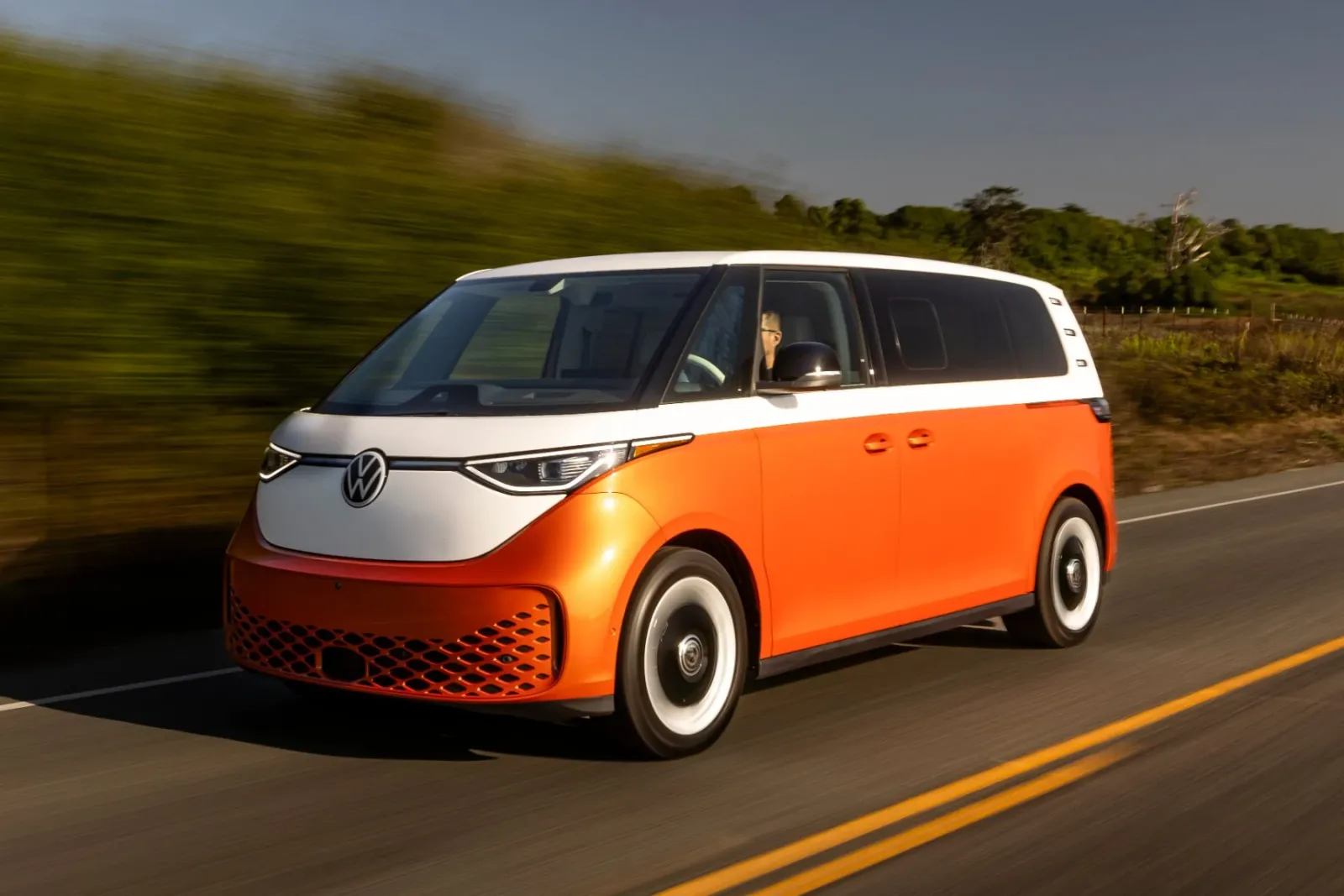
The VW ID. Buzz is set to be widely converted into robotaxis. The U.S. technology company May Mobility has announced its plan to deploy over 10,000 autonomous versions of this electric bus worldwide by the end of 2031. Initial tests on public roads will begin in the U.S. in early 2027, with mass deliveries to external fleet operators starting in 2028.
Illustration
Image: Volkswagen
By Victoria Zippmann
11/13/2026 - 1:00 PM
- [May Mobility](https://www.electrive.net/tag/may-mobility/ "May Mobility")
- [Volkswagen](https://www.electrive.net/tag/volkswagen/ "Volkswagen")
- [ID. Buzz](https://www.electrive.net/tag/id-buzz/ "ID. Buzz")
The American tech company May Mobility has announced that by 2031 it will deploy over 10,000 autonomous VW ID. Buzz vehicles worldwide for robotaxi services. Volkswagen will technically modify the electric vans for this purpose, after which technology firm ECARX will add May Mobility’s autonomous driving system (Autonomous Driving Kit, ADK). Another partner company, Charlton Intelligence.ai, is set to assist with vehicle delivery and deployment.
Through this collaboration, May Mobility aims to reduce the total cost per vehicle by more than 50 percent. Development is already underway. Initial test drives on public roads in the U.S. are scheduled to begin in early 2027, with the delivery of the first production-ready vehicles planned for 2028.
May Mobility operates as a so-called asset-light provider in this context. The company does not own or operate large fleets itself but supplies its AI-driven driving technology to external fleet managers and mobility platforms.
The system’s AI software performs all calculations on the vehicle’s local onboard computers rather than outsourcing them to an external cloud. As a result, the vehicle responds almost without delay and remains independent of cellular connectivity, according to the company. The software simulates traffic situations up to ten seconds in advance using a predictive world model and evaluates various driving maneuvers in real time, it is stated.
"The scaling of autonomous ride services depends heavily on the vehicle platform, and with the Volkswagen ID. Buzz, we have a platform that is perfectly suited for this purpose," said Dr. Edwin Olson, CEO and founder of May Mobility. "We are confident that passengers will love the ID. Buzz with our autonomous driving system — and the vehicle is built on a cost structure that can grow alongside the robotaxi market."
The company already has extensive experience in commercial operations, such as through the partnership between Lyft and May Mobility in Atlanta, and has completed over 600,000 autonomous rides covering 1.1 million miles in the U.S. and Japan to date.
The VW ID. Buzz is currently a frequently used model series for experiments in autonomous driving. This year, the original manufacturer, VW Nutzfahrzeuge, has also increased pre-production of the autonomous ID. Buzz AD. As is well known, this version of the vehicle is set to be the first to be deployed in the ALIKE project in Hamburg as well as by ride-hailing service Uber in Los Angeles. The partner for this autonomous driving system is the Israeli company Mobileye.
maymobility.com
Keywords
- May Mobility
- Volkswagen
- ID. Buzz
- BEV
- Ride-Hailing
- USA
- Autonomous Driving
13 Comments
on “May Mobility to Convert 10,000 ID. Buzz Vehicles into Robotaxis”
David
11/13/2026 at 1:12 PM
The ID.Buzz is also a great foundation for autonomous vehicles. So it’s not the only company that wants to use it this way. It has plenty of space, yet it remains comfortable to live in, and it looks incredibly appealing—something no other currently produced mass-market vehicle can match. Private customers share this view; our sales rankings for the year place this vehicle at 22nd, which is remarkable for a bus. Its gasoline-powered counterparts never reached such high rankings. Interestingly, it’s even more popular in the Nordic countries, where it has the biggest fan base.
Answers
D-Tric
13.11.2026 at 19:02
Tesla certainly has not overtaken Waymo, and that won’t happen anytime soon. These are just the registration numbers for Texas. Waymo has over 4000 vehicles in operation, covering approximately 10 million kilometers per month. Tesla is still a VERY long way behind in this regard.
Replies
Xpeng Bro
11/14/2026 at 01:15
Sorry, my mistake. Tesla’s Robofleet has only overtaken Waymo in Texas. As you mentioned, Waymo has over 4000 vehicles in U.S. service. So it will indeed take a little longer...
Replies
Xpeng Bro
11/13/2026 at 13:44
Oh man. How short-sighted can investors be? Tesla’s Cybercab costs a fraction of what MM’s RoboBuzz does to operate. How are MM’s customers supposed to make profits with RoboBuzz?? That’s crazy. By the way, today (11/13), Tesla’s Robofleet (Cybercab and MY) has surpassed America’s Waymo fleet (1,305 units) in registrations. The race has begun
Answers
David
11/13/2026 at 5:16 PM
Tesla does not have an autonomous vehicle. They have not applied for Level 4 tests anywhere. They merely want to create that impression. That’s why they also moved to Texas, as Austin has a special status. So they’re not really in the game. Things here are on a completely different level. It’s no longer about how to implement autonomous driving, but about a concept to make it cheaper. The advantage of the ID.Buzz is that it will still be available tomorrow and the day after. The PA is planned for 2028, so model year 29. It’s modular in design and is already being produced in an AD version, meaning a special “barebone version” with connections for all sensors is entirely possible at a fair price once sufficient volume is reached.
Answers
Xpeng Bro
11/14/2026 at 01:05
How can one write such contradictory nonsense? Please read your comment again: your statements directly contradict each other. It seems like you copied unverified AI output and mixed up different contents. Of course, FSD15 is autonomous at Level 4. I took my first ride in a Cybercab in Austin, TX last week. Tesla’s Robotaxi fleet is currently operating autonomously in 8 cities across two U.S. states: Austin, Dallas, Houston, Fort Worth, and San Antonio in Texas, as well as Miami, Orlando, and Tampa in Florida. It uses a combination of Cybercab and MY vehicles. I can agree with @MK that there are different use cases, and the interior design of the Buzz might be different and possibly better than that of the I-Pace, MY, or Ioniq5. Nevertheless, the ID. Buzz does not offer a cost-effective platform and was never designed as a pure autonomous vehicle. Autonomous vehicles must be developed for this purpose from the outset. Everything else are expensive DIY solutions that incur additional costs in operation.
Answers
David
11/14/2026 at 12:21 PM
In Austin, Tesla’s self-certification is good enough. But not in any other county or state in the U.S. To drive elsewhere, you need an NHTSA approval. To obtain that, you must complete many years of publicly registered tests. Tesla has not registered such tests. Therefore, they will not receive a federal approval. Whether the vehicles in Austin truly drive autonomously is another question. Many say they are controlled by remote operators. Whether this happens permanently or only in emergencies, as Tesla fans claim, is not really important. The fact that it’s even possible shows it’s not a Level 4 vehicle. Because by definition, that’s excluded. Waymo cannot remotely control its cars.
Answers
MK
11/13/2026 at 3:43 PM
@XPeng Bro: The difference is that an ID.Buzz can fit 6 people and is already on the roads in six-figure numbers, while a Cybercab can only fit 2 people (who had better not be disabled) and it can’t be purchased from an external company...let alone with a guarantee that the first vehicles will be delivered by 2026. Additionally, May Mobility is a company whose only expertise lies in developing software for autonomous driving. Buying an autonomous vehicle would thus render their own company obsolete. In other words, May Mobility isn’t a potential Tesla customer but a direct competitor...as you put it: “The race has begun.” Only, a few more companies are participating in this race than many realize: For example, the Berlin-based company Bliq.AI has already gotten autonomous vehicles approved in the EU.
Answers
Future
11/13/2026 at 11:57 PM
It’s good for VW that they can supply some Buzz vehicles, as demand for that model isn’t very high. What’s notable, however, is that VW is only allowed to handle the bodywork. The technology comes from companies with expertise in this area: ECARX, May Mobility, Charlton Intelligence. Perhaps this will become more common in the future, where older manufacturers are only allowed to supply the bodywork, as no one trusts them with the technology — experts handle that themselves. What happened to Moia anyway? The cash-strapped company is reportedly considering a possible exit, liquidation, or partial sale of its subsidiary by the end of 2026. Taxi drivers will be happy to get rid of those annoying Moia vehicles.
Answers
MK
11/14/2026 at 11:20 AM
@Future: Manufacturers have already been taking this path for a long time. Just think back to the "diesel scandal" in 2015: The software was ordered by VW but developed by Bosch. In other words, which components do car manufacturers develop in-house these days? Name a car manufacturer that is capable of developing and producing a matrix-LED headlight on its own. Or a driver’s seat with seat heating? Still, your statement here is incorrect. According to the official press release on May Mobility’s website, the "AV-ready version of the ID. Buzz" is purchased from VW, which, as implied in the article using the euphemism "Volkswagen will technically modify the electric bus for this purpose," still needs to be quickly finished developing.
Answers
Matthias
11/14/2026 at 01:37
"allows 10,000 ID. Buzzes to be modified" suggests that functional cars are purchased from the used market and converted, such as into campers. Here, however, new cars are produced directly by VW in the already self-driving-ready AD version and then fully equipped by a specialized company.
Answers
rg
11:03 on 14.11.2026
I doubt May Mobility has the financial resources to buy more than 10,000 ID buzz vehicles and convert them for autonomous driving. In the end, there might only be 100 of them. Besides, it seems no one has considered the actual usage scenario yet. An ID buzz may have 6 seats, but the situation is far more intimate than in a public transit vehicle (bus or tram). The vast majority of people, especially women, would never get on such a vehicle, even if surveillance cameras are installed inside. Therefore, an ID buzz represents the niche within the niche of autonomous driving. It has an experimental nature, nothing more.
Answers
MK
11/14/2026 at 7:41 PM
@rg: It’s not about replacing public transportation (the road capacity in city centers simply wouldn’t allow that), but rather about automating taxis. There are groups, for example, that share a vehicle after a party, as well as colleagues who travel together on business trips — these are by no means niche markets. One of the most important segments in Germany’s taxi market is actually medical transport: whether for outpatient rehabilitation or dialysis, such trips account for an increasingly larger share of the taxi business. Requirements for the vehicles include plenty of space (so that one can get in with their legs fully extended) and a high seating position. What do you think is why limousines are being increasingly replaced by vans and minibuses in the taxi industry? Also: Just take a look at the taxi situation at any major German train station with an open eye, and then reconsider your comments. The same applies to the capital aspect: May Mobility has already raised around $450 million in investor funds and plans to raise another $330 million in the coming months. It has fixed purchase agreements with companies like Uber and Lyft (which is also the “concrete implementation” — not just an idea, but something agreed upon in contracts with corporations that can access hundreds of billions in capital), and it has already covered more than twice as many kilometers with autonomous taxis in the U.S. as Tesla, for example. So it’s already well-established, but it relied on Toyota vehicles until now and is switching to VW with this contract.
Write a comment Cancel reply
Your email address will not be published. Required fields are marked with *
Name *
Email *
I agree to the privacy policy - [x]
Website
Also read
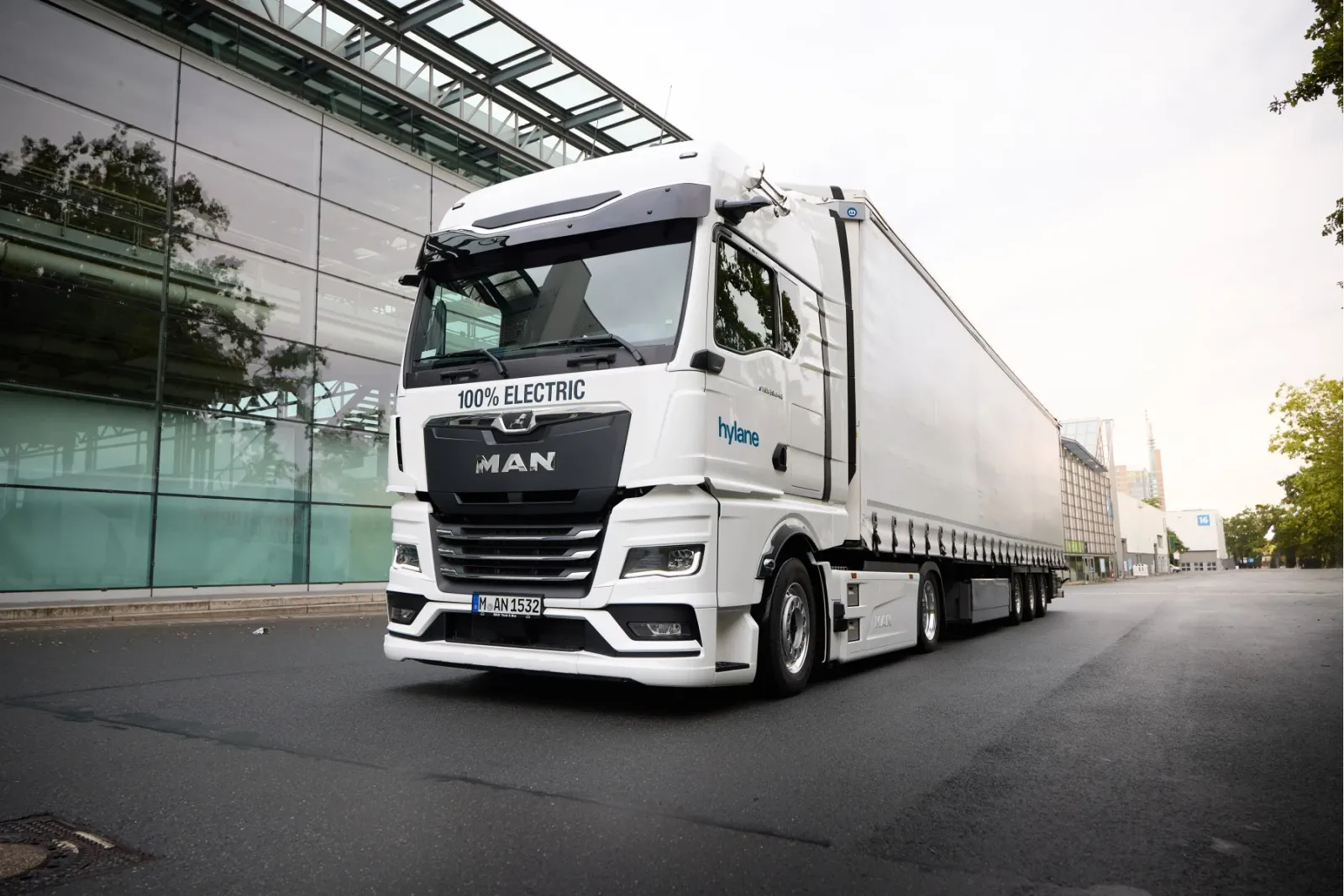
[Commercial vehicle ## Hylane takes another 20 electric trucks from MAN Published 10 hours ago](https://www.electrive.net/2026/11/14/hylane-nimmt-man-20-weitere-elektro-lkw-ab/ "Hylane takes another 20 electric trucks from MAN")
[ Automotive ## Dacia Sandero Expected to Reach Around 400 km on Electric Power 13.11.2026](https://www.electrive.net/2026/11/13/dacia-sandero-soll-als-elektroauto-rund-400-km-weit-kommen/ "Dacia Sandero Expected to Reach Around 400 km on Electric Power")
[ Video ## “We Sell Capacity from A to B,” Says Robert Ziegler of Einride 15.11.2022](https://www.electrive.net/2022/11/15/wir-verkaufen-kapazitaet-von-a-nach-b-sagt-robert-ziegler-von-einride/ "“We Sell Capacity from A to B,” Says Robert Ziegler of Einride")
electrive – The Leading Publication on Electromobility
Since 2011, we have been following the development of electric mobility with journalistic passion and expertise. As a leading digital industry publication, we deliver comprehensive reporting of the highest quality. With news, background articles, interviews, test drives, videos, podcasts, as well as advertisements and job listings, we provide the central platform for the rapid growth of this technology.
- Automotive
- Air Transport
- Infrastructure
- Water
- Batteries
- Off-Highway
- Commercial Vehicles
- Politics
- Fleets
- Data
- Fuel Cells
- Careers
- Bicycles
- Job Market
- Newsletter
- Media Information
- Contact
- Team
- Legal Notice
- Terms of Service
- Data Protection
- Cookie Settings
© 2026 electrive.net
[electrive global](https://www.electrive.com/ "electrive global")