
BMW sales fell by 4.9% in the second quarter despite the rise of electric cars
BMW is facing a situation of stark contrasts. While its electric cars gain ground in Europe and account for an increasingly large share of its sales, the German automaker continues to suffer from its loss of competitiveness in China, a market that is affecting its overall performance.
Electrification is becoming one of BMW’s key drivers of growth, especially in Europe, where demand for its electric models shows strong momentum. However, this growth is not enough to offset the challenges it faces in other markets, particularly China, where intense local competition is putting pressure on traditional brands.
The latest results for the BMW Group for the first nine months of 2026 reflect exactly this dual reality. On one hand, there is Europe where electric cars continue to gain prominence, and where the German manufacturer is managing to strengthen its position. On the other hand, there is China where sales continue to decline at a concerning rate.
Between July and September, BMW delivered nearly 82,000 electric cars in Europe, a 37.5% increase compared to the same period last year. This means that 34.7% of all cars sold by the group in this region were electric. In other words, practically one out of every three BMW and MINI vehicles delivered in Europe no longer has a combustion engine.
In Germany, its home market, the trend was even slightly better, with a 38.5% increase in electric car deliveries. This is particularly interesting given the importance of this market to the manufacturer and the continued dominance of traditional engines.
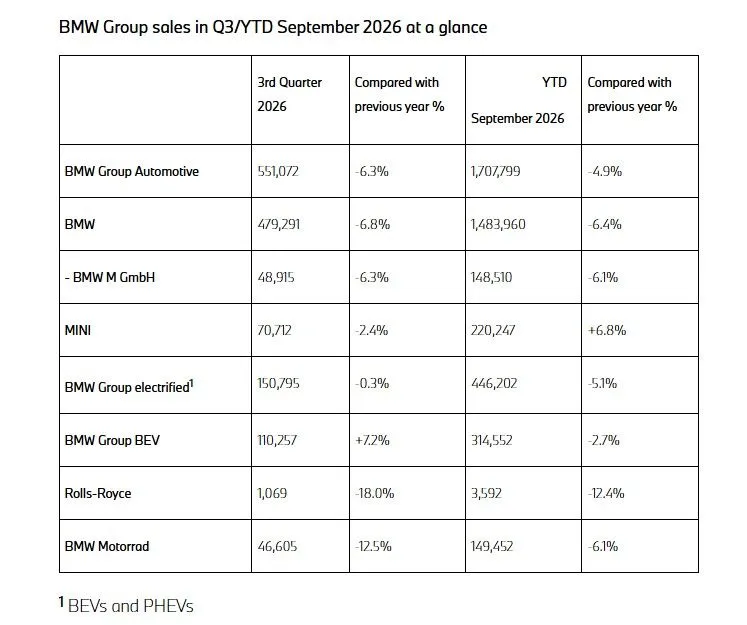
Globally, figures were also positive during the third quarter, though with a much more moderate growth rate. From July to September, BMW delivered just over 110,000 electric cars, 7.2% more than a year earlier.
However, when we expand the analysis to the entire year, the picture changes. From January to September, global deliveries of electric cars were around 315,000 units, 2.7% lower than during the same period in 2025.
If we include plug-in hybrids, deliveries of electrified models reached approximately 446,000 units, representing a 5.1% decline. In the third quarter, this figure was around 151,000 units, with little change compared to the previous year.
The BMW iX3 drives expectations while China becomes a major concern
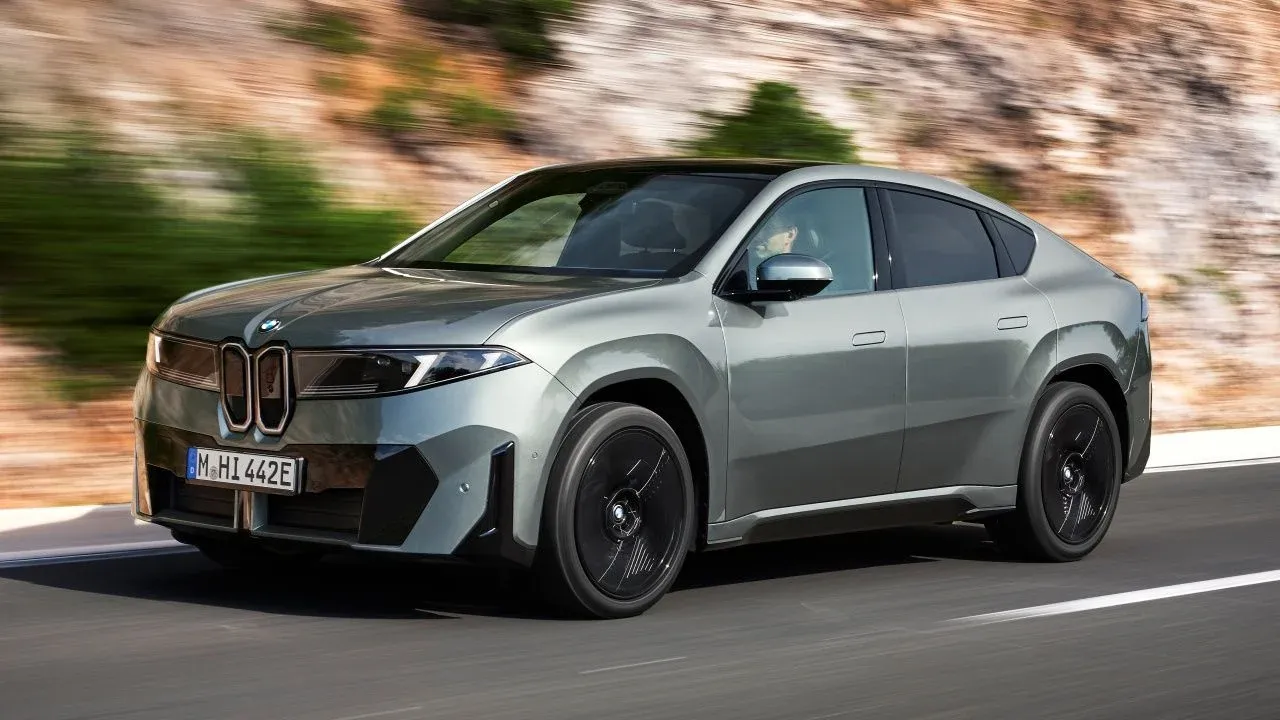
In addition, BMW is preparing to enter the Chinese market with a version specifically tailored to local consumer preferences, with its launch set for November. This is a significant move, as China has become the company’s biggest challenge.
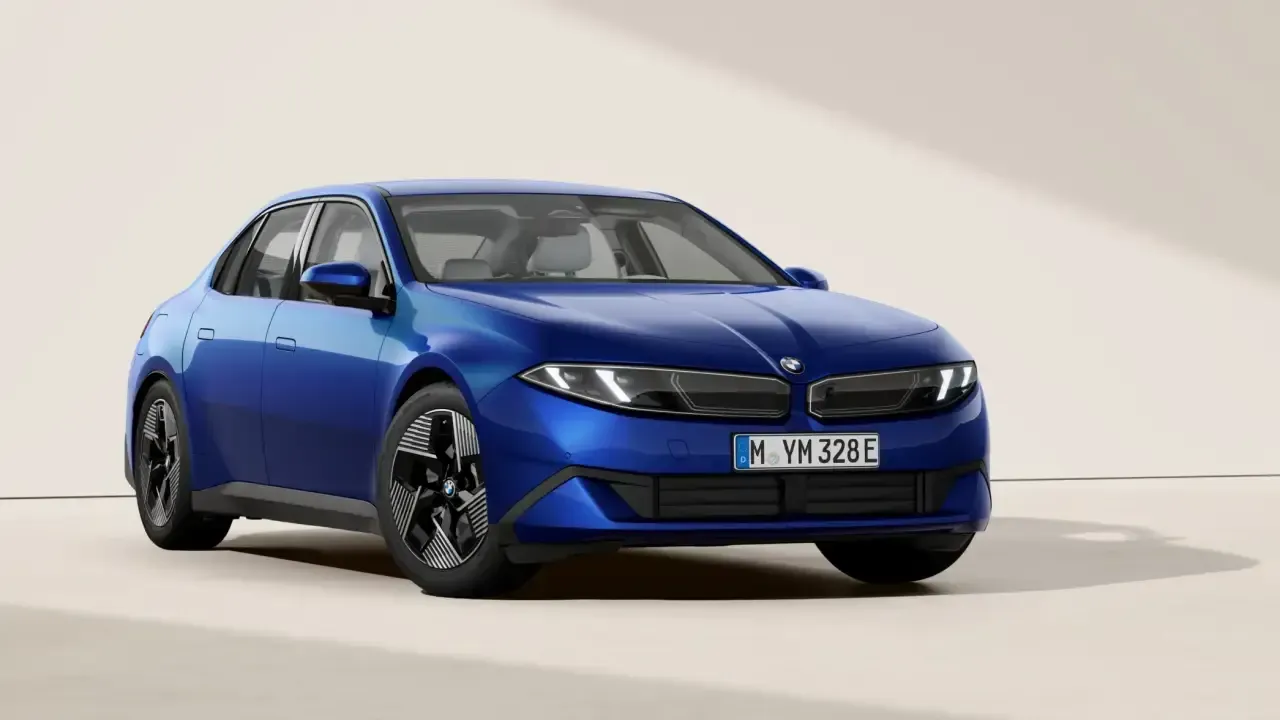
Jochen Goller, head of Customers, Brands, and Sales at BMW AG’s board of directors, emphasized that the strong demand for electric cars confirms the group’s strategy is on track. He also noted the high interest in the new Series 3 and X5, two models set to play a key role in updating the lineup.
Yet as BMW prepares its new product offensive, overall results continue to show significant challenges.
In the first nine months of the year, BMW delivered around 1.71 million cars worldwide, 4.9% fewer than in the same period of 2025.
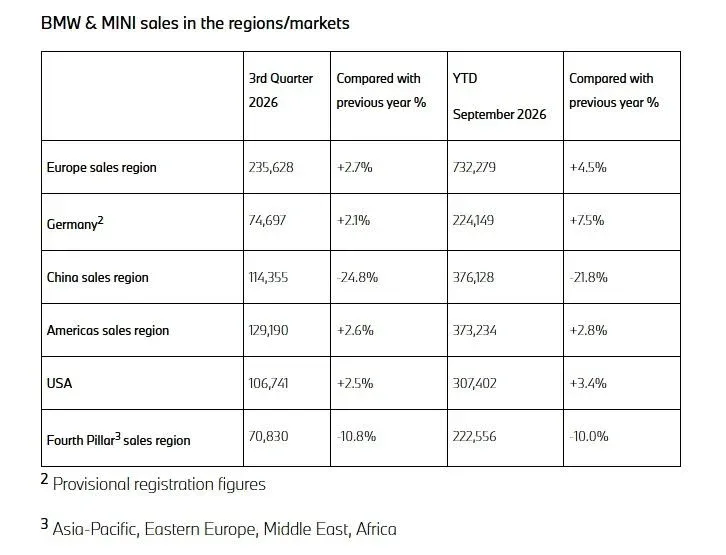
The decline stands in contrast to the performance of the European market, where deliveries rose by 4.5%, exceeding 732,000 units. In Germany, growth was 7.5%, according to preliminary registration data.
The United States also showed positive results, with an increase of 3.4% for the overall group. BMW managed to achieve a 4.3% growth in this market, driven mainly by demand for its X-series SUVs, despite the overall contraction in the U.S. market.
The situation is very different in China. As of September, BMW and MINI deliveries in this market dropped by 21.8%, with the decline accelerating to 24.8% during the third quarter.
A decline that highlights the difficulties faced by European manufacturers in maintaining their position in a market where domestic brands are gaining prominence, especially thanks to their range of electric cars and electrified models.
BMW attributes this downturn to the overall trends in the Chinese market, although the figures also reflect how reliant the company is on recovering ground in a country that has been one of its main growth drivers for years.
The only exception in China were BMW M sports models, which managed to keep their deliveries stable. However, on a global scale, BMW M GmbH also fell victim to the negative trend, with 148,500 units delivered by September, a 6.1% decrease.
Sales also declined in the region that BMW refers to as the Fourth Pillar, which includes markets in Asia-Pacific, Eastern Europe, the Middle East, and Africa, by 10%.
Within this group, MINI is one of the few positives. The British brand delivered over 220,000 cars between January and September, a 6.8% increase from the same period last year, making it the only car brand in the group to achieve annual growth.
In addition, 37.2% of MINI’s sales already come from electric vehicles, a proportion even higher than that recorded by the entire group in Europe during the third quarter. The company highlights the strong demand for the John Cooper Works and Paul Smith editions, while expecting further sales growth with the Countryman Untamed Edition.
The other divisions are also not performing at their best. Rolls-Royce delivered 3,592 cars in the first nine months of the year, a 12.4% decrease, while BMW Motorrad sold around 149,500 motorcycles and scooters, marking a 6.1% decline.
The results offer an interesting insight. BMW is showing that it can significantly increase its electric car sales in Europe, to the point where they now account for more than a third of its quarterly deliveries. However, the growth of this technology alone does not guarantee an improvement in overall results.
The problem lies in China, where the German manufacturer must contend with increasingly fierce competition and consumers who are rapidly changing their preferences. The new generation of electric models may help regain some of the lost ground, but BMW needs more than strong performance in Europe to resume growth.
And that’s because while in Europe one out of three cars delivered by the group is already electric, in China BMW still loses almost one out of four quarterly sales. These two very different realities explain much of the challenges it faces ahead.