
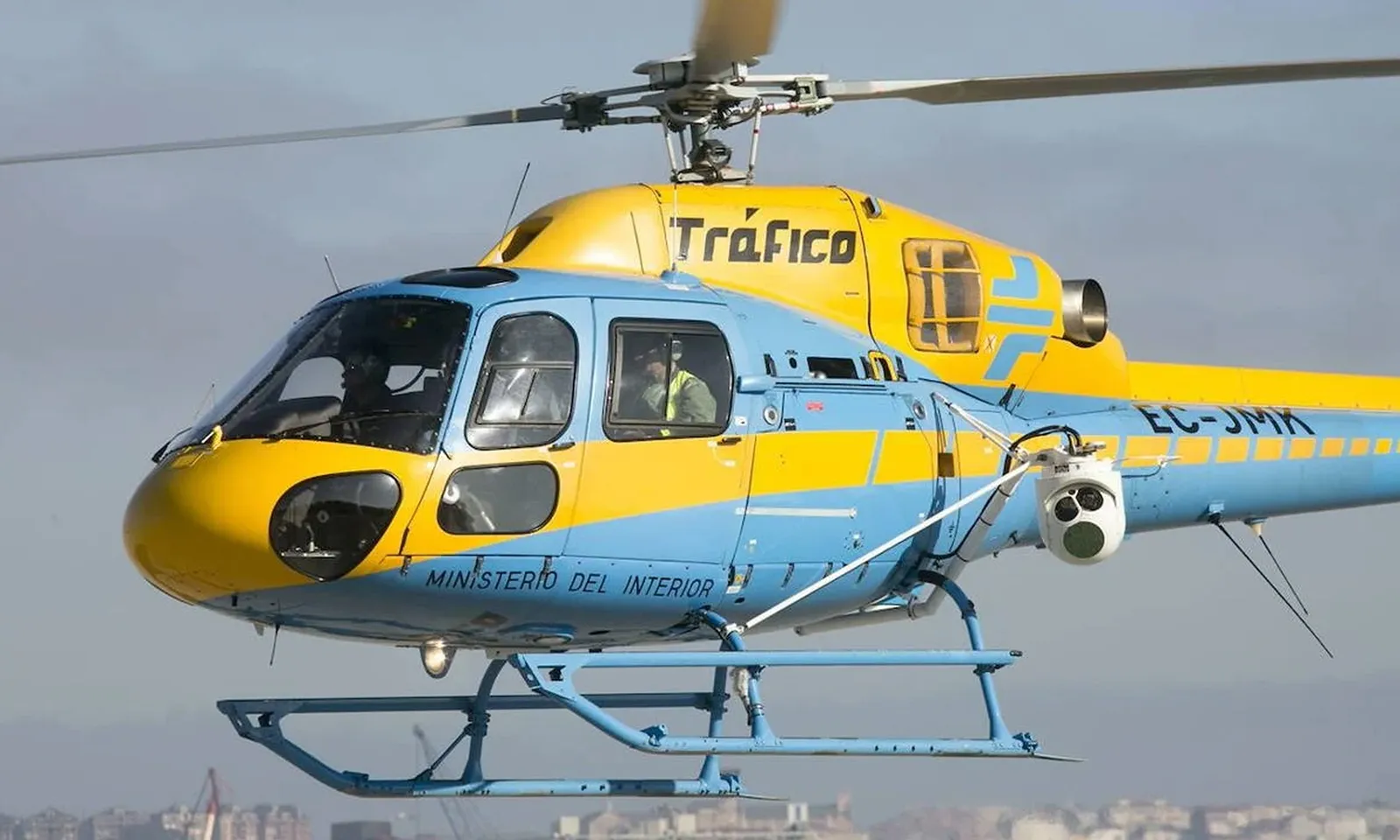
The DGT claimed to have strengthened its air surveillance; a year later, its helicopters were already gathering dust in a hangar in Madrid.
13/11/2026 19:00
Updated to
13/11/2026 19:00
The General Directorate of Traffic is once again without one of its key resources for monitoring traffic on Spanish roads. Financial difficulties faced by Eliance, the company responsible for operating and maintaining its helicopters, have forced the agency to temporarily suspend aerial operations. This measure affects the entire fleet, which has been instructed to return to Madrid while efforts are made to ensure the continuity of services.
The situation has worsened in recent days, although the first operational difficulties appeared weeks earlier. According to El Mundo, the decision was made on November 6th, after the contractor formally admitted that its insolvency prevented it from fulfilling all its obligations. As of now, there is no confirmed date for the return of the aerial patrols.
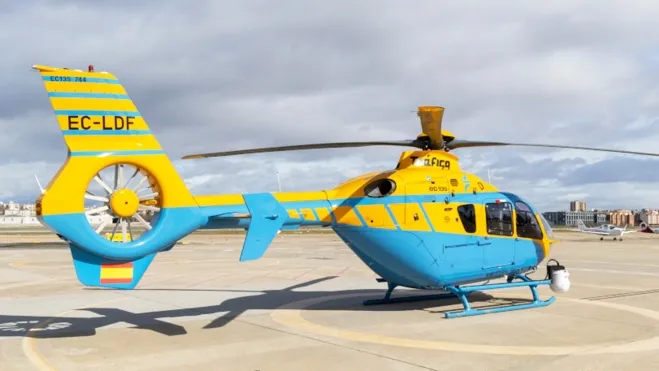
DGT helicopters returning to Madrid for security reasons
The suspension is primarily due to aviation safety concerns. After receiving information from Eliance, Tráfico determined that the company’s financial difficulties could affect the availability of pilots, specialized staff, and maintenance resources. For this reason, it ordered the suspension of flights and the relocation of aircraft to the Cuatro Vientos facilities, where they will remain under preservation measures.
The relocation was carried out in phases. The aircraft based in Zaragoza arrived in Madrid on November 6th itself, while the one from Valencia returned the following day. The helicopter from Valladolid completed the journey on Sunday, after a mechanical issue was resolved. Meanwhile, the company stated that its financial resources barely cover essential expenses and that it is awaiting the judicial proceedings regarding its bankruptcy.
Uncertainty also affects the workers at the Air Media Unit (UMA). The UGT union requested an urgent meeting on November 10 with the Director General of Traffic to learn about the planned measures and clarify the future of the crew members, camera operators, and technical staff. The organization criticizes the lack of official information regarding the continuation of operations.
A contract worth over 51 million euros that already had problems
The shutdown occurred just one year after the service was awarded to Eliance. In September 2025, the Ministry of the Interior granted a temporary consortium linked to the company a contract worth 51.14 million euros, tax-free, for an initial period of 38 months, with the possibility of extending it by another 22 months. The estimated value of the project reached 83.2 million euros and included increasing the annual flight hours from approximately 2,700 to 5,500.
However, the difficulties began before the general suspension. In early October, CCOO had already warned about Eliance’s insolvency situation, attributing losses of nearly 24 million euros in 2025. At that time, the helicopters based in Málaga, Sevilla, and Santiago de Compostela had ceased operations, while other bases continued to function with limitations. This crisis adds to the previous period of inactivity from September to October 2025, when the aircraft remained grounded due to the lack of a new contract.
The economic consequences of Eliance are not limited to the DGT. The company is involved in other public services, including customs aerial surveillance and medical transport. Its four helicopters assigned to the Customs Surveillance Service ceased operations on November 4, while the two medical-equipped aircraft of Summa 112 in Madrid also experienced disruptions due to technical issues and training problems. These incidents have forced the affected agencies to explore alternatives to ensure the delivery of their respective services.
What happens to the Pegasus radars while the helicopters remain on the ground
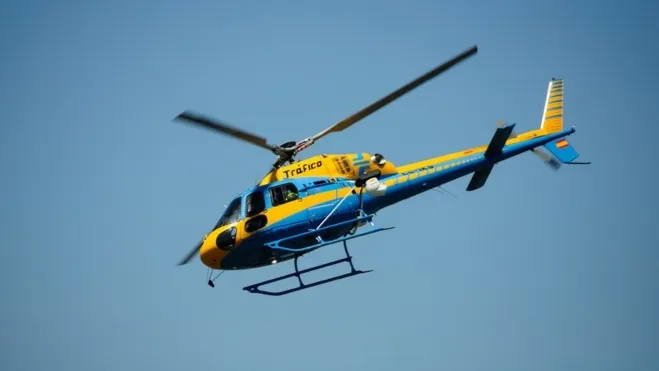
The suspension means that the Pegasus systems installed on the helicopters cannot carry out their usual aerial surveillance tasks. These devices allow speed control of vehicles from the air, while the aircraft’s cameras help detect other violations, such as using a mobile phone while driving or traveling without a seat belt.
However, the disruption of flights does not mean an end to speed control measures in Spain. The DGT maintains other surveillance devices available, including fixed and mobile radars, control cameras, drones, and camouflaged vehicles. The recovery of the helicopters will depend on the development of the situation with Eliance and the decisions made by the Interior Ministry to ensure the service is restored.