
Spanish researchers are developing a solar cell that will achieve 43% efficiency.
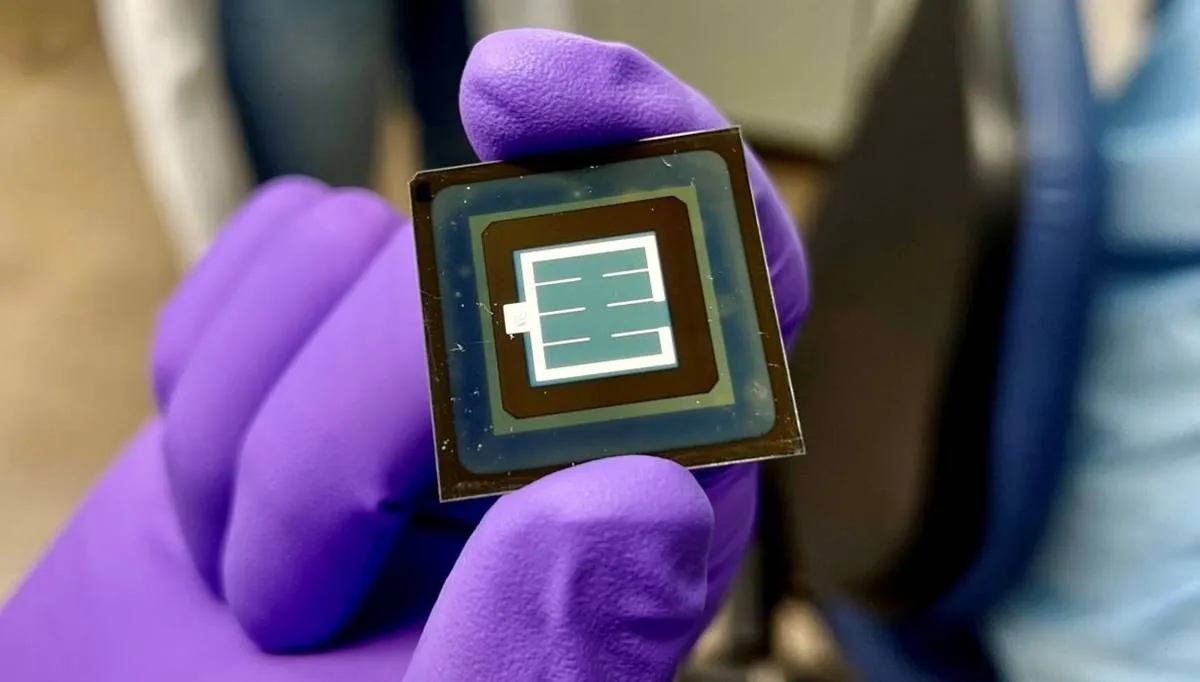
Solar energy has been improving its performance for years, but there is still much room for improvement. Although current installations are becoming increasingly cost-effective and efficient, there is a physical limit that restricts the performance of conventional solar cells.
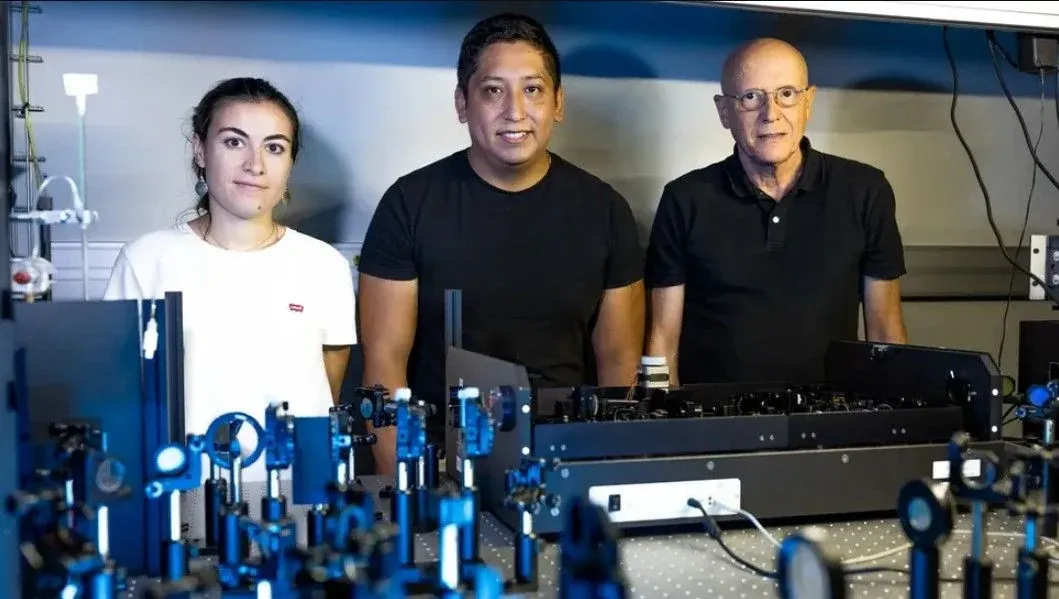
Now, a group of scientists from the Institute of Photonic Sciences (ICFO) in Castelldefels, Barcelona, has proposed a solution that could help overcome this barrier. What’s most interesting is that it doesn’t require developing a completely new semiconductor material, but rather modifying one of the components in solar cells to make better use of the energy they receive.
The key is to replace the conventional transparent electrode with an extremely thin layer of silver, capable of conducting electricity, allowing light to pass through, and at the same time controlling how some of the radiation escapes from inside the cell.
A silver layer to overcome the efficiency limit of solar panels
To understand the significance of this advancement, one must refer to the well-known Shockley-Queisser limit, a benchmark in physics that states a conventional single-junction solar cell has a theoretical maximum efficiency of around 33% under standard solar illumination conditions.
This means that even when high-quality materials are used and manufacturing defects are minimized, there is still a significant amount of energy that cannot be utilized. Some of it is lost as heat, while another portion consists of photons that do not have enough energy to generate electricity.
But there is a third phenomenon that also reduces efficiency. When sunlight reaches the semiconductor, it releases electrons that can generate an electric current. However, some of these electrons recombine and emit photons that eventually escape from the cell, taking some of the energy with them.
Spanish researchers have focused their efforts on reducing these losses, which are related to radiation emission and so-called Boltzmann losses. Their proposal involves modifying the way light can exit the solar cell by utilizing the optical properties of a metal film.
Instead of the usual indium tin oxide, known as ITO, they have used a layer of silver that is thin enough to allow most of the light to pass through, but also has reflective properties. In this way, it restricts the angles through which radiation emitted from inside can escape.
The result is a structure that functions partially as an optical cavity, helping to improve photon utilization. In the experiments, the team observed improvements in both voltage and electric current, which is particularly significant because both parameters determine the power that a solar cell can deliver.
From 33% to 43% efficiency: what they have actually achieved
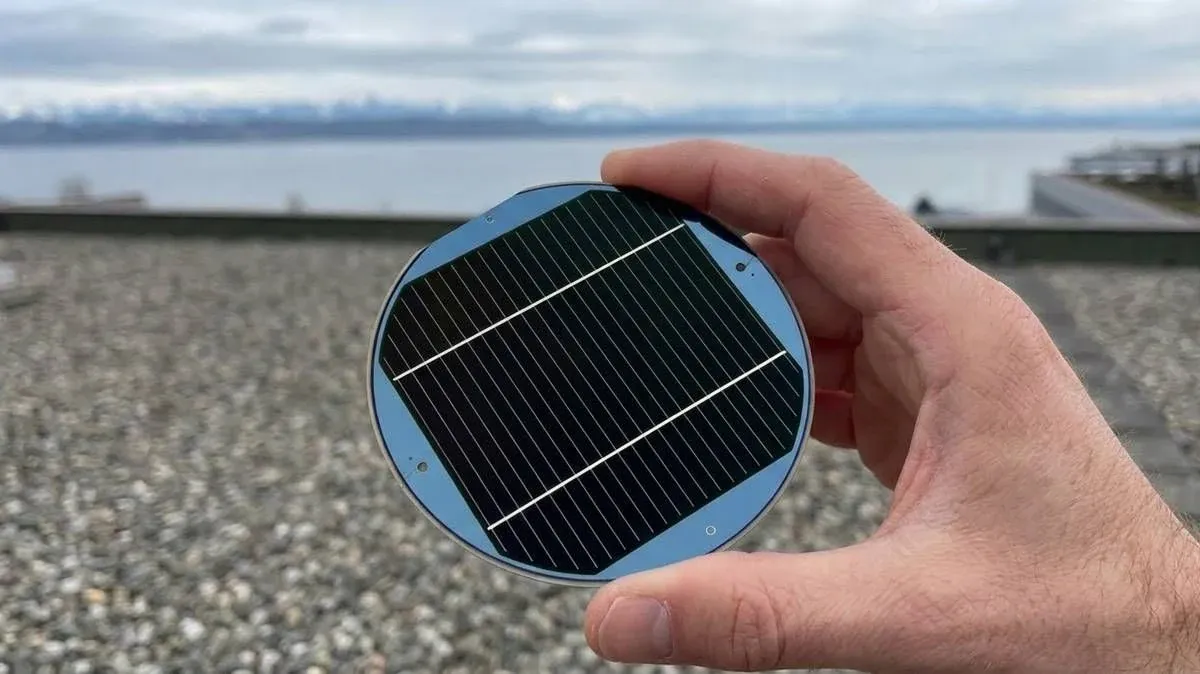
Based on these results, theoretical models suggest that by improving the technology, efficiencies close to 43% could be achieved. This figure would represent a significant leap compared to the classical limit of single-junction cells, although much work remains to be done to determine how far this approach can go.
Francisco Bernal Texca, the lead researcher of the study, believes this work opens up a research pathway that has been little explored to date for overcoming the Shockley-Queisser limit. The advantage is that it offers an alternative to conventional strategies, which mainly focus on combining different semiconductor materials.
And that’s because if this technology develops into a commercial solution, it could increase electricity production without a proportional increase in the area occupied by panels. This is particularly interesting for rooftop installations, where available space is often limited.
A technology that could complement perovskite solar cells
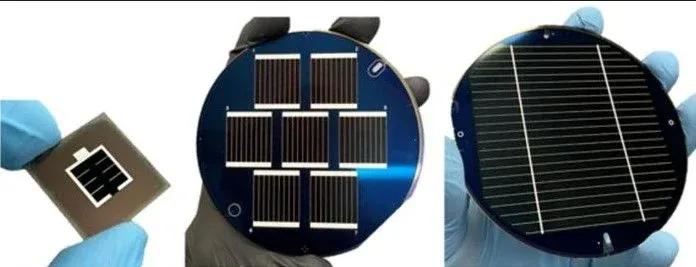
The ICFO’s work comes at a time of intense competition to improve photovoltaic efficiency. One of the technologies receiving the most attention is tandem solar cells, which combine different materials to harness various parts of the solar spectrum.
An example is the Chinese manufacturer LONGi, which has announced an efficiency of 35.5% in a perovskite-silicon tandem cell. In this case, the principle differs from that used by researchers in Barcelona: instead of controlling the radiation that escapes, materials with different absorption properties are combined to make better use of photon energy.
Perovskite allows for adjusting the wavelengths it can absorb, while silicon is responsible for utilizing another part of the spectrum. This combination helps overcome the limitations of conventional single-junction cells.
The ICFO’s proposal addresses another mechanism of loss, thus opening the door to exploring complementary solutions. This does not mean the two technologies can be combined directly without challenges, but it does indicate there are various paths to further improving solar energy efficiency.
Techniques such as single-photon splitting are also being explored, aiming to use high-energy photons to generate more than one electron excitation. These are still experimental strategies, but they show that there is significant room for improvement in photovoltaic technology.
More electricity from the same solar panel area
The practical consequence of increasing efficiency is quite simple. The more energy that can be obtained from the same area, the less space will be needed to achieve a certain level of electricity production.
For example, in a purely theoretical comparison, a cell with 43% efficiency could generate approximately 30% more electricity per unit area than one with 33% efficiency, assuming both operate under the same conditions.
That would have implications for self-consumption installations, large solar plants, and also for applications where every square meter is particularly valuable. From industrial rooftops to photovoltaic systems integrated into buildings, increasing production without expanding the installed area represents an obvious advantage.
However, there are still significant obstacles. The new structure will need to prove that it can be manufactured on a large scale, maintain its performance over years, and offer competitive costs. It will also be necessary to verify whether the improvements observed in the lab are maintained when the system is applied to larger cells and, subsequently, to complete modules.
The use of silver is also not a minor detail, as it is a relatively expensive material. Although the layers used are extremely thin, their consumption, stability, and manufacturing process will be important factors in determining commercial viability.
For now, this is a scientific advancement rather than a new generation of solar panels ready for installation on rooftops. But the work of researchers in Barcelona shows that there are still paths to explore to make better use of an energy source we receive for free every day.
And if it becomes possible to convert a much larger portion of that light into electricity, solar energy could continue to reduce its costs without requiring more and more space.