
Rivian’s robots aim to handle 80% of the tasks in factories
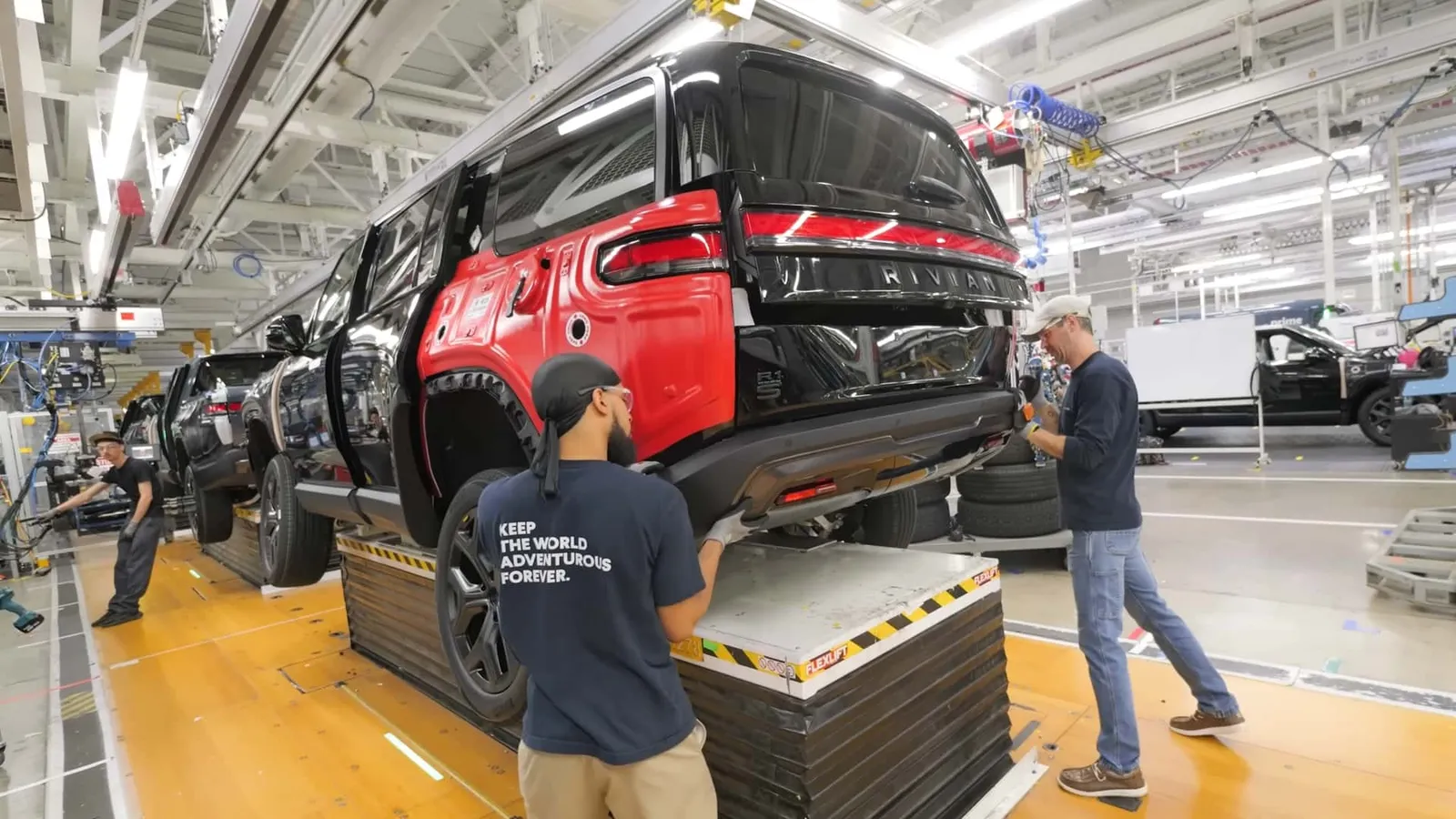
Rivian, the California-based startup that produces the electric R1S, R1T, and R2 models, plans to fill its automobile factories with robots. In an interview with Kleiner Perkins, the company’s founder and CEO, RJ Scaringe, said that up to 80% of the tasks on the assembly line will be automated, and this is made possible by the spinoff company Mind Robotics established last year.
We don’t know when the robotic revolution will arrive at Rivian’s facilities, but Scaringe said things will start on a smaller scale.
“At first, we’ll be able to handle 20% of the tasks at the factory, but over time we want to increase that to 80%,” Scaringe said. “And that’s what makes software so exciting and why designing hardware with room for growth is so important.”
A Long History of Robots in Automobile Factories
To be clear, the vast majority of automobile factories around the world, including Rivian’s, have some level of automation. We’ve all seen those large robotic arms that lift various parts and place them in fixed positions. These robots are manually programmed to perform the same task repeatedly, and they can only do their job if the parts they need are exactly in the same place every time.
However, what Rivian and other similar companies aim to do in the future is replace humans who perform highly repetitive tasks that involve a certain degree of variability. Initially, the stations where humans simply take an item from a container and place it on a holder will be handled by robots equipped with artificial intelligence capable of detecting slight variations in the position of the items inside the container.
“These are the immediate opportunities we see,” said Scaringe. “And they tend to be the least interesting jobs. But there’s a huge amount of work involved there. Depending on the section of the factory, up to 50% of the work consists of picking and placing tasks.”
Collaboration with Mind Robotics
To achieve all this, Rivian has worked closely with Mind Robotics, a startup created by the electric vehicle manufacturer last year to develop autonomous driving and “physical AI.” Now, RJ Scaringe has revealed that both companies have recruited talent from the consumer electronics industry to work on Rivian’s future software and hardware plans.
“We have many people, both at Rivian and at Mind, who we’ve hired from consumer electronics. For example, if you work on a phone with tactile sensors, how can that be useful on a robot? Well, a robot needs to have tactile sensors. So, there are these deep capabilities that have been developed in the consumer electronics space that we’ve leveraged at Rivian, and we’re leveraging them with Mind,” said Scaringe.
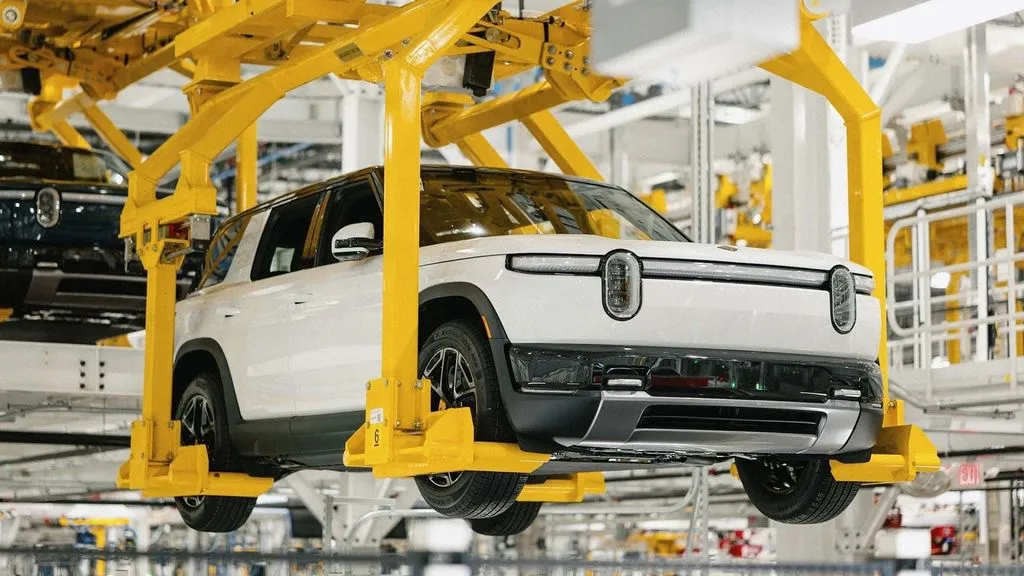
Rivian R2 on the Production Line
Photo by: Rivian
In practice, engineers filmed various tasks being completed on the factory floor and then fed those videos into software capable of decoding what’s happening in each frame. The software can then issue commands to the robots.
"In terms of production, what we did within Mind was we captured videos of a wide range of tasks. So, thousands of tasks were performed, characterized by what’s involved in those tasks and what the level of difficulty is in terms of dexterity and reasonableness," said Rivian’s CEO. With the right hardware in place, the software can then be improved over time. "The model becomes smarter over time," added Scaringe.
It is similar to what the company aims to achieve with its Gen2 R1S and R1T electric models. Both electric vehicles are equipped with all the necessary hardware to enable hands-free driving from point to point, while the software that ties it all together is expected to be available on a limited scale through an over-the-air software update by the end of 2026, followed by a broader release in 2027.
Regarding robots