
Hyundai IONIQ 5 or Kia EV6: A Comparison of Specifications
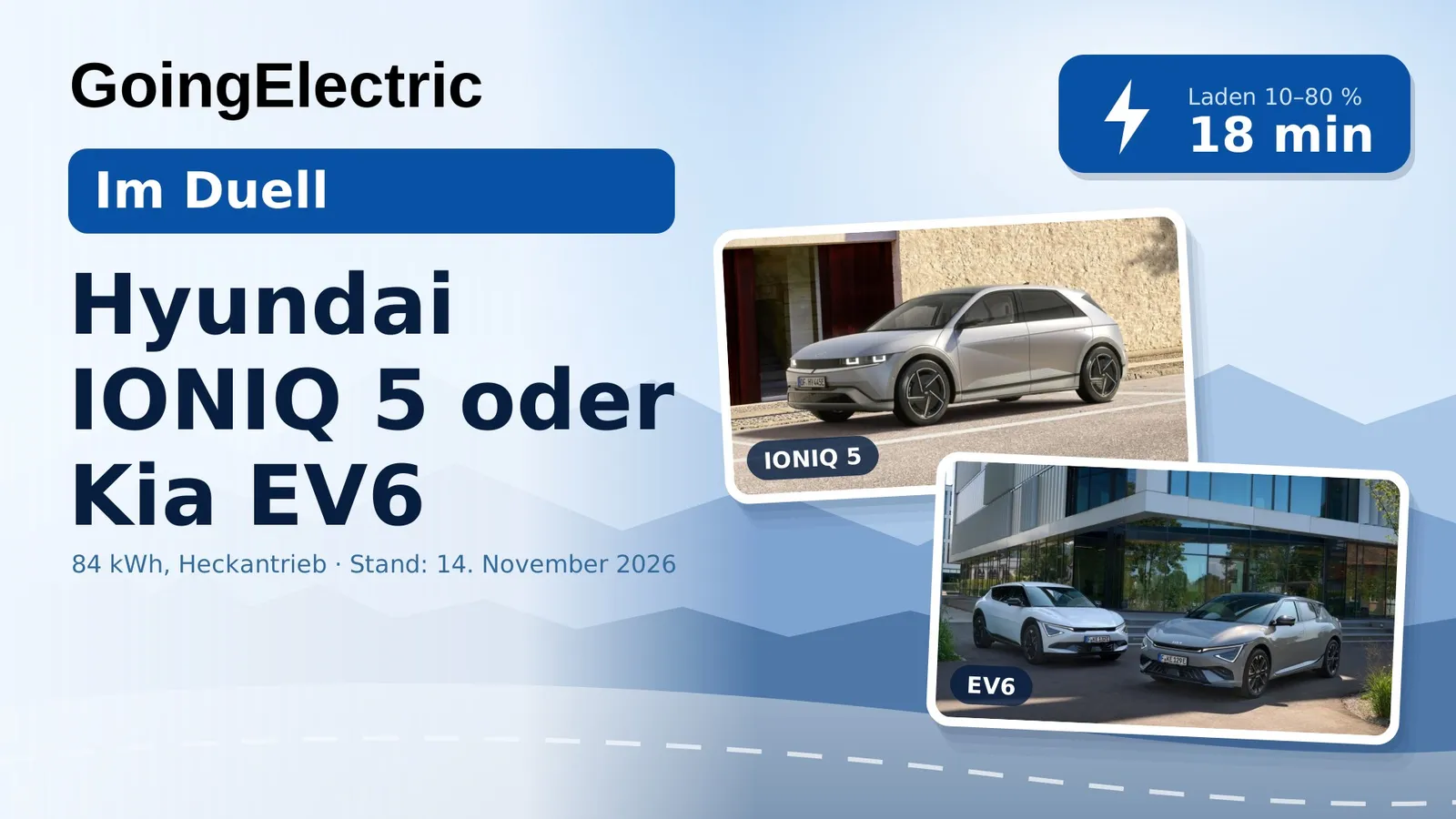
With an 84-kWh battery and rear-wheel drive, the Kia EV6 costs 49,990 euros according to the database, while the technically similar Hyundai IONIQ 5 costs 54,100 euros. Under WLTP standards, the EV6 can travel 582 kilometers, the IONIQ 5 570 kilometers, and both can reach 80 percent charge in 18 minutes.
Advertisement
Both models are based on the same technical platform: The Hyundai IONIQ 5 was the first model on the company’s E-GMP platform in 2021, with the Kia EV6 following the same year as Kia’s first model on it. Both use 800-volt technology, and both received batteries with capacities of 63 and 84 kWh during model updates. They differ in size by only a few centimeters: the IONIQ 5 is 4,655 millimeters long, while the EV6 is 4,695 millimeters long.
The versions that are most similar technically are compared here: both have an 84-kWh battery, rear-wheel drive, and 168 kW (229 HP). According to the database, these versions have identical power, torque, and battery capacity; differences lie in price, body style, and towing capacity.
Summary
Hyundai IONIQ 5 84 kWh (Rear-wheel drive):
Base price: 54,100 euros
WLTP range: 570 km
Battery: 84 kWh total, 80 kWh usable
Power: 168 kW (229 HP)
Max DC charging speed: 260 kW, 10–80% charge time: 18 minutes
Towed weight with brakes applied: 1,600 kg
Kia EV6 84 kWh (Rear-wheel drive):
Base price: 49,990 euros
WLTP range: 582 km
Battery: 84 kWh total, 80 kWh usable
Power: 168 kW (229 HP)
Max DC charging speed: 258 kW, 10–80% charge time: 18 minutes
Towed weight with brakes applied: 1,800 kg
Across all available versions, the WLTP range for the IONIQ 5 ranges from 440 to 570 kilometers, while that of the EV6 ranges from 428 to 582 kilometers; the shortest ranges correspond to the 63-kWh battery, and the longest ranges belong to the versions being compared here.
Prices and Versions
Hyundai IONIQ 5
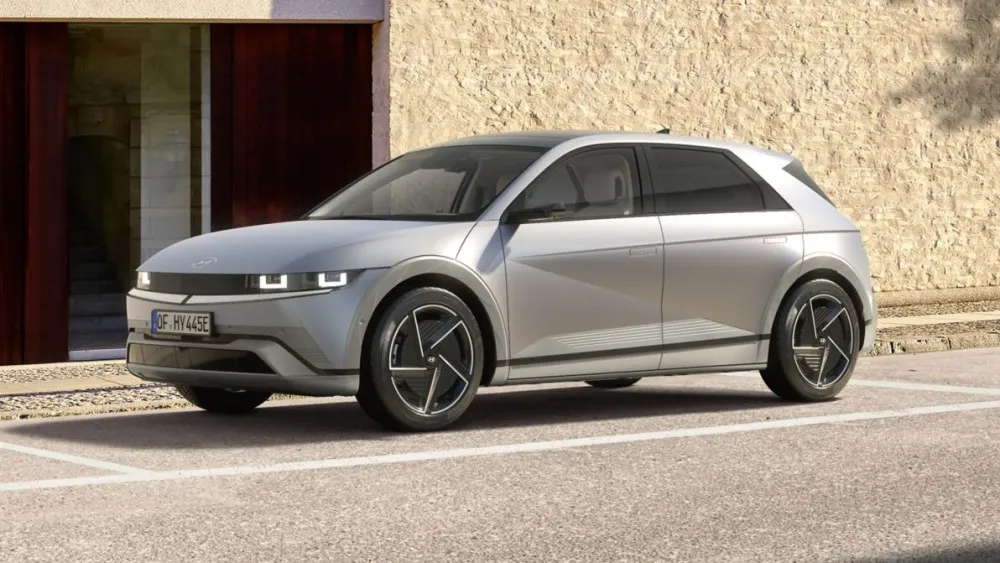
The database lists four available versions for the IONIQ 5: the 63-kWh battery with 125 kW (170 hp) and rear-wheel drive, the 84-kWh battery with rear-wheel drive and 168 kW, the 84-kWh battery with all-wheel drive and 239 kW (325 hp), and the IONIQ 5 N as a sport version. Starting with the smaller battery, the IONIQ 5 costs 45,750 euros, while the version compared here with the larger battery and rear-wheel drive costs 54,100 euros. With all-wheel drive and 239 kW (325 hp), the IONIQ 5 costs 61,650 euros, has a range of 495 kilometers according to WLTP, and consumes 18.1 kWh per 100 kilometers.
All specifications and variants of the Hyundai IONIQ 5
Show
Kia EV6
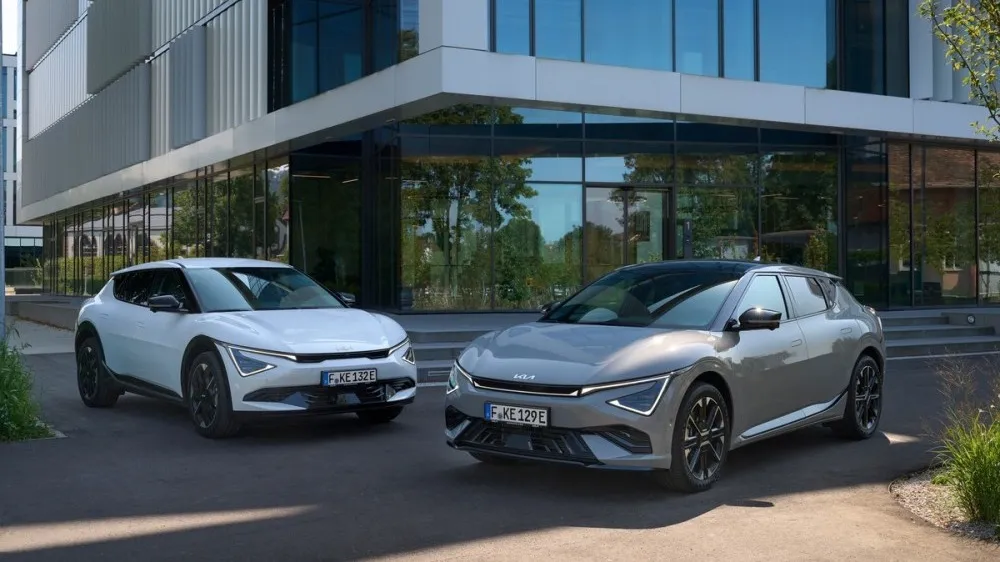
The EV6 is also listed in the database in four available versions: with a 63-kWh battery, 125 kW (170 hp) and rear-wheel drive; with an 84-kWh battery and rear-wheel drive (168 kW); with an 84-kWh battery and all-wheel drive (239 kW, 325 hp); and as the EV6 GT. Starting with the smaller battery, the EV6 costs 44,990 euros, while the comparable version with a larger battery and rear-wheel drive costs 49,990 euros, which is 4,110 euros less than the comparable IONIQ 5. With all-wheel drive, the price is 53,990 euros. According to WLTP standards, this version has a range of 546 kilometers and consumes 17.0 kWh per 100 kilometers. The EV6 was already part of our comparison of electric cars with 800-volt technology under 50,000 euros from November 4, 2026.
All data and variants of the Kia EV6
Range and fuel consumption
With the same battery and performance, the EV6 covers 582 kilometers according to WLTP, while the IONIQ 5 covers 570 kilometers, which is 12 kilometers less. The database lists the WLTP fuel consumption at 15.9 kWh/100 km for the EV6 and 16.0 kWh/100 km for the IONIQ 5. The drag coefficient is 0.28 for the EV6 and 0.288 for the IONIQ 5.
Their driving performance is also very similar. Both deliver 168 kW (229 horsepower) and 350 Nm of torque, and both can reach 185 km/h. For the 0 to 100 km/h acceleration, the database shows 7.5 seconds for the IONIQ 5 and 7.7 seconds for the EV6. The curb weight is listed at 2,050 kilograms for the EV6 and 2,060 kilograms for the IONIQ 5.
Charging
They differ little when it comes to fast charging. The IONIQ 5 can charge at up to 260 kW according to the database, while the EV6 can charge at up to 258 kW. Both take 18 minutes to charge from 10% to 80% charge.
The IONIQ 5 can charge at up to 11 kW at a wall charger or AC charging station, while the EV6 has a rated charging speed of 10.5 kW. Both models can power external devices via V2L, but this requires appropriate equipment and an adapter. According to the database, there is no confirmed use for these vehicles as home energy storage (V2H) or grid energy storage (V2G) in Germany.
Display
Space and Dimensions
The body designs of the two vehicles differ. The EV6 is 40 millimeters longer at 4,695 millimeters compared to the IONIQ 5 (4,655 millimeters), but it is 55 millimeters shorter in height at 1,550 millimeters (IONIQ 5: 1,605 millimeters). In terms of width, the IONIQ 5 is 10 millimeters wider at 1,890 millimeters compared to the EV6’s 1,880 millimeters.
The IONIQ 5’s trunk holds 520 liters behind the rear seats, while the EV6’s holds 490 liters, which is 30 liters less. With the rear seats folded down, the IONIQ 5 has 1,580 liters, and the EV6 has 1,290 liters. Both are five-seaters.
Towing
They also differ when it comes to towing. The rear-wheel-drive EV6 84 kWh can tow 1,800 kilograms when braking, according to the database, while the IONIQ 5 in a similar version can tow 1,600 kilograms, which is 200 kilograms less. The load capacity for both is listed at 100 kilograms. With the smaller 63-kWh battery, both models can tow 750 kilograms.
Key Differences at a Glance
Starting price: The EV6 84 kWh costs 49,990 euros, while the IONIQ 5 84 kWh costs 54,100 euros, representing a difference of 4,110 euros.
Range: The EV6 has a greater range per WLTP standard, at 12 kilometers more (582 km vs. 570 km).
Dimensions: The IONIQ 5 is 55 millimeters taller and 40 millimeters shorter, with a trunk that is 30 liters larger.
Towing capacity: The EV6 can pull 200 kilograms more (1,800 kg vs. 1,600 kg).
The battery, power, torque, top speed, and 18-minute charging time are identical.
All figures come from the GoingElectric electric vehicle database, as of November 14, 2026.
Which of the two would you choose — and why?
Advertisement