
Up to 1,346 euros in savings per year by driving 15,000 kilometers: the cost of driving a gasoline car, a hybrid, or an electric vehicle
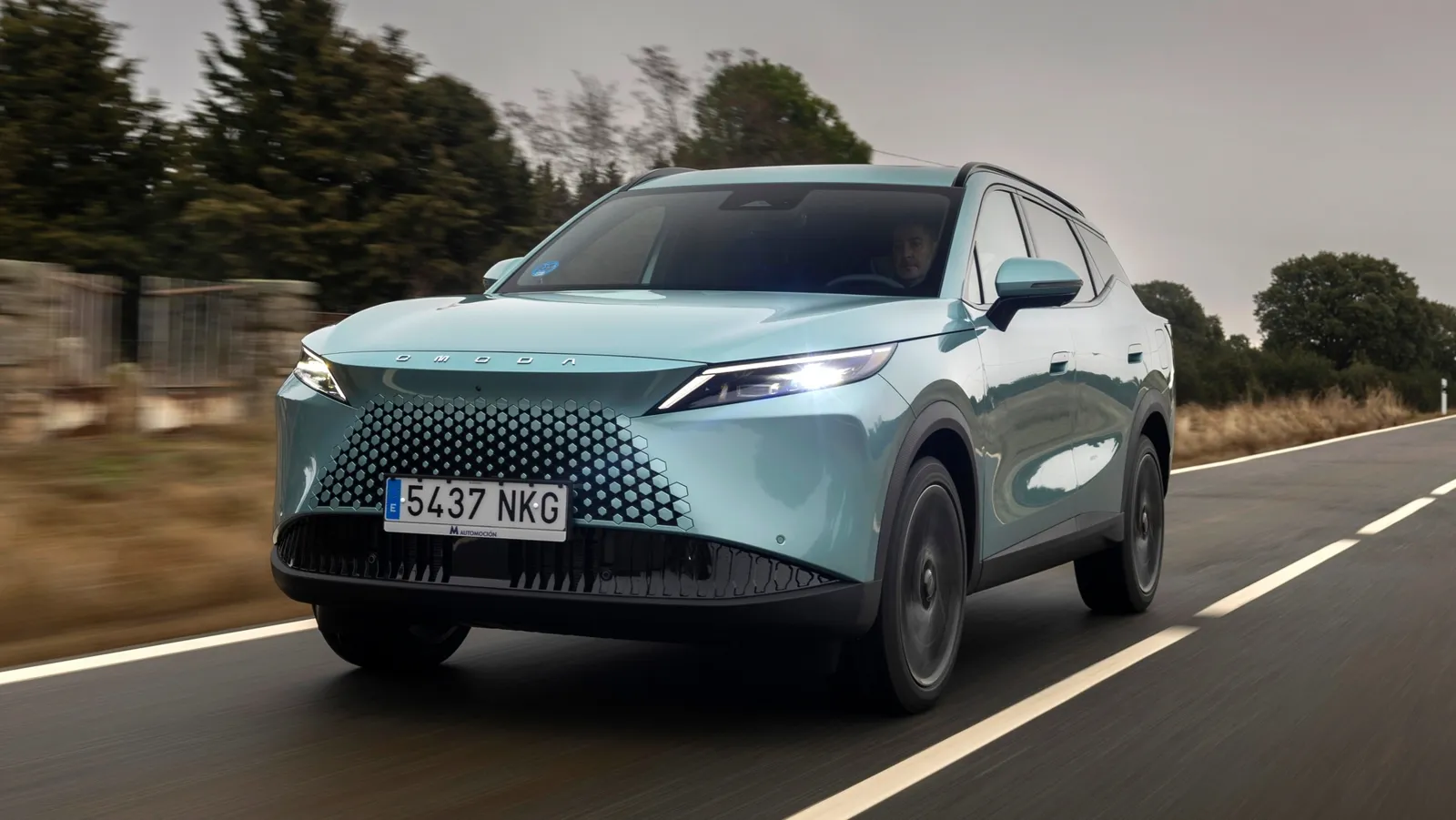
The cost of using a car for an entire year can vary significantly depending on the technology it features. Gasoline engines, hybrids, and electric vehicles differ greatly in terms of fuel consumption and energy costs, to the point where choosing one over another can result in savings of hundreds of euros. But how much does it actually cost to travel the same distance with each type, and which one is the most economical?
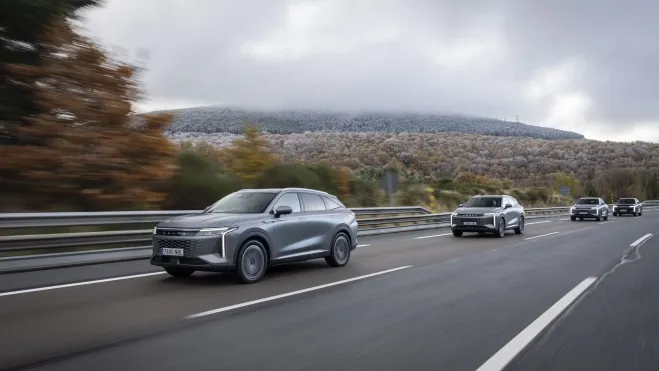
To find out, we calculated the energy cost for a driver who travels 15,000 kilometers per year, comparing four options: gasoline, hybrid, plug-in hybrid, and electric. As a reference, we selected various SUVs from OMODA and JAECOO, two manufacturers that offer models with these four technologies, allowing us to analyze their differences in consumption under comparable conditions.
The calculation uses a price of 1.94 €/l for gasoline and 0.16 €/kWh for household electricity. However, charging an electric car outside home can significantly change the result. That’s why we also considered a second scenario with fast charging at 0.46 €/kWh to see how much the charging location affects annual costs.
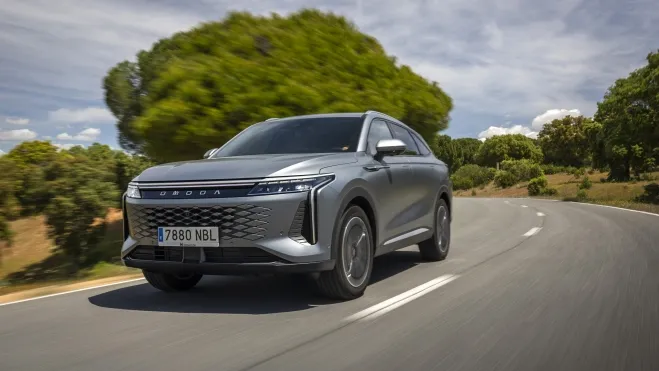
We start with what’s well known. A gasoline-powered JAECOO 5 with a certified fuel consumption of 7 l/100 km requires about 13.58 euros to travel 100 kilometers. This amount may seem relatively small, but after 15,000 kilometers, which we used as a reference, it amounts to approximately 2,037 euros per year just in fuel costs.
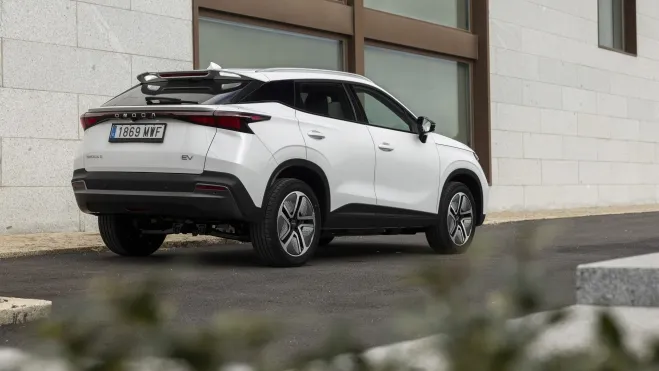
To start reducing that bill, you don’t even need an outlet. The OMODA 5 hybrid has an estimated fuel consumption of 5.3 liters per 100 kilometers, which brings the energy cost down to around 10.28 euros per 100 kilometers. After traveling the same 15,000 kilometers, the total expense would be about 1,542 euros, meaning 495 euros less per year compared to a gasoline SUV, without the hassle of charging a battery.
The difference might not seem huge if considered over just twelve months, but it takes on greater significance when thinking about the typical lifespan of a car. Keeping both mileage and prices constant for this comparison, the energy difference after five years would be around 2,475 euros.
The big leap comes with the availability of charging stations
Things start to change significantly when electricity plays a more prominent role. Here, a key factor emerges in understanding the true cost of using a plug-in hybrid: where and at what price we charge its battery.
In this case, the JAECOO 7 SHS plug-in hybrid is perfect for testing this. To make this calculation, we assume a scenario where most trips are completed using electric power, which is crucial for understanding the figures and implies frequent charging of the vehicle.
If we can charge it regularly at home, the estimated energy cost is only 2.44 euros per 100 kilometers. After traveling 15,000 kilometers, we would have spent approximately 366 euros, compared to 2,037 euros required to cover the same distance with the JAECOO 5 gasoline model. The difference amounts to a whopping 1,671 euros in just one year.
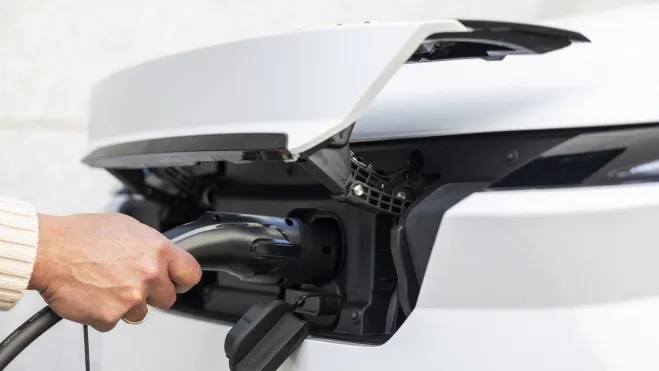
But changing just one variable can significantly alter the costs. If we don’t have home charging and rely mainly on fast chargers, using the price of 0.46 €/kWh in these calculations, the energy cost rises to 7.01 euros per 100 kilometers. After covering those same 15,000 kilometers, the annual expense would be approximately 1,052 euros.
A plug-in hybrid would still be more cost-effective than a gasoline car, saving 985 euros annually, but this difference is far smaller than the over 1,600 euros saved when the battery is charged primarily at home. Here we find one of the most interesting conclusions of this comparison: in a plug-in car, where we charge it can end up being almost as important for our wallet as the technology itself we purchase.
Another good example can be found in the OMODA 9 SHS, a larger plug-in hybrid SUV. By relying mainly on its electric operation and home charging, the estimated energy cost is 2.93 €/100 km, which would amount to around 440 euros after traveling 15,000 kilometers. Compared to our gasoline reference vehicle, this is 1,597 euros less per year.
However, when using fast charging, the cost for the OMODA 9 SHS rises to 8.41 €/100 km and 1,262 euros annually. The car and mileage remain exactly the same, but the difference between charging mainly at home or at fast charging stations exceeds 800 euros per year, highlighting just how much the cost of electricity can affect the final outcome.

What if we eliminate gasoline altogether?
We finally arrive at the electric car, a technology that completely does without a combustion engine and, therefore, eliminates gasoline costs as well. But just like with plug-in hybrids, having a home charging station makes a significant difference once again.
The JAECOO 5 electric model has an energy consumption of 16.5 kWh/100 km. Using the domestic electricity price as a reference for this comparison, driving 100 kilometers costs approximately 2.67 euros.
That means covering the 15,000 kilometers with our electric vehicle would cost around 401 euros per year in electricity. Compared to the 2,037 euros required to travel the same distance with a gasoline-powered JAECOO 5, this represents 1,636 euros less per year.
The difference becomes even more striking when we look at a longer time frame. Keeping the mileage and energy prices constant in these calculations, after five years we’d be talking about over 8,100 euros in savings solely from energy costs.
But let’s unplug our driver from home charging again. If those 15,000 kilometers were covered mainly through fast charging, the energy cost for the JAECOO 5 electric vehicle would rise to 7.66 €/100 km, amounting to approximately 1,149 euros per year. The savings compared to gasoline would still exist, though it would decrease to 888 euros annually.
At this point, the figures give us a pretty clear idea of the differences. Driving 15,000 kilometers would cost approximately 2,037 euros with a gasoline SUV and 1,542 euros with a hybrid vehicle. If we can take advantage of home charging, the plug-in hybrid used primarily in electric vehicles reduces the cost to 366 euros, while the electric vehicle stays around 401 euros.
The difference between the 2,037 euros for gasoline and the 366 euros in the most economical scenario of this comparison is 1,671 euros per year. This is a sufficiently large amount to make energy costs another factor to consider when deciding which technology best fits our needs.
It is clear, then, that there is no single solution suitable for all drivers. Hybrids allow drivers to start reducing expenses without needing a charging outlet, while plug-in hybrids can cut costs even further if we have a place to charge regularly and make use of their electric range. Electric vehicles, on the other hand, achieve some of the lowest energy costs when we can rely primarily on home electricity.
Therefore, before deciding which technology interests us the most, we might need to ask another question besides how many kilometers we drive each year: where will we charge the car? For someone who drives 15,000 kilometers per year, the answer could mean a difference of nearly 1,700 euros per year.
Cost of driving 15,000 km per year by technology
Technology / model
Cost per 100 km
Annual cost (15,000 km)
Annual savings compared to gasoline
Gasoline – JAECOO 5
13.58 €
2,037 €
-----
Hybrid – OMODA 5
10.28 €
1,542 €
495 €
Plug-in hybrid – JAECOO 7 SHS, home charging
2.44 €
366 €
1,671 €
Plug-in hybrid – OMODA 9 SHS, home charging
2.93 €
440 €
1,597 €
Electric – JAECOO 5, home charging
2.67 €
401 €
1.636 €
How much does the annual cost vary depending on where we charge the car
Plug-in model
Charging at home
Fast charging
Annual difference
JAECOO 7 SHS
366 €/year
1.052 €/year
686 €
OMODA 9 SHS
440 €/year
1.262 €/year
822 €
JAECOO 5 electric
401 €/year
1.149 €/year
748 €