
They disassembled 115 electric motors from 80 cars in China, Europe, and the United States: these are the most surprising differences.
12/11/2026 11:30
Updated to
12/11/2026 11:30
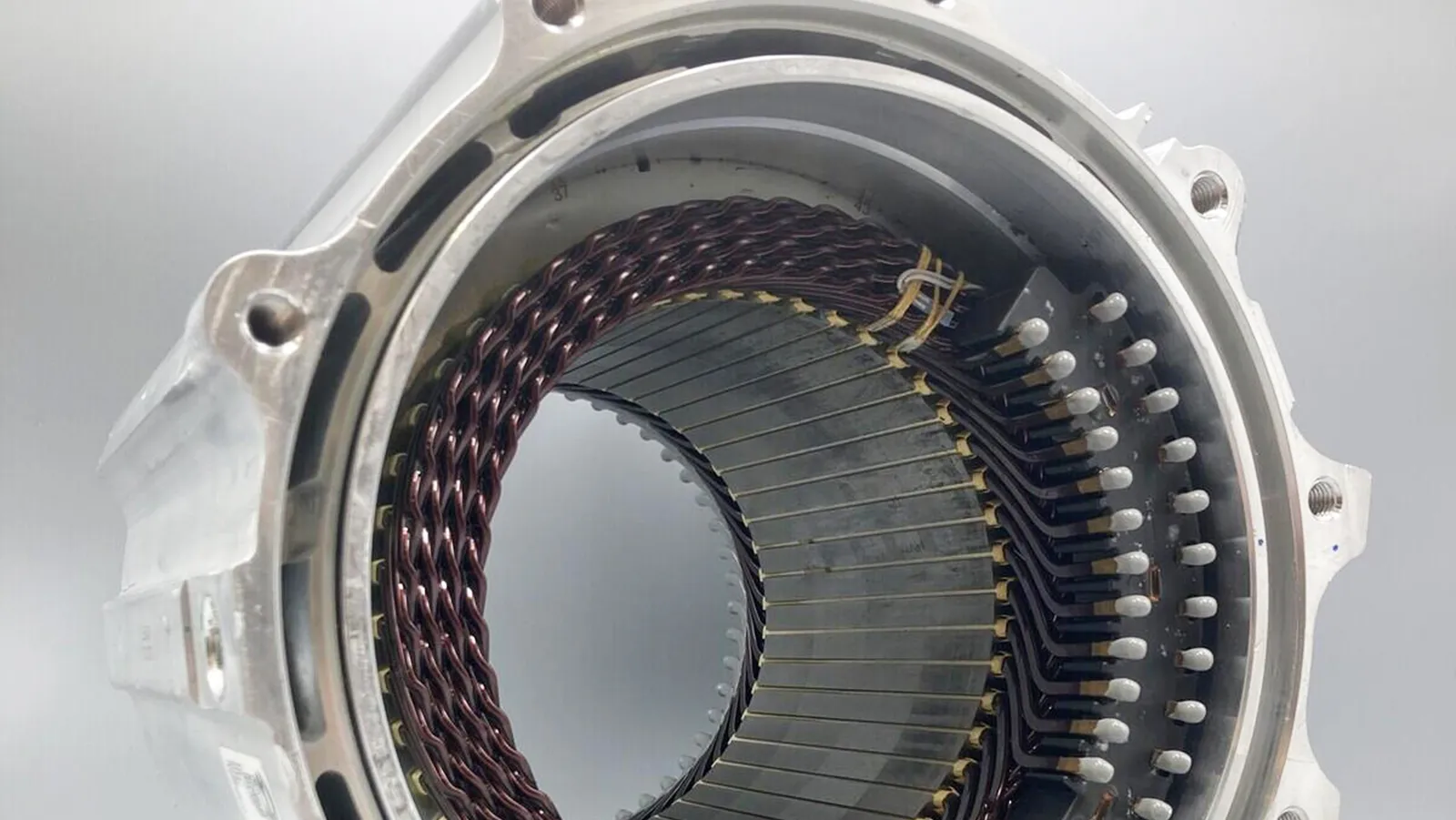
Are the engines in Chinese electric cars technologically different from those developed by European and American manufacturers? A study by RWTH Aachen University in Germany analyzed 115 engines installed in 80 vehicles from 2019 to 2025 and reached an interesting conclusion: their architectures are much more similar than one might think. The main differences lie in the materials used and certain manufacturing details. The research also shows that the power density of newer electric motors has increased by nearly 45% since 2019.
Chinese and European engines are more similar than it seems
The research, published this November in the scientific journal Energies, was conducted by the Department of Engineering for Components of Electric Mobility at RWTH Aachen University.
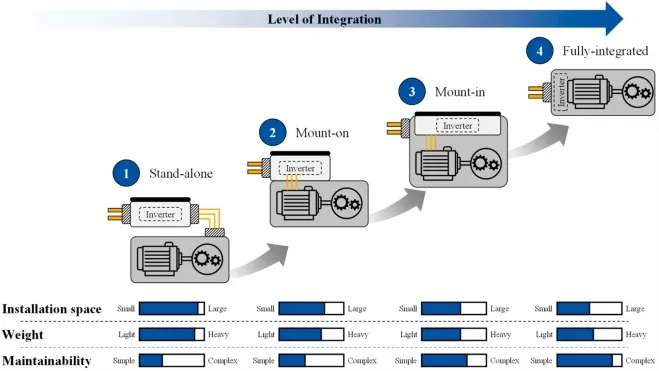
The researchers examined aspects such as the motor structure, rotor, stator, power electronics, transmission, and cooling systems.
They concluded that there are no fundamental differences in the architecture of the electric motors from Chinese, European, and American manufacturers included in the comparison.
However, various engineering decisions do emerge. One of the most interesting relates to the casings. While European manufacturers typically use aluminum, some Chinese manufacturers are opting for magnesium alloys. This material can reduce the weight of the casing by 20% to 30% compared to an aluminum equivalent.
Its use presents challenges in terms of manufacturing and corrosion resistance, but China has a significant advantage: it accounts for over 80% of the world’s primary magnesium production.
There are also differences in the internal electrical connections. Chinese manufacturers often use conductive bars with powder coatings, while Europeans rely on copper assemblies integrated into polymer materials.
Modern electric motors offer 45% more power per kilogram
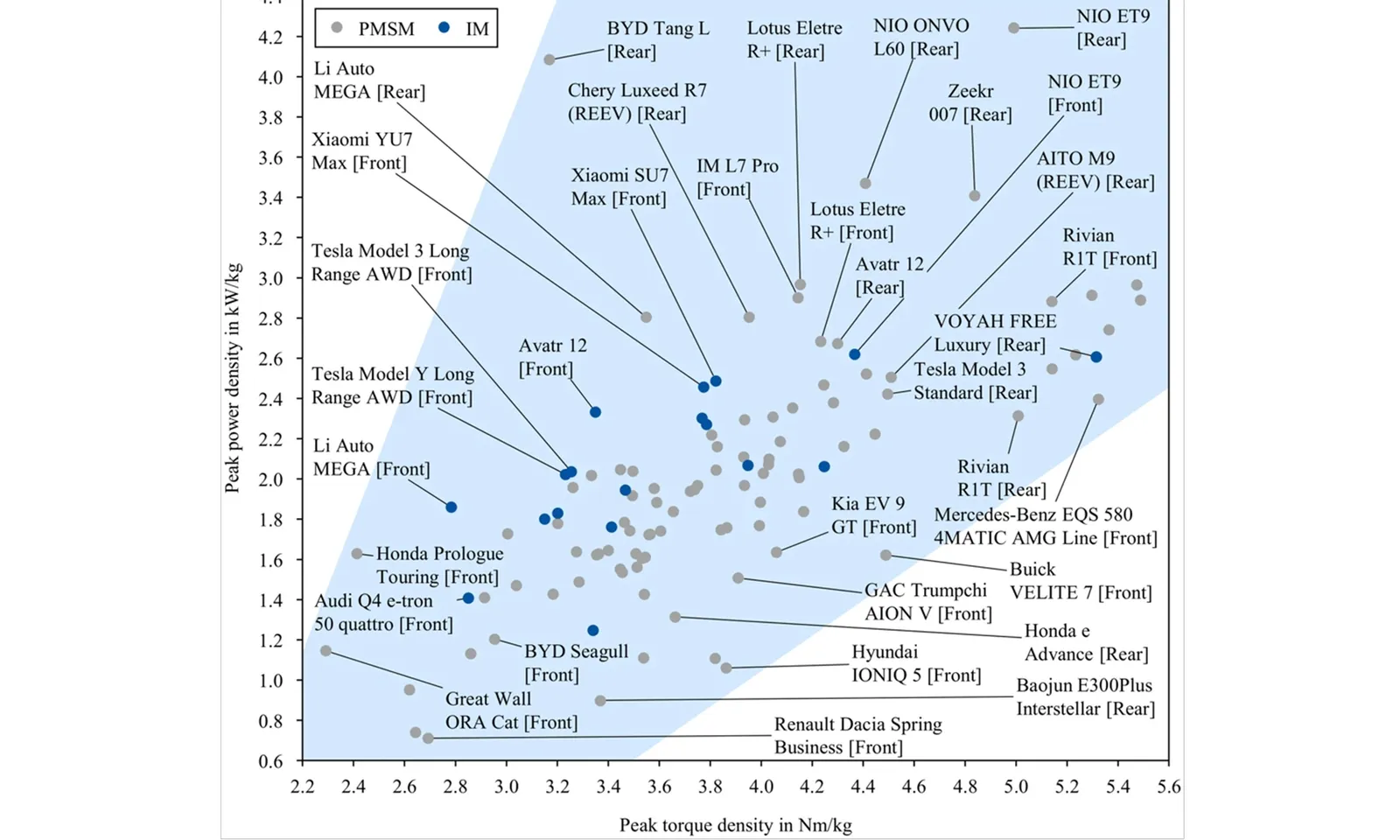
The study also identifies a significant technological advancement common to all markets. The maximum power density of permanent magnet synchronous motors has risen from an average of 1.68 kW/kg in 2019 to 2.43 kW/kg in models from 2024 and 2025.
This represents an improvement of nearly 45%, enabling the development of more compact engines for a given power output.
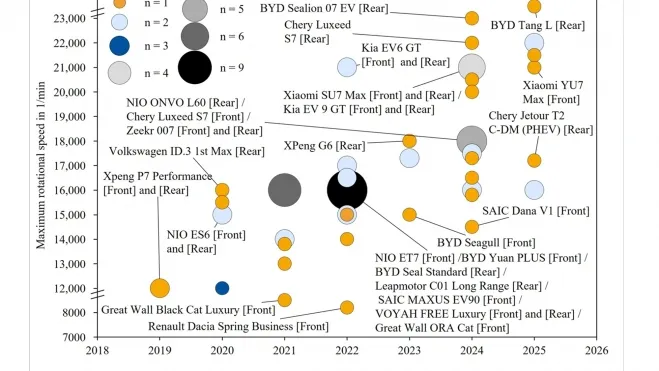
A key factor is the increase in rotational speed. Between 2020 and 2022, the engines analyzed primarily operated at maximum speeds ranging from 8,000 to 17,000 rpm. In contrast, the newer engines often exceed 20,000 rpm, with some reaching 30,500 revolutions per minute.
Operating at higher speeds allows for reducing certain engine dimensions and saving materials, although it requires adapted transmissions and careful control of vibrations.
China and Europe advance toward more compact and better-cooled engines
Another common trend is the integration of components. Since 2022, units that combine the engine, transmission, and power electronics into compact structures have become dominant among the vehicles analyzed.
The cooling systems are also changing. Rather than traditional water jackets, manufacturers are increasingly using direct oil cooling solutions to control the temperature of the rotor and stator. These technologies improve thermal management but also require higher manufacturing precision.
For the European industry, the study offers a relevant conclusion: China is not pursuing a completely different technological path, but rather competing by using similar solutions and leveraging certain advantages in materials and industrial processes.
The research does not determine which country produces the best electric motors. Its main contribution is identifying the technologies that are transforming these components and that could influence their cost, size, and performance in the coming years.