
Fraunhofer has developed an in-asphalt truck charger. UBCS, up to 4.5 MW, with no cooling up to 1.5 MW
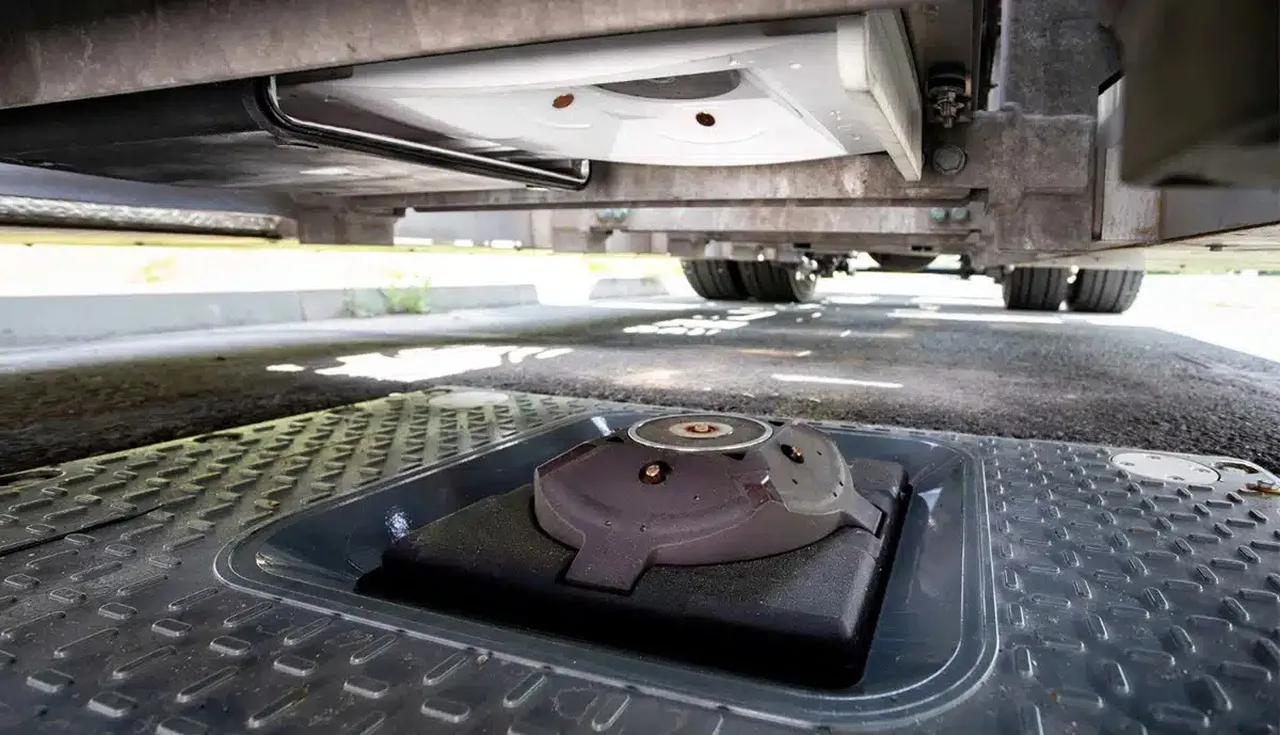
The German Fraunhofer Institute (Fraunhofer IVI) has developed a truck charger that is installed on the parking surface. The device works in conjunction with the charging port in the vehicle’s chassis and features its own water drainage and heating system to ensure it can function even in rainy or snowy conditions. With active cooling, it can achieve a power output of up to 4.5 MW, meaning it theoretically has the capability to charge a battery with a capacity of 1,000 kWh in less than fifteen minutes.
UBCS, Underbody Charging System, Underbody Charging Mechanism
The connector is mounted in a metal cover on the parking surface. When there is a need to charge the battery, the plug is raised to a port installed under the truck’s chassis to make contact with the contacts [this is not induction charging – editor’s note]. A representative from Fraunhofer IVI claims that such a socket can be used in practically any large vehicle, and the institute is already in “advanced discussions” with several manufacturers. The device has been tested since 2025 with a 15-ton truck operated by the city cleaning services in Dresden, Germany.
Under-vehicle charger. Note the four copper-colored contacts, which represent two DC circuits in total (c) Fraunhofer IVI
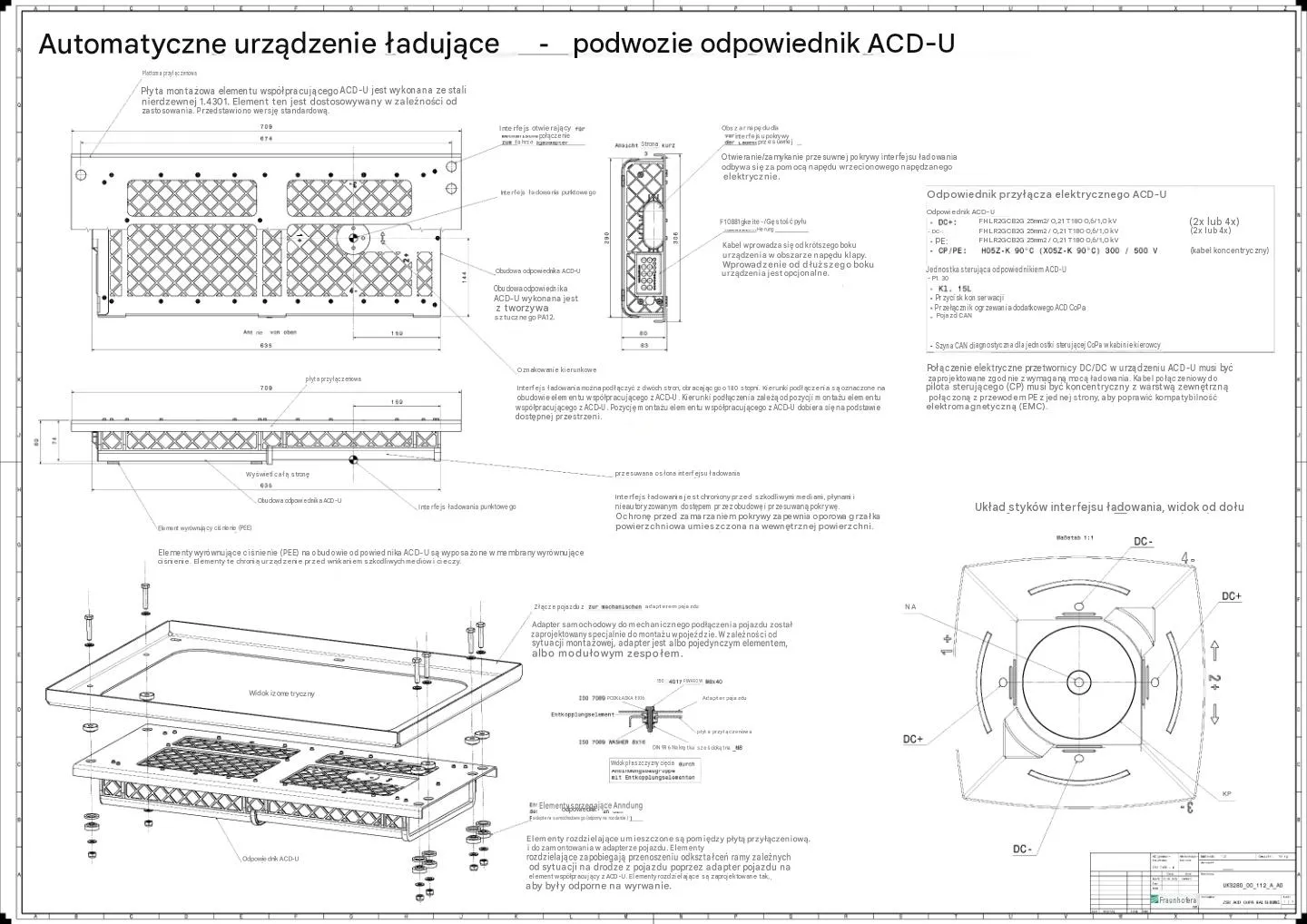
Schematic of the device’s components (c) Fraunhofer IVI, translation: Google Translate
The connector can operate at up to 1.5 MW without active cooling and up to 4.5 MW with cooling. It can be particularly useful in crowded parking lots as it requires almost no space. Regular chargers, even those that are only satellite units, must be surrounded by protective barriers to prevent accidental damage. Another advantage of the UBCS system in asphalt is that drivers no longer have to deal with heavy cables, which can become thick and rigid at megawatt levels of power.
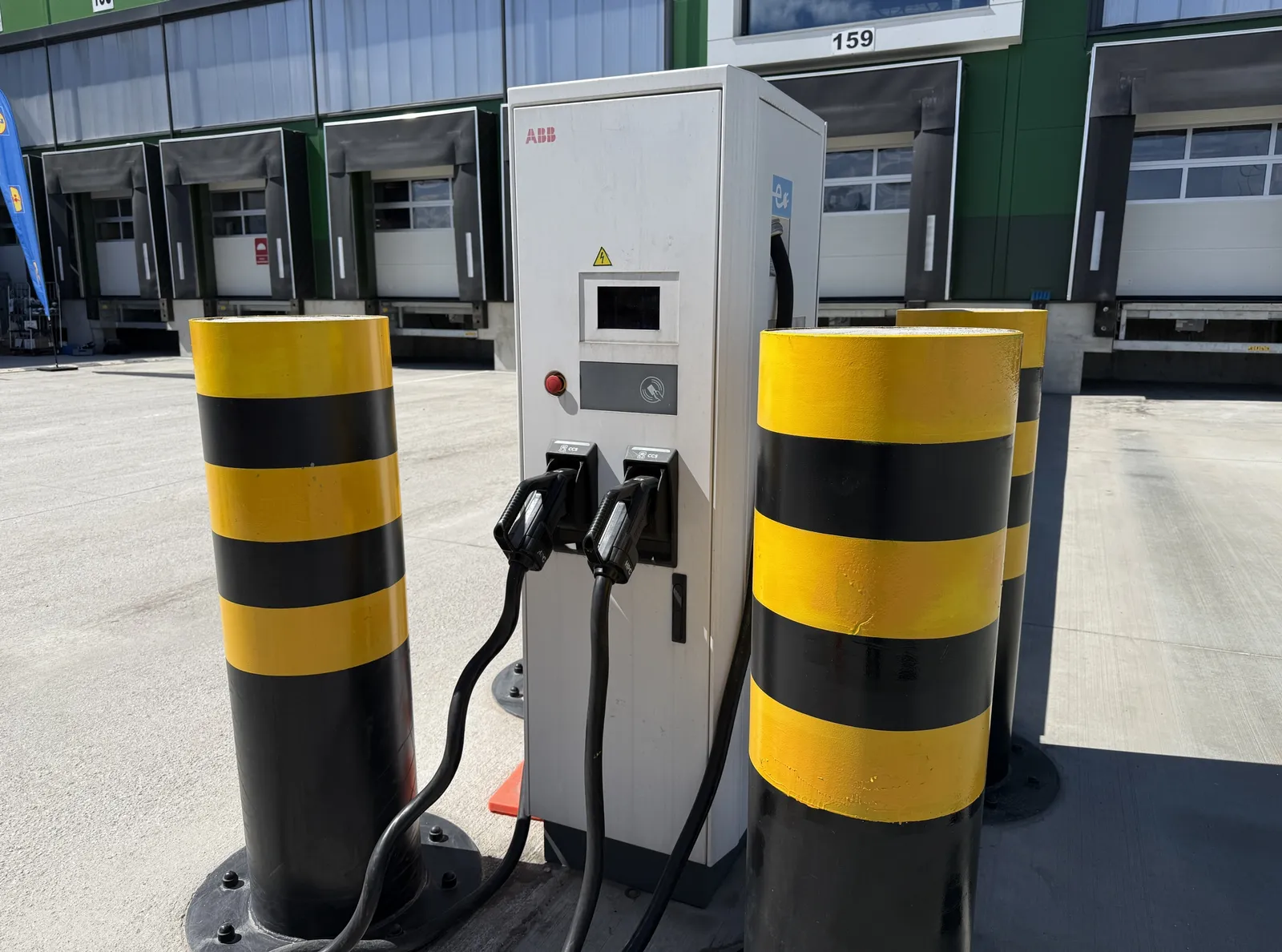
A charger at Lidla’s logistics center near Warsaw. Four sturdy pillars protect it from accidental disassembly by trucks operating in the vicinity.
The charger’s connector attaches to the loading port using an electromagnet, minimizing losses. Based on the photographs, the driver currently needs to align the yellow lines, with the camera assisting him. In the future, as trucks become autonomous, they may have a precisely programmed sequence for approaching the connector. Representatives of DHL Group say the system looks promising, but the costs of implementation and potential mass production are still under evaluation.
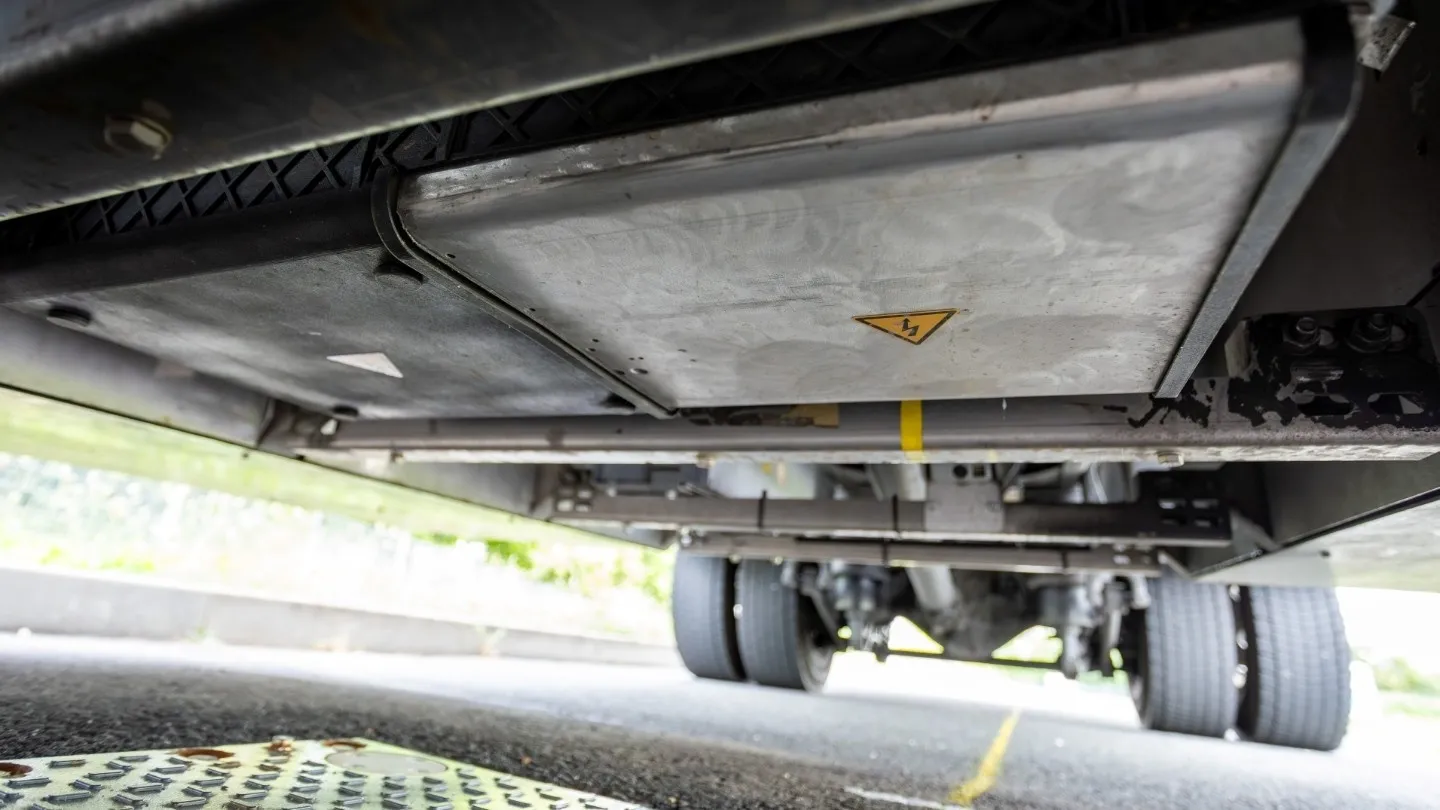
Shield covering the loading port in the chassis (c) Fraunhofer IVI
Editor’s note from Elektrowozu: It struck us that today’s charging ports are essentially installed in a hasty manner, roughly where fuel tanks used to be. Fraunhofer’s invention represents a break from this tradition, a new way of thinking. It’s possible that in twenty years, passenger cars will also have charging ports placed in different locations. This is especially true for autonomous vehicles.
Article rating
Readers’ ratings
[Total: 2 votes Average: 5]
Don’t miss new content—CLICK and FOLLOW Elektrowoz.pl on Google News. You might also be interested in the following ads: