
Ford inspected 36,000 batteries in the Mach-E. Five years later, their condition is surprising.
In the article:
- Ford analyzed over 36,000 2021 model Mustang Mach-E vehicles.
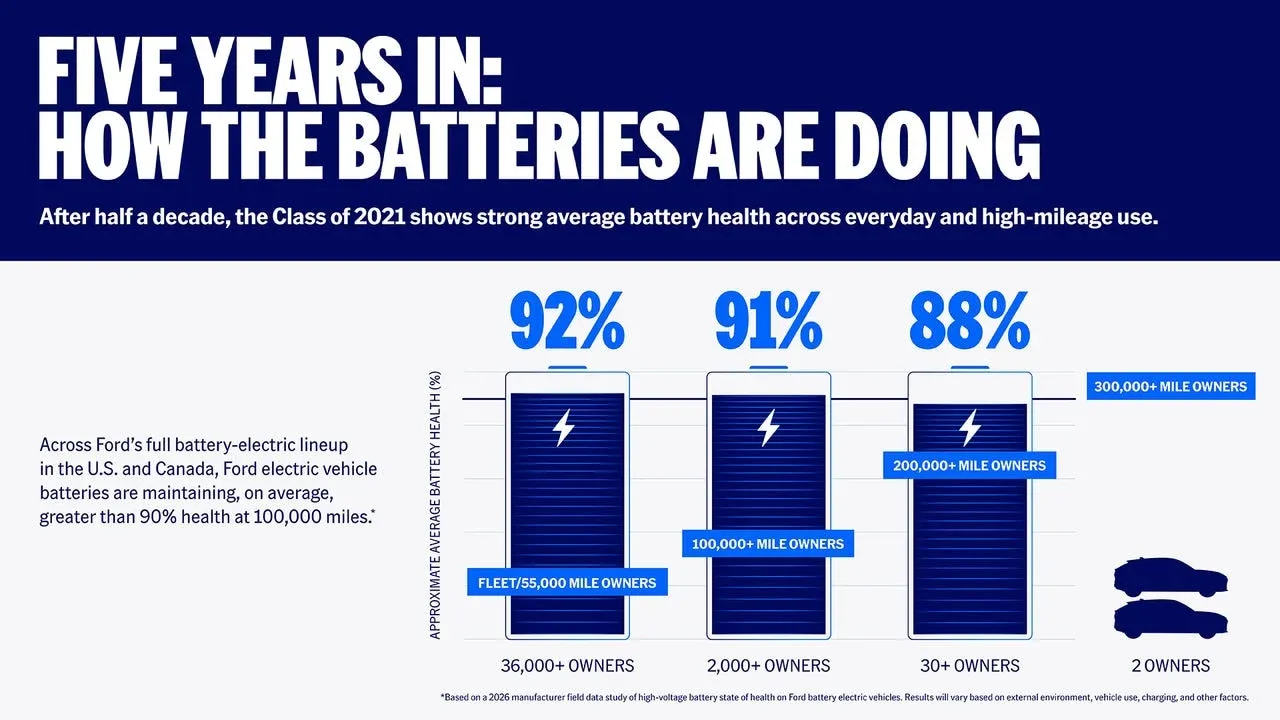
- The average battery condition after more than five years was 92%
- Over 2,000 vehicles had traveled more than 160,000 km, with their batteries retaining an average capacity of over 91%
Ford as the research base
Battery degradation is inevitable. With each passing year and additional charging cycles, the battery gradually loses some of its capacity, and along with it, the range it can achieve. The question isn’t “whether” but “how fast.”
Ford already has a large fleet of several-year-old electric vehicles, allowing it to answer this question based on data from normal operation. The manufacturer analyzed over 36,000 Mustang Mach-E models from the 2021 model year sold in the United States and Canada. These vehicles were on average 5.2 years old and had traveled a total of about 3.2 billion kilometers.
The average battery health status, or State of Health (SoH), was 92%. This refers to the usable capacity of the battery available to the driver.
This means an average degradation of around 8% after five years. Of course, not every vehicle ages in exactly the same way. However, 95% of the cars tested fell within the range of 87% to 97% of their original capacity remaining.
Long mileage doesn’t mean a dead battery
The situation is even more interesting for vehicles that have been heavily used. Over 2,000 Mustang Mach-E models from the tested model year have already covered more than 100,000 miles, or about 161,000 kilometers. All of them still use the original battery, and its average condition exceeds 91%
Ford also found over 30 units with mileage exceeding 200,000 miles, or about 322,000 kilometers. In this group, the average SoH is 88%
There are also much more extreme cases. One 2022 Mustang Mach-E has already covered over 400,000 miles, or roughly 644,000 kilometers, still using its original battery. Of course, this is a single vehicle, and this result should not be generalized to the entire lineup, but it shows that the battery itself doesn’t necessarily have to be the factor that ends an electric vehicle’s life after hundreds of thousands of kilometers.
92% does not mean the battery is “8% worn out”
It’s important to understand State of Health properly. A 92% rating means the battery can currently store about 92% of the energy it provided to the user when it was new.
This does not mean that after another five years it will automatically drop to 84%. Battery degradation does not have to occur linearly. The rate of aging depends on factors such as temperature, charging method, charge levels, mileage, and the thermal management system used in the vehicle.
The 2021 Mustang Mach-E models analyzed used NCM cells, which are lithium-ion batteries that utilize nickel, cobalt, and manganese. newer versions of Ford’s electric components also use LFP batteries, which have different characteristics and charging requirements.
Ford estimates over 90% capacity after 160,000 km
The manufacturer states that its batteries are designed for at least ten years of use. Data from Ford’s entire electric lineup in the US and Canada indicate that after 100,000 miles, or about 161,000 km, the batteries retain an average capacity of over 90%.
The performance of the 2021 Mustang Mach-E aligns with these expectations. Importantly for Polish customers, Ford currently covers the high-voltage battery and its components in the Mustang Mach-E with a warranty of 8 years or 160,000 km, whichever comes first.
How to slow down battery degradation?
Along with releasing the data, Ford reminds users of several guidelines to help reduce battery wear.
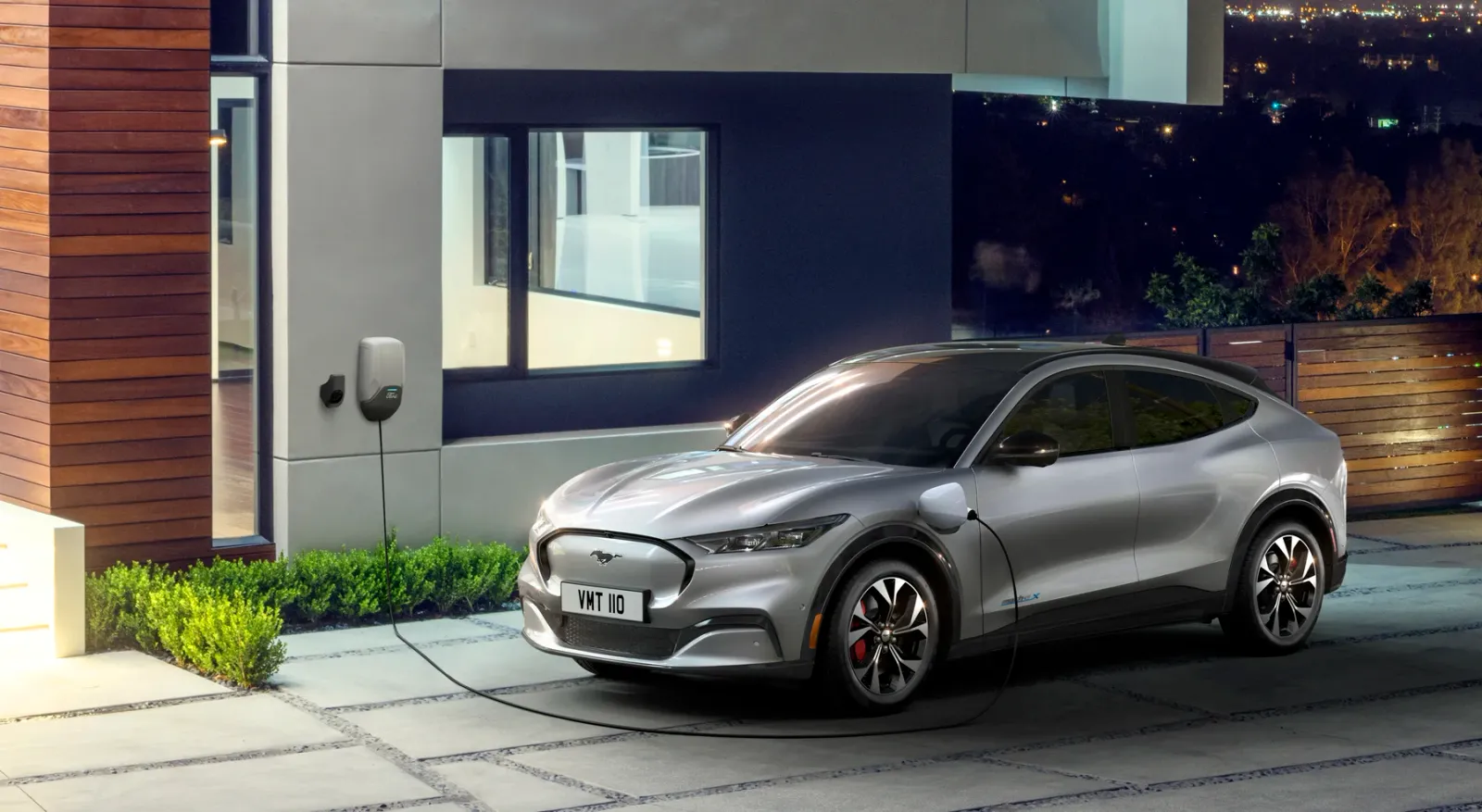
The manufacturer recommends using AC charging for daily charging, reserving DC fast charging for when it is needed. Another factor is temperature—during extreme cold or heat, it’s advisable to use the vehicle’s preconditioning feature while it remains connected to a charger.
Ford also does not recommend regularly charging NCM batteries to 100% unless necessary. The situation is different for LFP cells, which require periodic full charging, among other things, for proper calibration of the battery management system.
Important information for the used electric vehicle market
Ford’s data is not an independent study of the entire electric vehicle market. It comes from the manufacturer, covers one model, a specific battery chemistry, and vehicles used in the US and Canada.
However, the sample size is large. Over 36,000 vehicles and several years of normal use provide far more information than individual record-breaking units or laboratory simulations.
This is significant also because the first Mustang Mach-E vehicles are now becoming regular used cars. When purchasing them, battery condition remains one of the parameters worth checking, but Ford’s data
suggest that a five-year-old battery does not necessarily mean drastically reduced range or the need for an immediate replacement of the entire battery pack.
In the case of the fleet studied, after more than five years, there was an average loss of only 8% of the original usable capacity. Even vehicles that had traveled over 300,000 kilometers retained an average of 88% of that capacity.
Mikołaj Adamczuk