
EV charging will hit £1/kWh in 2027 due to ‘grid tax’, warns report
News
‘Immediate action’ needed to reverse Ofgem rules which have pushed up operator bills by 616% in five years
MA
Matt Allan
11 November 2026, 13:04 GMT · 4 min read
Add as a preferred source on Google
Electric car drivers could face public charging costs of more than £1/kWh by next year, according to a new report.
The Reverse the Charge report compiled by EV newsletter The Fast Charge and charging operator Zest blames the increase firmly on regulator Ofgem, which controls standing energy charges for public charging.
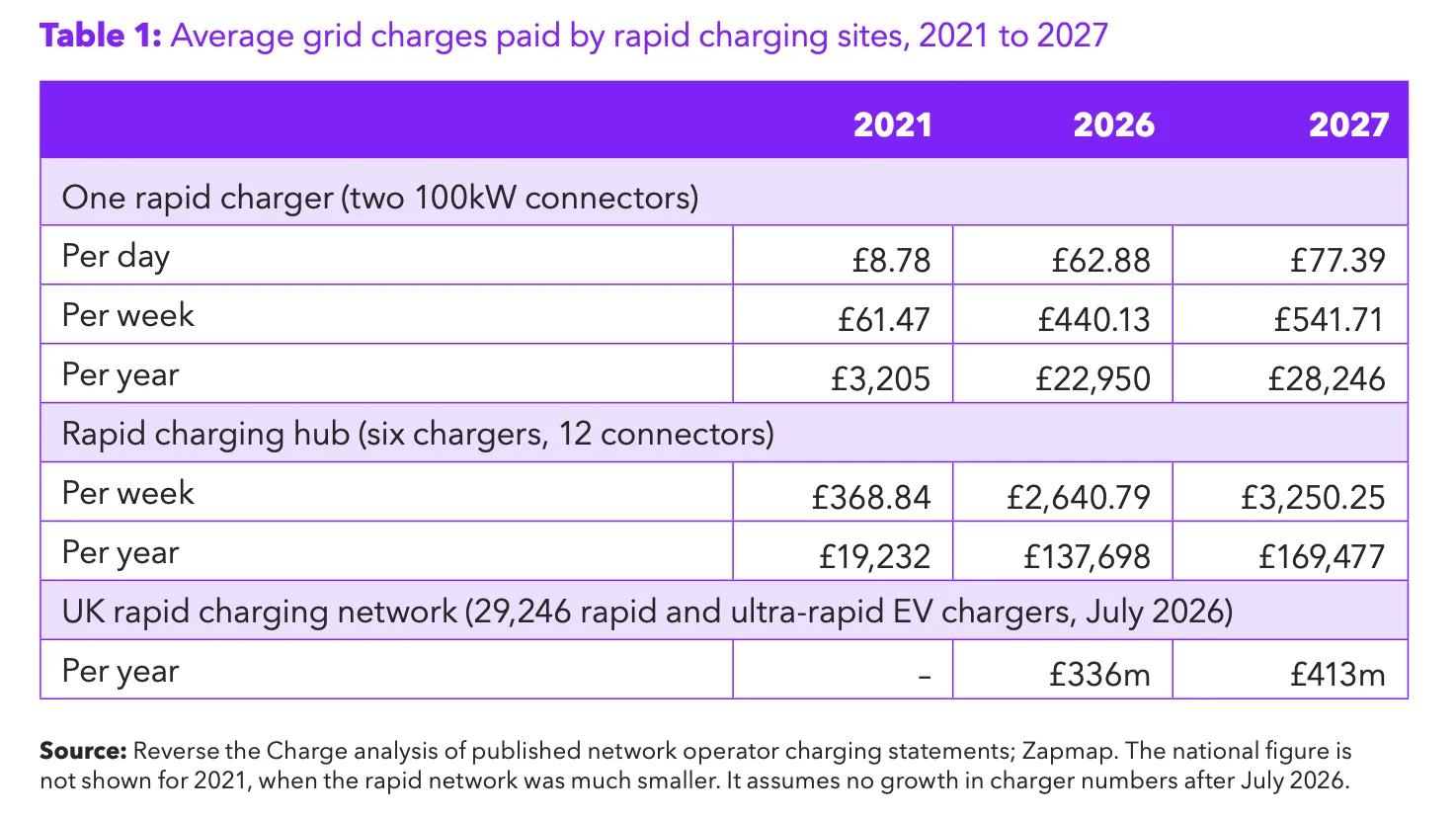
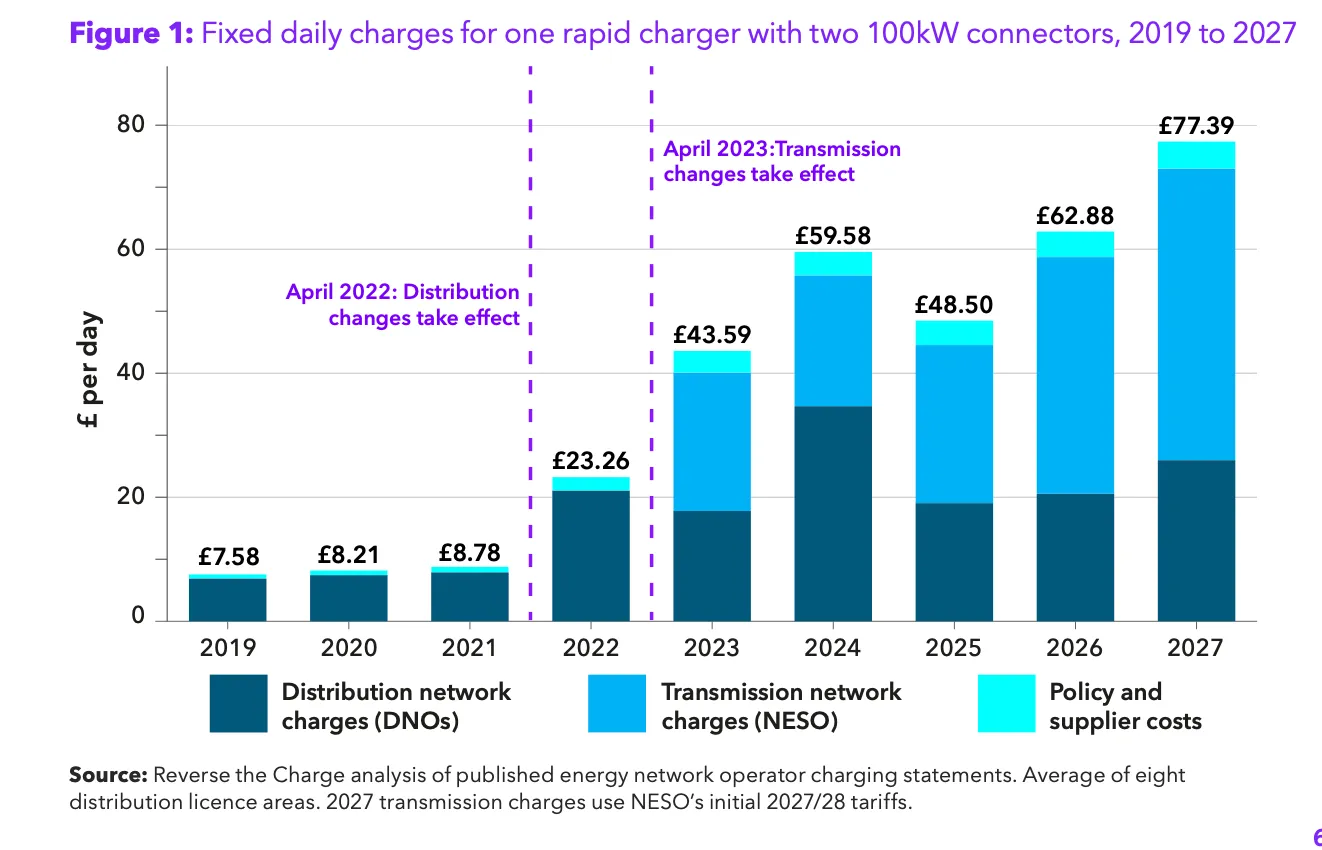
Following a decision by Ofgem, since 2022, charging operators (CPOs) have paid standing charges based on how much electricity a charging device could use, rather than how much it actually uses. That has seen rates for a two-connector 100kW charger rise from £8.78 per day in 2021 to £62.88 today – a 616% increase.
Based on tariffs published by the UK’s Distribution Network Operators (DNOs) and the National Energy System Operator (NESO), the report estimates that will climb again to £77.39 per day or more than £28,000 per year in 2027.
Those charges apply to every device, whether or not it delivers any charging sessions.
It is estimated that rapid charger operators will pay around £336 million in grid charges this year, rising to £413 million in 2027, even if no new chargers are built.
The report’s author and Fast Charge founder Tom Riley warned that increase was likely to be passed on to drivers in the form of rising charging costs and £1/kWh could become “commonplace”.
He said this would hurt those already running an EV and potentially putting off others from making the switch.
He also claimed that Ofgem had known for years about the negative impact the standing charges rule would have on the charging network but has done nothing to address it.
Riley commented: “Grid standing charges are effectively a feudal tax, enabled by Ofgem without proper thought, with money going from a driver’s pocket straight to energy networks.
“At a time when the cost of running non-EVs is near a record high, the Government must do all it can to provide relief for people wanting to go electric so they can save money. At present, the UK is allowing a situation where going electric, especially if you don’t have a driveway, could be more expensive than sticking with a banger.”
According to Zapmap, the average rapid charging session currently costs 82p/kWh (up from 79p/kWh when the report’s data was compiled.
Robin Heap, founder and CEO of Zest, said the charges threatened the future rollout of the UK’s rapid charging network.
He commented: “The switch to capacity-based network charges was never intended to put the brakes on EV adoption. For public charging, however, it has created an egregious cost burden that pushes up prices for drivers and means many otherwise investable charging projects are delayed or shelved.
“Energy-intensive industries already receive recognition that high electricity costs can damage investment and competitiveness. Public EV charging faces the same structural problem, yet CPOs receive no equivalent protection despite building infrastructure essential to the UK’s transition to electric transport.”
The report says that the solution to the problem already exists in the form of two proposed rule changes – known as DCP 420 and DCP 454. The first would let eligible sites drop to a lower standing charge band while the latter would return them to a consumption-based band.

Heap added: “The solutions have been developed by the energy industry and are ready to implement. Reforming these charges would bring stalled projects back into play, unlock private investment and give drivers better access to affordable, reliable charging, particularly those without the option of charging at home.”
Using specific examples from two Zest sites, the report shows how much of a charging session cost is eaten up by electricity and grid charges. At an urban charging hub in Birmingham, electricity and grid costs take 48p of the 58p/kWh cost before VAT. At an on-street ultra-rapid charger in London, they take 58p of 64p.
That leaves, respectively, just 10p and 6p per session towards everything from land rent and installation work to long-term maintenance and payment processing systems.