
Europe bought 510,000 plug-in cars in October. BEV sales rose by 49%.
In October 2026, 2.09 million electric and plug-in hybrid cars were sold worldwide. This represents an 8% increase from the previous year, according to Benchmark Mineral Intelligence. Europe led the way with 510,000 plug-in vehicles (+36% year-over-year), while battery-electric cars saw a surge of 49%. China remained in negative territory, while North America recorded its first growth this year, showing strong performance.
Table of Contents
Show
Hide
Benchmark includes both BEV and PHEV vehicles in the passenger car and light truck segments. Global sales dropped by 3% compared to September. However, after ten months in 2026, the total reached 17.5 million vehicles, up 5% from the previous year.
Region
Oct 2026 (million)
rdr
mdm
YTD (million)
YTD-26 vs YTD-25
China
1.14
-12%
5%
9.1
-11%
Europe
0.51
36%
-17%
4.5
31%
North America
0.13
24%
0%
1.3
-21%
Rest
0.3
85%
-2%
2.6
93%
Global
2.09
8%
-3%
17.5
5%
Germany above 45%, Portugal 55%
European growth in October is faster than the average since the start of the year (+31%, totaling 4.5 million cars). Plug-in hybrids contributed only 7%, so battery electric vehicles did the heavy lifting. The 17% drop compared to record-breaking September says little, as September was driven by the UK’s annual license plate change event.
In Germany, vehicles with plug-in capabilities accounted for over 45% of the new car market, the highest figure since December 2022. That peak was artificial, as buyers rushed to purchase before subsidies were cut. Sales of pure BEVs in our neighbors’ countries rose by nearly 80%, reaching over 95,000 units. The United Kingdom saw a +30% increase compared to October 2025, when the government’s Electric Car Grant was already in effect (though it covered fewer models).
Portugal led the way: 55% of new cars sold there in October had plug-in features. In the same country, BYD is considering building a battery factory on the site of a former Galp refinery near Porto.
North America: Growth from a Low Base
The region sold 130,000 cars (+24% year-over-year), the same as in September. About 110,000 of those were sold in the U.S. Sales since the start of the year total 1.3 million, 21% lower than the previous year (the decline after September was 24%). However, October 2025 was the first month without the federal EV tax credit, which expired for cars purchased after September 30, 2025, causing sales to drop sharply.
Charles Lester, a data analyst at Benchmark, says, “October is the first month compared to the period without the federal tax credit in the U.S., and the American market has stabilized at a lower level rather than recovering.”
China in decline, exports set records
Chinese buyers purchased 1.14 million NEVs (the term used in China for both BEVs and PHEVs combined). This is 5% more than in September but 12% less than a year ago. The decline is slowing, as it was 18% year-on-year in September, while since the start of the year, 9.1 million vehicles were sold, representing a -11% drop (compared to -13% after September). NEVs’ share of the Chinese market has still reached a record high, as the overall passenger car market is shrinking faster.
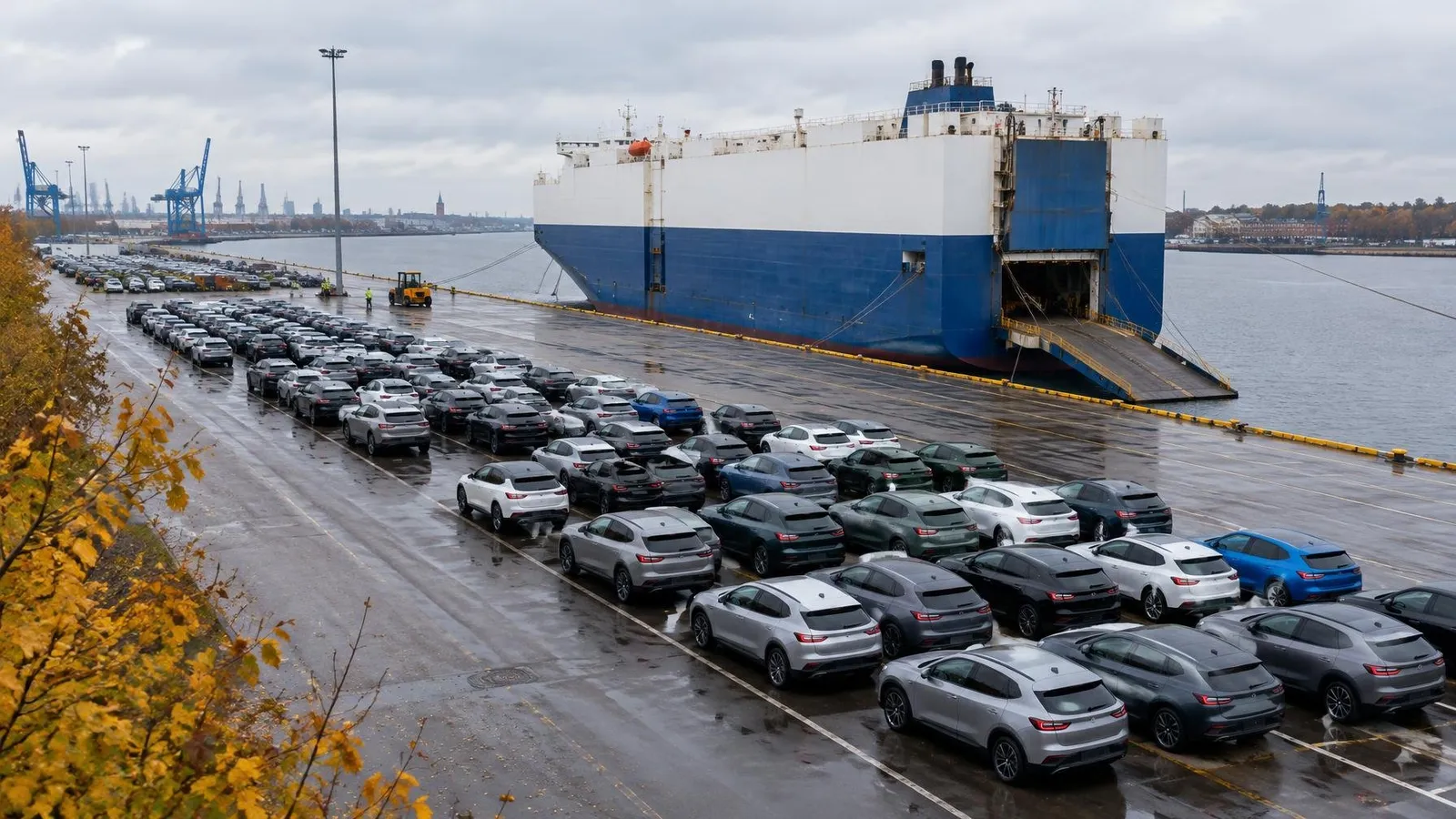
As a result, manufacturers are seeking buyers abroad. Export volume of passenger NEVs reached nearly 600,000 units in October, up from 558,000 in September, setting another record. BYD itself has raised its sales forecast for overseas markets to 1.8 million vehicles by 2026. However, exporters face two obstacles. The EU has agreed to restrict imports of hybrids produced in China, and Beijing will reduce the VAT rebate on EV exports from 13% to 9% starting April 1, 2027.
Australia and Brazil are growing the fastest
Outside of China, Europe, and North America, 300,000 vehicles with plug-in options were sold in October (+85% year-on-year), and 2.6 million since the start of the year (+93%). In Australia, sales surged by over 200%. According to Benchmark, dealers earn little from this because more brands, mostly Chinese, compete for customers and cut margins. In Brazil, the growth was driven partly by one-time factors: importers brought in vehicles ahead of further tariff increases, the fuel crisis pushed drivers toward EVs, and BYD increased production at its Brazilian factory. Once tariffs are fully in place and fuel prices stabilize, Benchmark expects these drivers to fade away. Only BYD’s local production will remain, which is also intended to supply Argentina and Mexico.
LovEV Newsletter
Want more content like this?
Sign up — we’ll send you a weekly summary once the newsletter starts.