
The Defender of the Poor is now available: electric, 625 km range, and for less than 17,000 euros
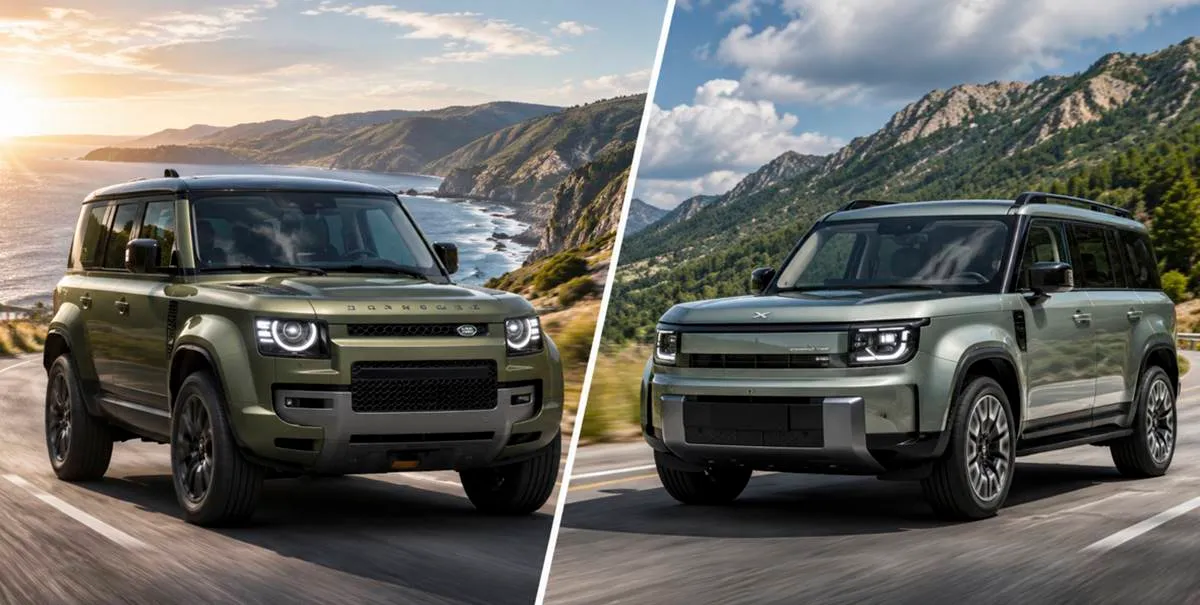
Chinese manufacturers continue to prove that they can offer increasingly large, powerful vehicles equipped at prices that in Europe would barely allow one to afford a compact SUV. The latest example comes from BAIC, which has just launched the Xingtan 5X, a model that has attracted attention both for its technical specifications and its obvious resemblance to the Land Rover Defender.
In fact, Chinese social media users have already given it several nicknames. Ranging from “the people’s Defender” to a less complimentary one, “the poor people’s Defender.” The comparison to the British model makes sense given its square-shaped body, practically flat roof, prominent wheelbase, and presence that immediately recalls the British off-roader.
An electric SUV of almost five meters for less than 17,000 euros
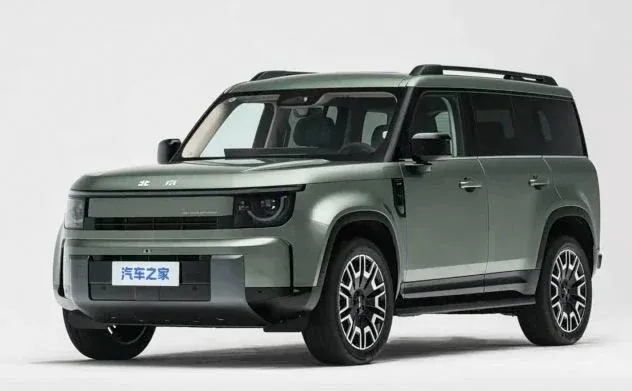
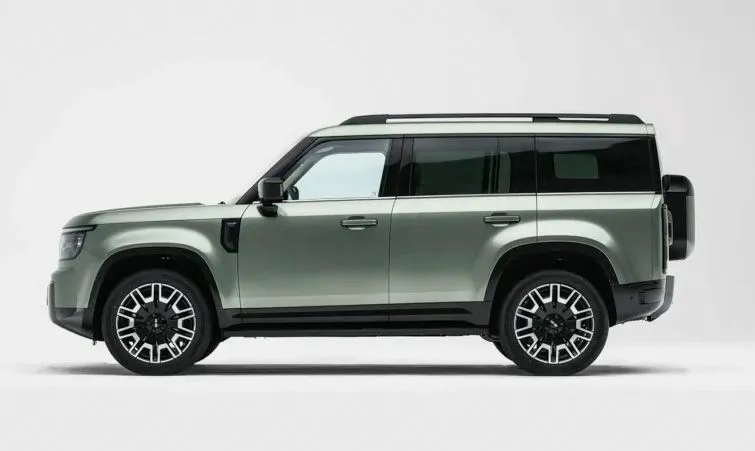
The new BAIC Xingtan 5X is a D-SUV that is 4.86 meters long, 2 meters wide, and 1.91 meters tall, with a wheelbase of 2.87 meters. It can accommodate five passengers, and its body length can reach up to 5 meters when equipped with an external spare tire.
But what’s truly striking is its price. BAIC has announced a lineup of seven versions, three electric and four plug-in hybrid models, with official prices ranging from 129,900 to 174,900 yuan. However, a 3,000 yuan discount is applied at launch, bringing the entry-level model to 126,900 yuan, which is approximately 15,500 euros at the current exchange rate.
We’re talking about a car that is nearly five meters long, equipped with a high-capacity battery and advanced technological features typically found in much more expensive models in Europe. Of course, these are prices exclusive to the Chinese market, excluding transportation costs, certification fees, tariffs, and taxes that would apply if it were sold on our continent.
And it seems the strategy is working. BAIC claims to have received 30,208 pre-orders in just 20 days since it opened reservations on October 21st.
Up to 625 km of range and a charge in just 14 minutes
The electric version uses an engine located on the rear axle that generates 227 kW (309 HP), powered by an 81.9 kWh LFP battery. With this configuration, the manufacturer claims a range of up to 625 kilometers under the Chinese CLTC cycle.
Another strength lies in its charging system. The Xingtan 5X features an 800-volt architecture, which, according to the manufacturer, allows it to go from 30% to 80% charge in just 14.5 minutes.
Huawei technology and premium-grade equipment
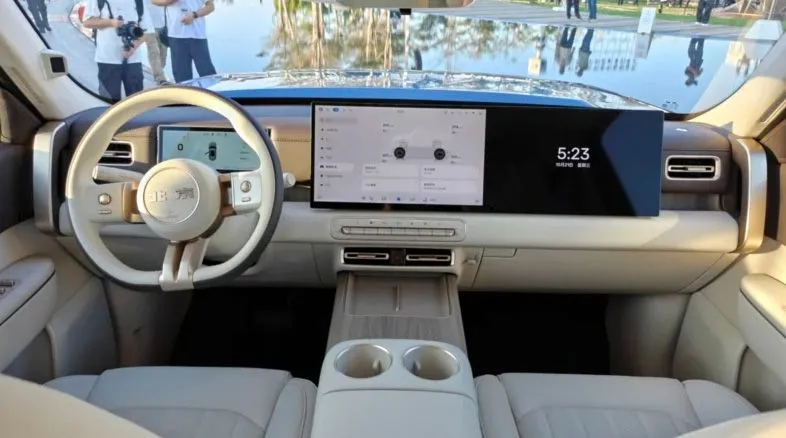
Inside, BAIC has opted for a layout dominated by screens. The base versions feature a 15.6-inch central screen and an 8.8-inch digital instrument cluster, while the higher trims come with two 15.6-inch screens and a Qualcomm 8295P processor.
The tech specs are further enhanced by the option to equip it with Huawei Qiankun ADS 5 Pro driving assistance system, which uses 27 sensors, including a solid-state lidar installed behind the windshield.
This system provides advanced highway driving assistance features, while urban navigation assistance requires an additional subscription. Electric versions equipped with Huawei’s technology start at 146,900 yuan, around 18,000 euros, whereas plug-in hybrid versions begin at 151,900 yuan, approximately 18,600 euros.
This level of technology is particularly impressive considering that the prices are similar to those of some of the smallest and most basic electric cars on the European market.
BAIC and its long tradition of drawing inspiration from Western models
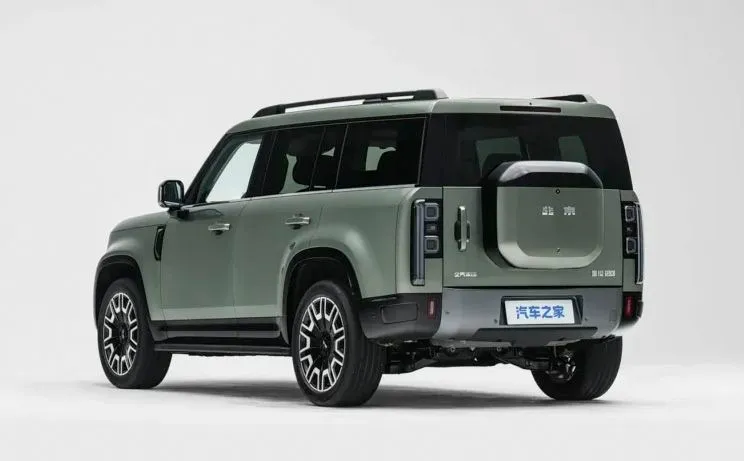
The resemblance of the Xingtan 5X to the Defender is not an isolated case within BAIC. The Chinese manufacturer has a long history of models with designs clearly inspired by Western SUVs. The BJ80 and BJ81 resemble the Mercedes Classe G, while the first generation of the BJ40 showed obvious influence from the Jeep Wrangler.
It should be noted that BAIC maintains a significant industrial relationship with Mercedes-Benz through Beijing-Benz, a joint venture in which the Chinese manufacturer holds 51% ownership. It also had a historic partnership with Jeep, which began in 1984 and lasted until the 2000s.
The situation is different with Jaguar Land Rover, with whom BAIC does not have an equivalent industrial relationship. Additionally, the British manufacturer is already involved in a legal dispute with BYD over accusations that the Fang Cheng Bao Ti 7 copies elements of the Defender’s design.
The conflict has even reached European courts. On November 11th, a Dutch court ordered Jaguar Land Rover to request the destruction of records obtained during a search of BYD’s offices in the Netherlands, under threat of fines that could reach 500,000 euros.
Meanwhile, other Chinese manufacturers are also exploring this same aesthetic approach. This is the case with the Chery iCaur V27, another square-shaped SUV that has been compared to the Defender, with its arrival in Europe expected in early 2027.
For now, BAIC has not announced plans to market the Xingtan 5X in Europe. But its launch brings to the forefront an increasingly obvious reality: in China, electric SUVs over five meters long, with batteries exceeding 80 kWh, 800-volt architectures, and advanced technology, are already available at the price of a regular electric utility vehicle. And this price gap is starting to become too large to ignore.