
The electric truck that wants to eliminate truck drivers on short routes: it has no cab or steering wheel
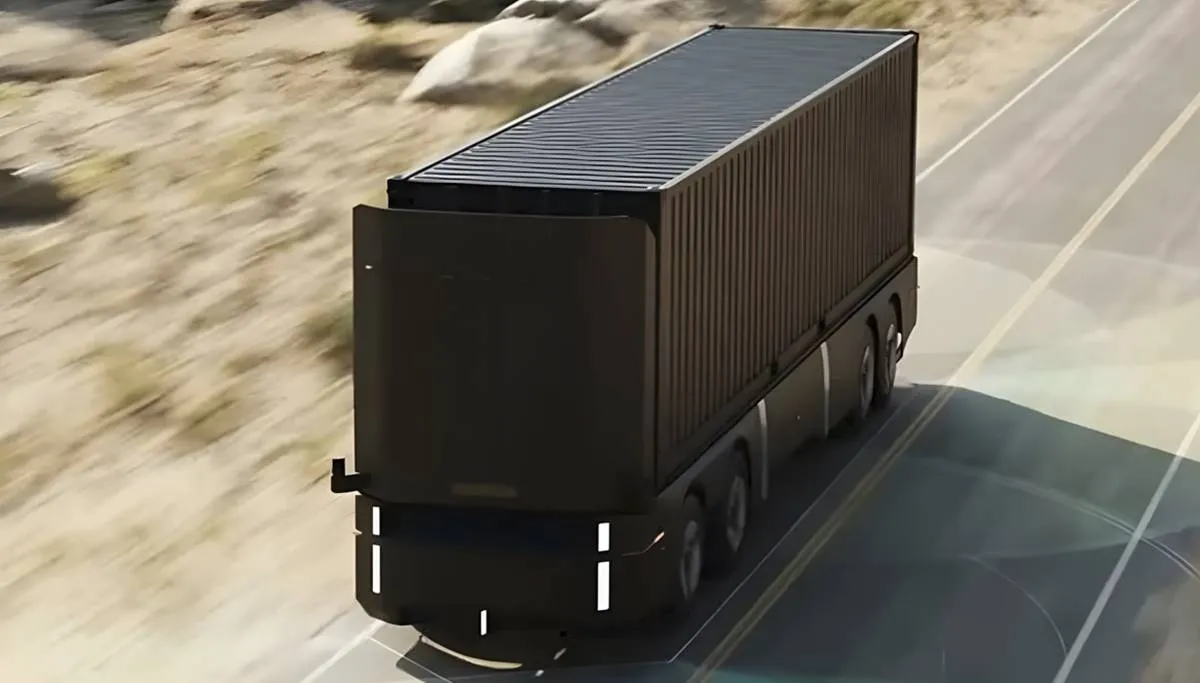
The electrification of heavy transportation is paving the way for solutions that just a few years ago seemed like science fiction or content from shows like Black Mirror. We’re no longer talking merely about replacing internal combustion engines with batteries, but about eliminating the driver entirely and all the space needed for them to work. An American company has proposed an idea that could change the way goods are transported between ports, warehouses, and logistics centers.
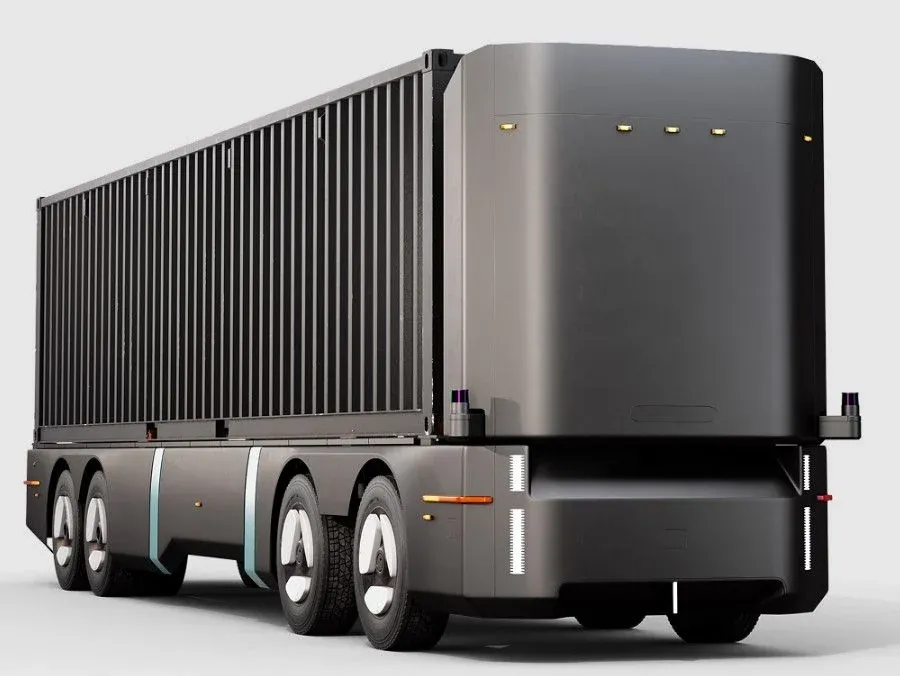
The protagonist is Humble Robotics, a startup developing an autonomous electric truck with a quite striking feature: it has no cabin, steering wheel, or driver seat. In fact, it resembles a huge wheeled platform rather than a conventional truck. And that’s exactly the idea. If transportation can be automated, why continue manufacturing a cabin that no one will use?
The company has just received a significant financial injection to accelerate the development of its project, named Humble Hauler. Its goal is not to compete with large trucks that travel thousands of kilometers on highways, but to carve out a niche in a much more specific yet highly active segment: short-distance, repetitive freight transportation.
An electric truck with a range of 320 kilometers and no driver’s space
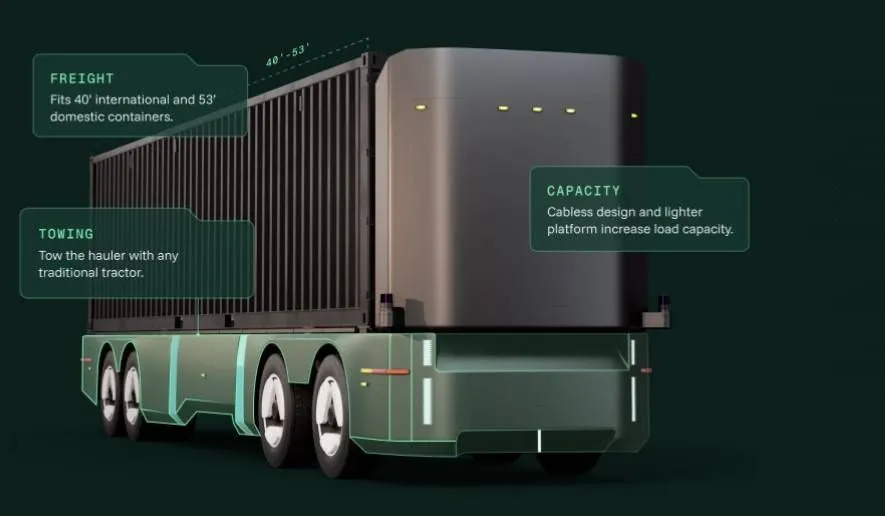
The Humble Hauler belongs to the American Class 8 category, equivalent to the large heavy trucks we know in Europe. However, its design completely breaks away from traditional concepts. Instead of a tractor unit connected to a trailer, it uses a flat, modular electric chassis designed to carry various types of cargo directly.
The platform can carry marine containers about 12 meters long or American semi-trailers up to 16 meters long, including refrigerated units. This allows it to be used to transport goods between port terminals, railway stations, distribution centers, and supermarkets without the need for a driver.
The specifications are tailored for this type of work. The manufacturer claims an approximate range of 320 kilometers and a top speed of 88 km/h. These figures are not particularly impressive when compared to other electric trucks, but they don’t need to be either. Its purpose is to make relatively short trips on known routes with the option to return regularly to a base for recharging.
To operate without a driver, the Humble Hauler features a set of 360-degree vision cameras, lidar sensors, and radars. These systems enable it to detect obstacles, identify other vehicles, and monitor its surroundings. It also includes redundant safety systems designed to ensure its operation at night or in challenging weather conditions.
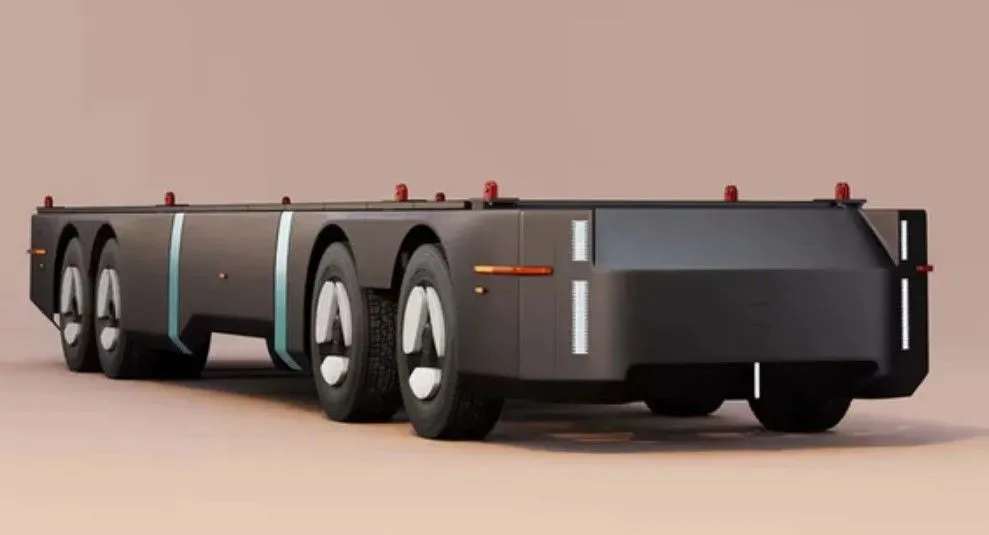
The main advantage of this proposal lies in the simplification of the vehicle. Removing the cabin allows for better utilization of the available space and eliminates numerous components that are no longer necessary. But the potential savings extend far beyond manufacturing. A truck that can operate without a driver could handle cargo movements for much of the day, reducing waiting times and costs associated with certain logistics operations.
This does not mean it will immediately replace drivers. The project is designed for a very specific type of activity, where trips usually occur repeatedly between known locations. That is precisely why it may be easier to introduce autonomous driving here than in long-distance transportation, where unexpected situations are much more common. It is also clear, however, that as technology evolves, trips will become increasingly longer.
The company will also need to address a fundamental issue: integration with logistics facilities. It is not enough for the truck to be able to move on its own. The loading and unloading systems, access to terminals, and warehouse management will all need to coordinate with a platform where no human workers will be available to intervene when problems arise.
Humble Robotics has raised $51 million in a new funding round, bringing its total capital raised since inception to over $75 million. This is a substantial amount for a company still in its early stages, having managed to move from an initial concept to a functional prototype in less than six months.
The significance of this development lies in it offering a different approach to electric transportation. While manufacturers like Tesla, Mercedes-Benz, and Volvo are working on trucks that retain conventional configurations, Humble Robotics proposes eliminating one of the most distinctive parts of a vehicle altogether.
If the system works and can prove it can move goods safely and cost-effectively, it could find a significant market in ports and large logistics platforms. These are facilities where thousands of container movements occur daily, many following almost the same route.
The question is what will happen to the drivers who currently perform these tasks. The automation of short routes might reduce the need for staff dedicated solely to moving goods between terminals, although people will still be needed to monitor the systems, resolve issues, and manage operations.
For now, the Humble Hauler is a prototype with funding and an interesting idea, but still without commercial operation. Nevertheless, it shows the direction in which a segment of heavy transportation could evolve: electric trucks that no longer require a driver and thus also do not need a cab.