
Will Chinese cars be produced at Autoeuropa? The new CEO responds
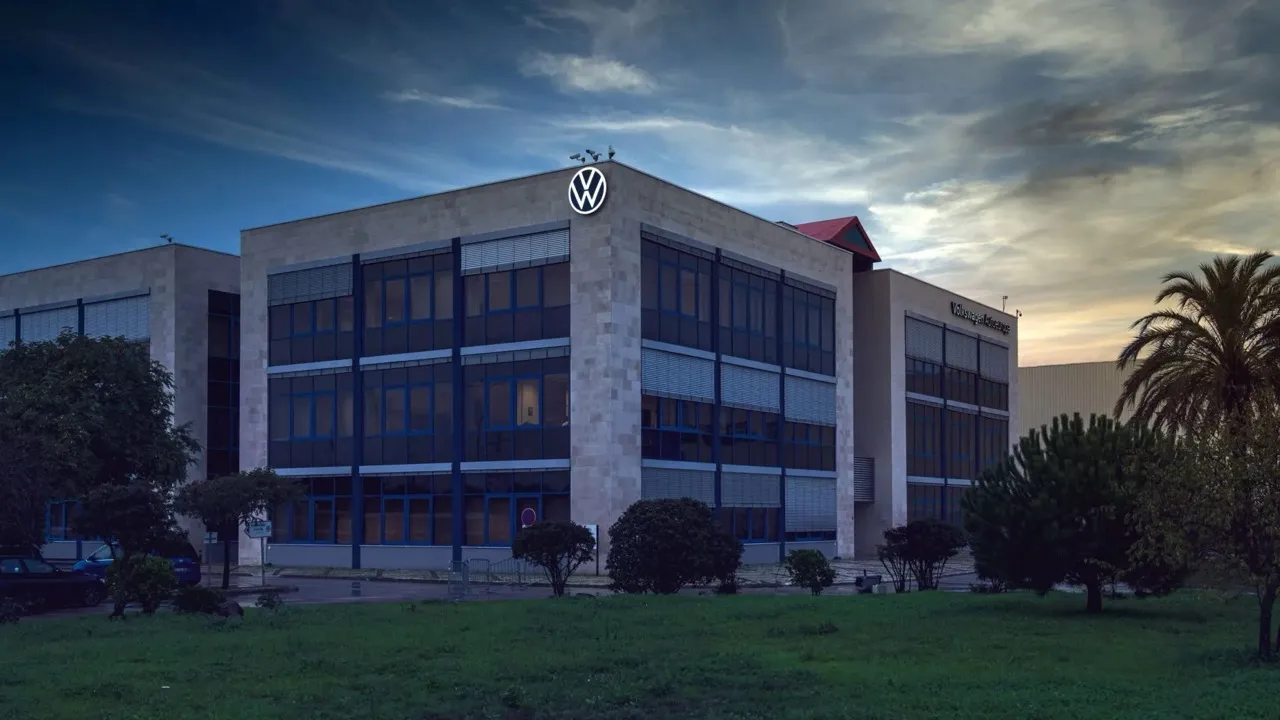
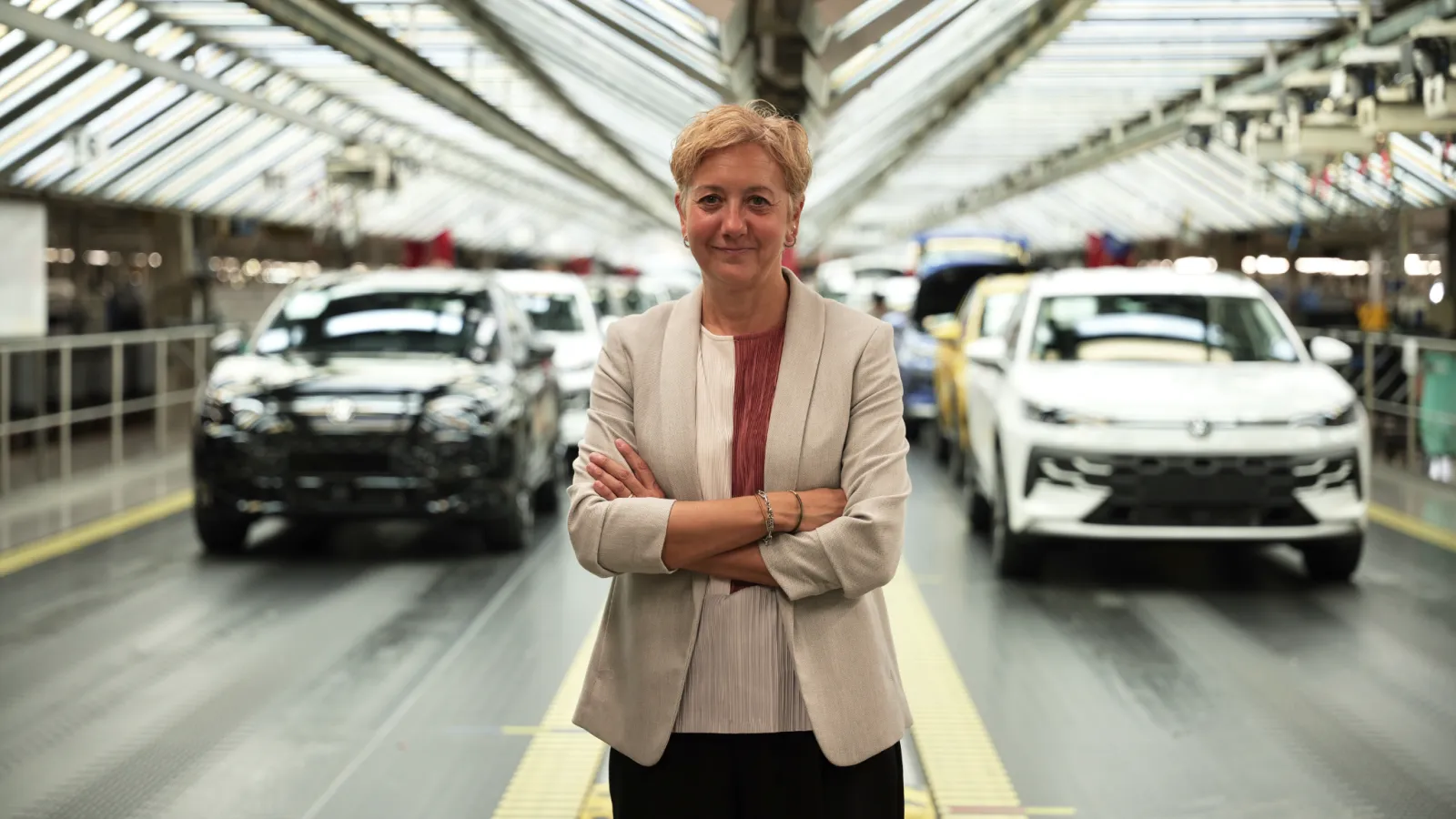
In an exclusive interview with Razão Automóvel, Anabel Andión discussed Chinese competition and the future of the Palmela factory.
The European automotive industry is facing one of the most challenging periods in its recent history. Pressure from Chinese manufacturers, the shift toward electric mobility, and the need to cut costs are forcing major automakers to rethink their industrial operations. They are even considering sharing factories with competitors.
Volkswagen Group itself is exploring this possibility. In April, the group’s CEO, Oliver Blume, admitted that some European factories might eventually make their production capacity available to the group’s Chinese partners.
But this will not happen at Volkswagen Autoeuropa. Directly asked about this possibility, Anabel Andión, the new CEO of Volkswagen Autoeuropa, replied with a firm “No” in an exclusive interview with Razão Automóvel, which can be viewed in full below:
The increasing competition from Chinese manufacturers is putting pressure on Europe’s automotive industry. But Anabel Andión prefers to see her rivals as a reference point rather than an insurmountable threat.
I don’t think they are a nightmare. I believe that in some aspects, they should even serve as a reference for us.”
Anabel Andión, CEO of Volkswagen Autoeuropa
For decades, European manufacturers have served as a benchmark for China’s automotive industry. They brought technology, production processes, and industrial expertise to that market, helping to develop an industry that now competes directly—and fiercely—with them.
Volkswagen is particularly familiar with this history. It dominated the Chinese market for 30 years, and the Spanish executive does not forget that period. “Many people from Europe traveled to Chinese factories to teach them, in a way, how to do things properly. Now, it’s our turn to learn,” she said.
And what is there to learn? Above all, the speed, focus, and organization of Chinese manufacturers. Characteristics that, according to the official, are not always easy to replicate in Europe.
“They are very fast, very focused, and very organized. In Europe, sometimes we have more difficulty working in this way; we question things more. What we need to do is observe what they do, learn from them, and even improve their ideas.”
Anabel Andión, CEO of Volkswagen Autoeuropa
Why isn’t Autoeuropa opening its doors to Chinese companies?
The answer lies in the current utilization rate of the Portuguese factory’s production capacity. Unlike other European manufacturing plants that struggle with overcapacity, Volkswagen Autoeuropa continues to operate three shifts during the week and two shifts on weekends. And there’s another model on the way.
By 2027, the Portuguese factory will begin producing the Volkswagen ID.1, the future electric vehicle that will be the most compact and affordable in the German brand’s lineup. Its price is expected to start around 20,000 euros.
Its introduction won’t require a second assembly line. The new electric vehicle will be produced on the same line as the Volkswagen T-Roc, allowing production volumes for each model to be adjusted according to changing demand.
ADVERTISING
What’s national is good
Discover over 140 Volkswagen T-Rocs starting at 13,500 euros.
According to Anabel Andión, the planned ratio is one ID.1 for every three cars produced, without altering the factory’s total capacity. Production is set to begin in the final quarter of 2027.
It is precisely this high utilization, combined with competitive production costs, that puts Autoeuropa in a different position from other European factories.