
CATL wants to sell sodium batteries through its 2,520 Choco-Swap exchange stations network
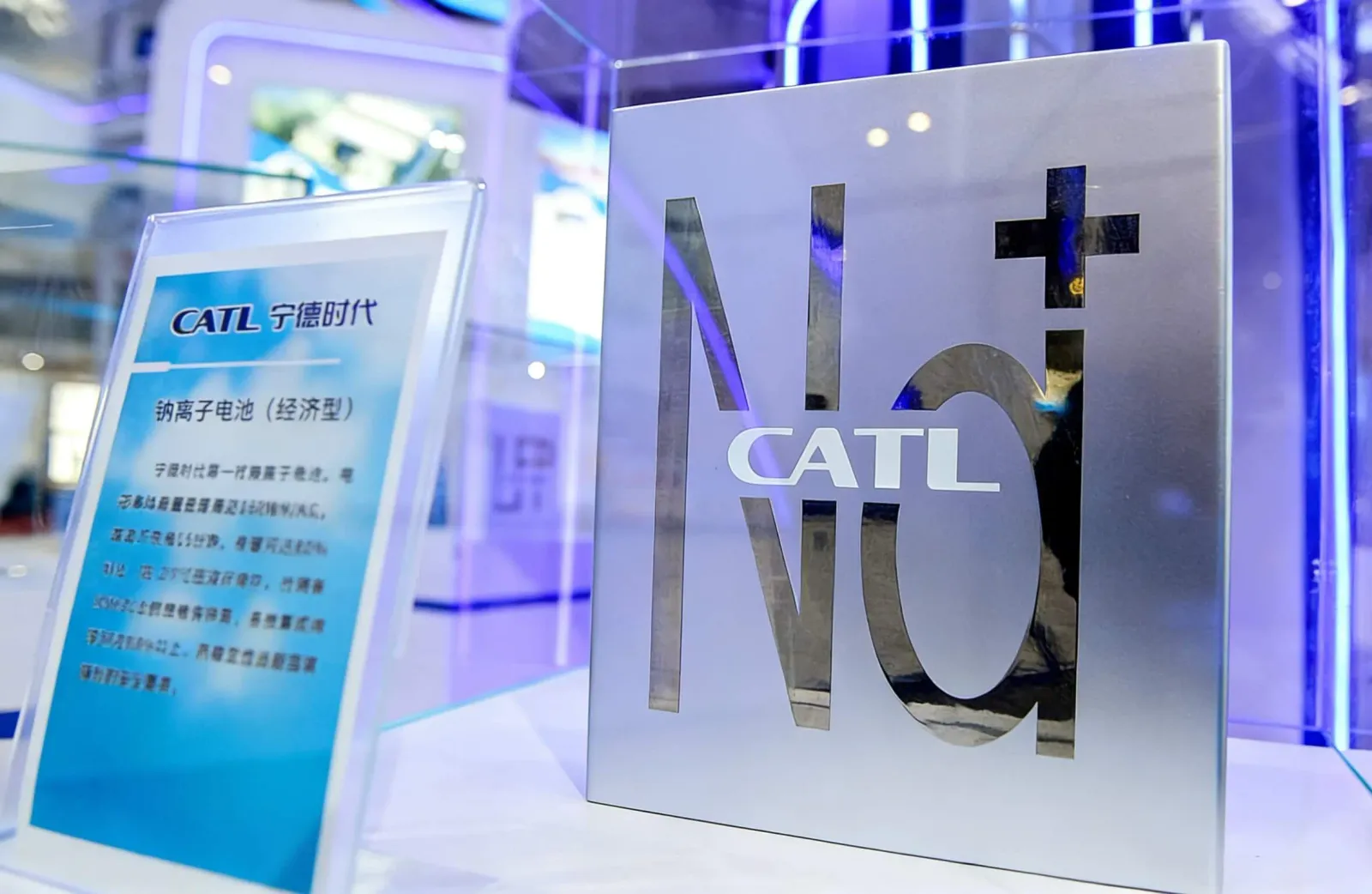
On Tuesday in Shanghai, CATL President Robin Zeng argued that sodium-ion batteries are already sufficient for daily city driving, with the Choco-Swap battery swap network set to support longer trips—this network had 2,520 stations by the end of September. Meanwhile, the company’s chief scientist, Wu Kai, spoke about lithium-air cells and a claimed range of 2,000 kilometers, but framed this as a research goal for many years to come. Thus, CATL has one plan for the coming months and another for the next decade.
Table of Contents
Show
Hide
Sodium in cars, and swapping battery packs for weekend trips
Bloomberg reported on CATL’s plans, citing Zeng’s speech at the Benchmark Mineral Intelligence conference. Sodium-ion cells are cheaper in terms of raw materials than LFP and NMC batteries, and they are considered safer and more resistant to freezing temperatures. However, they have lower energy density, meaning they provide fewer miles per kilogram, which has previously prevented their use in passenger vehicles.
CATL aims to overcome this issue through battery swapping. Choco-Swap is operated by CAES’s subsidiary and uses standard battery packs, with stations capable of handling both lithium-ion and sodium-ion batteries. This allows different battery chemistries to operate on the same vehicle platform while using the same network of stations. According to Zeng, CATL is building the stations itself and offering batteries for rent to drivers, and the network still needs to expand in cities and along highways.
By the end of September, Choco-Swap had stations in 200 cities across all 31 provincial-level regions of China, with nearly 20,000 packs in circulation. The company planned to have over 3,000 stations by the end of the year, meaning it would need to install around 480 new ones in the fourth quarter.
All of these stations are located in China.
In mid-October, Yang Jun, CEO of CAES, became co-president of CATL’s marketing division and is now responsible for both automotive batteries and Choco-Swap. Sales of cells and pack exchanges are under one leadership structure. Previously, CATL predicted that its sodium batteries would power 10,000–20,000 vehicles by 2026. For the manufacturer, sodium also serves as a safeguard against fluctuations in lithium prices. CATL is also developing pack exchange systems for heavy transportation, having showcased a 432–513 kWh replaceable battery for trucks in October.
Lithium-air: 3505 Wh/kg in theory
Wu Kai presented lithium-air cells at the Equipment Powerhouse Forum 2026 as a long-term area of research. The anode in these cells is metallic lithium, with oxygen from the environment serving as the other reactant. During discharge, lithium peroxide is formed in the porous cathode, while during charging the reaction reverses and oxygen returns to the air. The battery does not need to include a conventional cathode material, resulting in a theoretical specific energy of around 3505 Wh/kg. However, this figure refers only to the chemical reaction itself, not the complete cell with electrolyte, casing, and safety features. A higher value of 12,000 Wh/kg is only achievable if the mass of oxygen is disregarded.
The laboratories are far from these values. In 2024, scientists from Jilin University and the Chinese Academy of Sciences achieved 757.5 Wh/kg in a pouch-type cell, but only after 241 cycles. A solid-electrolyte cell from Argonne National Laboratory and the Illinois Institute of Technology lasted at least 1,000 cycles at room temperature in 2023, with a theoretical potential of around 1,200 Wh/kg. For comparison, CATL’s own solid-state cells are expected to reach 500 Wh/kg, with mass production set to begin around 2030.
The most challenging aspect is the air. Oxygen must reach the cell, but moisture and carbon dioxide need to be removed because they damage the electrodes and electrolyte. Therefore, the car would require a filtration and humidity control system, which adds weight, takes up space, and consumes energy on its own. Additionally, lithium peroxide clogs the pores of the cathode, and issues remain regarding cycle life, charging efficiency, and the stability of the lithium anode. A range of 2000 km cannot be attributed to any specific car today.
CATL still makes profits from what is already in production. According to SNE Research, in the first nine months of 2026, the company installed 143.7 GWh of batteries outside China and held a 33.7% market share there.
LovEV Newsletter
Want more content like this?
Sign up — we’ll send you a weekly summary once the newsletter starts.