
BYD is considering a battery factory in Portugal. It aims to export 1.8 million cars in 2026.
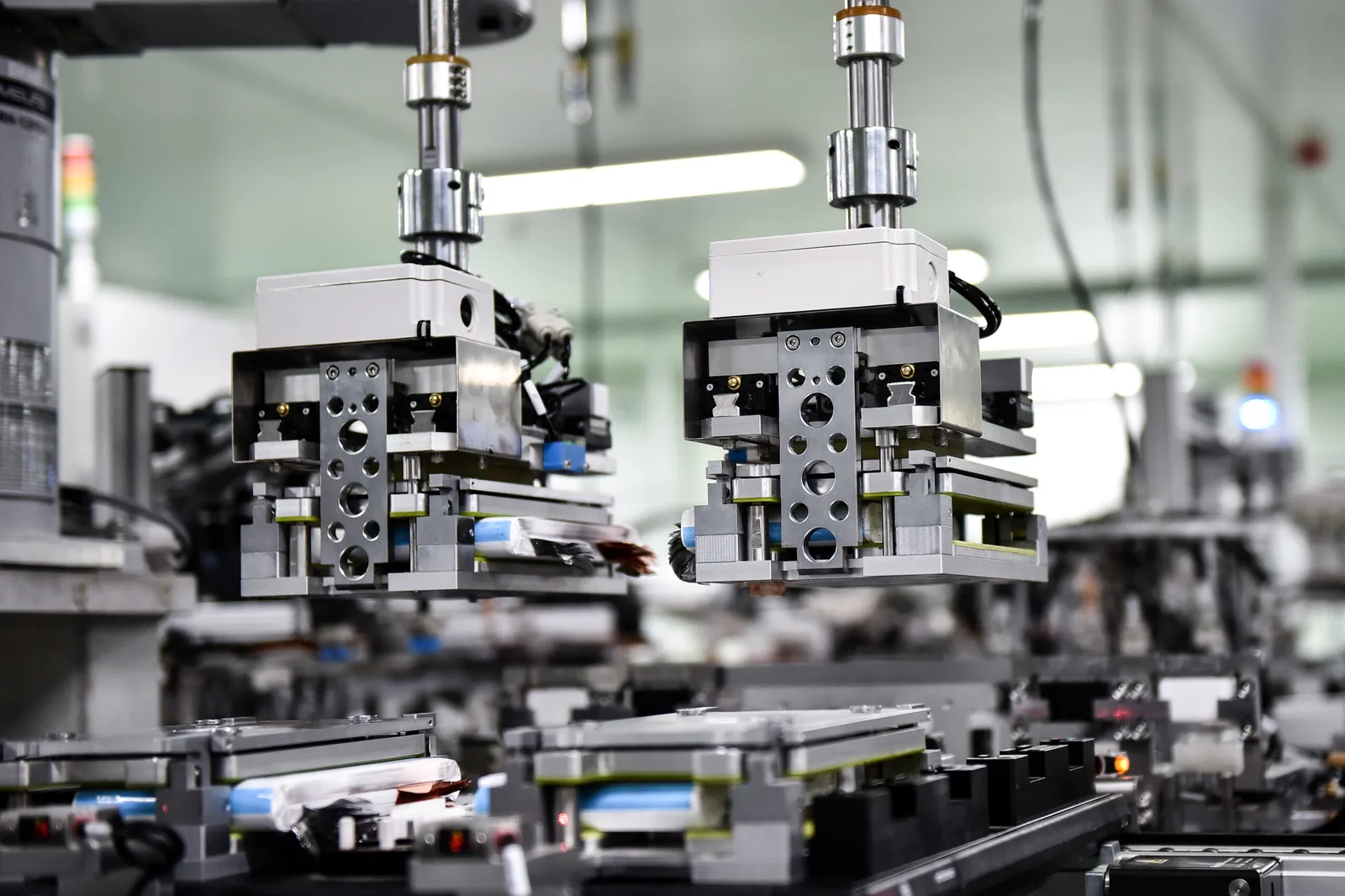
BYD is in talks with the Portuguese government about building a battery factory at the former Galp refinery in Matosinhos near Porto. This was reported by the Portuguese newspaper Expresso, though the manufacturer has not officially confirmed anything. Meanwhile, the Chinese company has raised its sales forecast outside China for the second time this year. The target for 2026 is 1.8 million vehicles, nearly 40% more than it initially planned.
Table of Contents
Show
Hide
The former refinery near Porto
According to Expresso, BYD is in talks with the government and the AICEP (Portuguese agency for investment and foreign trade), and a person familiar with the matter claims the project is already quite advanced. Economy Minister Manuel Castro Almeida only confirmed a “fruitful dialogue” with the Chinese car manufacturer, without naming it. The authorities in Matosinhos say no one has formally informed them. However, Mayor Luísa Salgueiro described such an investment as a “highly welcome project.”
The Galp refinery was closed in 2021, and the site off the Atlantic covers about 240 hectares. The city has already taken over 100 hectares, 40 hectares will go to the University of Porto, and 20 hectares are set to be turned into a park. The remaining area has not yet been designated for a purpose. According to Galp, demolition will continue until the end of 2026, after which land reclamation will begin. The site is located near the Leixões port, and in 2028, lithium mining at the Barroso mine is set to start in the north of the country, so some of the raw material would not need to be transported from afar.
It is unclear exactly what BYD would produce in Portugal: cells, modules, or complete battery packs. The company is capable of doing all of these things, as it manufactures its own LFP (lithium-iron-phosphate) cells and finished batteries. Its signature product is the Blade Battery introduced in 2020, which are long, flat cells arranged in a cell-to-pack configuration directly within the battery pack, without intermediate modules. The second generation of Blade promises a 10-97% charge in nine minutes, and BYD claims the same for its new Seal 07.
Expresso reports that the factory would supply the entire Iberian Peninsula, including any potential BYD car factory in Spain. The company is also considering France, while its first European passenger car factory is being built in Segedín, Hungary. Portugal has long pursued a battery industry presence, and the Chinese company CALB already plans to build a factory there.
41.6% of sales already abroad
Regarding the new forecast, Li Yunfei, head of BYD’s brand and PR department, said that at the start of the year the company targeted 1.3 million vehicles sold outside China. By the end of March, President Wang Chuanfu raised the target to 1.5 million. In September, analysts from Deutsche Bank and Citi, after meeting with the management, spoke of a target of 1.9–2 million.
In October, BYD sold nearly 170,000 passenger cars and pickups overseas, which is 103% more than the previous year. Exports accounted for 34.6% of total sales that month. After ten months, the figure stands at 1.5074 million (a 92% increase), representing 41.6% of total sales. In 2022, it was just over 50,000 vehicles, over 200,000 in 2023, over 400,000 in 2024, and 1.04 million in 2025.
According to the management, each car sold overseas generates an average net profit of around 20,000 yuan. BYD is also expanding its lineup to include more expensive brands. The Denza Z costs £142,900 in the UK, while the Yangwang Altior in the Shanhe Dingyun edition is priced at 2.08 million yuan, with deliveries starting in the second quarter of 2027. The factory in Brazil is already in operation, and assembly in Hungary is set to begin before the end of 2026. Additional projects are underway in Thailand and Indonesia. Wang Chuanfu aims for sales in China and overseas to eventually be equal. BYD aims to gain an advantage overseas through local factories and its own fast-charging network.
On November 9, the 19-millionth BYD vehicle with electric or hybrid power, the flagship SUV Fang Cheng Bao Ti9, rolled off the production line.
From the editorial team: To reach 1.8 million, about 293,000 cars are still needed, meaning around 146,000 cars per month are sufficient in November and December, which is less than in October. The new target thus seems cautious, especially compared to 1.9–2 million mentioned by bankers in September.
LovEV Newsletter
Want more content like this?
Sign up — we’ll send you a weekly summary once the newsletter starts.