
BMW i3 Neue Klasse: The Series 3 becomes electric, but keeps its original character
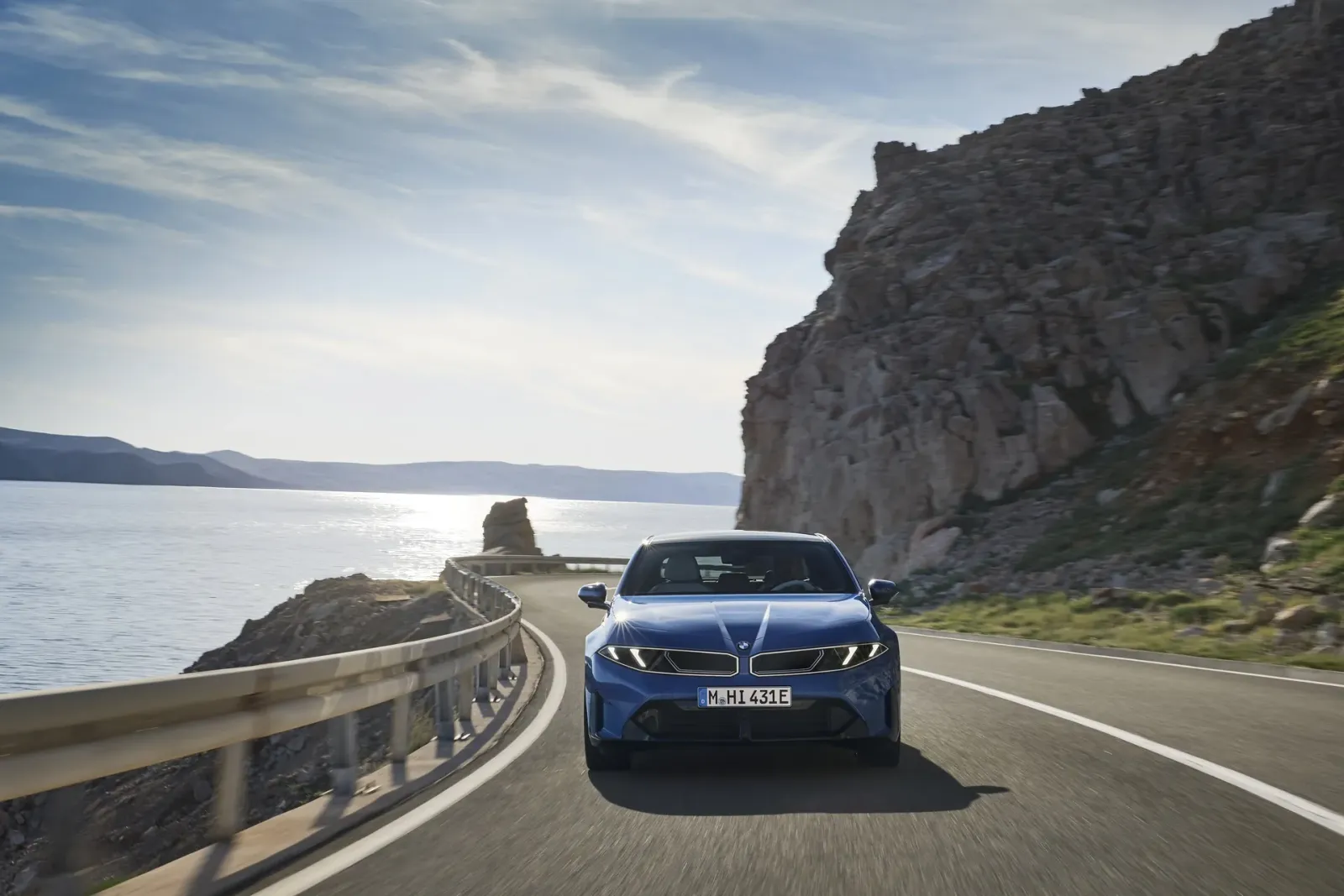
First encounter with the new BMW i3: a completely redesigned exterior, futuristic interior, an advertised range of up to 912 km, and 345 kW of power. But above all, one question arises: can the Series 3 maintain its sporty character without a gasoline engine?
The Series 3 is a name that, for BMW, signifies sportiness, driving pleasure, and charisma. Neue Klasse, on the other hand, is the name for the Bavarian manufacturer’s new direction: a technological, philosophical, and, of course, aesthetic revolution. The new BMW i3 emerges from the fusion of these two philosophies, with the ambition of bringing one of the brand’s most iconic models into the electric era.
The question, of course, is whether she succeeded. Because a Series 3 isn’t just supposed to be fast—it needs to have character, convey emotions, and engage the driver. And after a brief first encounter with the new i3, we can already provide some answers.
BMW i3: Everything changes, but it remains a Series 3
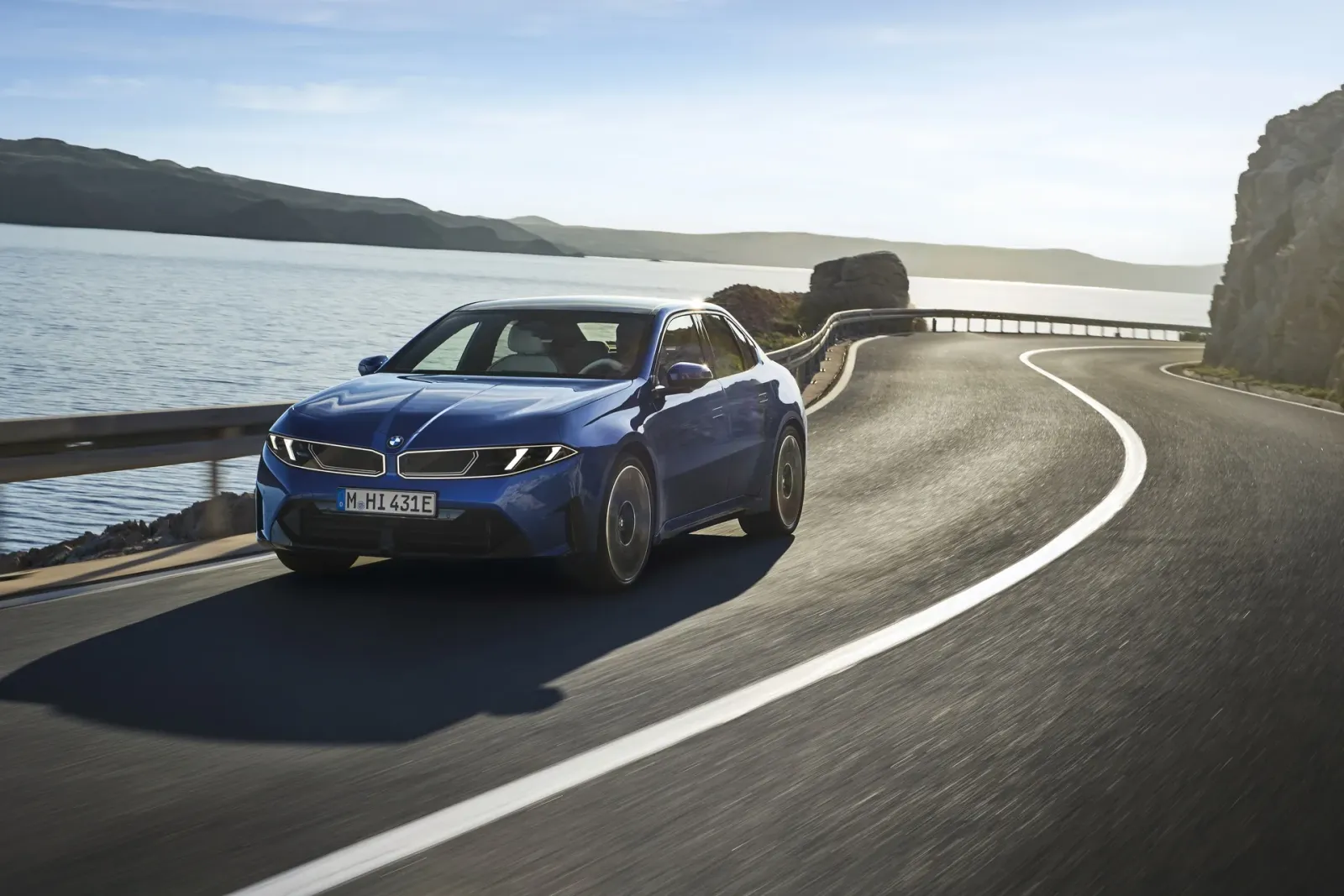
BMW radically alters its stylistic language while striving to retain the elements that have made the Series 3 recognizable over the past fifty years.
The proportions remain those of a sports sedan, with a pronounced hood, a rear-mounted cockpit, a long wheelbase, and short overhangs. However, the surfaces become cleaner, the lines more minimalist, and especially the front end is completely transformed.
The hood retains its characteristic V-shaped design, with the ribs converging toward the BMW logo. The traditional double kidney grille, on the other hand, has been completely reimagined and integrated with the dual headlights. This more horizontal approach is distinctly elegant and marks a clear departure from the large grilles seen in recent years.
The side profile is very sleek, also extremely clean, with handles that run along the body surface. At the lower part, there is a fairly prominent rib structure, while the pronounced fenders highlight the muscular presence of the Series 3.
The rear end, however, seems almost in contrast to the lightness of the side profile. The horizontal layout of the lighting units visually emphasizes the vehicle’s width, conveying a sense of solidity and stability.
The dimensions confirm that we are looking at a significant sedan: 4.76 meters in length, 1.87 meters in width, 1.48 meters in height, with a wheelbase of nearly 2.90 meters. This last figure is particularly interesting because, thanks to the platform developed specifically for electric vehicles, it allows for better utilization of the space available for passengers.
BMW i3 Interior: Science fiction, but the driver remains the focus
While the exterior represents an evolution of BMW’s design language, the interior is a much more radical revolution. Once inside, one gets the impression of being transported to an almost science fiction-like environment. But note that behind the most eye-catching features lies careful ergonomic design, and above all, the driver remains the focus.
There are three elements that most distinctly characterize the interior. The first is the large 17.9-inch central display, featuring a distinctly original parallelogram shape. This stylistic choice also serves a practical purpose: it brings the farthest corner of the screen closer to the driver, making it easier to reach.
Not everything, however, is convincing. Personally, I still don’t appreciate the decision to concentrate virtually all of the vehicle’s controls on the display. As advanced and well-designed as the system is, a few more physical controls would have made certain operations quicker.
The second element is the steering wheel, which is truly distinctive. It has a slightly square shape, a very sporty design, and spokes with a decidedly unusual pattern. Even the controls seem to come from the future: touch-sensitive surfaces with haptic feedback that provide a tactile response to pressure. On the left are the controls for driving assistance, while on the right are those for infotainment.
But the feature that impressed me the most is undoubtedly the BMW Panoramic Vision. It’s not just a very long screen; it’s a system that projects information across the entire lower part of the windshield, from one pillar to the other.
On the left side, in front of the driver, essential driving data such as speed and range are displayed. The central and right sections can be customized by selecting up to six widgets with the information you want to keep within easy view.
The result is visually striking, but most importantly, functional. The information is positioned at the bottom of the field of view, eliminating the need to constantly look down at traditional instruments.
The perceived quality is also high. The surfaces surround the occupants, and many trims have the appearance and texture of leather, even though they are made of synthetic material. Veganza, one of the solutions offered by BMW, is an example of this, helping to create a refined and modern atmosphere.
BMW i3: Two versions, up to 345 kW and over 900 km of range
The new BMW i3 is built on the Neue Klasse platform and features BMW’s sixth generation of eDrive electric technology. The initial lineup includes two versions, both with all-wheel drive and an electric motor per axle.
The BMW i3 40 xDrive delivers a total power output of 275 kW and comes equipped with an 82.8 kWh battery, offering a declared WLTP range of up to 710 kilometers.
The BMW i3 50 xDrive boosts power to 345 kW, with a maximum torque of 645 Nm and acceleration from 0 to 100 km/h in just 4.7 seconds.
But the figure that impresses the most is the range. Thanks to the 108.7 kWh battery, BMW claims up to 912 kilometers in WLTP testing. This figure will naturally need to be verified on the road, but it places the new i3 among the most interesting electric sedans for long-distance drivers. (We will soon have it for a longer test drive and be able to accurately check the actual fuel consumption as well.)
Underpinning these results is also a significant upgrade in battery technology. The Neue Klasse uses cylindrical cells that, according to BMW, increase volumetric energy density by 20% compared to the previous generation.
The propulsion system has also been changed. The i3 50 xDrive features an electrically excited synchronous motor at the rear and an asynchronous motor at the front. According to the manufacturer, this combination reduces energy losses by 40% compared to the previous generation.
400 kW charging: up to 423 km in ten minutes
The 800-volt architecture allows the BMW i3 50 xDrive to achieve a maximum DC charging power of 400 kW.
BMW claims that under ideal conditions, just ten minutes at a fast-charging station are sufficient to restore energy equivalent to 423 kilometers of WLTP range.
The new i3 also supports two-way charging, which enables using the battery to power external devices or, with compatible equipment, a home and the electrical grid.
How’s the BMW i3? Its character is evident right from the first turns.
Unfortunately, in this initial encounter I didn’t have the chance to drive many kilometers. Enough, though, to realize that BMW hasn’t forgotten what a Series 3 should be.
The first thing that stands out, right from the first turns, is the grip. This i3 seems literally glued to the road. It feels like an extremely stable, precise vehicle that delivers a great sense of safety even when speed increases. In fact, thanks to the new Heart of Joy system—a high-performance control unit that coordinates propulsion, braking, energy recovery, and some steering functions—the i3 is both fun and safe. The onboard brain allows us to dial in the i3 just right, giving us the right amount of adrenaline while keeping the vehicle fully under control.
The acceleration is remarkable, as one would expect from a car with nearly 650 Nm of torque and a 0-100 km/h time of 4.7 seconds. The thrust is immediate, powerful, and above all, very well controlled.
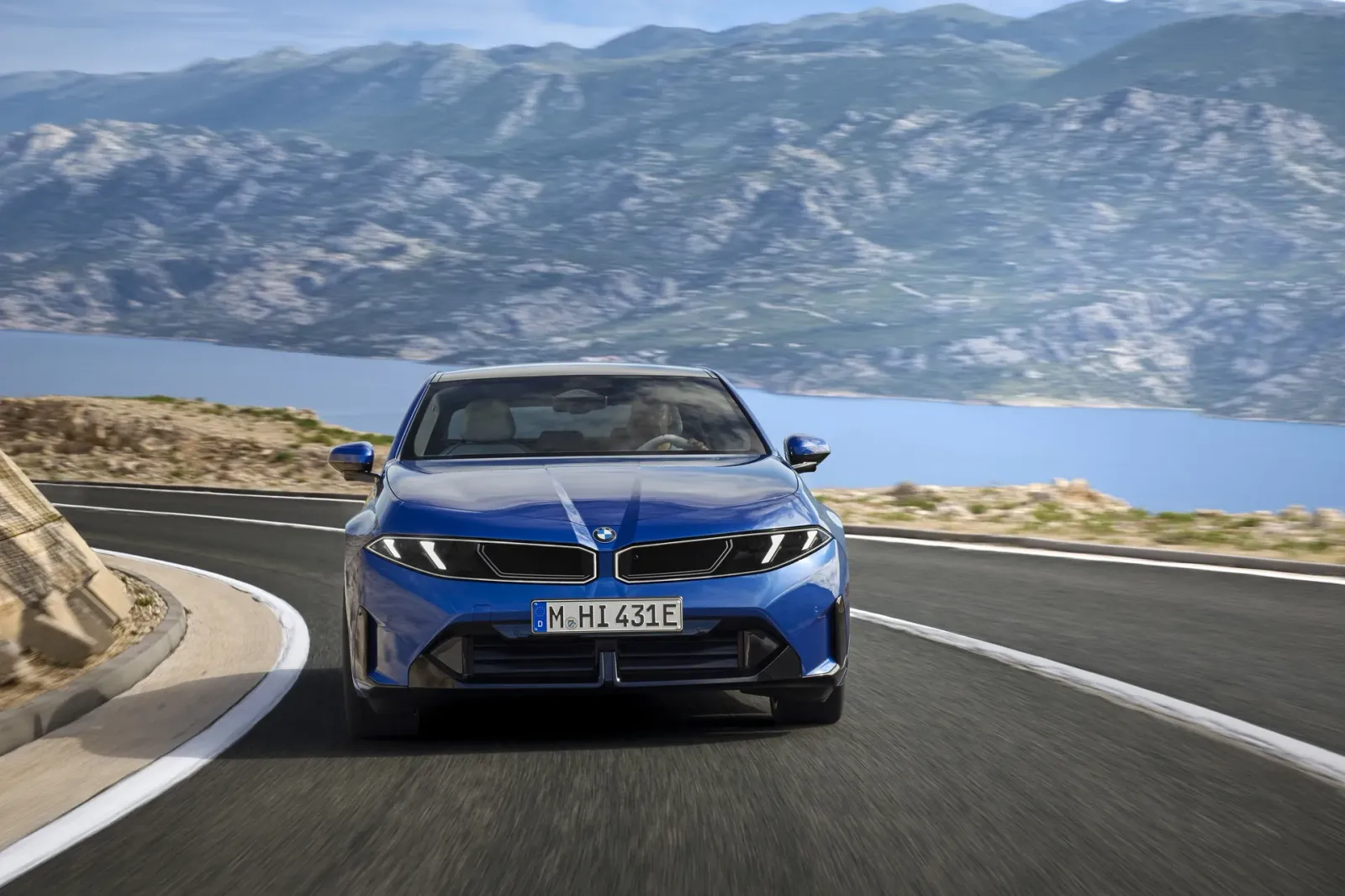
The steering, which is extremely precise and responsive, also convinced me, contributing to a very engaging driving experience. The braking is also excellent—forceful yet easy to modulate, an aspect that is far from guaranteed in electric vehicles, where the transition between regenerative braking and traditional braking doesn’t always deliver a natural feel. On this topic, BMW informed us that the mechanical brakes in the i3 are used very rarely, with regenerative braking handling the vast majority of the braking effort.
Critics of electric vehicles will say it lacks the sound of cylinders. True. But when it comes to precision, acceleration, and driving pleasure, this Series 3 seems to have all the advantages.
BMW i3 Prices: The electric car surprises even when compared to gasoline models
The new BMW i3 has convinced me in many aspects: its design, interior quality, technological features, and especially its road performance. Not to mention its claimed range, which promises to address one of the main perceived limitations of electric cars.
But there’s another factor that surprised me: the price. The BMW i3 40 xDrive (the more affordable model if you’re not an avid traveler) starts at 59,900 euros, while the more powerful i3 50 xDrive costs 64,750 euros.
Numbers that are far from popular, of course. But comparing them to the gasoline versions of the Series 3 changes things. The gasoline 320 starts at 57,550 euros, just 2,350 euros less than the i3 40 xDrive, which offers significantly higher power and all-wheel drive.
And to approach the performance of the i3 50 xDrive, one has to look at the gasoline M350 xDrive, priced at around 83,000 euros.
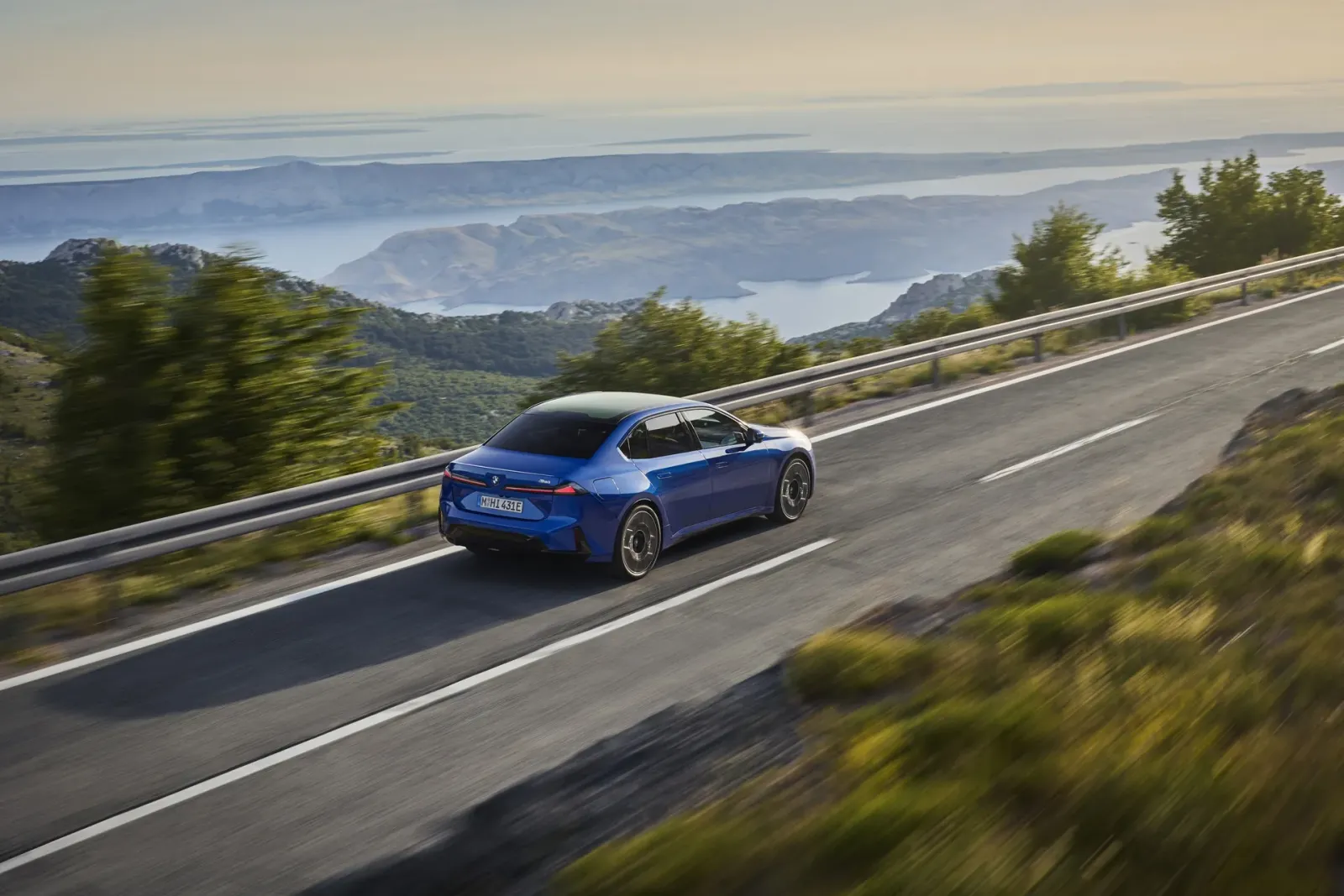
In short, considering technology, performance, and range, the positioning of the new i3 appears quite competitive, even within BMW’s own lineup.
In conclusion, BMW evolves but does not change. The Neue Klasse marks a profound break from the past, but this new Series 3 shows, at least after the first encounter, that the brand’s sporty character can thrive even without internal combustion engines.
The way power is generated changes, the aesthetic language changes, and the driving experience changes. But the pleasure of driving a BMW remains exactly as it was.