
Audi A2 e-tron: V2L with up to 3.6 kW, V2G to follow
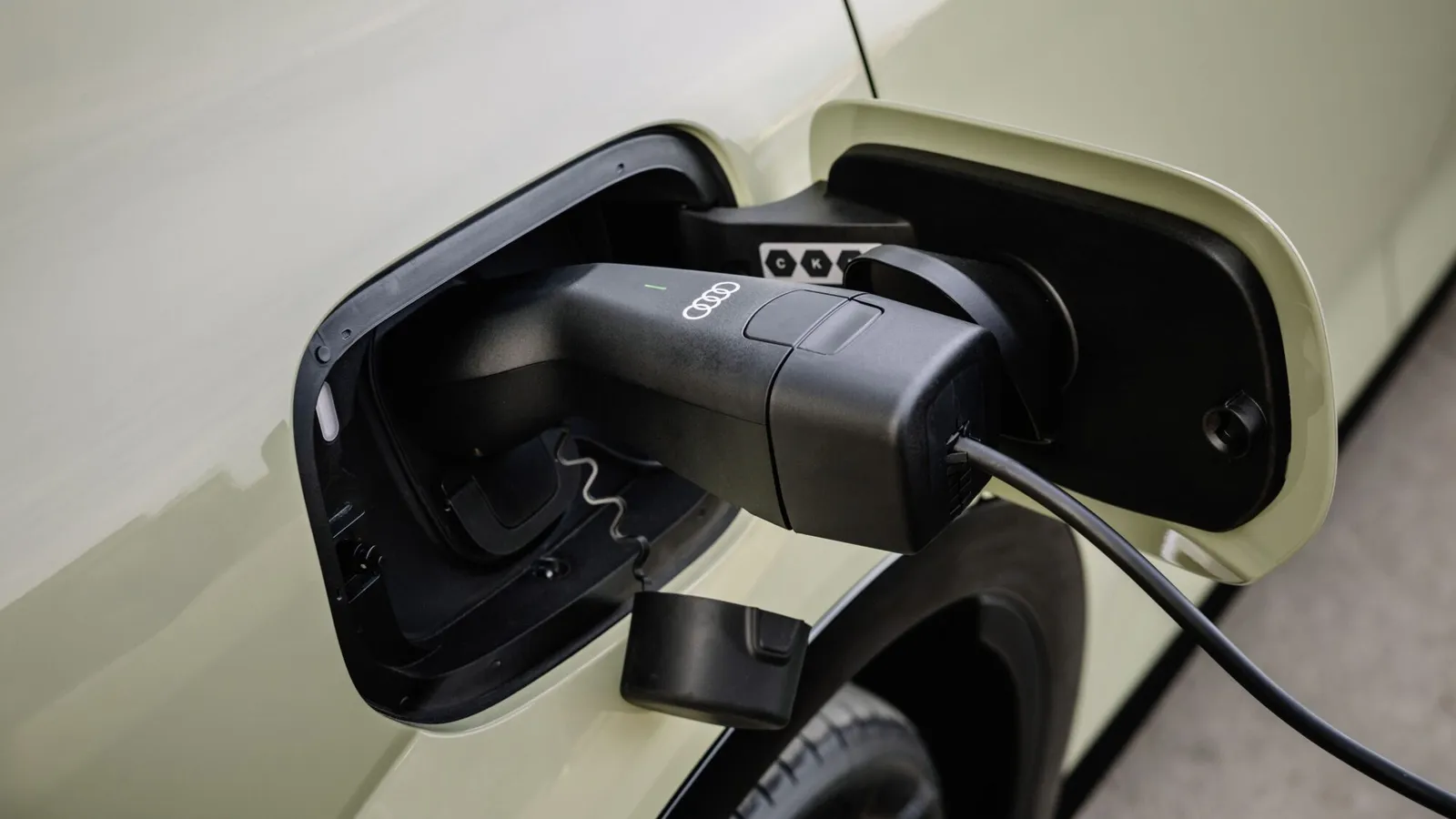
Audi has released details on the two-way charging capability of the A2 e-tron: External devices can be charged at up to 3.6 kW, while a 11-kW DC wallbox is intended for home use. Feeding electricity back into the grid is expected to be possible for this compact car in the future.
Advertisement
The A2 e-tron is available for ordering in Germany since September 10, with Audi announcing that the first deliveries would take place in December following the release of prices and range figures in September. Audi had already described two-way charging in the initial technical specifications from August, referring to it as an option at that time. Now, Audi has published its own media information on the car’s battery and charging technology.
Vehicle-to-Load: up to 3.6 kW for external devices
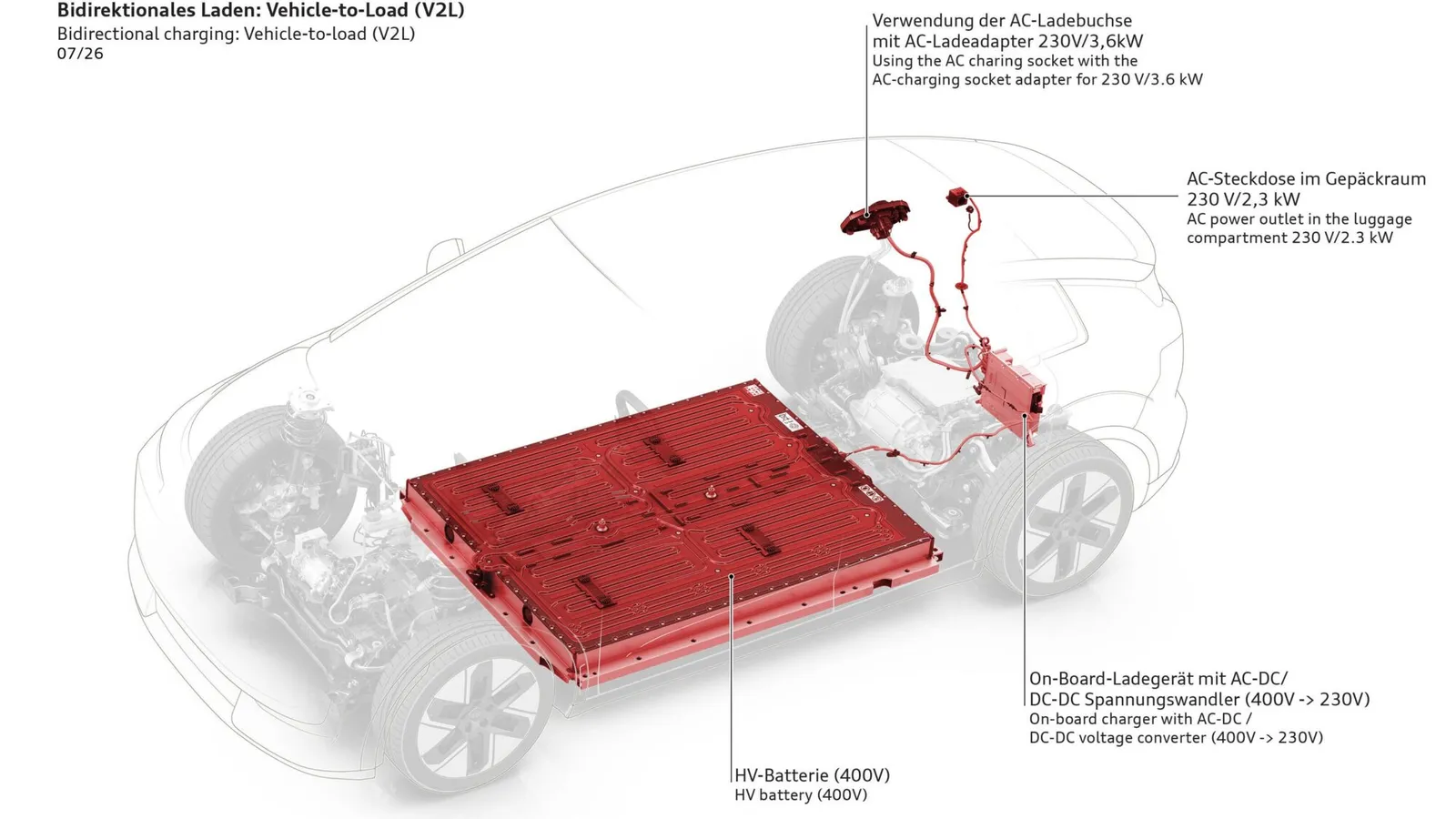
Vehicle-to-Load (V2L) allows suitable external devices to be powered by the high-voltage battery. According to Audi, a battery charge level of at least 20 percent is required. A diagram from the manufacturer shows two methods: An adapter at the AC charging port provides 230 volts at up to 3.6 kW, while a socket in the trunk delivers 230 volts at up to 2.3 kW. The on-board charger with an integrated voltage converter handles the conversion of the 400-volt battery voltage.
Vehicle-to-Home with DC Wallbox
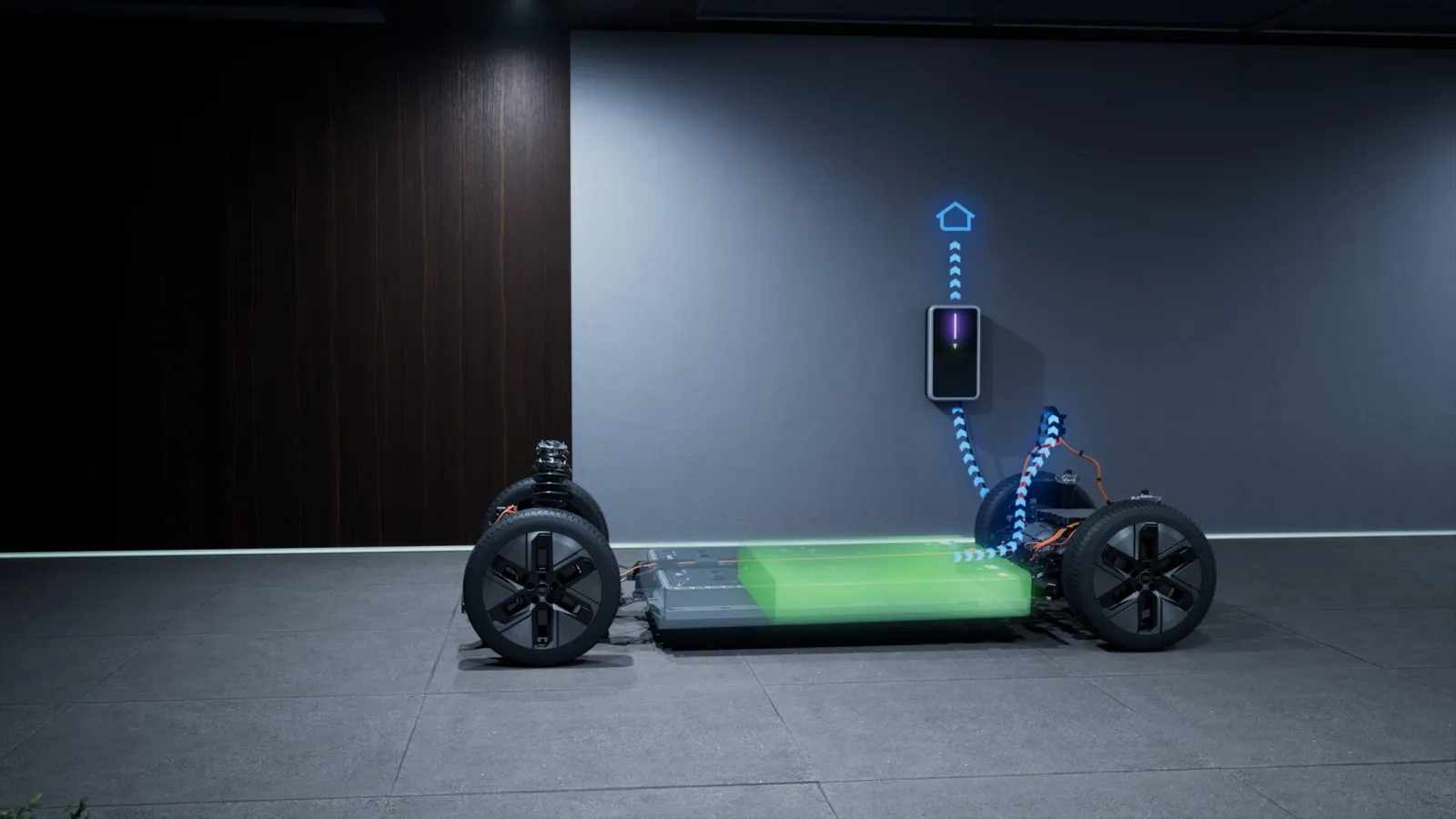
In Vehicle-to-Home (V2H) mode, the A2 e-tron functions as a battery storage unit for the home. This requires a compatible, bidirectional DC wallbox, and additional hardware may be needed depending on the existing home electrical system. In the diagram for V2H, Audi mentions an 11-kW DC wallbox that connects directly to the CCS port.
Energy is exchanged between the vehicle and the home grid only when the battery level is between 20 and 80 percent. Within this range, the charging limits set for the specific charging location apply. If the battery level is below 20 percent, the car is charged exclusively; if it’s above 80 percent, it is discharged exclusively. According to September’s announcements, Audi will initially offer V2H in Germany, Austria, and Switzerland.
Display
Vehicle-to-Grid is only a future possibility
Audi states that Vehicle-to-Grid (V2G), which involves feeding energy from the vehicle battery into the public power grid, is intended to become available for the A2 e-tron in the future. According to the manufacturer, whether and when this feature will be available depends on factors such as the market conditions, vehicle specifications, compatible charging technology, home electrical setup, regulatory requirements, and potentially an appropriate electricity tariff. A compatible, bidirectional DC wallbox is also necessary for this functionality. Audi does not specify a timeline.
Charging Capacity and Charging Electronics
The A2 e-tron is available with three batteries: lithium iron phosphate batteries (LFP) with 52 or 61 kWh in a cell-to-pack configuration, and a nickel-manganese-cobalt battery with 84 kWh, all figures being gross capacities. The maximum DC charging power ranges from 100 to 183 kW. The base model with 125 kW (170 hp) and 52 kWh capacity charges from 10 to 80 percent in 24 minutes, while the version with 140 kW (190 hp) and 61 kWh capacity takes 26 minutes. The two variants with 84 kWh capacity and 170 kW (231 hp) or 240 kW (326 hp) respectively require 29 minutes. These values are based on defined testing conditions.
Thermal management continuously adjusts battery temperature, current flow, and charge level during charging and discharging. According to Audi, the goal is to achieve reproducible charging behavior. The charging electronics include an improved component that combines an on-board charger with a DC/DC converter. This OCDC 2.0 features more MOSFET power transistors than before, adjusted AC output management, and revised software. The announcement does not specify the AC charging capacity.
A Battery Management Controller monitors and regulates the battery. In LFP batteries, the resting voltage remains flatter across most of the charge range compared to other cell chemistries, making it difficult to accurately determine the charging and aging status. Audi uses a customized algorithm for this purpose, with its results influencing calculations for range, charging behavior, and operating strategy.
Would you use your electric car as a home energy storage system if a bidirectional DC wallbox is required for it?
Advertisement